Can a robe abaya be the gentle armor I wear when I step into a world that doesn’t know me yet?
Bismillah, wa salatu wa salamu ‘ala Rasulillah —
There was something in the stillness of this June morning that felt like a pause between chapters. The kind of hush that settles in the air before you speak a truth you’ve been holding too long. My robe abaya was folded neatly beside me, the same one I wore on the day I entered a boardroom full of stares and unspoken questions — the same one I wept into after my first jummah prayer as a revert, knees pressed to unfamiliar carpet, heart cracked wide open in sujood.
It’s June 16th, 2025 — but that date doesn’t quite capture where I am in this moment. Because time isn’t just clocks and calendars. Sometimes, it’s the way your breath trembles before you step outside. It’s the memory of your mother’s disapproval layered beneath your jilbab. It’s the heat of a summer train ride while strangers wonder why you’re so covered. Time, for me, has always been marked by the clothes I wore — and the strength I had to summon while wearing them.
Today, I felt compelled to write this blog not as a fashion blogger or stylist — but as a sister. A daughter. A woman who has both feared and found herself in the drapes of modest clothing. This isn’t just about cloth. This is about armor. About softness. About survival. About how a simple robe abaya became the most honest expression of who I am when the world didn’t offer me the benefit of being known first.
So, if you've ever paused in front of a mirror, wondering if what you wear makes you smaller or stronger — come sit beside me. Let’s take this journey together, layer by layer. Let’s talk not just about fashion, but about faith. Not just about modesty, but about meaning.
When the world stared but never saw me, what did I even wear to survive it?
I remember the first time I stepped into a lecture hall wearing my robe abaya. The air didn’t change, but everything inside me did. I had worn this garment dozens of times before, but something about being in a room full of strangers — eyes darting and eyebrows slightly raised — made it feel like I had just stepped into battle. Not one with fists or fury, but one where silence and stares said what mouths never dared to.
It was then I learned that you can be visible without being seen.
I wasn’t just a student that day. I was a walking projection screen for assumptions: foreign, oppressed, overly religious, perhaps even a little extreme. But what they didn’t see was that the robe abaya I wore had a story stitched into every thread — one of choice, of conviction, and of quiet resistance.
You see, when the world refuses to recognize your complexity, it becomes an act of power to dress in a way that reflects your truth. My robe abaya wasn’t a costume. It was the fabric that helped me hold myself together when everything around me felt like it was trying to tear me apart. It was the soft shield I clung to when I was too tired to explain my identity for the hundredth time.
But what did I really wear to survive those stares? Let me show you:
| What I Wore |
What It Symbolized |
Why It Mattered |
| Robe Abaya |
Dignity, Identity, Spirituality |
It reminded me I was enough without needing validation from others. A robe abaya allowed me to embody my values without speaking a word. |
| Hijab |
Obedience, Connection to Allah |
It was my personal promise to Allah, a daily act of worship and resilience in the face of misunderstanding. |
| Confidence (even when I didn’t feel it) |
Protection, Assertion |
I wore courage like an accessory. Some days, I faked it until my strength became real. |
| Soft Silence |
Boundaries, Reflection |
Silence became my language when the world wanted loud explanations. I let my presence speak instead. |
| Du’a |
Armor of the heart |
I whispered prayers before every difficult step — from walking into an interview room to boarding a plane — asking Allah to cloak me in serenity. |
Most people think survival is about toughness. That the only way to thrive is to blend in, to assimilate, to make yourself palatable to those around you. But what if survival, for some of us, is about holding onto softness — in a world that keeps trying to harden us?
I survived not by shrinking, but by standing in my fullness, even when I wasn’t understood. I survived by letting my robe abaya be a lighthouse — not because it made me invincible, but because it kept me anchored. Because even when I was trembling on the inside, the world saw a woman wrapped in purpose. They couldn’t see my tears. They couldn’t hear the prayers whispered through my trembling lips. But that was the point. I didn’t need to be seen by them to be seen by Him.
It wasn’t always easy. There were moments I questioned everything — moments I stood in dressing rooms wondering if the stares were worth it. Moments when I’d fold my robe abaya in half and wonder if life would be simpler without it. But simpler isn’t always truer.
And what about the stares? Let’s talk about those.
There were the curious stares — the kind that almost wanted to ask “why?” but stopped at the edge of discomfort. Then there were the suspicious ones — where you felt like you had to overcompensate with politeness just to prove you weren’t dangerous. And perhaps the most painful ones: the indifferent stares that looked right through you, as if your identity made you invisible.
But the longer I wore my robe abaya, the less those stares defined me. I began to realize that it was their gaze that was broken — not my reflection.
Survival, for me, looked like walking through airports with my head held high. It looked like standing in line at coffee shops without shrinking. It looked like choosing softness when the world demanded hardness. And yes — it looked like choosing a robe abaya every morning, even on the days when courage didn’t come easy.
Because the robe abaya is more than a garment. It is a declaration. A decision. A divine trust.
It’s the whispered words of women before me who chose faith over conformity. It’s the warmth of my grandmother’s stories woven into fabric. It’s the echo of every “Assalamu Alaikum” offered to a stranger who looked like they needed reminding that we’re not alone in this.
When the world stared but never saw me, I wore truth. I wore intention. I wore love. I wore conviction.
And now — I wear it all with pride. Not because I want the world to notice, but because I’ve finally seen myself.
Was it wrong that I longed for softness in a world that asked me to be steel?
There was a time I thought strength had to look a certain way. Sharp, loud, unflinching. Like the women in boardrooms who never blinked. Like the protestors with fists raised. Like the loud ones, the bold ones, the ones who swallowed pain and marched forward anyway. And I admired them, deeply. But I couldn’t find myself in their reflection. I didn’t move like steel. I moved like silk.
And in a world that rewards hardness — in tone, in voice, in posture — I wondered if I was wrong to want to stay tender.
My robe abaya was never about performance. It wasn’t a costume I wore to become a stronger version of myself. It was the exact opposite. It was what allowed me to remain soft in a world that kept trying to harden me. A gentle reminder that femininity, grace, and softness are not flaws to fix — they’re strengths to protect.
Yet, I found myself questioning:
“Ya Allah, is my softness a weakness or a secret kind of sabr?”
You see, there’s a subtle kind of strength in choosing gentleness when life pushes you toward bitterness. I remember moments when I had to return harsh words with kindness, not because I lacked a comeback, but because I feared what anger would do to my heart. I remember when I let tears fall in sujood rather than scream in frustration. I remember when I chose silence not out of fear — but because I knew not every battle deserves my spirit.
But still, the world kept demanding steel.
“Be fierce,” they said. “Speak louder,” they urged. “Don’t let them walk over you.” And maybe they were right — in their world. But I never wanted to live in a world where steel was the only way to survive.
My longing wasn’t weakness. It was worship. I longed for softness not because I was fragile, but because I was faithful. I wanted my voice to hold mercy, my eyes to offer compassion, my presence to soothe rather than dominate.
The robe abaya gave me permission to be both.
It reminded me of Maryam (alayhas-salaam), whose silence spoke louder than a thousand defenses. Of Khadijah (RA), whose strength wasn’t in shouting but in standing beside the Prophet ﷺ with unwavering belief. Of the women who stitched love into everything they touched — meals, du’as, late-night tears — whose softness was never submission, but sacred resilience.
What the World Asked vs What My Soul Needed
| The World Demanded |
My Heart Yearned For |
What My Robe Abaya Gave Me |
| Sharpness in speech |
Kindness in correction |
A language of compassion that doesn’t compromise clarity |
| Speed, productivity, hustle |
Stillness, reflection, intention |
A reminder to slow down and honour divine timing |
| Confidence through dominance |
Confidence through presence |
The comfort of being quietly certain of my worth |
| Perfection and polish |
Authenticity and vulnerability |
A safe space to be imperfect and loved by Allah anyway |
| Armor that looked like ego |
Armor that felt like grace |
A covering that guarded both my body and my heart |
I began to notice something: my softness was not incompatible with strength — it was a different kind of strength altogether. One that resisted the need to fight every battle. One that refused to trade femininity for acceptability. One that trusted Allah’s justice more than my need for revenge.
And the robe abaya helped me embody that truth. Every time I wore it, I felt like I was stepping into myself, not away from the world but into the part of the world that Allah designed for me to occupy. Not invisible. Not passive. Just... peaceful.
I used to think strength meant having the last word. Now I know, sometimes it means making the first du’a. I used to think power came from posture. Now I believe it comes from prayer. I used to think the world’s approval was necessary. Now I know my Lord’s acceptance is enough.
Was it wrong to long for softness in a world that asked me to be steel?
No. It was right. It was sacred. It was survival.
And today, I walk softer on this earth — not because I am weak, but because I know Who holds it beneath my feet. I speak gently — not because I lack words, but because I remember how words can wound. I dress with dignity — not because I want attention, but because I’ve learned that true beauty doesn’t scream to be noticed.
My robe abaya is not the armor of steel. It is the shield of softness. The cloak of contentment. The garment of grace.
And maybe, just maybe — in a world that praises steel — the robe abaya is my most radical rebellion of all.
Why did dressing modestly sometimes feel like hiding instead of honoring?
There were seasons in my life when dressing modestly didn’t feel empowering. It didn’t feel like devotion or beauty or strength. It felt like retreat. Like I was wrapping myself in layers not to honor my soul — but to shrink from a world that had already decided I was too much. Too foreign. Too quiet. Too covered. Too... other.
I would stand in front of the mirror, hijab in hand, robe abaya draped across the bed, and feel a quiet ache. Was I choosing this out of conviction — or fear? Did I truly feel seen by Allah, or was I trying not to be seen at all?
It’s hard to admit that sometimes, modesty felt more like a wall than a window. Not because it was inherently so — but because I hadn’t yet healed the way I saw myself beneath the fabric. I hadn’t yet embraced the *why* behind the *what*. And in a society that equates visibility with value, it’s easy to internalize the lie that covering yourself is erasing yourself.
But Allah never asked me to disappear.
He asked me to preserve.
And that shift — from hiding to honoring — took time. It took tears. It took relearning what modesty meant beyond cultural voices and societal commentary. It took me understanding that my robe abaya was not a cage — it was a crown. But first, I had to name the wounds.
When Modesty Feels Like Hiding
These are the moments no one prepares you for:
- When you walk into a room and eyes avoid you like you don’t exist
- When you get passed over for opportunities because you “don’t look the part”
- When your own family questions your choice — “Why do you need to be so extreme?”
- When you wonder if your silence is misread as submission
- When you feel like you’ve become a background character in your own life
And in those moments, the robe abaya can feel heavy. Like a burden you weren’t trained to carry. Like a garment that speaks louder than you ever get to.
But these feelings, though real, were never the fault of the abaya. They were the echoes of a world that hasn’t yet learned how to see beauty without exposure. Power without volume. Womanhood without performance.
From Shrinking to Shining: The Emotional Shift
| Old Belief |
What I Learned |
How the Robe Abaya Transformed Me |
| “Modesty means staying silent.” |
Modesty means choosing intentionality — in words, in space, in presence. |
Helped me speak with purpose, not perform for applause. |
| “I’m not worthy if I’m not noticed.” |
Allah sees me even when the world looks away — and that is enough. |
Taught me to be satisfied with divine recognition. |
| “I have to blend in to survive.” |
I was made to stand out — with dignity, not ego. |
Reclaimed my right to be visible on my own terms. |
| “I’m hiding because I’m afraid.” |
I’m covering because I’m cherished. |
Shifted from fear-based modesty to faith-based majesty. |
| “They don’t understand me.” |
I dress for the One who created me — not for their comfort. |
Stopped seeking validation from those who don’t hold my akhirah. |
The robe abaya slowly became a love letter to myself. A declaration of self-worth. A protest against every narrative that told me I had to reveal more to be respected. With every step, I started to feel it not as a way of hiding — but as a radiant form of honoring.
Honoring the woman who values her connection with Allah over worldly attention. Honoring the soul who remembers Jannah when making wardrobe choices. Honoring the ummah by being a visual reminder that submission is beautiful.
My robe abaya did not erase me. It reintroduced me — to myself, to my purpose, to the kind of woman I had always prayed to become.
Du’a for the Days Modesty Feels Heavy
Ya Allah, when my robe feels like a burden, remind me it is a blessing.
When I feel invisible to the world, remind me You are Al-Baseer — the All-Seeing.
When I shrink from the weight of judgment, help me stand tall in Your mercy.
Let my covering not be a hiding place — but a home.
Let it be a garment of honor, not shame.
A robe of light, not of fear.
A sign that I belong — not to this dunya, but to You.
And so now, when I wrap myself in my robe abaya, I pause. I breathe. I whisper Bismillah. And I no longer feel like I’m disappearing. I feel like I’m being held. Cloaked in purpose. Honored by the Most Honorable.
Because modesty was never meant to dim your light.
It was meant to guard the flame until it’s ready to rise.
Could the quiet folds of a robe abaya hold the parts of me I couldn’t say out loud?
I’ve often wondered how many emotions a single garment can carry — how much unspoken grief, hope, and prayer can live in fabric. There were seasons in my life where I couldn’t find the words to describe what I was feeling. Not to my friends, not even to Allah in my du’as. But when I draped my robe abaya over my shoulders, it felt like I was wrapping myself in a language my soul understood.
On the outside, it may have looked like I was simply getting dressed — another modest outfit for another ordinary day. But inside, I was reaching for something sacred. Something that would hold me together when my voice trembled, when my heart questioned everything, when I was too exhausted to explain myself to a world that didn’t seem to want to listen.
My robe abaya didn’t need an explanation. It didn’t judge me for crying between sujood. It didn’t rush me to be okay. It held space for my silence, for my longing, for the pieces of me I kept buried under layers of survival. Somehow, the very act of dressing became a kind of du’a — a plea for protection, for gentleness, for understanding.
When Words Fail, What Else Speaks?
There are moments — especially for us as Muslim women — where we’re asked to explain everything. Why we cover. Why we believe. Why we don’t compromise. But the robe abaya didn’t demand articulation. It became the vessel for things I couldn’t put into words. My fatigue. My reverence. My softness. My scars.
I started to see that my abaya wasn’t just something I wore — it was something that wore my story. Not to display it, but to protect it. To honor it. It was a cloak that understood what even I didn’t have the courage to admit out loud.
| Unspoken Feelings |
How the Robe Abaya Responded |
| Feeling emotionally fragile |
Provided comfort, weight, and calm like a gentle hug |
| Not wanting to be seen, but needing to be acknowledged |
Allowed presence without exposure — dignity without spotlight |
| Wishing for softness in a hardened world |
Moved with grace, reminding me that gentleness is strength |
| Not having the words to explain my boundaries |
Set them for me — quietly, clearly, unapologetically |
| Wanting to hold onto faith in silent struggle |
Felt like a constant act of worship — a wearable form of sabr |
The Day My Robe Abaya Spoke For Me
I’ll never forget a moment after jummah salah when an elder sister came up to me. I was wearing my olive-green robe abaya, quiet, head down, eyes a little red from tears. She didn’t ask what was wrong. She didn’t probe. She just gently said, “You look like you’re wrapped in a du’a.” And then she smiled. That was it. But I felt so seen — not because she knew my story, but because she recognized the language of a covered woman who was surviving something in silence.
That day, I walked home with my steps lighter. I realized that my robe abaya had been saying something for me the whole time. It had been praying with me, grieving with me, resisting with me. I didn’t need the right words. I just needed to show up, wrapped in intention and faith.
From Hiddenness to Healing
Over time, the robe abaya helped me reframe silence. It was no longer a symptom of brokenness — it was a sacred space of becoming. I started to journal more, to make quiet du’a under my breath as I adjusted my sleeves, to feel worthy even when I wasn’t loud. I didn’t need to over-explain anymore. My presence in the robe was enough. My silence could still be sincere. My quiet could still be powerful.
I began choosing robe abayas that reflected my healing — linen for softness, earth tones for grounding, flowing silhouettes for release. I realized that each one was like a chapter in my becoming. Each fold whispered something different: “You made it through.” “You are still soft.” “You are still His.”
To the Sister Who Can’t Find the Words Right Now
If you’re reading this and you’re holding your breath around the things you don’t know how to say — know that your silence is not empty. Your robe abaya can hold it with you. Dress with tenderness. Wrap yourself with niyyah. Let the fabric remind you that your story matters, even in its quietest form.
Allah hears what no one else does. He sees the du’a beneath your dressing. He knows the parts of you you’re not ready to speak about — and He loves you still. The robe abaya is not just a garment. It’s a shield, a whisper, a form of remembrance. And when the words return to you, they’ll find you wrapped in beauty and barakah.
Why did I cry the first time I saw a woman wear her robe abaya like a crown?
It happened on an ordinary afternoon, in a café where the clink of spoons met the soft murmur of voices. I wasn’t expecting my heart to stir. I wasn’t expecting to be cracked open. But then she walked in—tall, poised, wrapped in a deep emerald robe abaya that seemed to both whisper and roar. Her presence was quiet, but it shifted the air around her. And I cried. Not because I was sad, but because something in me recognized something in her. And it hurt—in a healing kind of way.
She walked with the kind of grace that wasn’t taught in finishing schools or styled on social media. Her robe abaya wasn’t worn to blend in or disappear. It framed her like royalty, flowed like intention, and crowned her like dignity. She didn’t shrink. She didn’t apologize. She took up space with a serenity that made people look twice—not in suspicion, but in admiration. And I sat there, with my coffee gone cold, thinking: Is this what we were always meant to look like? To feel like?
Unraveling My Reaction: Why That Moment Broke Me Open
I cried because I had spent years wrapping myself in modesty not as empowerment, but as retreat. I dressed to disappear. To not be questioned. To not tempt. To not stand out. My robe abaya had been a shield, not a crown. I had forgotten that modesty was a choice made in defiance of a world that commodifies women—not a surrender to shame. Seeing her redefined everything I had internalized.
And what hit me hardest was not just how she looked, but how she carried herself. She wasn’t wearing her robe abaya out of obligation. She was wearing it like identity. Like worship. Like sovereignty. That moment unearthed years of buried guilt, misunderstood faith, and cultural pressure. I had never seen confidence and modesty walk so gracefully hand in hand.
Robe Abaya as Resistance, Dignity, and Honor
For too long, the robe abaya has been seen by outsiders as restriction. But for us—when we claim it intentionally—it becomes a form of spiritual rebellion. It is not weakness; it is strength disguised in fabric. The folds become a fortress. The sleeves are wings. The coverage is clarity. And when a woman wears it from a place of belief, not fear, it transforms from garment to armor—from cloth to crown.
| Aspect |
Hiding in Modesty |
Honoring in Modesty |
| Mindset |
Fear of judgment |
Rooted in self-worth |
| Intent |
To disappear or conform |
To express submission to Allah and inner dignity |
| Energy |
Withdrawing, hesitant |
Calm, grounded, radiant |
| Impact |
Perceived as oppression |
Radiates quiet power and self-respect |
Seeing Her Was Seeing Who I Wanted to Become
That woman didn’t just walk into a café. She walked into my life as a mirror, a dua in motion. I had never met her, but I knew her. She was the woman I’d whispered about in sujood—the one I hoped to become when I begged Allah to help me feel at home in my body and in my faith. She was proof that beauty and belief were not at odds. That our deen could be worn with elegance. That there is nothing more revolutionary than a Muslim woman who walks in the world unashamed of her sacredness.
It wasn’t just fashion. It wasn’t just style. It was sabr woven into fabric. Tawakkul trailing behind her like a silken train. It was everything I had ever misunderstood about modesty—clarified in a single glance. And yes, I cried. Because deep down, I had been waiting to see someone like her. And maybe even more, I had been waiting to be someone like her.
From Envy to Embrace: A Shift in My Soul
Envy was the first sting. But it quickly melted into reverence. I realized she wasn’t better than me. She was just home in herself. And I could get there too. I just had to reclaim my robe abaya—not as a tool of defense, but as a declaration of who I am: a believer, a woman, a servant of Allah, worthy of grace and strength.
That night, I stood in front of my wardrobe differently. I chose a robe abaya not because it was easy, but because it was honest. I held it close, whispered Bismillah, and draped it over myself like a reminder: I too can be both covered and seen. Both humble and bold. Both surrendered and radiant.
She Wasn’t Just a Stranger—She Was a Sign
Maybe she’ll never know what she gave me. But that moment wasn’t random. I believe Allah sent her to show me a version of myself I hadn’t yet dared to become. And I pray—when I walk into a room draped in grace and conviction—maybe one day, another sister will see me and feel less alone. And maybe she’ll cry too.
When I walked into spaces that judged before they listened, what protected my heart?
Walking into a room where eyes flicker with suspicion before even a word is spoken is a feeling no one should endure, yet many of us know it all too well. Spaces that judge before they listen create invisible walls around your soul, where vulnerability feels like a risk, and self-expression seems like a gamble. For a Muslim woman dressed modestly, this experience can be especially heavy—where assumptions about faith, culture, and identity hang in the air like unspoken accusations.
I remember countless times stepping into such rooms, my heart pounding softly beneath my robe abaya, feeling the weight of invisible gazes. The judgement often came wrapped in silence or thinly veiled glances—sometimes outright skepticism. What did they see? What did they think? Were they wondering if I belonged? If I was “too different,” “too strict,” or “too quiet”? Their minds raced with their own narratives before even one of mine was heard. And yet, despite that storm, I learned to protect my heart and carry on with grace.
The Shield That Saved Me: Inner Faith and Self-Trust
When faced with judgment, the first armor I wrapped around myself wasn’t physical—it was spiritual. My faith, deeply rooted in trust and surrender to Allah, became my sanctuary. It whispered calm to my anxious heart and reminded me that my worth is not defined by others’ opinions but by my Creator’s love and mercy. This internal compass helped me navigate hostile or cold environments with a quiet strength that nothing external could shake.
I learned to trust myself—to know who I am beyond the assumptions and to remember that my identity is multifaceted and sacred. This trust became a protective barrier, shielding me from the sting of premature judgment. It allowed me to stay grounded even when I felt unseen or misunderstood.
Finding Strength in the Robe Abaya: More Than Just Fabric
My robe abaya was often misunderstood by those who judged me without listening. But for me, it was a tangible symbol of protection—both physically and emotionally. The flowing fabric wrapped around me like a comforting embrace, a reminder of my values and my dignity. It was my shield against superficial scrutiny and an emblem of my autonomy in a world quick to stereotype.
| What Others Saw |
What I Felt |
How My Heart Was Protected |
| Silent judgment |
Isolation and vulnerability |
Faith and prayer |
| Assumptions about my beliefs |
Frustration and misunderstanding |
Self-awareness and knowledge |
| Pressure to explain or justify |
Defensiveness and exhaustion |
Setting boundaries and calm communication |
| Alienation in social spaces |
Loneliness and doubt |
Community and sisterhood support |
The Power of Silence and Listening to My Own Voice
In those spaces that judged before listening, I discovered the power of silence—not as submission, but as a way to protect my energy and reclaim my voice on my own terms. I stopped trying to explain myself to people who weren’t ready to hear, and instead, I invested in listening to my own heart. I journaled my feelings, recited du'as, and surrounded myself with affirmations rooted in my faith and self-love.
This practice was transformative. It gave me clarity and peace, allowing me to discern when to engage and when to step away. It helped me remember that being misunderstood does not diminish my truth or my beauty.
Building a Protective Community: Finding My Tribe
Another crucial layer of protection came from seeking out and nurturing a community where my values were honored and my story was heard. Finding sisters who shared my journey, who understood the delicate balance between modesty and modern life, was like finding a safe harbor amid turbulent seas. These connections replenished my spirit, gave me courage, and reminded me I was never truly alone.
Community became a fortress that shielded my heart when the outside world felt harsh and unwelcoming.
Lessons Learned: How Judgment Shaped My Resilience
While judgment from others initially felt like wounds, over time those experiences shaped my resilience. I learned that:
- My value is intrinsic: It is not contingent on acceptance or validation.
- Boundaries are essential: Protecting my emotional and spiritual well-being means saying no to harmful spaces.
- Grace is powerful: Responding with calm dignity disarms hostility far more than confrontation.
- Self-compassion heals: Being kind to myself allowed me to rise above internalized negativity.
Conclusion: Walking Forward with a Guarded But Open Heart
Now, when I walk into new spaces, I carry these lessons like precious armor. I am still cautious, yes, but no longer fearful. My heart is protected by faith, self-trust, community, and the quiet power of my robe abaya. I know judgment will come, but it will no longer break me. Instead, it will be a reminder to hold onto my dignity, speak my truth gently, and embrace the beauty of my identity—listened to and respected, even when others fail to listen.
In a world that often judges before it listens, the greatest protection comes from within. And that protection is a crown I wear proudly beneath the folds of my robe abaya.
Did my robe abaya know I was still learning how to belong inside it?
There’s a quiet, almost unspoken relationship between a woman and her robe abaya—a bond woven through fabric and faith, identity and self-discovery. For me, this relationship was never simple or immediate. When I first donned my robe abaya, I was not fully sure how to belong inside it. It felt both familiar and foreign, like stepping into a new skin that I was still figuring out how to wear with confidence and grace.
Did my robe abaya know this? Could the folds of its fabric sense my hesitations, my fears, and my growing sense of self? I like to believe it did. Like a patient companion, it held me through the awkwardness and the learning curve, silently witnessing my journey from uncertainty to belonging.
The Early Days: Feeling Like a Stranger in My Own Clothes
At first, the abaya was a symbol of something I wanted to be but wasn’t yet—a reflection of faith, modesty, and culture that I admired but didn’t fully own in my heart. Wearing it felt like entering a role that wasn’t quite mine, and I sometimes questioned if I was wearing it correctly or if others would see my insecurity through the fabric.
This feeling of not belonging inside my robe was deeply personal and often amplified by the world around me. People expected the abaya to be worn a certain way, with an air of confidence and tradition. When I didn’t meet those unspoken expectations, I felt like I was failing—both myself and the robe that wrapped me.
Learning to Belong: The Process of Acceptance and Growth
Belonging inside my robe abaya was not a switch I flipped overnight. It was a gradual process of acceptance, learning, and growth. I began by educating myself about the rich history and diverse styles of the abaya, realizing it was not a monolith but a garment that could reflect many aspects of my identity. This knowledge helped me feel more connected to it.
I also practiced mindfulness as I dressed each day, paying attention to how the fabric felt on my skin, how it moved with me, and how it expressed who I was becoming. Slowly, the abaya transformed from a garment I wore out of obligation or expectation into a true extension of myself.
| Stage of Learning |
Feelings & Challenges |
How My Abaya Held Me |
| Initial Uncertainty |
Insecurity, feeling like an outsider |
Wrapped me gently, offering comfort |
| Exploration |
Curiosity, trying different styles and meanings |
Adapted with versatility, becoming a canvas |
| Acceptance |
Growing confidence, embracing my identity |
Felt like a second skin, supportive and strong |
| Belonging |
Peace, pride, deep connection |
Symbolized my journey, a crown of belonging |
The Role of Community and Shared Stories
I realized that belonging inside my robe abaya was not just an individual journey; it was communal. Hearing the stories of other women—how they learned to embrace their abayas, the struggles and triumphs—gave me strength and perspective. Our shared experiences built a tapestry of belonging that extended beyond fabric and fashion into faith, culture, and sisterhood.
Through conversations and connections, I found reassurance that not belonging perfectly at first was part of the journey, not a sign of failure.
The Abaya as a Living Reflection of My Identity
As I grew into myself, my robe abaya became a living reflection of who I was—a blend of tradition and modernity, vulnerability and strength. It held the parts of me that were still learning and those that were fully formed. It became less about fitting into a mold and more about expressing my unique story through the folds of fabric.
This realization changed how I viewed the abaya—from a garment imposed by expectation to a partner in my journey of belonging and self-expression.
Lessons Learned: Embracing the Journey of Belonging
- Belonging is a process, not an instant state: It takes time, patience, and self-compassion.
- Authenticity matters more than perfection: My abaya is mine because it reflects my honest self.
- Community nurtures belonging: Shared stories and sisterhood are vital.
- Growth and change are natural: My relationship with my abaya evolves as I do.
Conclusion: The Abaya as a Teacher and Companion
Did my robe abaya know I was still learning how to belong inside it? I like to believe it did. More than that, it taught me how to belong—to myself, my faith, and my community. It held me through uncertainty and welcomed me into a space of confidence and peace. Wearing my abaya today feels like stepping into a garment that carries my story, honors my journey, and celebrates my belonging in a world that is still learning to understand.
In the quiet folds of my robe abaya, I found not just fabric, but a home for my evolving self.
Why did I feel safest when I was wrapped in fabric that made others uncomfortable?
There is a profound paradox in feeling safest precisely when wrapped in fabric that unsettles others. For many women who choose to wear the robe abaya, this paradox is not just an external experience but a deeply internal one—a feeling of protection and identity that sometimes clashes with the world’s gaze, judgments, and misunderstandings.
When I first wore my abaya, I quickly noticed the varied reactions it sparked. Some looked with admiration or respect, but many stared with suspicion, curiosity, or discomfort. The fabric that wrapped around me, meant to shield and honor my modesty, often seemed to provoke unease in others. And yet, it was within those folds, amidst that tension, that I found my greatest sense of safety.
The Fabric as a Shield: Protection Beyond Physicality
The abaya, more than just a garment, serves as a shield. It is a physical barrier that offers privacy and autonomy over my body, creating a space where I can move through the world on my terms. But this protection is not only about covering skin; it’s about safeguarding my dignity, my spirituality, and my sense of self.
The sensation of being wrapped in soft, flowing fabric gives me a tangible sense of security. It creates a boundary between my inner world and the outside—between what I choose to reveal and what I keep sacred. In a world that often demands too much exposure or judgment, this fabric becomes a sanctuary.
Why Did the Fabric Make Others Uncomfortable?
This question is layered and complex. The discomfort others feel is often rooted in unfamiliarity, cultural misunderstandings, and ingrained stereotypes. The abaya challenges dominant narratives about femininity, beauty, and freedom, and for some, that challenge provokes unease or even fear.
People may see the abaya as a symbol of oppression or difference, without understanding the empowerment and choice it represents for many women. The fabric that shields me also reveals, by contrast, societal biases and discomforts about identity and autonomy.
Table: Contrasting Perspectives on the Abaya
| My Experience of the Abaya |
Common Reactions from Others |
Underlying Reasons |
| Safe, protected, and dignified |
Curiosity, discomfort, or judgment |
Lack of understanding, cultural stereotypes |
| Expression of faith and identity |
Perceived as restrictive or foreign |
Media narratives, ignorance, fear of difference |
| Personal choice and empowerment |
Misinterpretation as oppression |
Biases about women’s autonomy |
How the Abaya Became My Safe Space
The very fabric that made others uncomfortable became a refuge for me. It allowed me to step out into the world with a sense of calm and confidence. When wrapped in my abaya, I was no longer at the mercy of the world’s gaze; instead, I was protected by a tangible symbol of my faith and identity.
This safety is both physical and emotional. Physically, the abaya covers and protects. Emotionally, it affirms my right to be myself, to be seen on my terms, and to navigate spaces with dignity and grace. In a way, the fabric acts as armor—not one that restricts, but one that empowers.
The Inner Dialogue: Safety Amidst External Discomfort
Wearing the abaya while others feel discomfort sparked an ongoing inner dialogue. I asked myself: Why should my comfort and sense of safety depend on others’ approval? What was the source of their unease, and how could I reconcile that with my own peace?
This reflection helped me understand that my abaya’s fabric was not just material but metaphorical—a layer of protection against misunderstanding, prejudice, and intrusion. I learned to hold my space with pride, even when others’ eyes felt heavy or judgmental.
Empowerment Through Embracing Difference
Over time, I recognized that the discomfort others felt was not my burden to bear but a reflection of broader societal challenges. By embracing the abaya, I was also embracing my difference and challenging others to see beyond their assumptions.
This realization was empowering. It gave me strength to walk with my head held high, knowing that my fabric was a statement of my identity and an invitation for dialogue and understanding.
Table: Emotional Journey Wearing the Abaya
| Emotion |
Trigger |
Outcome |
| Fear |
Unfamiliar stares and whispers |
Reflection and resilience |
| Confusion |
Misunderstandings about my choice |
Education and dialogue |
| Confidence |
Owning my identity and faith |
Empowerment and peace |
Conclusion: Wrapped in Fabric, Wrapped in Strength
Why did I feel safest when wrapped in fabric that made others uncomfortable? Because within those folds, I found sanctuary, identity, and strength. The fabric became more than cloth—it was a boundary, a shield, and a declaration of who I am.
In embracing what made others uneasy, I discovered a deep peace and belonging. My abaya taught me that true safety comes not from pleasing the world, but from honoring myself—wrapped in fabric, faith, and fierce self-love.
How do I carry both fear and faith when stepping into unfamiliar rooms?
Stepping into unfamiliar rooms—whether literal or metaphorical—is a profound act of courage, especially when you carry both fear and faith simultaneously. For many women who wear the robe abaya, these moments are charged with deep emotion: the tension of vulnerability balanced by the strength of spiritual trust. How do I navigate this delicate balance? How do I carry fear without letting it cripple me, and faith without letting it blind me? This section explores that inner journey with honesty and nuance.
The Weight of Fear: What Does It Mean?
Fear in unfamiliar spaces is natural. It is an instinct rooted in our desire for safety and belonging. When I walk into a room where I don’t know the faces or the customs, the fear often manifests as anxiety about being judged, misunderstood, or excluded. It is the fear of standing out, of being “other,” of not fitting into the invisible rules that govern social dynamics.
For someone wearing an abaya, these fears can be amplified by societal biases, stereotypes, or ignorance. The fabric that is meant to protect and empower can also be a target of scrutiny. Fear can feel heavy—a weight pressing on my heart and mind, whispering doubts and second-guessing.
The Power of Faith: The Antidote and Anchor
But faith, in all its forms, offers a powerful counterbalance. For me, faith is a source of peace and resilience. It reminds me that I am not alone, that my worth is intrinsic, and that I am part of a larger story and purpose beyond the immediate moment.
Faith is not the absence of fear; rather, it is the courage to act despite fear. It is the belief that even in uncertainty, there is divine guidance and protection. Carrying faith means holding onto hope, grounding myself in spiritual values, and trusting that every new room I enter has a reason for me.
Table: Balancing Fear and Faith
| Aspect |
Fear |
Faith |
How They Work Together |
| Emotional Impact |
Anxiety, doubt, hesitation |
Calm, trust, hope |
Fear highlights challenges; faith provides strength to overcome them |
| Mindset |
Focus on risk and unknown |
Focus on purpose and protection |
Faith reframes fear as part of growth |
| Action |
Reluctance, avoidance |
Courage, stepping forward |
Faith encourages embracing discomfort despite fear |
Personal Strategies for Carrying Both
Carrying fear and faith simultaneously is a delicate art. Over time, I have developed personal practices that help me maintain this balance:
- Mindful breathing: When fear arises, I pause and focus on my breath, grounding myself in the present moment.
- Prayer and reflection: I turn to prayer or meditation to seek calm and reinforce my faith.
- Positive affirmations: Reminding myself of my worth and purpose helps quiet fear.
- Preparation: Knowing something about the unfamiliar room, its people, or its purpose reduces anxiety.
- Seeking support: Having a trusted friend, mentor, or community member nearby can boost confidence.
The Role of the Abaya in This Balance
My robe abaya plays a symbolic and practical role in carrying both fear and faith. Symbolically, it is a reminder of my spiritual identity and values, grounding me when uncertainty looms. Practically, it provides a sense of protection and privacy in unfamiliar spaces.
Wearing the abaya is an outward expression of the faith I carry inwardly. It becomes a visual anchor, reminding me of my commitment to walk with dignity and courage even when fear whispers otherwise.
Stories of Stepping Into the Unknown
Every time I enter an unfamiliar room, I carry countless stories with me—my own and those of countless women before me. Some rooms welcomed me warmly, others tested my resolve. In each experience, fear was present, but faith was the compass that guided me through.
These stories remind me that the tension between fear and faith is universal. It is a shared human experience, a passage through which we grow stronger and more rooted.
Table: Emotional Journey of Entering Unfamiliar Spaces
| Stage |
Fear |
Faith |
Outcome |
| Anticipation |
Apprehension about unknown |
Hope for acceptance |
Preparing mentally and spiritually |
| Entry |
Heightened anxiety, self-doubt |
Inner calm, prayerful focus |
Maintaining composure |
| Interaction |
Fear of judgment or rejection |
Trust in divine timing |
Engaging authentically |
| Reflection |
Relief or lingering doubts |
Gratitude and growth |
Learning and preparing for next time |
Conclusion: Embracing the Duality
Carrying both fear and faith when stepping into unfamiliar rooms is not a contradiction but a beautiful duality. Fear reminds me to tread carefully and respect my boundaries, while faith invites me to step forward with courage and trust.
This balance shapes who I am: a woman grounded in her beliefs, aware of her vulnerabilities, yet unwavering in her determination. With every new room I enter, I learn more about myself, my faith, and the power of walking with both fear and faith as companions on my journey.
Was my robe abaya a symbol of restriction — or of spiritual release?
The robe abaya has always been a garment charged with deep meaning, layered with perceptions that shift depending on who looks at it and who wears it. To some, it might seem a symbol of restriction — a heavy cloak of limitation and invisibility. To others, and most profoundly to those who truly embrace it, it is a symbol of spiritual release — a liberation of the soul and an outward expression of inner freedom. But how do I reconcile these seemingly opposite truths? Was my robe abaya a chain, or was it a key?
The External View: Symbol of Restriction
For many outside the world of modest dress, the abaya can be misunderstood. It is often seen as a garment that confines, hides, and suppresses individuality. Media portrayals sometimes reinforce this view, showing the abaya as a tool of oppression rather than choice. The black fabric, the flowing silhouette, the complete coverage — these visual cues can be wrongly interpreted as a loss of agency, a submission to external control.
Even within Muslim communities, some struggle with the idea of modest clothing, wrestling with societal expectations or personal desires for different styles. For someone new to wearing an abaya, especially if it was imposed or not freely chosen, the garment can indeed feel restrictive. The feeling of covering up, hiding parts of yourself from the world, can feel like a loss rather than a gain.
The Internal Reality: A Path to Spiritual Release
But for me, and for many women who wear the abaya with intention and love, it is precisely the opposite. The abaya is a symbol of spiritual release — an outward manifestation of inner liberation. It is not a cage but a sanctuary, a gentle shield that allows me to focus on what truly matters without distraction.
The act of wearing the abaya is a practice of mindfulness and submission to a higher purpose. It reminds me daily to walk with humility, to guard my heart and my intentions, and to express my faith in a tangible way. This spiritual release is about freeing myself from the pressures of superficial beauty standards, from the constant judgment about appearance, and from the need to perform for the eyes of the world.
Table: Restriction vs. Spiritual Release — Perspectives on the Abaya
| Aspect |
Restriction |
Spiritual Release |
| Physical Experience |
Feeling confined, hidden, limited movement |
Feeling protected, comfortable, purposeful draping |
| Emotional Impact |
Frustration, invisibility, external pressure |
Peace, empowerment, inner focus |
| Social Perception |
Oppression, lack of freedom |
Faith, dignity, identity |
| Personal Meaning |
Obstacle, burden |
Choice, liberation |
How I Navigated This Duality
When I first began wearing the abaya, I admit there were moments of resistance. It felt like stepping into something unfamiliar and heavy — not just physically, but emotionally. I questioned: Was this truly my choice, or was it imposed by culture, family, or fear? Was I limiting myself or protecting myself? The answers did not come easily.
Gradually, through prayer, reflection, and experience, I began to see the abaya in a new light. It became less about what I was covering and more about what I was revealing — my commitment to my faith, my respect for my body and soul, my desire to prioritize substance over surface.
The Spiritual Practice of Wearing the Abaya
The abaya became a spiritual practice, much like prayer or fasting. It invited me to slow down, to be conscious of my intentions, and to embody my values outwardly. Every fold and drape held meaning. It was a daily reminder that true freedom comes not from exposing everything but from choosing what to share and how.
This practice did not negate my individuality; instead, it deepened it. Within the quiet folds of my robe, I found a space to cultivate patience, humility, and gratitude — qualities that brought me closer to spiritual release than any fashion statement ever could.
Table: Spiritual Benefits Gained Through the Abaya
| Spiritual Benefit |
Explanation |
| Mindfulness |
Choosing to wear the abaya intentionally fosters awareness of self and surroundings |
| Humility |
The garment encourages modesty, reminding me to prioritize inner virtues over outward display |
| Empowerment |
Wearing the abaya on my terms strengthens my sense of identity and confidence |
| Spiritual Connection |
It serves as a constant symbol of faith, inspiring daily reflection and devotion |
Overcoming External Judgments
One of the greatest challenges in embracing the abaya as spiritual release is facing the judgments of others. Whether from misconceptions, stereotypes, or outright prejudice, the abaya can become a battleground of misunderstanding.
But in these moments, I remind myself that the abaya is my personal expression — a sacred dialogue between me and my Creator. Others’ perceptions do not define its meaning or my relationship to it. This awareness strengthens my spiritual release even further, transforming what might feel like restriction into a profound act of freedom.
Conclusion: The Abaya as a Symbol of Choice and Liberation
Ultimately, the robe abaya is what I choose to make of it. It is neither inherently restrictive nor inherently liberating. Its meaning lies in the wearer’s heart and mind. For me, it is a beautiful paradox: a garment that covers yet reveals, that restricts the gaze but releases the spirit.
In embracing my abaya, I embrace a path of spiritual release — one that honors my faith, my dignity, and my autonomy. It is not a shackle but a crown, a daily gift that frees me to be wholly and authentically myself.
Can fabric stitched with intention become a prayer my body wears?
There is something almost sacred about the fabric of an abaya, especially when it is stitched with intention. It transcends the ordinary, transforming from mere cloth into a living, breathing prayer that the body wears. But can this truly be so? Can something as physical and tangible as fabric carry the weight of spiritual longing, devotion, and mindfulness? For me, the answer has been a profound yes. Wearing my abaya has become more than a fashion choice — it is a prayer in motion, a daily act of worship woven through every thread.
The Power of Intention in Clothing
Clothing is often dismissed as superficial — something worn only for protection or style. But intention changes everything. When I choose my abaya carefully, reflecting on the purpose behind it, I transform the act of dressing into a spiritual ritual. The intention behind stitching, choosing fabric, and draping the garment becomes a silent prayer, an embodied declaration of faith.
The Prophet Muhammad (peace be upon him) taught us that “Actions are judged by intentions.” So, why should the fabric I wear be any different? When stitched with purpose, the fabric becomes an extension of my heart’s prayers — prayers for humility, for dignity, for connection with Allah, and for the strength to navigate the world with grace.
How Intention Transforms Fabric Into Prayer
When I put on my abaya, I am not just covering my body; I am wrapping myself in layers of spiritual meaning. Each fold and stitch serves as a reminder of the intentions I hold within:
- Humility: The loose, flowing fabric reminds me to be humble, to bow my heart in submission to the Divine.
- Modesty: The coverage is a form of respect for myself and others, embodying a dignity that goes beyond appearances.
- Mindfulness: Wearing the abaya intentionally requires me to be conscious of my actions and presence in the world.
- Faith: The abaya is a visible symbol of my faith, a prayer made manifest.
In this way, the abaya becomes a prayer not just spoken with words, but lived and worn every day.
The Craftsmanship Behind the Prayer
The process of creating an abaya stitched with intention involves skilled craftsmanship, patience, and love. The artisan who cuts the fabric, sews the seams, and adds delicate embellishments is participating in a form of worship, even if unconsciously. This human element breathes life into the fabric, infusing it with stories and energies that echo the wearer’s spiritual journey.
Knowing this, I choose abayas made with care — whether handcrafted by a loving artisan or produced with ethical mindfulness. This connection between maker, wearer, and Creator weaves a sacred bond that elevates the abaya beyond mere garment into a tangible prayer.
Table: Elements That Turn Fabric Into Prayer
| Element |
Spiritual Significance |
Impact on the Wearer |
| Intentional Stitching |
Represents mindfulness and devotion in creation |
Instills calm, focus, and reverence |
| Choice of Fabric |
Reflects respect for the body and earth |
Creates comfort and connection |
| Design and Embellishment |
Symbolizes beauty in faith and humility |
Boosts confidence and spiritual pride |
| Ethical Production |
Aligns with values of justice and kindness |
Fosters gratitude and peace of mind |
The Daily Prayer in Motion
Each morning, as I don my abaya, I am reminded that this is my prayer — quiet, personal, powerful. Unlike spoken prayers that fill the air for moments, this prayer stays with me, flowing as I walk, sit, and interact with the world.
It shapes my demeanor and invites me to act with kindness, patience, and integrity. It shields me from distractions and judgments, allowing me to focus on my inner spiritual growth. The fabric, stitched with intention, acts as a gentle yet constant reminder that faith is not only in words but in the way I present myself to the world.
Transforming Perceptions Through Intention
When others see my abaya, they might only see fabric and form. But I see something much deeper — a prayer worn on the outside, echoing my innermost hopes and convictions. This perception shift can be challenging but also empowering.
It allows me to reclaim the narrative around modest dress and the abaya. Instead of seeing it as restrictive or imposed, I present it as an intentional act of spiritual beauty. The fabric becomes a silent sermon of faith, humility, and strength.
Reflecting on My Journey
Looking back, I realize how much my relationship with the abaya has evolved. What began as a simple garment became a symbol of my prayers, fears, hopes, and growth. The fabric stitched with intention transformed into a living prayer — one that I carry, wear, and share every day.
This transformation teaches me that spirituality can manifest in the most ordinary things when intention is present. A piece of cloth, a fold of fabric, a stitch — these can all become vessels of devotion and connection when we allow them to be.
Conclusion: Wearing a Prayer
Yes, fabric stitched with intention can absolutely become a prayer my body wears. It is an intimate form of worship that combines faith, mindfulness, and beauty. Through this garment, I express my soul’s deepest longings and my commitment to live a life aligned with my values.
My abaya is not just clothing — it is a daily, walking prayer. It speaks silently of dignity, humility, and faith, reminding me and those around me that spirituality is woven into every aspect of life, even the fabric we choose to wear.
What does it mean to dress in dignity when the world calls it defiance?
To dress in dignity is to wear your self-respect and values visibly — a form of silent strength that speaks volumes without uttering a single word. But what happens when this very act of dressing with dignity is misinterpreted, misunderstood, or even condemned by the world around you? When modesty and faith become labeled as defiance or rebellion, what does it truly mean to keep your head held high and your heart steadfast?
For many women who choose to dress modestly, especially in garments like the abaya or hijab, this is not just a matter of clothing but a profound expression of identity, spirituality, and personal sovereignty. Yet, society often frames this choice as controversial, confrontational, or oppositional — as if dressing in dignity is an act of resistance against prevailing cultural norms rather than a personal and sacred commitment.
The Intersection of Dignity and Defiance
The tension between dressing with dignity and being seen as defiant is rooted in deep societal misunderstandings. To some, a woman covering herself is exercising her faith and autonomy; to others, it’s perceived as rejecting or challenging dominant cultural expectations. This clash creates an emotional and psychological landscape that women navigate daily.
Dignity in dress means honoring oneself, one's values, and one's body. It’s about choosing to be seen and respected for who you are beyond superficial judgments. Defiance, on the other hand, implies an act of deliberate opposition or rebellion. When the world views modest dress through this lens, it can create feelings of isolation, judgment, and at times, even fear.
Why the World Sees Defiance Instead of Dignity
This misinterpretation often stems from a lack of understanding or exposure. Cultural norms shape perceptions, and when those norms clash with visible markers of difference — like an abaya or hijab — reactions can range from curiosity to hostility. For some, modest dress challenges dominant narratives about freedom, beauty, and identity, triggering defensive or dismissive responses.
Moreover, media portrayals often paint modest dressing as oppressive or restrictive, overshadowing the voices of women who choose it freely and proudly. This narrative contributes to the perception that modest dress is a form of silent protest or defiance rather than a dignified expression of faith.
Table: Comparing Perspectives on Modest Dress
| Perspective |
How Modest Dress is Viewed |
Emotional Impact on Women |
| Woman Dressing in Dignity |
Expression of faith, identity, and self-respect |
Empowerment, pride, spiritual connection |
| Societal Majority |
Possible defiance, non-conformity, or rejection of norms |
Misunderstanding, judgment, alienation |
| Media Narrative |
Oppression, restriction, or rebellion |
Confusion, stigma, stereotyping |
How to Maintain Dignity in the Face of Misunderstanding
Maintaining dignity when the world calls your dress defiance requires deep inner strength and clarity. Here are some ways women navigate this challenging space:
- Rooting in Intention: Staying connected to why they dress modestly helps ground women in their dignity. This connection serves as an anchor amid external judgment.
- Building Community: Surrounding oneself with supportive friends and like-minded individuals fosters a sense of belonging and affirmation.
- Education and Dialogue: Engaging in conversations to share the meaning behind modest dress can break down misconceptions and build bridges.
- Embracing Pride: Choosing to wear dignity visibly and confidently is an act of self-respect and defies negative stereotypes by example.
- Self-Compassion: Recognizing that it is okay to feel hurt by misunderstandings while also forgiving those who do not yet understand.
The Spiritual Dimension of Dressing in Dignity
For many Muslim women, dressing modestly is deeply intertwined with their spiritual journey. It’s not just about appearance but about manifesting humility before God and honoring the sacredness of the body. This spiritual commitment imbues the act of dressing with a power that surpasses societal labels.
This spiritual grounding allows women to transform potential defiance into grace and resilience. When the abaya is seen as a crown, not a cage, it becomes a source of empowerment — a testament to faith and an emblem of dignity that no misunderstanding can diminish.
Reclaiming the Narrative: Dressing as a Choice, Not a Challenge
One of the most powerful ways to confront the misconception of defiance is by reclaiming the narrative. Dressing in dignity is not a challenge to society but a personal choice rooted in love, faith, and respect. When women share their stories — their hopes, struggles, and reasons — they humanize an often polarized issue.
This storytelling shifts perspectives from fear or suspicion to empathy and understanding. It opens pathways for dialogue and change, turning what was once seen as defiance into a shared celebration of diversity and freedom of expression.
Conclusion: The Courage to Dress in Dignity
To dress in dignity when the world calls it defiance is an act of courage. It requires the strength to stand firm in your truth and the grace to rise above misunderstanding. It is a daily choice to embody faith, respect, and self-love in the face of misinterpretation.
In that choice lies tremendous power — the power to change minds, to inspire hearts, and to live authentically. The abaya, the hijab, or any modest garment is not defiance but a declaration: that dignity is not given by the world but claimed by the wearer, boldly and beautifully.
How did my robe abaya become the only place I didn’t have to apologize?
In a world that often demands constant explanation, justification, and compromise, finding a space where you don’t have to apologize for who you are can feel like a rare and sacred gift. For many women, the robe abaya became exactly that—a refuge, a sanctuary, and a silent shield where apology was unnecessary, where identity and dignity could flourish without reservation.
But how did this humble garment—a simple robe, flowing and modest—transform into the only place where apology was not expected, where judgment softened, and where peace could be found? This question invites us to explore the profound emotional, spiritual, and cultural layers embedded within the fabric of the abaya, as well as the experiences of the women who wear it.
The Weight of Apology in Everyday Life
Before understanding the abaya’s sanctuary-like power, it’s important to recognize the emotional burden many women carry in daily life. Whether it’s navigating social expectations, cultural misunderstandings, or microaggressions, women—especially those who dress modestly—often feel compelled to apologize for their choices, their appearance, or simply for existing in a way that challenges dominant norms.
This constant apology is exhausting. It’s the apology for covering or uncovering, for speaking or staying silent, for asserting faith or blending in. It’s a demand to explain a garment, a gesture, or a belief. This social pressure can chip away at self-worth and create a pervasive sense of vulnerability.
The Abaya as a Space of No Apology
The robe abaya, with its flowing lines and quiet presence, becomes a sacred space where the language of apology falls away. It’s not merely fabric stitched together but a symbol of belonging, acceptance, and personal sovereignty. Here are some reasons why:
- Clarity of Intention: Wearing an abaya is often a conscious, heartfelt decision grounded in faith, modesty, and self-respect. This clarity frees the wearer from doubt or the need to justify herself.
- Shield Against Judgment: The abaya’s modest silhouette offers a protective layer, a visual boundary that invites respect and limits unwarranted intrusion.
- Community and Solidarity: Within the circle of those who wear and understand the abaya, there is implicit acceptance—no need for explanations or apologies.
- Spiritual Embrace: For many, the abaya is a physical manifestation of their spiritual journey. It envelops not just the body but the soul, offering a comforting reminder of divine presence and purpose.
Table: Comparing Emotional Experiences With and Without the Abaya
| Experience |
Without Abaya |
With Abaya |
| Need to Apologize for Appearance |
Frequent, due to societal pressures or misunderstandings |
Rare or absent, due to clear intention and cultural respect |
| Feeling of Vulnerability |
High, exposed to judgment and scrutiny |
Lower, shielded and protected |
| Sense of Belonging |
Variable, often tenuous in mainstream spaces |
Strong, especially within modest fashion or faith communities |
| Emotional Energy |
Depleting, spent on explanations and justifications |
Restorative, focused on self-expression and spiritual connection |
Stories of Sanctuary: Real Voices, Real Journeys
Countless women share stories of how the abaya became their refuge. Layla, a young professional, recalls her early days in a new city feeling scrutinized and questioned for her choice to wear the abaya. "At first, I felt like I owed everyone an explanation," she says. "But over time, my abaya became my armor — it reminded me of who I was and why I chose this path. In it, I didn’t have to apologize for my faith or my identity."
Another story comes from Amina, who struggled with self-acceptance until she found strength through the abaya. "I was always trying to fit in, to make others comfortable. But when I started wearing the abaya intentionally, it was like a quiet revolution inside me. For the first time, I didn’t feel like I had to say sorry for my choices or my body."
The Abaya as a Statement of Empowerment
The freedom from apology that the abaya offers is a profound form of empowerment. It flips the narrative: rather than shrinking to avoid conflict or judgment, the wearer stands tall in her convictions and dignity. This empowerment is both personal and political — personal in how it nurtures self-love, and political in how it challenges misconceptions and biases.
When a woman wears her abaya without apology, she reclaims control over her narrative. She decides how she is seen and how she interacts with the world. This reclaiming is an act of bravery in a society that often demands conformity or silence.
How to Embrace Your Abaya as a Place Without Apology
For those learning to find refuge in their abaya, here are some ways to nurture that space:
- Reflect on Your Why: Reconnect regularly with your reasons for wearing the abaya, whether spiritual, cultural, or personal.
- Create Rituals: Treat wearing your abaya as a sacred act, a daily reminder of your strength and values.
- Build Support Networks: Engage with communities that honor modest dress and provide encouragement.
- Practice Self-Compassion: Allow yourself to feel vulnerable without guilt, knowing the abaya is your sanctuary, not a prison.
- Speak Your Truth: When comfortable, share your journey with trusted people to dismantle myths and foster understanding.
Conclusion: The Abaya as a Sanctuary of Self-Respect
The robe abaya becoming the only place a woman didn’t have to apologize is a testament to its transformative power. It transcends fabric and thread to become a living sanctuary—a space of dignity, peace, and unshakable identity. In a world full of demands and judgments, the abaya offers a rare freedom: the freedom to simply be, without apology.
This freedom is not granted lightly; it is earned through courage, faith, and the quiet strength of choosing to wear oneself fully and unapologetically. For every woman who finds solace in her abaya, it becomes more than a garment—it becomes her home, her shield, and her voice.
Can the act of dressing become a sacred rebellion against erasure?
In a world that often seeks to simplify, silence, or erase identities that challenge dominant narratives, the act of dressing can transcend mere functionality and fashion. It can become a sacred rebellion—a deliberate, powerful statement against erasure and invisibility. For many women, particularly those who wear modest clothing like the robe abaya, dressing is not just about covering the body; it is an act charged with meaning, resilience, and defiance.
This section explores how clothing transforms from everyday necessity into a sacred form of resistance. We delve into the layers of symbolism, faith, identity, and community woven into the fabric of this rebellion. How does the choice to dress a certain way push back against erasure? How does it reclaim space, voice, and visibility for those who might otherwise be marginalized or misunderstood? And how can this act of dressing inspire empowerment on both personal and collective levels?
Understanding Erasure: More Than Just Visibility
Erasure is not only about being unseen; it is about the systematic negation of a person’s culture, identity, and humanity. It manifests in social exclusion, stereotyping, cultural appropriation, or denial of one’s right to self-expression. For women who wear the abaya, erasure can be experienced through the dismissal of their beliefs, the stereotyping of their choices, or the societal pressure to conform to a narrow definition of beauty and identity.
In this context, the act of dressing intentionally becomes a refusal to vanish or be muted. It is a bold declaration: "I exist, I matter, and I will not be erased."
The Sacredness of Clothing as Identity
Dressing with intention elevates the ordinary to the sacred. The abaya, often seen as simple black fabric by outsiders, is imbued with layers of meaning for those who wear it. It represents:
- Faith: A visible symbol of spiritual devotion and obedience.
- Cultural Heritage: A connection to history, tradition, and community.
- Personal Agency: A choice made consciously amidst societal pressures.
- Resistance: An act of standing firm against erasure and marginalization.
By consciously choosing to wear the abaya, women engage in a sacred dialogue with themselves, their faith, and the world around them.
Table: Dimensions of Dressing as Sacred Rebellion
| Dimension |
Meaning |
Impact |
| Spiritual |
Garment as an outward sign of inward faith |
Strengthens identity and spiritual connection |
| Cultural |
Preserving heritage and tradition through dress |
Fosters pride and counters cultural erasure |
| Political |
Choice as defiance against societal pressures |
Challenges stereotypes and normative expectations |
| Personal |
Empowerment through self-definition |
Boosts confidence and mental resilience |
Stories of Sacred Rebellion
Fatima, a university student, recalls the first time she decided to wear her abaya publicly in a predominantly secular environment. “It wasn’t just about modesty,” she explains, “it was about making sure my presence was not erased. Each time I put on my abaya, it felt like I was carrying the voices of my ancestors and the hopes of my community.” Her choice sparked curiosity, conversation, and sometimes challenge, but never invisibility.
Similarly, Noor, an artist and activist, uses her dress to challenge misconceptions and reclaim narrative control. “People see the abaya and think it’s a symbol of oppression,” she says. “But for me, it’s the opposite. It’s my way of saying, ‘I define my body, my faith, my identity—not society.’ Dressing becomes my protest, my prayer, my declaration of existence.”
The Act of Dressing as Ritual and Rebellion
When dressing becomes sacred rebellion, it often takes on ritualistic qualities. The selection of fabric, the way the robe is folded, the layering of accessories—all become acts of mindfulness and intention. This ritualization transforms the mundane into a meaningful performance of selfhood and resistance.
Such rituals can serve to ground women amidst external pressures, reminding them daily that their identity is not negotiable and their voice not silenced. The abaya is not just worn; it is inhabited.
Intersectionality: The Broader Context of Rebellion
It’s important to recognize that the sacred rebellion of dressing intersects with other identities and struggles. Women who wear the abaya may face compounded forms of erasure—based on race, religion, gender, or immigrant status. The act of dressing with intention becomes even more critical as a form of intersectional resistance, asserting the fullness of their identity in the face of multiple marginalizations.
How to Embrace Dressing as Sacred Rebellion
For those seeking to transform their act of dressing into a sacred rebellion, here are some guiding principles:
- Know Your Why: Reflect deeply on what your clothing means to you beyond appearance.
- Celebrate Your Culture: Learn and share the stories behind your garments.
- Practice Intention: Dress with mindfulness, treating each piece as part of your story.
- Connect With Community: Find or build spaces where your choice is honored and supported.
- Speak Out: Use your story to challenge stereotypes and educate others.
Conclusion: Dressing as an Act of Sacred Defiance
Yes, the act of dressing can become a sacred rebellion against erasure. It is a profound way to claim visibility, assert identity, and live authentically in a world that often demands conformity. For those who wear the robe abaya with intention, dressing is not just about fabric or fashion—it is an act of faith, culture, and resistance.
This sacred rebellion weaves together the past and present, the personal and political, the seen and unseen. It transforms the simple act of putting on clothes into a powerful statement: I am here. I will not be erased. I will not apologize for my existence.
Why did I spend so long dressing to disappear — until Allah reminded me I’m seen?
For many of us, the act of dressing carries layers of meaning beyond just clothing our bodies. Sometimes, it becomes a way to navigate the world quietly, to blend into the background, to make ourselves small so we can avoid unwanted attention or judgment. I spent so long dressing to disappear — hiding in oversized sweaters, muted colors, and loose layers — hoping to fade away from prying eyes and harsh words. But then, Allah reminded me in the most profound way: I am seen.
This awakening transformed not only how I view my clothing but how I see myself and my place in the world. It revealed that dressing isn’t about disappearing — it’s about being fully present, fully known, and fully accepted by the One who sees everything, knows everything, and loves without condition.
The Invisible Weight of Dressing to Disappear
When I look back at those years of dressing to disappear, I recognize the heavy emotional cost it carried. It was an armor meant to shield me from judgment, but it also muffled my voice and stifled my spirit. The subtle messages I was telling myself and others were, “I am not worthy of attention,” or “Please don’t look too closely.”
This desire to become invisible stemmed from fear — fear of being misunderstood, fear of rejection, and fear of standing out in a world that often demanded conformity or punished difference. The clothes became a silent plea for safety, but paradoxically, they also kept me trapped in a cycle of invisibility and self-doubt.
The Turning Point: When Allah Reminded Me I’m Seen
The turning point came gradually but unmistakably. In quiet moments of prayer and reflection, I felt a deep, unwavering reminder that Allah sees me completely — not just the parts I want to hide, but my whole self, with all my flaws, hopes, and dreams. This reminder shifted my perspective profoundly.
If Allah sees me, then my worth is not measured by how well I disappear or how little I am noticed by others. My worth is inherent, radiant, and undeniable. Dressing to disappear no longer served me; it was time to dress to be seen — to honor myself as Allah’s creation and to step forward with dignity and faith.
Table: Dressing to Disappear vs. Dressing to Be Seen by Allah
| Aspect |
Dressing to Disappear |
Dressing to Be Seen by Allah |
| Intent |
Hide from judgment and attention |
Embrace identity and spiritual dignity |
| Emotional State |
Fearful, anxious, uncertain |
Confident, peaceful, purposeful |
| Relationship with Self |
Self-doubt and invisibility |
Self-acceptance and empowerment |
| Relationship with Others |
Withdrawal or avoidance |
Connection and authenticity |
| Spiritual Awareness |
Unaware or disconnected |
Centered in faith and divine presence |
The Beauty of Being Seen: Faith as the Foundation
Being seen by Allah means living with the constant awareness that we are known intimately and loved infinitely. This awareness is both humbling and uplifting. It challenges us to let go of the need to hide and instead wear our identity — including the clothes that represent our faith and values — with pride and grace.
The abaya, the hijab, or any garment chosen with intention becomes more than fabric; it becomes a reflection of the soul’s submission and strength. When I wear my abaya now, I do so not to disappear but to show that I am present — fully present to myself, to my faith, and to the world around me.
Stories of Transformation: From Disappearance to Visibility
Many women share this journey of transformation. Sarah, a mother of three, recalls how she once dressed in dark, shapeless clothing to avoid questions and stares. “I was so afraid of what others thought that I covered myself in ways that made me feel smaller,” she says. “But after embracing my faith fully, I realized that Allah sees me — every part of me. Now, I dress with intention and love, and it’s freeing.”
Another story comes from Mariam, who struggled with balancing cultural expectations and personal faith. “I used to dress to blend in, to not stand out as ‘different,’” she shares. “But once I understood that Allah’s gaze is loving and constant, I started dressing to reflect that love and confidence. It changed how I moved through the world.”
How to Shift from Dressing to Disappear to Dressing to Be Seen
- Reflect on Your Relationship with Yourself: Explore why you might feel the need to hide or disappear through clothing.
- Connect with Your Faith: Deepen your spiritual awareness and remind yourself of Allah’s loving gaze.
- Dress with Intention: Choose garments that honor your values, beliefs, and identity.
- Practice Self-Compassion: Be patient and gentle as you embrace visibility and presence.
- Seek Community: Surround yourself with supportive people who affirm your journey and choices.
Conclusion: The Freedom of Being Seen
The journey from dressing to disappear to dressing to be seen by Allah is a journey toward freedom — freedom from fear, freedom from judgment, and freedom to live authentically. It is a powerful reminder that we are never truly invisible to the Divine, and that our worth is not tied to the eyes of the world but to the gaze of our Creator.
When Allah reminds us that we are seen, we can let go of the heavy cloak of invisibility and step boldly into the light of our true selves. And in doing so, we find peace, purpose, and profound dignity — wrapped not just in cloth, but in faith.
What shifted the day I stopped fearing visibility and started craving authenticity?
For so long, I wrapped myself not just in fabric but in fear — fear of being seen, judged, misunderstood. I dressed to blend in, to become a shadow among crowds, avoiding any spotlight that might reveal my true self. The abaya, the hijab, the choice to dress modestly was often clouded by a deep, persistent anxiety: the fear of visibility. But something shifted, profoundly and irrevocably, on a day that now feels like a rebirth — the day I stopped fearing visibility and started craving authenticity.
This section unfolds that transformation: the internal and external forces, the moments of courage, and the spiritual awakenings that dismantled my walls of fear and led me into the liberating space of being truly seen and unapologetically authentic.
The Prison of Fear: Why Visibility Felt Dangerous
Fear of visibility is more than just fear of being noticed; it is fear of exposure. It’s the dread that if others truly see you, they might reject you, shame you, or dismiss you. For many Muslim women, especially those who wear the abaya, this fear is magnified by societal misconceptions, stereotyping, and even hostility. The weight of prejudice and misunderstanding can press heavily on the soul.
The result is a cautious dance — dressing down, softening one’s presence, and withdrawing from conversations that might reveal too much. The abaya, instead of being a symbol of empowerment, sometimes becomes a cloak for invisibility. This fear isn’t unfounded — it’s born from real experiences of discrimination and marginalization.
The Moment of Shift: Craving Authenticity Over Fear
The shift began quietly, almost imperceptibly, in moments of solitude and self-reflection. It was a gradual unlearning of the lessons that told me to hide, and a relearning of what it means to be human: flawed, whole, and deserving of dignity.
A key catalyst was reconnecting with my faith and understanding that Allah’s acceptance is unconditional. That His vision of me isn’t filtered through society’s judgments but is an embrace of my entire being. This spiritual awakening seeded a deep craving for authenticity — to live in alignment with my truth rather than society’s expectations.
Table: Fear of Visibility vs. Craving Authenticity
| Aspect |
Fear of Visibility |
Craving Authenticity |
| Mindset |
Self-protection, avoidance |
Openness, courage |
| Emotional State |
Anxiety, shame |
Peace, empowerment |
| Relationship to Others |
Withdrawal, superficial connection |
Vulnerability, genuine connection |
| Spiritual Perspective |
Feeling judged by the world |
Feeling embraced by Allah |
| Self-Expression |
Conformity, hiding true self |
Authentic expression, embracing identity |
The Role of Community and Support
This craving for authenticity did not blossom in isolation. Finding a supportive community — sisters who wore their faith and their abayas with pride and vulnerability — was instrumental. In spaces where my story was heard without judgment, where questions and doubts were welcomed, I found the courage to shed my fears.
Being surrounded by others who celebrated authenticity helped dismantle internalized shame and replaced it with solidarity and strength. This collective journey of visibility and honesty created a safe harbor to practice living my truth daily.
Faith as a Foundation for Authentic Visibility
Understanding that my worth is anchored in Allah’s love allowed me to redefine what visibility means. It’s no longer about meeting others’ standards or avoiding scrutiny. Visibility became an act of worship — a manifestation of the honesty and humility Allah desires from His servants.
When I dress, speak, or act authentically, I honor that sacred relationship. The abaya transforms from a symbol of concealment into a canvas of authenticity, faith, and resilience.
Personal Stories of Transformation
Layla, a teacher, shares how she used to avoid speaking up in class, fearing her opinions would be dismissed. “I was scared of being seen as ‘too different’ because of my abaya,” she says. “But one day, I realized that hiding my voice was a disservice to myself and my students. Embracing authenticity meant stepping into visibility with confidence — and that changed everything.”
Another sister, Amina, recalls her first community event wearing a brightly colored abaya that reflected her personality. “It was scary,” she admits, “but the joy of being seen for who I truly am was worth it. I started craving more moments like that, where I could be honest and open.”
Steps to Embrace Authenticity and Overcome Fear
- Self-reflection: Identify where fear of visibility shows up in your life and what triggers it.
- Spiritual grounding: Deepen your connection with Allah and remind yourself of His unconditional acceptance.
- Find your community: Surround yourself with supportive people who celebrate authenticity.
- Practice vulnerability: Start small by sharing your true thoughts and feelings in safe spaces.
- Celebrate your identity: Wear your garments and express yourself in ways that feel genuine and empowering.
Conclusion: From Fear to Freedom
The day I stopped fearing visibility and started craving authenticity was the day I began to live freely — not bound by others’ judgments, but empowered by my faith and truth. It was a shift from hiding in shadows to shining my light with courage and love.
This journey is ongoing, filled with challenges and triumphs, but it is a path worth walking. Through embracing visibility and authenticity, I discovered my true self — a reflection of divine love, strength, and dignity.
Can the robe abaya teach me how to walk with both humility and honor?
The robe abaya is more than just a garment — it is a powerful symbol woven into the fabric of faith, identity, and culture. For many Muslim women, the abaya represents modesty, dignity, and spirituality. Yet beneath its simple, flowing silhouette lies a profound lesson about how to carry oneself through life: balancing humility with honor. This duality—walking with humility and honor—is a nuanced art that the robe abaya, if we truly listen, can teach us.
The Meaning of Humility and Honor
Humility is often misunderstood as meekness or weakness, but in its truest form, it is a strength — an honest recognition of our place in the world and our dependence on Allah. Honor, on the other hand, reflects self-respect, dignity, and the courage to uphold our values even when challenged. Together, humility and honor form a sacred balance that empowers us to be grounded and dignified simultaneously.
The robe abaya, with its modest design, invites us into this balance: it calls us to embrace humility in how we present ourselves and to carry honor in how we live our values and faith.
How the Abaya Teaches Humility
The abaya’s loose, flowing fabric covers the body in a way that diverts attention from physical appearance to inner character. This encourages humility by shifting the focus away from vanity and toward the heart. It reminds us that our worth is not in our outward beauty or social status but in our intentions and actions.
Wearing the abaya humbles us before Allah and others. It serves as a daily reminder that we are servants of a higher purpose, not the center of attention. This conscious act of dressing modestly teaches patience, restraint, and respect for oneself and others.
How the Abaya Teaches Honor
At the same time, the abaya carries deep honor. It is a visible assertion of faith and identity in a world that can sometimes misunderstand or challenge those who wear it. Choosing to wear the abaya with confidence means standing firm in one’s beliefs and values.
Honor in this context is not arrogance; it is a quiet dignity that flows from self-respect and spiritual conviction. It teaches us to walk with our heads held high, not because we seek approval from others, but because we honor our Creator and the identity He has bestowed upon us.
Table: Walking with Humility vs. Walking with Honor
| Aspect |
Humility |
Honor |
| Focus |
Inner character and submission to Allah |
Self-respect and upholding values |
| Expression |
Gentle, modest, restrained |
Confident, dignified, poised |
| Emotional State |
Grateful, patient |
Strong, courageous |
| Interaction with Others |
Respectful, listening |
Assertive, standing firm |
| Spiritual Impact |
Remembrance of Allah’s greatness |
Commitment to divine guidance |
Personal Reflections: Walking Both Paths
In my own journey wearing the abaya, I’ve come to appreciate how it shapes my walk — literally and figuratively. When I put on the abaya, I feel enveloped not only in fabric but in a sense of purpose. It reminds me to lower my gaze, speak softly, and approach others with kindness and patience. This is humility.
Yet, simultaneously, the abaya emboldens me to hold my head high in the face of misunderstanding or prejudice. It reminds me that my faith and identity are sacred, worthy of protection and respect. This is honor.
Balancing humility and honor is not always easy. There are moments when the world challenges my dignity or when I struggle with pride. But the abaya serves as a gentle teacher, calling me back to the middle path — a path where I am neither diminished nor inflated, but steady and true.
The Spiritual Significance of Walking with Humility and Honor
The Qur’an and Hadith emphasize the virtues of humility and honor as complementary qualities. Allah loves those who walk humbly on earth (Qur’an 25:63), and the Prophet Muhammad (peace be upon him) embodied both humility and honor in his character — gentle with the weak, dignified among leaders.
Wearing the abaya is a physical manifestation of embodying these values. It calls us to mirror the Prophet’s example: to be humble servants of Allah while standing honorably in our faith and community.
How to Cultivate Walking with Both Humility and Honor
- Intentional Dressing: Wear your abaya with the conscious intention of honoring Allah and yourself.
- Self-Reflection: Regularly assess your heart’s posture — are you leaning toward arrogance or self-deprecation?
- Gratitude Practice: Cultivate gratitude for the blessings and challenges that teach humility.
- Set Boundaries: Honor yourself by establishing respectful boundaries with others.
- Seek Knowledge: Learn from the Prophet’s example and Islamic teachings on character.
Conclusion: The Abaya as a Living Lesson
The robe abaya is more than modest attire; it is a living lesson in how to navigate the complexities of human dignity. It teaches us that walking with humility does not mean shrinking away but embracing our true place as humble servants of Allah. It also teaches that walking with honor means carrying ourselves with a quiet strength that commands respect without arrogance.
By wearing the abaya with intention and heart, we embody a balance that reflects the highest spiritual ideals — a balance of humility and honor that lights our path and inspires those who walk beside us.
Was this gentle armor stitched by angels or shaped by my own awakening?
The abaya—this flowing, modest robe that drapes over my body—is often described as gentle armor. It shields, comforts, and defines me in ways both seen and unseen. But as I trace my fingers over its soft fabric and think about the strength it grants me, a profound question arises: was this gentle armor stitched by angels, woven with divine care, or was it shaped by my own awakening to faith, identity, and resilience?
The answer is not simple. It is a beautiful convergence of both celestial grace and human growth. This section explores how the abaya became my gentle armor—part divine gift, part personal evolution—and how this dual origin enriches its meaning and power.
The Concept of Gentle Armor
Armor typically evokes images of hard metal plates, battlefields, and invulnerability. Yet, the abaya is a paradoxical kind of armor — soft, flowing, and delicate. It offers protection not through rigidity but through quiet strength and dignity. It is “gentle” because it nurtures, conceals, and empowers without harshness. This gentle armor guards my spirit against harsh judgments, societal pressures, and the turmoil of self-doubt.
Wearing it daily, I feel a shield that is less about defense and more about presence—a statement of peaceful resilience in a world that often misunderstands modesty and faith.
Was It Stitched by Angels?
There is a poetic, spiritual truth in feeling that this garment carries divine touch. The concept of angels stitching or blessing the abaya can be understood metaphorically as a symbol of divine care and protection. In Islam, angels are messengers and protectors, assigned by Allah to watch over His servants. The idea that the abaya is stitched by angels resonates deeply with the belief that Allah’s mercy and protection envelope us in visible and invisible ways.
This view lifts the abaya beyond mere clothing; it becomes a sacred vestment, infused with blessings, mercy, and the quiet presence of divine watchfulness. It is as if every fold and seam carries a prayer, every thread a shield woven by the unseen hands of angels.
Or Was It Shaped by My Own Awakening?
On the other hand, this gentle armor is also a product of my own awakening — the conscious decisions, struggles, and spiritual growth that led me to embrace the abaya not just as fabric but as an extension of my identity.
My awakening involved grappling with doubts, fears, and societal pressures. It was shaped by learning, by introspection, and by the gradual realization that modesty is a form of empowerment, not restriction. This awakening crafted the abaya’s meaning within me, transforming it from a mere garment into a personal symbol of faith, dignity, and resilience.
Table: Divine Origin vs. Personal Awakening
| Aspect |
Stitched by Angels (Divine Origin) |
Shaped by My Awakening (Personal Growth) |
| Source |
Divine mercy and protection |
Personal reflection and experience |
| Nature |
Sacred, blessed, mysterious |
Conscious, intentional, evolving |
| Impact |
Spiritual comfort and faith |
Empowerment and identity formation |
| Symbolism |
Divine guardianship and prayer |
Self-discovery and resilience |
| Emotional Resonance |
Peace, reverence |
Strength, courage |
The Dance Between Divine Grace and Human Agency
The true power of the abaya lies in the sacred dance between divine grace and human agency. While the gentle armor feels like a gift from the heavens, it is activated by my willingness to wear it with intention and consciousness.
Faith teaches that Allah’s mercy is ever-present, but it also calls for personal responsibility. The abaya becomes a bridge between the two — an invitation to embody divine mercy through mindful choices and courageous self-expression.
Stories of Awakening and Armor
Many sisters recount moments when their abayas felt like armor forged by their own journeys:
- Sara: “I struggled to wear the abaya at first, fearing rejection. But over time, each time I stepped out, it became a shield — not from others, but from my own doubts. It was my awakening that stitched the armor stronger.”
- Fatima: “I feel the blessings of angels every time I wear my abaya. It reminds me that I am never alone, that Allah watches and protects me even when the world misunderstands.”
The Spiritual and Emotional Significance
This gentle armor is both a sanctuary and a sword — a refuge for the soul and a symbol of resilience. It carries prayers whispered silently in the folds, stories of awakening etched in every hem.
Embracing this dual origin deepens my gratitude and reverence for the abaya. It is a sacred garment not only because it covers the body but because it reflects a soul’s journey — both divinely inspired and humanly cultivated.
How to Wear Your Gentle Armor with Awareness
- Reflect on its meaning: Contemplate the spiritual and personal significance of your abaya daily.
- Wear with intention: Let each wearing be a mindful act of faith and self-empowerment.
- Seek connection: Share your journey with supportive sisters to strengthen the sense of community and awakening.
- Balance surrender and agency: Trust in Allah’s protection while actively nurturing your spiritual growth.
- Embrace the unseen: Believe in the angels’ silent presence as you navigate life’s challenges.
Conclusion
Was this gentle armor stitched by angels or shaped by my own awakening? The truth is, it is both — a beautiful intertwining of divine love and human courage. This understanding transforms the abaya from mere clothing into a sacred emblem of faith, strength, and grace. Wearing it, I step into a lineage of protection and awakening that empowers me to face the world gently yet resolutely, wrapped not only in fabric but in purpose and prayer.
Why do I feel closest to Allah when my robe abaya shields me from dunya’s noise?
In the chaos of everyday life, the constant hum of distractions, judgments, and expectations can feel overwhelming. The dunya — this worldly existence — often bombards the senses, pulling the heart in a thousand directions. Yet, paradoxically, in those moments when I wrap myself in my robe abaya, a profound stillness settles over me, and I feel closest to Allah. Why is it that this simple garment, so deeply woven into my faith and identity, becomes a sanctuary from the noise of the world and a bridge to the Divine?
This section explores the spiritual and emotional reasons why my abaya acts as a shield against dunya’s distractions and helps me connect intimately with Allah. Through reflection, personal experience, and understanding Islamic teachings, we’ll uncover the layers of meaning behind this sacred relationship.
The Nature of Dunya’s Noise
The word “dunya” refers to the temporal, often fleeting nature of our worldly life. It encompasses all the sights, sounds, and pressures that come with living in a society preoccupied with appearances, success, and constant stimulation. This noise can be:
- Social judgments about appearance and behavior
- Endless media distractions
- Material desires and societal expectations
- Internal doubts and insecurities fueled by external pressures
Dunya’s noise clouds the heart’s clarity, making it difficult to focus on spiritual growth and the remembrance of Allah.
How the Abaya Becomes a Shield
The robe abaya acts as a literal and symbolic shield. Physically, it creates a modest barrier that limits how much the world can penetrate my personal space and distract me. Emotionally and spiritually, it signals an intentional separation from dunya’s chaos, creating a space for reflection and connection with Allah.
Wearing the abaya is an act of surrender to divine guidance — a conscious choice to prioritize inner peace over external validation. In this quiet armor, I feel protected from the judgments and noise that would otherwise pull me away from my faith.
Table: Dunya’s Noise vs. Abaya’s Shield
| Dunya’s Noise |
Abaya’s Shield |
| Judgment and gossip |
Creates privacy and dignity |
| Visual distractions and societal pressure |
Focuses attention inward, toward faith |
| Materialism and desire |
Encourages contentment and spiritual awareness |
| Self-doubt fueled by external opinions |
Fosters self-respect rooted in Allah’s love |
The Spiritual Dimension of Wearing the Abaya
In Islamic spirituality, clothing can be more than just physical protection; it can be a form of worship (ʿibādah). The Prophet Muhammad (peace be upon him) emphasized modesty as a manifestation of faith. The abaya becomes an extension of this principle, allowing me to carry my devotion visibly and internally.
When I wear my abaya, I am reminded of Allah’s commands and His encompassing mercy. It prompts dhikr (remembrance of Allah) and prayerfulness throughout the day. This continuous awareness is harder to sustain amid dunya’s distractions without the grounding reminder the abaya provides.
Personal Reflection: Moments of Closeness
There have been moments when, surrounded by the noise of the city or the overwhelming pace of life, slipping into my abaya was like stepping into a sacred space. It was as if the fabric whispered a prayer to my heart, urging me to remember who I am and whose I am.
In those moments, the world’s noise faded, replaced by the serenity of faith. The abaya’s folds became a cocoon of peace, a tangible connection to Allah’s protection and love.
How the Abaya Supports Mindfulness and Inner Peace
The practice of mindfulness — being fully present in the moment — is vital in cultivating closeness to Allah. The abaya encourages mindfulness by:
- Serving as a physical reminder to maintain modesty in actions and thoughts
- Reducing focus on outward appearances, which diminishes anxiety about dunya’s judgments
- Creating a moment of intentionality each time it is worn
This mindfulness helps break the cycle of distraction and centers the heart on worship, gratitude, and reflection.
The Balance Between Worldly Life and Spiritual Connection
The abaya does not isolate me from the world; rather, it helps me engage with the dunya on my terms. It allows me to participate in society while maintaining spiritual boundaries that keep my heart anchored to Allah.
This balance is crucial. Islam teaches us to live fully in this world without becoming consumed by it. The abaya serves as a practical and spiritual tool for maintaining this balance, helping me navigate life’s complexities with dignity and faith.
Table: Practical Benefits of the Abaya in Daily Life
| Benefit |
Impact on Spiritual Connection |
| Reduces distraction from fashion trends and societal pressures |
Enables focus on spiritual priorities |
| Offers physical comfort and modesty |
Enhances confidence and peace of mind |
| Creates a sense of belonging to the Muslim community |
Strengthens faith through communal identity |
| Acts as a visual declaration of faith |
Reinforces commitment to Allah in everyday life |
Embracing the Abaya as a Spiritual Shield
To feel closest to Allah when wearing my abaya is to embrace a spiritual shield — one woven from faith, intention, and divine mercy. It reminds me that while the world’s noise may roar around me, my heart can remain anchored in the tranquility that only Allah provides.
In this gentle armor, I find solace, strength, and the profound nearness of my Creator. The abaya is more than fabric; it is a sanctuary where dunya’s distractions fade and the soul finds its quiet, sacred home.
Conclusion
Why do I feel closest to Allah when my robe abaya shields me from dunya’s noise? Because in its embrace, I am reminded to quiet the external clamor, turn inward, and listen deeply to the divine whisper within. It is both a physical and spiritual refuge, a humble yet powerful symbol of faith that transforms everyday life into a continuous act of worship and connection.
Is it possible that modest fashion is more about truth than trends?
In a world constantly chasing the newest styles, fleeting fads, and ever-changing trends, modest fashion stands as a quiet but powerful counter-narrative. While many see fashion as merely a form of expression or a race to keep up with the latest looks, modest fashion—especially within the context of Islamic dress—reveals itself to be something far deeper. Could it be that modest fashion is less about what is “in vogue” and more about a timeless truth rooted in identity, spirituality, and personal integrity? This question invites us to look beneath the surface of fabric and style and explore the authentic heart of modesty as it shapes who we are, not just what we wear.
The Illusion of Trends vs. The Reality of Truth
Trends are, by their nature, temporary. They change seasonally, often driven by marketing and consumerism. Trends are external forces—fickle, surface-level, and sometimes superficial. They invite comparison, competition, and sometimes insecurity. Modest fashion, on the other hand, offers a grounding force, an anchor amidst the swirling currents of style changes. It reflects values and beliefs that are unchanging, eternal, and personal.
Truth in modest fashion means embracing clothing choices that align with faith, dignity, and self-respect rather than the latest hype. It’s a conscious decision to prioritize meaning over momentary approval.
Table: Comparing Trends and Truth in Fashion
| Aspect |
Trends |
Truth in Modest Fashion |
| Duration |
Temporary, seasonal changes |
Timeless, rooted in faith and identity |
| Focus |
External approval and appearance |
Internal values and spiritual integrity |
| Motivation |
Market-driven, consumerism |
Conscious choice, devotion |
| Effect on wearer |
Often insecurity, comparison |
Empowerment, dignity, peace |
| Community |
Competitive, individualistic |
Supportive, faith-centered |
The Spiritual Foundation of Modest Fashion
Modest fashion is deeply intertwined with Islamic teachings. The Qur’an and Sunnah emphasize modesty as a principle that goes beyond clothing—it encompasses humility, respect, and consciousness of Allah (taqwa). Wearing modest attire is not merely about covering the body; it is an outward manifestation of an inward state of faith and awareness.
This truth, embedded in the fabric of modest fashion, calls the wearer to live authentically, rejecting societal pressures to conform to superficial standards. It invites a relationship with clothing that respects both the self and the Creator.
Personal Story: Finding Truth in Modest Fashion
I remember the first time I consciously chose an abaya that reflected my faith rather than the latest style on social media. It was a turning point. The garment was simple yet elegant, modest yet confident. Wearing it, I didn’t feel the need to prove anything to the world. Instead, I felt a deep connection to a timeless truth—that my worth and identity are defined not by fleeting trends but by my relationship with Allah and my commitment to live according to His guidance.
This realization brought a profound sense of peace and freedom. Modest fashion became less about fitting in and more about standing firm in truth.
The Role of Modest Fashion in Empowerment
There is a misconception that modesty restricts self-expression. In truth, modest fashion empowers by giving control back to the wearer. It allows for creative expression within boundaries that honor one’s values and spirituality. Choosing modest fashion is a radical act of self-respect in a world that often equates worth with exposure.
It also challenges stereotypes, showing that modesty is not about invisibility but about visible dignity and strength. This empowerment fosters a community where women uplift each other rather than compete.
Table: Empowerment through Modest Fashion
| Empowerment Aspect |
How Modest Fashion Supports It |
| Self-Respect |
Choosing attire that reflects personal faith and values |
| Confidence |
Feeling comfortable and dignified in one’s appearance |
| Community |
Belonging to a faith-centered, supportive network |
| Authenticity |
Expressing true identity beyond societal pressures |
Modest Fashion as a Form of Truth-Telling
When we wear modest fashion rooted in truth, we are telling the world who we really are. This form of truth-telling is brave. It resists the pressure to blend in or conform to secular expectations. Instead, it announces a commitment to live deliberately and with purpose.
This act can inspire others, fostering greater respect for diversity and the rich tapestry of cultural and spiritual identities. It is a daily, visible testimony of faith and integrity.
Integrating Modest Fashion with Contemporary Style
Truth in modest fashion doesn’t mean rejecting style or creativity. Many designers today are blending tradition with innovation, creating beautiful pieces that honor modesty while embracing modern aesthetics.
This balance allows modest fashion to evolve without losing its foundational truth. It respects the wearer’s individuality while maintaining the core principles that define modesty in Islam.
Conclusion
Is it possible that modest fashion is more about truth than trends? Absolutely. It is a deliberate, faith-filled choice that transcends time and culture. Modest fashion is a testament to authenticity, spirituality, and empowerment. It invites us to look beyond the surface and embrace a lifestyle that honors who we truly are—rooted in faith, dignity, and unwavering truth.
How did wearing my robe abaya reconnect me to the girl I used to silence?
There was a time in my life when the girl inside me—the one full of dreams, laughter, and untamed spirit—felt like a secret to be hidden. I silenced her voice, tucked away her curiosity, and wrapped her hopes in layers of fear and doubt. Growing up, I struggled to reconcile who I was with who the world expected me to be. The pressure to conform, to blend in, to appear “acceptable” weighed heavily on my shoulders. It was a subtle but persistent whisper telling me to quiet my light and soften my edges.
Then came the robe abaya—not just as a piece of clothing but as a transformative companion on my journey back to that silenced girl. Wearing it was an unexpected act of reclamation, a tender embrace of my past self and an invitation to listen again to the voice I once stifled.
The Silencing: Why Did I Quiet My Inner Girl?
The reasons were many and often intertwined. Fear of judgment, societal expectations, and internalized doubts created a barrier between my true self and the world. The girl who loved to dance, to dream big, to question, was told that her exuberance was too loud, too much, or simply not “right.” So, she shrank, folded inward, and adopted a quieter demeanor to survive.
This silence was a form of protection but also a heavy burden. It created a disconnect—a gap between who I was inside and who I presented outside. For years, I lived as a shadow of my full self, uncertain and cautious.
Wearing the Abaya: More Than Just Fabric
When I first wore my robe abaya, I did not anticipate the profound impact it would have on my inner world. At first, it felt like a shield—something to protect me from the harsh gaze of the outside world. But slowly, it became a bridge back to the girl I had silenced.
The abaya, with its gentle folds and flowing fabric, seemed to hold space for all my complexity. It allowed me to carry my faith and identity openly, yet with grace and dignity. In this garment, I found a language without words, a way to express who I was without shouting or hiding.
Table: The Journey of Reconnection Through the Abaya
| Phase |
Feeling/Experience |
Role of the Abaya |
| Silencing |
Fear, doubt, withdrawal |
Not worn or misunderstood as a restriction |
| Initial Wearing |
Protection, cautious comfort |
Shield from judgment, creates safe space |
| Growing Connection |
Recognition, acceptance |
Embraces identity, allows expression of faith |
| Full Reconnection |
Empowerment, peace, authenticity |
Symbol of strength, a vessel for the true self |
Embracing Vulnerability and Authenticity
Reconnecting with the girl I used to silence meant embracing vulnerability. It meant acknowledging the fears that kept her quiet and allowing myself to feel them fully. The abaya became a constant reminder that vulnerability is not weakness but strength. It taught me that I didn’t need to apologize for my true self or dim my light to fit in.
This realization was freeing. Wearing the abaya helped me to stand tall with confidence and compassion—not just toward the world, but toward myself. It became a symbol of self-love and acceptance, a physical manifestation of an internal healing journey.
The Power of Ritual and Routine
Each time I put on my robe abaya, it became a ritual—a sacred moment to reconnect with my identity and my past. This routine grounded me, reminding me daily of the journey from silence to voice. It was more than a garment; it was a prayer, a meditation, a statement of who I am.
This ritual helped rebuild the bridge to the girl I once silenced. It allowed me to carry her forward, honoring her dreams and fears alike while moving into a fuller, freer version of myself.
How the Abaya Reshaped My Relationship with Myself
Through the gentle folds of the abaya, I found a new way to relate to myself—one that celebrated both my strength and my softness. It helped me rewrite the story of self-rejection into one of self-embrace. I learned that belonging starts within, and the abaya was a constant companion on that inward journey.
This transformation rippled outward, influencing how I showed up in the world—more authentically, more lovingly, and with a quiet courage that I hadn’t known before.
Table: Internal Shifts Triggered by Wearing the Abaya
| Before Wearing Abaya |
After Embracing the Abaya |
| Self-doubt and silence |
Self-acceptance and voice |
| Fear of judgment |
Confidence grounded in faith |
| Feeling invisible |
Visible dignity and presence |
| Disconnect from identity |
Harmony with inner self |
Conclusion: The Abaya as a Bridge to Wholeness
Wearing my robe abaya reconnected me to the girl I used to silence by offering a safe, sacred space to rediscover her voice. It became a vessel of healing, a garment woven with threads of faith, courage, and self-respect. Through it, I learned that true belonging begins with embracing every part of ourselves—the quiet and the loud, the vulnerable and the strong.
This journey reminds me that modest fashion is not about hiding but about revealing the profound truths within us. My robe abaya is not just fabric; it is a bridge back to wholeness and a celebration of the resilient, beautiful girl who was always there, waiting to be heard.
Can we talk about the moment I realized my robe abaya wasn’t for them — it was for me?
There is a subtle but profound shift that happens when you move from wearing something to please others, to wearing it solely for yourself. For many years, I struggled with this very tension around my robe abaya. Was I wearing it to fit into expectations, to avoid judgment, or to show allegiance? Or was I truly wearing it because it spoke to my soul, my faith, my identity? The moment I realized my robe abaya wasn’t for them — it was for me — was nothing short of a spiritual awakening and a personal liberation all at once.
This realization came in layers, gently peeling away years of misunderstanding, societal pressure, and internal conflict. It was a moment that crystallized the meaning of modesty, faith, and self-love in a way I hadn’t grasped before.
The Weight of “Them” — Society, Opinions, and Expectations
For so long, “them” was the loudest voice in my head. It was the glance of disapproval from strangers, the whispered judgments in social circles, the pressure to conform to norms that didn’t always resonate with my heart. Wearing the robe abaya felt at times like a performance, an armor to shield me from criticism but also a symbol of submission to external rules.
This weight created confusion: Was I expressing my faith and identity, or was I simply trying to avoid the harsh spotlight of judgment? The line between self-expression and external validation blurred.
Turning Inward: The Beginning of a Personal Dialogue
The moment everything began to shift was when I paused to ask myself, “Who is this robe for?” Not in the sense of society’s expectations or cultural norms, but deep within my own heart. It was an intimate question that demanded honesty and courage.
I realized that if my abaya was only for “them” — the critics, the observers, the outside world — I would never wear it with peace. It would always feel like a mask or a burden. But if it was for me, if it was an act of faith, dignity, and self-respect, then it could become a source of strength, a daily affirmation of who I am.
Table: Comparing External vs. Internal Motivations for Wearing the Abaya
| Motivation |
Wearing for “Them” |
Wearing for “Me” |
| Focus |
External approval, avoiding judgment |
Inner peace, personal faith |
| Emotional Experience |
Stress, pressure, anxiety |
Confidence, calm, authenticity |
| Relationship to the Abaya |
Shield or mask |
Expression of identity |
| Outcome |
Uncertainty, self-doubt |
Empowerment, self-love |
The Spiritual Awakening: Faith Beyond Appearance
This realization was more than just personal—it was deeply spiritual. I understood that the abaya is not simply a garment but a vessel for my relationship with Allah and myself. It became clear that modesty is not about hiding but about honoring the soul. The abaya became a symbol of spiritual release rather than restriction.
When I embraced this, the act of wearing the robe transformed into a form of worship—a physical reminder of my commitment to walk with dignity, humility, and love. It no longer mattered what others thought because my intention was pure and grounded.
Reclaiming Ownership: My Abaya, My Story
Owning the choice to wear my abaya for myself meant reclaiming my story. It meant stepping out from the shadows of others’ opinions and stepping into my own light. This ownership healed many wounds and silenced the internal critic that had plagued me for years.
I stopped apologizing for my appearance, my faith, or my choices. Instead, I began to celebrate my identity boldly and beautifully. My robe abaya became a crown I wore not to impress, but to honor the journey I have walked.
Table: Steps Toward Wearing the Abaya for Yourself
| Step |
Action |
Effect |
| Reflection |
Ask honest questions about motivation |
Gain clarity on personal reasons |
| Intention Setting |
Define purpose rooted in faith and self-love |
Wear with confidence and peace |
| Release Judgment |
Let go of fear about others’ opinions |
Experience freedom and authenticity |
| Celebrate Identity |
Embrace the abaya as a symbol of self |
Deepen spiritual connection and empowerment |
The Ripple Effect: Impact on Relationships and Community
When I began wearing my robe abaya for myself, it also transformed how I related to others. Instead of being reactive to judgment, I became proactive in living my truth. This authenticity attracted genuine relationships and deeper connections based on mutual respect.
The abaya, once a source of tension and misunderstanding, became a bridge to dialogue, understanding, and empathy. It allowed me to embody the grace and dignity I wanted to inspire in the world.
Conclusion: The Abaya as a Personal Declaration
The moment I realized my robe abaya wasn’t for them — it was for me — marked a turning point. It was the moment I reclaimed my identity, deepened my faith, and embraced the beautiful complexity of modesty as an act of love toward myself and Allah.
My abaya is no longer about fitting into molds or silencing my voice. It is a personal declaration of dignity, faith, and self-respect. It is my gentle armor, my crown, my prayer in fabric — worn not for the world’s approval, but for the sacred peace within.
What would happen if we all wore our robe abayas like declarations of love?
Imagine a world where every woman who dons her robe abaya wears it not just as a piece of clothing or a symbol of modesty, but as a profound declaration of love. Love for herself, love for her faith, love for her community, and love for the sacred trust she carries in her heart. What would ripple through our lives, our societies, and our spirits if this simple garment was transformed into a banner of heartfelt intention and authentic expression?
This question is both poetic and revolutionary. It invites us to look beyond the fabric, beyond the silhouette, and into the deep emotional and spiritual essence that the robe abaya can embody. To wear it as a declaration of love means to embody a powerful intention that transcends societal pressures and judgments, turning modest fashion into a transformative experience of connection, dignity, and empowerment.
The Power of Intention in Modest Fashion
Every stitch, fold, and drape of the abaya can carry meaning when worn with intention. Intentions rooted in love invite a shift in perspective — from seeing the abaya as a limitation or obligation to experiencing it as an expression of inner beauty and strength. This love is multifaceted:
- Love for Self: Embracing who you are, your worth, and your spiritual journey without apology.
- Love for Faith: Honoring your commitment to your beliefs and values with pride.
- Love for Community: Connecting to the shared experiences, struggles, and joys of sisters and brothers in faith.
- Love for Humanity: Modeling dignity, respect, and kindness to the world around you.
How Would This Love Manifest? A Vision
If we all wore our robe abayas as declarations of love, the energy around modest fashion would transform profoundly. Here are some ways this could unfold:
| Aspect |
Current Reality |
Declaration of Love |
| Self-Perception |
Sometimes burdened by societal judgments or internal doubts |
Radiant with confidence, self-respect, and peace |
| Community Connection |
Varied experiences; sometimes isolation or misunderstanding |
Deep sense of sisterhood and shared purpose |
| Public Perception |
Often misunderstood, stereotyped, or politicized |
Respected as a beautiful expression of faith and individuality |
| Spiritual Experience |
Occasional disconnect between outer appearance and inner faith |
Harmony between outward expression and heartfelt devotion |
Love as Resistance and Revolution
In a world that frequently judges women for how they dress—whether it be too much or too little—wearing the abaya as a declaration of love becomes an act of resistance. It is a quiet revolution that asserts, “I am worthy. I am dignified. I am loved.”
This resistance is not confrontational but deeply rooted in self-awareness and faith. It challenges stereotypes and misconceptions by offering a counter-narrative: that modest fashion is not about repression but about empowerment, not about hiding but about revealing one’s soul in a way that commands respect and invites understanding.
The Emotional and Spiritual Ripples
When love is the foundation, the emotional experience of wearing the abaya shifts. Instead of feeling confined or restricted, one feels embraced and uplifted. The abaya becomes a cocoon that nurtures the spirit and encourages vulnerability in strength.
Spiritually, this love fosters a deeper connection with Allah, as the act of dressing modestly becomes a continuous prayer, a tangible reminder of one’s values and intentions throughout the day.
Table: Emotional and Spiritual Transformation Through Love
| Before (Without Intention) |
After (With Declaration of Love) |
| Feelings of anxiety or self-consciousness |
Feelings of calm and inner peace |
| Sense of obligation or duty |
Sense of joy and choice |
| Disconnection from spiritual purpose |
Continuous mindfulness and prayer |
| Focus on external judgment |
Focus on internal growth and love |
Practical Ways to Wear Your Abaya as a Declaration of Love
This transformation is not abstract; it can be lived out daily. Here are ways to embody this declaration of love:
- Set a Daily Intention: Before putting on your abaya, pause and silently affirm your love for yourself and your faith.
- Choose Mindfully: Select abayas that make you feel comfortable, beautiful, and aligned with your identity.
- Speak Your Truth: Let your actions and words reflect the dignity and respect your abaya represents.
- Connect with Others: Share stories, uplift sisters, and create a community grounded in love and mutual respect.
The Collective Impact
If every woman embraced her robe abaya as a declaration of love, the collective impact would be powerful. It would foster more acceptance and understanding across cultures and communities. It would challenge harmful stereotypes and create a more inclusive narrative around modest fashion and Muslim identity.
This love, radiating from individuals, would inspire others to look beyond appearances and appreciate the heart and faith that guide each woman’s choice. It would create a ripple effect of compassion, respect, and spiritual awakening.
Conclusion: Love as the Ultimate Statement
What would happen if we all wore our robe abayas like declarations of love? We would transform a simple garment into a symbol of profound meaning — one that nurtures the soul, empowers the individual, and connects communities.
In wearing the abaya with love, we reclaim its true essence: a beautiful expression of dignity, faith, and identity. It becomes more than fabric — it becomes a living prayer, a daily act of love that shapes who we are and how we walk through the world.
So, let us wear our robe abayas boldly, tenderly, and intentionally — as declarations of love that light up our hearts and the hearts of those around us.
Do our garments remember the du’as whispered while choosing them?
There is something deeply intimate about the moments when we select our garments—especially those as meaningful as a robe abaya. In the quiet of our hearts, as fingers brush the fabric, a whispered du’a (prayer) often accompanies the choice. But have you ever paused to wonder: do our garments remember these du’as? Is there a sacred memory woven into the threads, carrying our hopes, fears, and blessings forward as we wear them?
This question moves beyond the physical to a spiritual dimension, inviting us to explore the unseen connection between our faith, intention, and the very fabric we drape over ourselves. When the abaya is not merely clothing but a vessel of prayers, could it hold the echoes of those whispered du’as, becoming more than just a robe — a partner in our spiritual journey?
The Spirituality of Clothing in Islamic Tradition
Islam teaches us that intention (niyyah) is at the core of every act, big or small. Even something as seemingly simple as putting on a garment can be transformed into an act of worship if done with conscious intention. The Prophet Muhammad (peace be upon him) encouraged believers to begin every action with a good intention, reminding us that actions are judged by them.
The abaya, when chosen and worn with heartfelt du’as, becomes a living extension of this principle. It is not just fabric shaped by human hands; it is sanctified through prayer and the wearer’s sincere devotion. This transforms the garment into a sacred symbol that carries the spiritual energy of its wearer’s whispered du’as.
Whispered Du’as: Personal Prayers Embedded in Fabric
Consider the moments before stepping out into the world—moments of quiet reflection where you pray for strength, patience, guidance, or protection. These du’as, softly uttered as you adjust your abaya, are more than fleeting words. They are heartfelt wishes for your day, your interactions, and your soul’s journey.
By consciously associating these prayers with the act of dressing, you create a powerful ritual. The fabric becomes a silent witness to your hopes and fears. Whether it’s a plea for courage in challenging spaces or gratitude for the blessings you have received, these whispered du’as infuse your garment with meaning that transcends the physical.
Table: The Layers of Meaning Our Garments Can Hold
| Aspect |
Without Intention |
With Whispered Du’as |
| Fabric |
Simple material for coverage |
Sanctified cloth carrying spiritual energy |
| Dressing |
Routine act |
Ritual of faith and connection |
| Garment's Role |
Protection from the elements and public gaze |
Shield infused with prayers and blessings |
| Wearer’s Experience |
Focus on external appearance |
Focus on internal peace and spiritual strength |
The Memory of Fabric: A Metaphor for Spiritual Connection
While fabric itself cannot literally remember, the metaphor of “memory” here speaks to the spiritual imprint that intention and prayer leave on our lives. When you wear your abaya as a canvas of your whispered du’as, it becomes a tangible symbol of your ongoing relationship with Allah.
This connection is a two-way street. As much as you pour your prayers into the garment, the abaya wraps you in the spiritual warmth of those very intentions, offering comfort and strength in moments of doubt or challenge.
The Transformative Power of Intention
Psychologically and spiritually, intention shapes experience. When your du’as accompany your dressing, the act is imbued with mindfulness. You are reminded of your values, your faith, and the reasons behind your choice to wear modest clothing.
This transforms the abaya from a mere item of clothing into an active participant in your spiritual life. It becomes a symbol of your commitment to yourself and to Allah, and a daily reminder to embody the qualities your du’as express: patience, courage, humility, and love.
Practical Ways to Infuse Your Abaya with Du’as
- Create a Dressing Ritual: Dedicate a few moments before dressing to whisper your du’as, asking for guidance and protection.
- Choose with Prayer: When selecting your abaya, make it a moment to ask Allah for blessings in your journey and for the strength to uphold your values.
- Wear Mindfully: Throughout the day, remind yourself of your initial prayers and intentions, letting them guide your actions and interactions.
- Express Gratitude: At the end of the day, thank Allah for the protection and peace your abaya provided, reinforcing the spiritual bond.
The Deeper Impact: More Than Fabric
When our garments become vessels of whispered du’as, the relationship we have with our abaya deepens beyond fashion or modesty. It becomes a sacred dialogue between the seen and unseen, the material and the spiritual.
This sacredness transforms the abaya into a living prayer, a physical expression of our ongoing faith journey. It reminds us that even in the smallest actions — like choosing what to wear — there lies the potential for profound connection and spiritual nourishment.
Conclusion: The Silent Witness
Do our garments remember the du’as whispered while choosing them? Perhaps not in the way we remember events or emotions, but in the spiritual imprint left on our hearts and souls, absolutely yes. The whispered prayers become part of the story our abaya tells — a story of faith, intention, and love.
Next time you reach for your robe abaya, pause to remember the du’as whispered in those moments. Know that you are wrapping yourself not just in fabric, but in blessings, hope, and sacred connection. And in that, your garment holds the silent witness of your soul’s deepest prayers.
Will my robe abaya still carry my story long after I’m gone?
The thought lingers quietly in my heart—will my robe abaya still carry my story long after I’m gone? This question unfolds layers of emotion and spirituality, blending memory, identity, and legacy into the folds of fabric that have accompanied me on my journey. The abaya is more than just a garment; it is a living archive of moments, prayers, struggles, and triumphs. But does this silent companion hold onto these stories beyond my presence? Will it continue to whisper my existence into the future, even when my voice has faded?
When we consider legacy, we often think of grand monuments or words written in books. Yet, sometimes the most profound stories are held in humble things — the clothes we wore, the prayers we whispered, the values we embodied through our outward expressions. The robe abaya, with its gentle folds and flowing grace, becomes an intimate storyteller, narrating our spiritual and personal history long after our footsteps have ceased.
The Abaya as a Vessel of Personal and Collective Memory
Our garments bear witness to the experiences of our lives. The abaya, in particular, is a symbol of modesty, faith, and resilience in a world that often misunderstands or overlooks these qualities. It holds the quiet moments of reflection, the public acts of courage, the private du’as made in solitude.
In Islamic tradition, clothing has been more than protection from the elements; it has been a marker of identity and a tool for expressing devotion. When I wear my abaya, I am not just covering my body — I am embodying centuries of culture, faith, and stories passed down through generations. The abaya becomes a vessel, carrying not only my story but the collective story of Muslim women who have worn similar robes, each stitch infused with countless whispered prayers and lived experiences.
Table: Elements That Make an Abaya a Carrier of Legacy
| Element |
Meaning |
How It Carries a Story |
| Fabric & Stitching |
Material form |
Preserves physical presence, connects to maker’s intention |
| Wear & Care |
Personal use and maintenance |
Shows wearer’s respect, habits, and lifestyle |
| Context of Use |
Occasions worn |
Reflects life’s milestones, challenges, and celebrations |
| Spiritual Intention |
Prayers and du’as associated |
Imbues garment with unseen blessings and protection |
| Passed Down |
Inheritance or gifting |
Extends legacy across generations, linking past and future |
The Abaya and the Continuity of Story
The question of whether my abaya will carry my story after I am gone is also a question about how stories endure. Physical objects like garments act as bridges between the present and the future. When my descendants or those who knew me see or wear my abaya, they engage with a narrative much richer than the fabric alone. They sense the love, faith, and resilience sewn into every thread.
In many families, abayas are treasured heirlooms, handed down from mother to daughter, each carrying the silent witness of lives lived with intention and grace. These garments become tangible links to the past, embodying wisdom, memory, and identity. Through them, stories that might otherwise fade are preserved and honored.
Legacy Beyond the Material
But the legacy my abaya carries is not only in its physical form. It is equally present in the values and spirit it represents. Modesty, dignity, faith, and self-respect are qualities that transcend fabric. By wearing my abaya with intention, by living authentically and with courage, I infuse it with these values.
Therefore, even if the garment itself were lost or worn beyond repair, the story it tells lives on in the hearts of those who witnessed it and in the way I shaped my world. The abaya’s story is intertwined with mine — but it is also part of a larger tapestry of faith and identity that no single piece of fabric can contain alone.
The Emotional Weight of Leaving a Story Behind
Knowing that the abaya might carry my story brings comfort but also a sense of responsibility. What story do I want to leave? What prayers and intentions do I want woven into this legacy? These reflections encourage me to live mindfully, to nurture my faith, and to treasure the simple acts — like choosing and caring for my robe — that accumulate into a meaningful narrative.
This perspective turns the abaya into a kind of gentle armor, not just protecting the body but safeguarding the soul’s testimony. It reminds me that every moment I spend in this garment is part of a larger, enduring story.
Practical Reflection: Honoring Your Abaya’s Story
- Document Your Journey: Consider writing or recording your reflections about your abaya — what it means to you, the prayers you whispered, the moments it witnessed.
- Care with Reverence: Treat your abaya with respect and care, knowing it is part of your spiritual legacy.
- Share the Story: When passing your abaya to someone else, share its significance and the story it carries, ensuring its legacy continues.
- Embed Intention in Wearing: Continue to wear your abaya with mindful intention, reinforcing the spiritual bond and deepening its meaning.
Conclusion: A Living Testament
Will my robe abaya still carry my story long after I’m gone? If legacy is the essence of memory, intention, and love passed through time, then yes — it will. The abaya is more than fabric; it is a living testament to faith, identity, and the soul’s journey. It whispers the story of who I was, the prayers I made, and the strength I wore silently through life’s trials.
In embracing this truth, I find peace knowing that the quiet folds of my abaya hold a narrative that transcends my earthly presence — a story that lives on in hearts, in prayers, and in the timeless fabric of faith.
Elevate Your Modest Wardrobe with Grace & Intention
Dear sister, in a world that often asks us to compromise our values, let your wardrobe be a reflection of your faith and elegance. Discover the Black Chiffon Crystal Embellished Open Abaya that drapes like a whispered prayer, or embrace the delicate hues of our Pale Mauve Diamond Chiffon Khimar - perfect for both worship and worldly grace. For those seeking timeless sophistication, our 24K Gold Plated Minimalist Jewelry Set adds subtle luxury to any outfit, while the Navy Jilbab Set offers complete modesty without compromising style. Complete your look with the Black Pleated Open Abaya, a versatile piece that transitions seamlessly from mosque to marketplace.
Nourish your soul as you adorn your body with our uplifting blog posts. Explore Abaya: A Symbol of Respect and Modesty to reconnect with the spiritual significance of your wardrobe. Discover practical tips in 5 Hijab Fashion Trends You Need to Try This Year, or deepen your understanding with Choosing Your Veil: Hijab, Jilbab and Burqa Explained. For moments of reflection, read Embracing Modesty: A Beginner's Guide to Wearing a Hijab, and don't miss the inspiring From Tradition to Trend: How the Abaya is Changing the Fashion World.
About the Author: Amani
Amani’s Islamic journey is deeply woven into every thread of her life and work. Raised in a family that cherishes faith and tradition, she embraced modest fashion not just as a style choice but as a spiritual expression. Through years of learning and reflection, Amani has cultivated a sincere connection with the values of humility, dignity, and grace—principles she believes every woman can embody through her clothing.
With over a decade of experience in the modest fashion industry, Amani has become a trusted voice for Muslim women seeking authentic, elegant, and contemporary modest wear. Her expertise lies in blending cultural heritage with modern trends, making modesty accessible, stylish, and empowering. She actively collaborates with designers, artisans, and community leaders to uplift modest fashion while honoring Islamic principles.
Amani invites you to join her on this journey of faith, style, and self-discovery. Whether you are new to modest fashion or a seasoned lover of the abaya, her hope is that you feel inspired, confident, and connected through every garment you wear.
“May your abaya not only clothe your body but also whisper stories of strength, faith, and beauty.” — Amani ????
Frequently Asked Questions About Robe Abaya
1. What is a robe abaya, and how is it different from a regular abaya?
The robe abaya is a traditional garment deeply rooted in modesty and cultural heritage, often recognized for its flowing silhouette and versatile design. Unlike a regular abaya, which might vary in style, length, or embellishments depending on region or fashion trends, the robe abaya emphasizes a gentle, robe-like cut that drapes gracefully over the body. This design is intended not only for modesty but also for comfort and spiritual expression. The robe abaya often carries symbolic meaning — it is seen as a protective and dignified garment that shields the wearer physically and emotionally while fostering a sense of identity and belonging within Muslim communities.
The craftsmanship of a robe abaya also sets it apart. It is often stitched with intention, using fabrics that feel like a second skin, allowing freedom of movement while maintaining modest coverage. The materials can range from lightweight chiffons to heavier silks or cotton blends, chosen for their breathability and texture. Traditional robe abayas may feature minimal embellishment to uphold the principle of humility, whereas modern designs might integrate subtle embroidery or unique tailoring techniques to personalize the garment without compromising modesty.
Historically, the robe abaya has evolved as a symbol of spiritual release rather than restriction, encouraging women to wear their faith openly and proudly. Unlike casual loose garments, the robe abaya often carries layers of emotional and religious significance, marking rites of passage, moments of reflection, and connections to the Divine.
In summary, the robe abaya stands apart from regular abayas by its intentional design focused on both aesthetic grace and spiritual symbolism. It is not simply a garment but a statement of identity, resilience, and dignity—a wearable prayer that embraces the wearer in both fabric and faith.
2. How can I choose the right robe abaya that fits my lifestyle and spiritual needs?
Selecting the perfect robe abaya involves balancing practical lifestyle considerations with personal spiritual values. The first step is understanding your daily activities and the environments where you will wear the abaya. For instance, if you lead an active lifestyle with frequent movement, opting for breathable, lightweight fabrics like chiffon or jersey will enhance comfort while maintaining modesty.
Next, consider the cut and fit. A robe abaya with a slightly relaxed silhouette allows for ease of movement and layering over other clothing. Some women prefer more tailored styles that gently contour without being revealing, while others opt for looser, flowing designs that symbolize surrender and spiritual humility.
Spiritual needs often guide fabric choice as well. Natural fibers such as cotton and silk can feel more connected to the earth and to traditions, helping the wearer feel grounded during prayers and reflection. Colors matter too; classic black remains timeless and dignified, but softer hues like navy, deep greens, or earth tones can express personal identity without compromising modesty.
Personal values also play a role. If you prioritize sustainability, look for ethically sourced or handmade robe abayas. If you seek to express a cultural heritage, choose designs with traditional embroidery or patterns that reflect your roots. Importantly, your robe abaya should be a source of confidence and comfort, not restriction.
In essence, selecting a robe abaya that fits your lifestyle and spiritual needs is a deeply personal journey. It requires reflection on your daily rhythms, your connection to faith, and how the garment supports your dignity and presence in the world.
3. What spiritual significance does wearing a robe abaya hold for Muslim women?
The robe abaya carries profound spiritual symbolism that extends beyond its physical form. For many Muslim women, wearing this garment is an act of worship, an outward expression of an inner commitment to modesty, humility, and submission to Allah’s will. It serves as a gentle reminder to cultivate a heart focused on spirituality rather than worldly distraction.
The abaya is often described as "gentle armor," shielding the wearer from the gaze of others and allowing her to navigate public spaces with dignity and self-respect. This protective aspect enables women to focus on their spiritual journey without undue anxiety about societal judgments.
Many women find in the folds of their robe abaya a sense of peace and connection — the garment holds whispered duas (prayers) and intentions sewn into every stitch. It can become a form of physical meditation, where the act of donning the abaya signals entering a sacred mental and emotional space.
The spiritual significance also ties into identity and community. Wearing the robe abaya aligns a woman with a tradition that spans centuries and cultures, linking her to a collective memory and shared values. It acts as a declaration of faith, often challenging misconceptions and defying stereotypes.
Ultimately, the robe abaya embodies a sacred balance between visibility and privacy, presence and modesty — serving as a daily prayer in fabric form, reminding the wearer and observers alike of the enduring beauty of faith and dignity.
4. How do modern robe abayas blend tradition with contemporary fashion?
Modern robe abayas have embraced an exciting fusion of tradition and contemporary fashion, creating garments that honor cultural heritage while appealing to today’s style sensibilities. Designers have innovated with cuts, fabrics, and detailing, offering women diverse options that respect modesty without compromising aesthetics.
A key way modern robe abayas blend tradition with fashion is through fabric innovation. While classic abayas often used heavier materials like crepe or polyester blends, many contemporary versions utilize lighter, breathable fabrics such as silk blends, jersey knits, and even sustainable textiles that are gentle on the environment.
Design-wise, subtle tailoring and embellishments bring elegance without excess. Delicate embroidery, lace trims, or minimalist piping highlight craftsmanship while maintaining the garment's modest silhouette. Some designers incorporate adjustable features like drawstrings or belts to provide a customizable fit, blending comfort with style.
Color palettes have also expanded. Although black remains a staple due to its timelessness, modern robe abayas now come in jewel tones, pastels, and earth tones, offering personal expression while adhering to modest fashion principles.
Importantly, these modern adaptations respond to the dynamic lives of Muslim women today — professionals, students, mothers — who seek attire that supports their multifaceted roles. The robe abaya thus becomes both a nod to heritage and an embrace of individuality, allowing women to walk confidently in both worlds.
5. Can wearing a robe abaya influence a woman’s sense of identity and belonging?
Absolutely. Wearing a robe abaya can profoundly influence a woman’s sense of identity and belonging by acting as a tangible connection to her faith, culture, and community. For many women, it is a statement of who they are and what they stand for — a visible emblem of modesty, spirituality, and self-respect.
The robe abaya often marks a rite of passage, whether it's a personal decision to embrace modesty or a milestone in one's religious journey. This transition is accompanied by deep emotional resonance, helping women reclaim their narratives and assert their presence in society on their own terms.
The garment also fosters belonging by linking wearers to a global sisterhood of Muslim women who share similar values and traditions. It can be a source of comfort in unfamiliar or challenging environments, reminding the wearer that she is part of something larger than herself.
Psychologically, the robe abaya can empower women to express authenticity while maintaining privacy, creating a balance between openness and discretion that nurtures confidence. It can help mitigate feelings of alienation in diverse social settings by reinforcing cultural pride and spiritual grounding.
In essence, the robe abaya is more than clothing; it is an anchor for identity and a bridge to community, inviting women to embrace both individuality and shared heritage.
6. How should I care for my robe abaya to maintain its beauty and longevity?
Caring for your robe abaya properly ensures that its beauty, texture, and spiritual significance endure over time. The method of care depends on the fabric, design, and any embellishments present.
For delicate fabrics like silk or chiffon, hand washing in cold water with mild detergent is recommended. Avoid wringing or twisting the fabric; instead, gently press out excess water and lay flat to dry in shade to prevent fading.
For more durable fabrics such as cotton blends or polyester, machine washing on a gentle cycle with cold water is usually safe, but always check the care label. Using a laundry bag can help protect delicate stitching and prevent snagging.
Ironing should be done carefully; use a low-heat setting and place a thin cloth between the iron and the fabric to avoid damage or shine marks. For embroidered or embellished areas, avoid direct contact with the iron.
Storing the robe abaya is equally important. Hang it on padded hangers to maintain shape and avoid creasing, or fold carefully and store in breathable garment bags to protect from dust and moths.
Regular inspection for loose threads or minor damage will allow timely repairs, extending the life of your abaya. Proper care not only preserves the garment’s physical integrity but honors the intention and prayers sewn into its folds.
7. Are there cultural differences in how robe abayas are worn or styled around the world?
Yes, robe abayas vary in style, fabric, and wearing customs depending on regional cultures and local traditions. Though the core concept of modesty remains constant, the expression of this through robe abayas reflects diverse histories and aesthetics.
In the Arabian Peninsula, particularly Saudi Arabia and the UAE, abayas tend to be predominantly black with subtle embellishments or embroidery, symbolizing timeless elegance and uniformity. Women often pair their abayas with black hijabs and niqabs, creating a cohesive modest ensemble.
In South Asia, robe abayas may incorporate vibrant colors, embroidered motifs, and lighter fabrics due to the climate and cultural preferences. The garment is often worn alongside traditional headscarves or dupattas that complement the outfit’s palette.
In Western countries, Muslim women might adapt robe abayas by blending them with contemporary fashion trends—such as layering with cardigans, pairing with statement accessories, or choosing neutral tones to fit urban aesthetics—while still honoring modesty.
These cultural nuances enrich the meaning of the robe abaya, showcasing it as a living tradition that evolves while maintaining its spiritual heart. Understanding these differences fosters greater appreciation for the garment’s versatility and significance worldwide.
8. How can wearing a robe abaya impact perceptions and interactions in non-Muslim societies?
Wearing a robe abaya in non-Muslim societies often shapes perceptions and interactions in complex ways. For the wearer, it can be both an empowering act of faith and identity as well as a potential source of misunderstanding or stereotyping by others unfamiliar with the garment’s significance.
On one hand, the abaya acts as a visible assertion of religious commitment and cultural pride, fostering respect within Muslim communities and sometimes curiosity or admiration from others. It signals the wearer’s values clearly and unapologetically.
On the other hand, misunderstandings or biases may arise, especially in environments where modest clothing is less common or wrongly associated with oppression. This can lead to challenges such as social exclusion, intrusive questions, or even discrimination.
However, many women use these moments as opportunities for education and dialogue, helping to dismantle stereotypes and build bridges of understanding. The robe abaya becomes a catalyst for conversations about faith, freedom, and diversity.
Ultimately, the impact depends largely on societal openness and the wearer’s comfort navigating these interactions. Many find that the confidence and dignity rooted in their robe abaya empower them to respond with grace and clarity, transforming perceptions through lived example.
9. What are common misconceptions about robe abayas, and how can they be addressed?
Common misconceptions about robe abayas often stem from lack of awareness or cultural biases. One frequent misconception is that abayas represent oppression or enforced conformity, when in reality many women choose to wear them as expressions of faith, identity, and autonomy.
Another misunderstanding is that all abayas are identical or devoid of personal style. In fact, robe abayas come in countless designs, fabrics, and embellishments, allowing wearers to express individuality within the framework of modesty.
Some people mistakenly believe that wearing a robe abaya limits a woman’s freedom. Contrarily, many women report feeling liberated by the garment’s ability to shield them from unwanted attention and societal pressures, enabling focus on inner qualities rather than external appearances.
Addressing these misconceptions requires education, dialogue, and empathy. Sharing personal stories, cultural context, and the spiritual significance behind the robe abaya helps break down stereotypes. Encouraging curiosity and respectful questions fosters understanding.
By seeing the robe abaya as a multi-dimensional garment—rich with faith, heritage, and choice—society can move toward a more nuanced appreciation that honors the wearer’s dignity and agency.
10. How do robe abayas reflect the balance between privacy and visibility for Muslim women?
Robe abayas embody a delicate balance between privacy and visibility, allowing Muslim women to maintain modesty while asserting their presence in public spaces. This balance is central to the spiritual and social functions of the garment.
On the privacy side, the abaya covers the body, minimizing exposure and shielding the wearer from unsolicited gazes. This physical privacy supports emotional and spiritual privacy, enabling women to navigate their environments with a sense of security and self-possession.
Yet, the abaya is also a visible marker — a symbol of faith and identity that announces the wearer’s values clearly to the world. It invites recognition, respect, and connection within communities that share similar beliefs.
This duality fosters empowerment by enabling women to control how much of themselves they reveal and to whom. The abaya becomes a tool for setting boundaries while cultivating authentic social interaction.
In essence, the robe abaya’s design and spiritual meaning encourage a harmonious coexistence of modesty and visibility — honoring the wearer’s right to both privacy and dignified public presence.
11. Can wearing a robe abaya influence a Muslim woman’s spiritual practices?
Yes, wearing a robe abaya can deeply influence a Muslim woman’s spiritual practices by fostering mindfulness, intentionality, and connection to faith. The garment serves as a constant physical reminder of spiritual commitments, helping to anchor the wearer in moments of prayer and reflection.
The act of donning the abaya can become a ritual in itself — a transition from the external world to a sacred mental space. This intentional preparation supports focus and reverence during Salah (prayer) and other acts of worship.
Additionally, the modest coverage of the abaya aligns with Islamic principles of humility and dignity, reinforcing the spiritual ethos that guides daily behavior. The garment encourages the wearer to embody these values not just in appearance but in conduct.
Many women report that their robe abaya becomes infused with personal duas and intentions over time, making it a wearable prayer that accompanies them through life’s challenges and blessings.
Thus, the robe abaya acts as both symbol and facilitator of spiritual growth, enriching the wearer’s religious experience with every thread and fold.
12. How do fabric choice and design affect the comfort and spirituality of wearing a robe abaya?
Fabric choice and design play crucial roles in both the physical comfort and spiritual experience of wearing a robe abaya. Comfort enhances the wearer’s ability to focus on faith rather than distraction, making the right material and cut essential.
Natural fibers like cotton, silk, and linen are favored for their breathability and softness against the skin, promoting ease throughout long days and during prayer. Synthetic blends may offer durability and wrinkle resistance but can sometimes feel less comfortable or less connected to tradition.
Design elements such as looseness, length, and sleeve style impact how the abaya moves with the body and supports modesty without restricting freedom. A well-designed robe abaya respects the wearer’s need for grace and dignity, allowing her to engage confidently in spiritual and social activities.
From a spiritual perspective, fabrics that feel “alive” or natural often deepen the wearer’s connection to Allah’s creation. Similarly, thoughtful design—such as subtle embroidery with meaningful motifs—can transform the garment into a source of inspiration and remembrance.
Therefore, the interplay between fabric and design not only determines physical comfort but also shapes the emotional and spiritual resonance of the robe abaya.
People Also Ask (PAA) About Robe Abaya
1. What exactly is a robe abaya and how is it different from a regular abaya?
A robe abaya is a traditional Islamic garment designed to promote modesty by covering the body in a loose, flowing fabric. While "abaya" is a broad term encompassing many styles, a robe abaya specifically refers to a style that resembles a long, open or closed robe, often simple and elegant in its design.
The main difference between a robe abaya and other abayas lies in its cut and drape. Regular abayas might have fitted sleeves, embellishments, or structured designs, while robe abayas tend to have softer, more relaxed silhouettes resembling a robe or cloak. This style emphasizes comfort and ease of movement without compromising modesty.
Additionally, robe abayas often use lightweight, breathable fabrics that allow the garment to flow naturally. The design can sometimes include features such as wide sleeves, minimal embroidery, and open fronts that allow layering, making it versatile for different occasions.
Beyond its physical characteristics, the robe abaya carries symbolic meanings of dignity, spiritual protection, and identity for many women. It represents more than just clothing—it is a statement of faith, culture, and personal values.
2. How do I choose the right size and fit for a robe abaya?
Choosing the right size and fit for your robe abaya is essential to balance comfort, modesty, and style. Because robe abayas are traditionally loose, the sizing allows some flexibility; however, proper fit enhances both appearance and ease of wear.
Key Measurements to Consider:
- Length: The abaya should ideally brush the ankles, providing full coverage without dragging on the ground.
- Shoulder Width: A good fit across the shoulders ensures the garment hangs properly and doesn’t restrict arm movement.
- Sleeve Length: Sleeves should cover the wrists comfortably but not be so long that they become cumbersome.
- Body Width: Since robe abayas are loose, aim for a fit that drapes without appearing shapeless or overly bulky.
Size Guide Table:
| Size |
Approximate Height |
Chest Circumference |
Notes |
| Small |
5’0” – 5’4” (152 – 163 cm) |
34” – 36” (86 – 91 cm) |
Best for petite frames; may require tailoring if tall |
| Medium |
5’4” – 5’8” (163 – 173 cm) |
36” – 38” (91 – 96 cm) |
Most common fit; allows for comfortable layering |
| Large |
5’8” – 6’0” (173 – 183 cm) |
38” – 40” (96 – 101 cm) |
Provides extra room; ideal for tall or fuller figures |
| Extra Large |
6’0”+ (183+ cm) |
40”+ (101+ cm) |
Designed for tall and plus-size wearers for comfort |
Additional Tips: If you’re ordering online, always check the retailer’s specific size chart, as sizing can vary. Consider your preferred style too—some women like a more flowing fit, while others prefer a slightly tailored look.
3. Can robe abayas be worn for formal or special occasions?
Yes, robe abayas can be perfectly suited for formal and special occasions. While many robe abayas are designed for everyday modest wear, the right choice of fabric, embellishment, and styling can elevate them to suit weddings, Eid celebrations, or other important events.
Typically, formal robe abayas are crafted from luxurious fabrics such as silk, satin, crepe, or chiffon. These fabrics drape beautifully and add a refined elegance to the garment. Designers may also add subtle embroidery, beadwork, lace detailing, or delicate appliques to enhance the sophistication of the abaya without overwhelming its modest appeal.
How to Style a Robe Abaya for Formal Events:
- Fabric: Choose richer, shinier, or textured fabrics for a dressier look.
- Embellishments: Opt for tasteful embroidery or beadwork around the sleeves, neckline, or hemline.
- Accessories: Complement your robe abaya with elegant heels, clutch bags, and modest jewelry like pearl earrings or delicate bracelets.
- Hijab Coordination: Coordinate your hijab or scarf with the abaya fabric or embellishments to create a cohesive look.
Many women feel empowered and dignified wearing a formal robe abaya, as it combines modesty with celebration, honoring both their faith and personal style on special days.
4. What types of fabrics are best suited for robe abayas?
The fabric of a robe abaya significantly impacts its comfort, breathability, appearance, and suitability for different seasons or occasions. Choosing the right fabric depends on your climate, purpose, and personal preference.
Popular Fabrics for Robe Abayas:
| Fabric |
Characteristics |
Best For |
| Chiffon |
Lightweight, sheer, breathable, slightly textured |
Warm weather, layering pieces, elegant drape |
| Georgette |
Semi-sheer, slightly heavier than chiffon, graceful movement |
Day-to-day wear, casual and semi-formal events |
| Crepe |
Medium weight, slightly textured, wrinkle-resistant |
All-year wear, professional and formal abayas |
| Linen |
Natural fiber, breathable, crisp and airy |
Hot climates, casual and semi-formal wear |
| Satin |
Shiny, smooth, luxurious feel |
Formal events, evening wear |
| Velvet |
Heavy, plush, warm |
Winter wear, formal and special occasions |
When choosing a fabric, also consider the care instructions—some materials like chiffon and satin require delicate washing or dry cleaning, while crepe and linen may be easier to maintain. Ultimately, the best fabric is one that balances modesty, comfort, and your personal style preferences.
5. How can I style my robe abaya for different seasons?
Styling a robe abaya for different seasons involves selecting appropriate fabrics, layering techniques, and accessories that provide comfort and elegance year-round. In warmer months, lightweight and breathable fabrics such as chiffon, georgette, or linen are ideal. These allow airflow and prevent overheating. Pair your robe abaya with a lightweight cotton or silk hijab to maintain comfort. Opt for open-toe sandals or flats for a breezy look.
For cooler seasons, consider robe abayas made from heavier materials like crepe, wool blends, or velvet. These fabrics provide warmth while maintaining the graceful flow of the robe. Layer underneath with thermal wear or fitted long-sleeve tops to retain modesty and warmth. Accessories like scarves, gloves, and boots complement the winter look while adding sophistication.
Transitional seasons like spring and autumn are perfect for mid-weight fabrics like crepe or layered chiffon. A versatile robe abaya can be worn open over a fitted dress or pants, creating a stylish layered outfit. For these seasons, adding a statement belt or brooch can elevate your style without compromising modesty.
6. What cultural significance does the robe abaya hold in Muslim communities?
The robe abaya holds profound cultural and spiritual significance within many Muslim communities worldwide. Beyond being a modest garment, it symbolizes identity, faith, and respect for tradition. Wearing the robe abaya is often viewed as an outward expression of inner values such as humility, piety, and commitment to one’s beliefs.
Historically, the abaya emerged as a practical garment suited for desert climates, providing coverage and protection from harsh sunlight and sand. Over time, it evolved into a cultural symbol embodying dignity and honor. In many communities, it also fosters a sense of sisterhood and belonging, connecting women through shared values and traditions.
Furthermore, the robe abaya serves as a bridge between past and present, linking contemporary fashion with age-old customs. It allows Muslim women to navigate modern society while maintaining a visible connection to their faith and heritage.
7. Are robe abayas suitable for travel and daily activities?
Yes, robe abayas are exceptionally suitable for travel and everyday activities due to their comfort, versatility, and modest design. Their loose fit and breathable fabrics make them ideal for long journeys, allowing freedom of movement and ease during varying climates.
When traveling, robe abayas can be easily layered or adapted to different cultural settings, making them practical for both casual outings and formal events. Many modern robe abayas include pockets or easy-to-wear designs that simplify dressing on the go.
For daily wear, they provide modest coverage without compromising style or comfort, helping women feel confident whether running errands, attending work, or socializing. Choosing wrinkle-resistant and easy-care fabrics enhances their practicality for busy lifestyles.
8. How do robe abayas reflect personal style and identity?
While the robe abaya is rooted in tradition, it also offers a canvas for personal style and expression. Women customize their robes through fabric choices, colors, cuts, and embellishments that reflect their unique identity and preferences.
Some prefer classic black for its timeless elegance and cultural significance, while others opt for soft pastels, rich jewel tones, or even subtle prints that reflect their mood and personality. Accessories such as belts, pins, or layered scarves further individualize the look.
In this way, robe abayas bridge modesty with modern fashion, allowing women to express confidence, creativity, and faith simultaneously. This personalization supports a deeper connection to the garment, turning it into a meaningful extension of self.
9. What should I look for when buying a high-quality robe abaya?
When purchasing a robe abaya, quality should be your top priority to ensure longevity, comfort, and style. Look for the following factors:
- Fabric: Choose natural or high-quality synthetic fabrics that are breathable, durable, and suited to your climate and occasion.
- Stitching and Finish: Examine seams and hems for neat, reinforced stitching that prevents fraying or tearing over time.
- Design Details: Check for well-executed embellishments, functional features like pockets, and comfortable sleeve and neck finishes.
- Fit and Cut: Ensure the abaya drapes elegantly without being too tight or excessively loose, keeping comfort and modesty balanced.
- Brand Reputation: Purchase from trusted brands known for ethical production and quality craftsmanship.
Investing in a high-quality robe abaya not only enhances your wardrobe but also respects the garment’s cultural significance and your personal values.
10. How do I care for and maintain my robe abaya to keep it looking new?
Proper care is essential to preserve the beauty and longevity of your robe abaya. Here are some guidelines:
- Read Care Labels: Always follow the manufacturer’s washing and care instructions to avoid damage.
- Washing: Hand wash delicate fabrics such as chiffon or satin in cold water with gentle detergent, or use a delicate machine cycle inside a laundry bag.
- Drying: Avoid direct sunlight to prevent fading. Lay flat or hang to air dry.
- Ironing: Use a low heat setting for delicate fabrics, or steam to remove wrinkles safely.
- Storage: Hang your robe abaya on padded hangers to maintain shape. Store in breathable garment bags to protect from dust.
Regular maintenance, such as promptly treating stains and avoiding harsh chemicals, ensures your robe abaya stays fresh and vibrant for years.
11. Can men wear robe abayas, or is it exclusively for women?
Traditionally, the robe abaya is a garment designed specifically for women as part of Islamic modest dress codes. However, in various cultures, men wear similar loose, long robes known by different names such as thobes, dishdashas, or jalabiyas.
While robe abayas as a fashion term and garment are generally female-specific, the concept of loose, flowing robes is shared by both genders in Islamic and Middle Eastern cultures. Men’s robes typically differ in cut, style, and function but hold similar cultural and religious significance relating to modesty and tradition.
It is important to respect cultural norms and contexts; if men seek modest robes, they should look for garments designed for male wearers that align with appropriate religious and cultural practices.
12. How has modern fashion influenced the design of robe abayas?
Modern fashion has significantly influenced the design and popularity of robe abayas, blending tradition with contemporary aesthetics. Designers now incorporate innovative cuts, color palettes, and fabrics while maintaining the garment’s modest foundations.
This fusion has led to more diverse styles, including asymmetrical hems, layered looks, tailored fits, and creative embellishments that appeal to younger generations. Global fashion trends have encouraged mixing robe abayas with western accessories or shoes, making the garment more versatile and widely accepted.
Social media and modest fashion influencers also play a key role in popularizing robe abayas by showcasing ways to personalize and style them elegantly. This modern evolution helps preserve cultural heritage while empowering Muslim women to embrace identity confidently in a modern world.
Gentle Echoes of Faithful Fashion 4 14 34 74
Let your heart rest in the softness of these writings. 4 14 34 74
Find calm and clarity in each read. 4 14 34 74


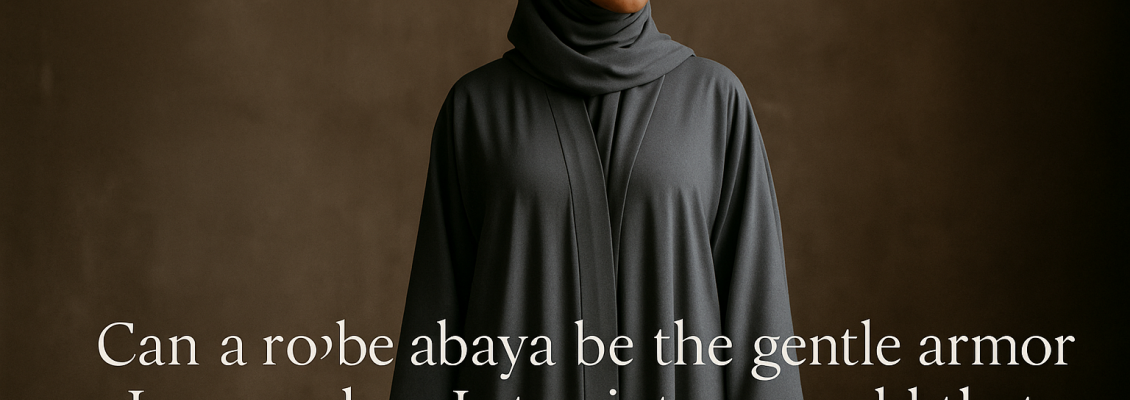
Leave a Comment