Bismillah, As-salamu Alaikum wa Rahmatullahi wa Barakatuh —
Today, on this calm June 10th, 2025, I sit with a cup of warm chai and a heart that's a little fuller, a little softer than it was this time last year. And I can’t help but whisper: subhanAllah — what a journey it’s been. This blog post isn’t just another modest fashion article. It’s a story I didn’t know I had the courage to tell. A story stitched between identity and yearning. Between the click of a search bar and the stillness of sajdah.
I remember the exact moment I typed those words — “abaya near me.” It was late. I was tired. And somehow, it felt like a prayer disguised as a search query. What I was really looking for wasn’t just fabric or fit — it was a reconnection with something I’d lost: my sense of self, my femininity in faith, my softness, my sincerity, my belonging. Maybe even my Lord.
This post is for every sister who’s ever hovered over the “Buy Now” button with tears in her eyes, wondering if modesty could also mean mercy. If covering could also mean coming home. If fashion could ever be spiritual. I’m writing this not as an expert, but as a seeker — like you. As someone who’s learning, unraveling, retying, and returning, again and again.
Let’s walk this road together. Every question you’ll find below is a question I’ve asked myself. A reflection from the heart. I pray you find yourself between the lines, and that this journey leads you — not just to a garment — but to grace. Bismillah, let’s begin.
When Did I Start Confusing My Modesty With My Loneliness?
There’s a kind of silence that settles over the soul—not the peaceful kind, but the type that aches. I didn’t realize it at first. I thought I was walking in modesty. I thought the quiet was part of the reward, part of the dignity of covering myself, part of the beauty of submission. But somewhere along the way, the silence started sounding like isolation. The lines blurred. And one day I found myself wondering: Am I really modest… or am I just lonely?
I can’t pinpoint the exact moment it happened. Was it the day I walked into the masjid and no one met my eyes? Was it the Eid gathering where I sat on the edge of the sofa, feeling invisible in my black abaya while others clustered in silken pastels? Or maybe it was when I posted a photo of my outfit, covered head to toe, and received not a single comment while others were flooded with love and emojis for their colorful, more "palatable" style?
There is a loneliness that sometimes hides inside the folds of a jilbab. Not because of the garment itself—no, never that—but because of how the world receives you when you wear it with conviction. I chose modesty out of love, out of awe for Allah. But in that choice, I began to feel disconnected—from friends who didn’t understand, from a community that praised trends more than taqwa, and even from parts of myself I hadn’t made peace with yet.
Modesty became my shield. But a shield, if held too tightly for too long, can become a wall. And I had built walls around me without realizing it.
The Silent Struggle Between Identity and Isolation
I began to wonder if this deep aching was a spiritual test or a warning sign. Was I being humbled by Allah or had I made my own isolation a form of piety? I had to confront some uncomfortable truths. I wasn’t smiling as much anymore. I wasn’t initiating conversations. I declined too many invites in the name of modesty, but really, it was because I feared being the only one covered. I confused boundaries with barriers. I mistook solitude for superiority. And in the quiet, loneliness crept in and masqueraded as righteousness.
| Modesty |
Loneliness |
| Choosing to wear the abaya/jilbab for the sake of Allah |
Withdrawing from gatherings out of fear of being judged |
| Covering as an act of spiritual empowerment |
Feeling invisible or less valuable in social spaces |
| Setting boundaries to protect your faith |
Cutting off connections to avoid discomfort |
| Confidence in quiet strength |
Silence from a fear of not being accepted |
Have You Ever Felt This Too, Sister?
If you have, please know you're not alone. Modesty is beautiful, but it doesn’t mean we don’t crave love, companionship, or recognition. It doesn’t mean we don’t want someone to say, “MashaAllah, you look radiant in that black jilbab.” It doesn’t mean we don’t need a sister to walk with us to the masjid or sit beside us in halaqah. Being covered doesn’t erase our humanity—it protects it. But that protection must be balanced with intention and heart. Otherwise, we risk mistaking our own self-isolation for sabr, when in truth, it may just be sorrow left unspoken.
I had to ask myself: Would I still be modest if everyone celebrated it? And more painfully: Would I still be modest if no one ever noticed? When our modesty becomes a mask for our loneliness, we rob ourselves of the beauty of both. We hide not only our bodies but our hearts. And that’s not what Islam asks of us.
Steps I Took to Reconnect
- Intentional Du’a: I started asking Allah specifically for righteous companionship. For sisters who would love me for His sake, and whom I could love in return.
- Small Acts of Presence: I began smiling again at other sisters, making eye contact, complimenting their hijab, even if I was scared.
- Balancing Solitude and Social Needs: I gave myself permission to need people while also preserving my modesty. I attended more halaqahs, messaged old friends, and even organized a sisters’ tea night at my home.
- Journaling the Difference: I kept track of when I felt spiritually strong in my modesty versus when I felt simply unseen. That awareness helped me notice the triggers of loneliness before they festered.
The Reality of a Covered Heart
It took me time to realize that modesty isn't the enemy of connection. In fact, true modesty softens the heart, invites compassion, and cultivates deeper, more intentional bonds. But I had let fear blur the lines. I had confused wearing less attention-seeking clothing with needing less love. And that’s just not true.
So if you're reading this, wrapped in your jilbab or sitting in a quiet room with your abaya draped over you like a gentle reminder of who you are—know this: You are allowed to be covered and still crave community. You are allowed to be modest and still be hugged, heard, and held. Islam doesn’t require us to disappear. It requires us to honor ourselves in the light of Allah’s mercy.
“I typed ‘abaya near me’ because I felt unseen, but what I really meant was ‘Sisterhood, please find me.’”
May we all walk the line between privacy and presence with grace. And may our modesty never become mistaken for mourning.
Why Did I Whisper 'Abaya Near Me' Like a Du’a I Was Afraid to Say Aloud?
I didn’t type it boldly. I didn’t even say it with confidence. “Abaya near me” — it was more of a whisper, a timid keystroke in the search bar that almost felt like a confession. I remember hovering over the letters, backspacing, typing again. I wasn’t just looking for fabric or fashion. I was searching for something far deeper. A connection. A way back to something sacred that I had drifted from. But admitting that out loud? That was too raw. Too vulnerable. So instead, I whispered it into Google, hoping the algorithm would understand what even my own heart was struggling to name.
It felt like du’a — quiet, desperate, soft. Not the loud kind you recite with raised hands, but the one that forms at the back of your throat when you’re alone, aching, and unsure if you even have the right to ask. That’s what “abaya near me” really meant. It wasn’t about location. It was about longing.
What I Was Really Asking For
I wasn’t searching for a store. I was searching for safety. For remembrance. For belonging. I was asking: Is anyone else out there like me? Someone who still believes modesty is beautiful even when the world treats it like a burden? Someone who covers not because she feels less, but because she wants to be closer to more — more barakah, more peace, more divine love?
I didn’t feel worthy of saying all that in du’a. Not back then. So I whispered it into a search box. I know that sounds strange, but in that moment, Google felt safer than my own tongue. Because to admit I missed my abaya meant admitting I had strayed. That I had let opinions, comfort, or fear chip away at my modesty. And I wasn’t ready to face that yet. So I typed it instead. Small. Quiet. Hoping someone — or Something — would hear me anyway.
| Search Query |
Silent Du’a |
| Abaya near me |
“Ya Allah, help me return to my fitrah.” |
| Black jilbab styles |
“Let me feel beautiful in obedience.” |
| Modest clothing UK |
“Surround me with people who remind me of You.” |
| Islamic fashion inspiration |
“Make modesty feel like light again.” |
Shame, Silence, and the Search for Self
Why was I afraid to say it out loud? Maybe because I felt like a hypocrite. I had taken off my abaya in phases. First for “practical reasons.” Then because “no one else at work wears one.” And finally, because I was tired of feeling like the only one trying. But that exhaustion slowly turned into shame. And shame is loud in your chest but silent on your tongue.
So instead of praying for guidance in words, I whispered it through actions — like lingering on Islamic clothing websites, scrolling through modest fashion reels with a tightness in my chest, and typing vague searches that I hoped would lead me back to something I couldn’t articulate. I wanted to come home. But I was scared my home didn’t want me anymore.
Typing “abaya near me” felt like asking Allah, “Am I still welcome?”
The Search Engine as a Spiritual Mirror
It’s strange how even the most mundane actions can reflect our deepest needs. Every time I typed into that search bar, I was projecting my spiritual state into a digital world, hoping it would echo something back. And sometimes it did. A blog post. A revert story. A modest fashion video that wasn’t dripping in vanity but overflowing with sincerity. And in those moments, it felt like Allah was whispering back: I see you. Keep going.
We don’t always come back to Allah through dramatic declarations. Sometimes, we return through quiet searches. Through lingering pauses. Through the hesitation before clicking “enter.”
Have You Ever Searched Like That, Too?
Sister, maybe you’ve done the same. Maybe you’ve typed “abayas for reverts” or “how to wear jilbab without looking awkward” or “why do I feel distant from Islam?” And maybe you felt a bit ashamed afterward. But let me tell you: even your search history can be a sign of your heart’s yearning. And Allah sees it all. Not to judge, but to guide.
The Prophet ﷺ said, “Indeed, Allah is more merciful to His servant than a mother to her child.” Do you think your quiet search goes unnoticed by a Lord so merciful? Every whisper of curiosity. Every hesitant search. Every “accidental” scroll past an inspiring post. He catches them all. And He responds — sometimes subtly, sometimes with a softness that startles you awake.
How I Turned the Whisper into a Real Du’a
- I admitted it to Allah. I stopped hiding behind search bars and started talking to Him directly, even clumsily. “Ya Rabb, I miss feeling close to You. I miss my abaya. I miss who I was.”
- I made space for shame and didn’t let it win. I told myself it’s okay to feel guilt — that it’s a sign of faith, not failure.
- I shared with a sister I trust. And just like that, my lonely little whisper became a shared moment of healing. She said, “I’ve been there too.” And I didn’t feel alone anymore.
- I took one small step back. I wore my abaya to the masjid, just once. Then again. And again. Each time, it felt like a piece of my heart was being sewn back together.
“Sometimes, the most powerful du’a is the one you whisper through your actions before your tongue finds the courage to speak.”
So if today, all you can do is type “abaya near me” and hope something in the void answers back—know this: your Lord is near. He was always near. And your whisper, even if typed instead of spoken, was a du’a heard by the One who responds.
How Did Covering My Body Reveal the Parts of My Soul I Had Been Hiding?
When I first reached for the abaya, I thought I was just covering my body. I thought it was a physical act — one of outer modesty, of following the rules. But subhanAllah, I had no idea how deeply it would uncover parts of my soul I had long buried beneath the noise of this world.
We live in a time where exposure is equated with confidence, where visibility is confused with value. For so long, I internalized those messages — that to be seen was to be validated, and that to shrink or cover was to be oppressed. But when I wore the abaya sincerely for Allah, with trembling hands and a hopeful heart, something unexpected happened. I didn’t feel erased. I felt remembered — by myself, and by Him.
Peeling Back Layers I Didn’t Know I Had
Each time I wrapped the fabric around me, I felt as though I was wrapping myself in divine intention. It wasn’t a hiding. It was a revealing — not of my skin, but of my soul. My priorities shifted. My self-talk softened. My gaze turned inward. And with every layer I added to my outer dress, a layer of ego or insecurity was quietly being removed from within me.
I didn’t expect this. I thought I’d feel smaller. Invisible. Instead, I felt like I was stepping into the fullness of who I was always meant to be. Modesty didn’t make me less. It made me more.
| What I Thought I Was Covering |
What I Actually Uncovered |
| My body |
My dignity and self-worth |
| My curves |
The depth of my femininity beyond the physical |
| My fashion identity |
The purity of my intention and niyyah |
| My “freedom” |
My submission, which was the real freedom all along |
What I Found Beneath the Fabric
Covering forced me to confront questions I had avoided for years. Who am I when the world cannot assess me by my appearance? What do I offer beyond beauty or trends? Do I believe I am still worthy, even when I no longer match the mold that society praises?
And through these questions, I began to see the parts of myself I had been hiding — not from the world, but from myself. My softness. My sincerity. My yearning for something pure. I had numbed those parts to survive in a world that rewarded performance. But the abaya — simple, humble, silent — invited those parts back into the light.
It taught me that I don’t have to compete to be seen. I just need to be true to who Allah made me to be. And sometimes, the most beautiful parts of us blossom in the quiet, unseen spaces.
The Inner Work That Modesty Requires
Modesty isn’t just fabric. It’s a discipline of the heart. And it reveals our true selves whether we’re ready or not. It taught me to:
- Check my intentions daily: Am I dressing this way for Him, or for approval from a certain group?
- Accept the discomfort of growth: Not everyone will understand. Not everyone will support. But Allah always sees the sacrifice.
- Reclaim my voice: Paradoxically, covering gave me the strength to speak more clearly. I no longer needed to be palatable. I needed to be sincere.
- Let go of perfection: I didn’t need to have it all figured out. I just needed to show up with ikhlas, again and again.
The Day I Cried in My Abaya
I remember walking past a shop window and catching my reflection — not the perfectly curated kind, but a raw moment. The wind was tugging at my abaya, my face was bare of makeup, and I had tears in my eyes. Not because I felt broken. But because I finally felt whole. Whole in a way I hadn’t allowed myself to feel in years. That reflection didn’t scream for attention. It whispered, “You’re enough. Not because of how you look. But because you’re striving for Him.”
It was the first time I saw myself and didn’t flinch. I didn’t assess or critique. I just... saw. And in that seeing, I felt seen — not by society, but by Allah.
The Journey is Still Ongoing
Even now, I’m still discovering layers of myself I didn’t know existed. Some days, the abaya feels like a fortress. Other days, it feels like a mirror — one that gently reminds me who I’m becoming. I still struggle with doubt. I still feel the pull of dunya. But now I have something sacred wrapped around me that pulls me back toward my purpose.
“In covering my body, I uncovered my sincerity, my softness, my strength — and the silence in which my soul had been waiting to speak.”
So if you're wondering whether dressing modestly will diminish you — let me tell you what no one else did: it might just be the thing that finally reveals you. Not the version that’s curated for likes or approval, but the one who stands tall before her Lord, radiant in humility, glowing with submission, wrapped not just in fabric — but in faith.
Am I Just Looking for Clothes — Or Am I Searching for a Safer Version of Myself?
It started innocently enough. I opened my phone, typed “abaya near me,” and told myself I was just shopping. Just browsing. Just trying to find something modest to wear for an upcoming gathering. But deep down — in the quiet part of my soul that I rarely dared to listen to — I knew this wasn’t just about clothes.
I wasn’t just seeking fabric. I was seeking safety.
Safety from the eyes that scan too long.
Safety from the world that tells me I have to perform womanhood to be worthy.
Safety from my past selves — the ones who smiled to please, who dressed to blend in, who didn’t know that being covered could mean being free.
Clothing Was the Surface — But the Longing Went Deeper
When I stood in front of my wardrobe, it was never just about what to wear. It was about how I wanted to be seen. Who I wanted to be. Who I wanted to be safe from. And who I wanted to belong to — the world, or my Lord.
Each time I scrolled through abaya collections or pinned modest outfits on my vision board, I was quietly piecing together a different version of myself — one that felt protected, one that could finally exhale. Because I was tired. So tired of being performative, exhausted from needing to be desirable, digestible, “feminine” in the ways the world defined it.
I wasn’t just shopping. I was whispering: “Ya Allah… please let me feel safe again.”
The Wound Beneath the Wardrobe
When I reflect honestly, I realize the way I dress has always been shaped by deeper forces — cultural pressure, family expectations, media imagery, past traumas. There were seasons when I dressed to impress, to assimilate, to survive. And then there were quieter seasons, sacred ones, where I dressed to disappear from the dunya and reappear before Allah.
That’s what this moment felt like. I didn’t just want an abaya. I wanted to return to a version of me I had lost — the one that felt held by her hijab, hidden in her haya, known by her Rabb.
| What I Told Myself |
What I Was Really Seeking |
| “I need a new outfit.” |
A new identity that feels aligned with my faith. |
| “I want something flattering but modest.” |
Validation that I can be beautiful without being exposed. |
| “I just need something appropriate for the masjid.” |
A space where I can finally feel spiritually safe and seen. |
| “I’m experimenting with my style.” |
I’m shedding old selves and trying to grow into someone more honest. |
What Does “Safe” Even Mean?
I used to think safety was about physical boundaries. But the safety I long for now is more intimate than that. It’s the safety of knowing I don’t need to edit who I am. That I can be soft without being stepped on. That I can be visible without being consumed. That I can walk into a room and know that my worth is not hanging from my sleeve, but woven into my soul.
I want to feel spiritually safe — protected from the fitnah of the dunya, wrapped in the remembrance of Allah, affirmed by the sisters who see me striving. I want emotional safety — to cry without shame, to be tender without explanation, to grow without fearing I’m “too much” or “not enough.”
And yes, I want modest fashion — not just because it’s stylish, but because it’s one of the few things that has ever helped me feel like I’m coming home to myself.
Was I Just Shopping? Or Was I Healing?
I remember the moment I added the abaya to my cart. My fingers trembled. My heart beat faster. Not because it was a big purchase — but because I knew I was saying yes to something deeper. I was saying yes to shedding the masks I had worn for too long. Yes to becoming that woman I saw in my du’as — quiet, dignified, strong in her surrender.
This wasn’t about trends or aesthetics. This was my way of telling my soul: “I see you. I’m ready to protect you now.”
“Maybe the clothes we seek are just the outer shell of the safety our hearts are begging for.”
From Shopping to Surrender
So no — I wasn’t just looking for clothes. I was looking for a gentler version of myself. One that didn’t feel watched or judged. One that didn’t rely on her appearance to feel worthy. One that walked with her head lowered, but her heart lifted.
And in that search, I realized something beautiful: modesty is more than a wardrobe. It’s a spiritual sanctuary. And every abaya, every hijab, every layered outfit becomes a brick in the home I’m building for my soul — a home that whispers safety, sincerity, and sacredness with every thread.
If you’ve ever typed “abaya near me” and felt like your fingers were trembling with something unspoken — know that you’re not alone. Maybe, like me, you’re not just shopping. Maybe you’re searching. And maybe, just maybe, what you’re searching for is already within you — waiting to be wrapped in softness, safety, and surrender to the One who sees you completely.
Why Do Shopping Carts Feel Like Confessionals These Days?
I never expected my online shopping cart to become a place of vulnerability. But lately, as I scroll and save and second-guess, I realize that what I place inside that cart feels more like a silent prayer than a retail decision. It’s not just fabric I’m selecting — it’s fragments of my identity. Little pieces of who I want to become, cloaked in cotton, linen, and niyyah.
I used to think that shopping was simple: find what you need, pay for it, move on. But now, every “add to cart” moment feels intimate. Every scroll, every filter, every color choice feels like I’m admitting something about myself. That I’m still healing. That I’m still trying to figure out what my modesty means to me. That I’m still trying to stitch together a life that reflects both my fashion and my faith.
The Cart as a Canvas for My Contradictions
Sometimes, my shopping cart reveals my inner tug-of-war. I’ll have a flowing black abaya sitting beside a pastel kimono, a jilbab nestled next to a bold accessory I know I probably won’t wear in public. Why? Because I’m not just dressing my body — I’m negotiating with my soul. I’m trying to reconcile the woman I’ve been, the woman I want to be, and the woman I fear I’ll never become.
When I see those items side by side, it’s like seeing different versions of myself staring back at me. The girl who wants to please Allah. The girl who still fears being invisible. The girl who’s brave enough to cover, but not yet brave enough to stop caring what people think.
A Table of Truths — What My Cart Reveals
| Item in Cart |
What It Says About Me |
| Plain black abaya |
I’m craving simplicity, dignity, and closeness to Allah. |
| Turquoise hijab with shimmer |
I want to feel seen — and I’m still working through what that means spiritually. |
| Neutral maxi dress |
I’m trying to balance modesty and femininity without overthinking it. |
| Long-sleeved tunic |
I’m slowly replacing my old wardrobe with one that aligns with my values. |
| Statement belt |
I still sometimes equate style with self-worth — and that’s okay, I’m learning. |
The Whisper Beneath the Click
Every time I hover over “checkout,” there’s this quiet voice inside me — soft, hesitant, sacred. It’s not asking, “Do I like this?” It’s asking, “Does this bring me closer to Allah?”
“Does this reflect the woman I’m becoming?”
“Will this help me feel safe, sincere, seen — in a way that pleases my Rabb?”
And sometimes, I close the tab. Not because I didn’t like the clothes — but because I wasn’t ready to face what they meant to me. Sometimes, the cart becomes a mirror. And I don’t always like what I see.
Modesty Isn’t Just a Look — It’s a Life I’m Learning to Build
There’s something raw about modest fashion. It’s not just about covering — it’s about uncovering deeper truths. It’s a journey of intention, of boundaries, of self-discovery. And in this world of fast fashion and fleeting trends, choosing to dress with purpose feels revolutionary.
When I fill my cart with modest pieces, I’m doing more than preparing my wardrobe — I’m choosing to rewrite the narrative I was handed. A narrative that said I had to expose more to be enough. That I had to compete to be noticed. That I had to sacrifice sacredness to feel “feminine.”
But now, I’m redefining all of that. One abaya at a time. One hijab. One long sleeve. One loose cut. One sacred click.
Letting My Cart Be a Space of Sincerity
There was a time when I would fill my shopping cart with things that impressed others. Now, I fill it with what protects me. What nourishes me. What reminds me that I am not my body, not my trends, not the approval I’m constantly tempted to chase. I am a servant of the Most Merciful — and my modesty is a small but mighty way to walk that path.
So yes, maybe my shopping cart feels like a confessional because it is. A private sanctuary where I admit who I’ve been, who I’m becoming, and what I’m still afraid to say out loud. It holds the hopes I’m not ready to speak and the healing I haven’t yet claimed.
And if you’ve ever felt that too — if you’ve ever stared at your cart and felt exposed in ways you didn’t expect — know this: you’re not shallow. You’re not materialistic. You’re not confused. You’re human. And you’re trying. And that alone is beautiful.
“Sometimes, what we add to our cart isn’t fabric — it’s forgiveness, it’s faith, it’s a fresh start folded gently into cotton and trust.”
May every checkout become a step toward sincerity.
May every item chosen in modesty be recorded as ibadah.
May every shopping cart become a space of sacred reflection —
Not just of who we are, but of who we hope to become, inshaAllah.
What Was I Really Hoping to Find When I Typed Those Words Into Google?
It was late. The kind of late that blurs the lines between one day and the next. My room was dim, my heart heavier than I wanted to admit, and the search bar on my screen blinked back at me like it was waiting for a confession. I didn’t even plan to type it — my fingers moved on their own. “Abaya near me.”
But what I meant — what I really meant — was something closer to “peace near me”, or “belonging near me”, or maybe even “someone, please remind me who I am.”
That search wasn’t about finding fabric. It was about finding familiarity. And not just the kind tied to culture or trends, but something that wrapped itself around my soul and whispered, “You’re not lost. You’re just searching in the way all seekers do — messy, quietly, and with trembling hope.”
It Wasn’t About Fashion — It Was About Faith
On the surface, it looked like I was shopping. But inside? I was unraveling. I didn’t want to admit it, but I was hoping the abaya would help me remember how it felt to be secure in my submission. To feel protected not just by the cloth, but by the commitment it symbolized. To cloak myself in a garment that said, “I am choosing Allah — even when I’m unsure, even when I’m afraid.”
Because deep down, I wasn’t looking for something to wear. I was looking for something to hold me together.
When Google Became My Quietest Du’a
There’s a strange vulnerability in searching. You’re alone with a blank space, typing out desires you may not even say aloud to your closest friends. That night, I realized how easily my Google search became a whispered prayer — not with the words “Ya Allah,” but with the longing tucked inside each keystroke.
I typed “abaya near me” because I didn’t know how else to ask the universe, “Is anyone else like me?”
“Is anyone else craving dignity in a world that cheapens us?”
“Is anyone else tired of having to explain why we cover, why we choose?”
“Is anyone else holding back tears as they scroll through online shops, hoping that maybe, just maybe, they’ll find more than style — they’ll find solace?”
A Table of What I Thought I Needed vs. What I Was Really Seeking
| What I Typed |
What I Meant |
| “Abaya near me” |
“Faith that fits me again.” |
| “Modest dresses UK” |
“A way to be visible without compromising my values.” |
| “Black jilbab affordable” |
“Protection that doesn’t feel out of reach.” |
| “Best hijab style for round face” |
“Help me feel beautiful without feeling like I’ve betrayed my sincerity.” |
| “Islamic clothing store near me” |
“Is there a space where I belong — physically, spiritually, emotionally?” |
The Pain Behind the Pixels
I think what hurt most was not knowing whether what I was searching for even existed. I wasn’t just looking for a retailer — I was hoping to stumble into a spiritual encounter. I wanted to see a photo of a model in an abaya and feel something stir in my chest — a familiarity, a reminder, a relief.
Instead, I got ads. Options. Sizes. Sales. Pages and pages of possibilities — but not answers. Not the kind my heart was quietly begging for.
And still, I kept scrolling. Not because I thought I’d find it all there, but because hope is stubborn. And when you’re feeling disconnected, even the act of looking can be an act of remembrance.
Maybe I Was Looking for Myself
Somewhere along the way, I stopped recognizing myself. Not in my selfies. Not in my voice. Not even in my du’as. I still made them, of course — but they felt distant, like they belonged to a version of me I couldn’t quite access anymore.
That’s what the abaya symbolized in that moment. It wasn’t just a garment. It was a reunion. A reaching. A way to say, “Ya Allah, I’m still here. Please see me. Please clothe me not just in modesty, but in mercy.”
So yes — I typed those words into Google. But I was really hoping to be found. By faith. By meaning. By the parts of me I thought I had lost in the noise of dunya.
Finding More Than I Was Looking For
Eventually, I did buy something. A simple, loose-fitting, black abaya. Nothing fancy. No embroidery. No statement details. But when I tried it on, something shifted. Not on the outside, but deep inside me. It felt like coming home to myself — not because of the material, but because of what I had to confront to get to that moment.
And isn’t that the quiet miracle of modest fashion? It’s not about denying beauty — it’s about redefining it. It’s not about hiding — it’s about honoring. It’s not about giving in — it’s about giving meaning.
“I thought I was looking for clothes. But I was really looking for a way to return to my fitrah — without judgment, without delay, without shame.”
To every sister who has ever typed something into a search bar and felt it echo back as a silent cry — know this: Allah heard you long before the algorithm did. Your yearning is not small. Your sincerity is not wasted. And even if your journey starts with something as seemingly simple as an “abaya near me,” it may lead you to the most beautiful kind of closeness: the kind where you find yourself again, tucked beneath layers of purpose and peace.
How Did I Become So Spiritually Bare While Being So Physically Covered?
It’s one of the paradoxes I never expected to face — the feeling of being completely covered on the outside, yet painfully exposed on the inside. Wearing an abaya or any modest clothing is meant to be an act of protection, a shield that safeguards our dignity and honors our faith. But how did it come to pass that while my body was hidden beneath layers of fabric, my spirit felt naked and vulnerable?
When I first committed to dressing modestly, I thought it would bring me a kind of spiritual armor. I imagined that with each fold of fabric, I was wrapping myself in divine protection, distancing myself from the distractions and trials of the world. But instead, I found myself confronting an unexpected emptiness — a spiritual bareness that felt heavier than any fabric could ever be.
The Difference Between Physical and Spiritual Covering
It’s easy to confuse physical modesty with spiritual modesty. The former is visible, measurable, and tangible — a dress code, a style, a look that others can see and judge. The latter, however, is internal, intangible, and often invisible, even to ourselves.
Spiritual covering means protecting our hearts from arrogance, envy, and despair. It means shielding our intentions from becoming performative or hollow. It means nourishing our souls with sincerity, humility, and connection to Allah. When the spiritual layer is weak or missing, physical modesty can sometimes feel like an empty costume.
A Table to Reflect on Physical vs. Spiritual Modesty
| Physical Modesty |
Spiritual Modesty |
| Wearing loose, non-revealing clothes |
Guarding the heart from pride and envy |
| Covering hair, neck, and body |
Covering one’s intentions with sincerity and humility |
| Following dress codes |
Following the commandments of Allah with love, not fear |
| External appearance judged by others |
Internal state known only by Allah |
| Visible compliance to modesty rules |
Invisible cultivation of piety and consciousness (taqwa) |
Why Spiritual Nakedness Can Happen Behind the Abaya
There are many reasons why someone might feel spiritually bare while physically covered:
- Routine Without Reflection: Modesty can become a checklist rather than a heartfelt practice. When we dress modestly because “that’s what we do,” without pausing to reconnect with the purpose behind it, the spirit can feel disengaged.
- Judgment and Comparison: Sometimes the external focus on how modest we look invites comparison and competition, which can harden the heart and leave it exposed to bitterness or pride.
- Emotional Isolation: Covering physically might inadvertently contribute to feelings of loneliness or disconnection if it’s not paired with community, support, and spiritual nourishment.
- Unmet Inner Struggles: We all carry doubts, fears, and wounds. Without addressing them, the soul can feel stripped bare, regardless of how covered the body is.
- Lack of Spiritual Practices: When prayer, dhikr (remembrance), Quran recitation, and other spiritual habits are neglected, the heart becomes vulnerable, even if the body is modestly dressed.
My Personal Journey From Bare to Whole
For me, this spiritual bareness felt like an ache I couldn’t ignore. The more I wrapped my body in abayas and jilbabs, the more I realized I was running from something inside. I had covered my skin, but my heart was still exposed to pain, confusion, and doubt.
It took time — and tears — to understand that covering my body was only one part of the journey. I needed to start covering my spirit, too. I began by:
- Reflecting deeply on my intentions for modesty, reminding myself it was for Allah’s pleasure, not others’ approval.
- Seeking forgiveness and healing for past wounds that left my heart vulnerable.
- Reconnecting with the Quran and Sunnah to find comfort and guidance.
- Engaging with a supportive community that encouraged spiritual growth without judgment.
- Practicing gratitude and patience, acknowledging that spiritual strength takes time.
Slowly, I felt the layers of spiritual nakedness start to fade. The abaya became more than just a garment; it became a symbol of my commitment — not just to cover, but to care for every part of myself, inside and out.
Spiritual Modesty Checklist for Healing and Growth
| Practice |
Why It Matters |
How to Start |
| Intention Check |
Keeps actions sincere and heart-focused |
Pause before dressing and ask, “Why am I doing this?” |
| Regular Prayer |
Maintains connection with Allah and spiritual center |
Set reminders for prayers and create a peaceful space |
| Quran Reflection |
Provides guidance, comfort, and strength |
Read a few verses daily, focusing on meaning |
| Community Support |
Offers encouragement and shared wisdom |
Join local or online groups focused on spiritual growth |
| Gratitude Practice |
Shifts perspective toward positivity and patience |
Write down 3 things you’re grateful for each day |
Conclusion: Covering the Soul Alongside the Body
Physical modesty is a beautiful and important act, but it is incomplete without spiritual modesty. The abaya, the jilbab, the hijab — they are not just fabrics. They are invitations to cultivate humility, patience, and love within ourselves. When the soul is tended to with the same care as the body, the two come into harmony.
My hope is that every sister who feels spiritually bare beneath her coverings finds the courage to nurture her soul. To seek connection, to heal wounds, and to remember that true modesty shines brightest when it radiates from within.
Because in the end, being physically covered but spiritually exposed is not the goal — the goal is to be fully clothed in the mercy, grace, and light that Allah provides to those who sincerely seek Him.
Is It Normal to Cry Over a Piece of Fabric You Haven’t Even Bought Yet?
At first glance, it sounds absurd — crying over fabric, especially fabric you haven’t even purchased. Yet, if you’ve ever found yourself overwhelmed with emotion just browsing modest clothing online or touching the soft folds of an abaya in a store, you know this feeling is real. It’s more than just fabric; it’s a deeply layered experience that touches on identity, faith, longing, and sometimes even grief.
For many of us, the abaya or any modest garment carries far more than aesthetic or practical value. It embodies our hopes, our struggles, and our spiritual aspirations. It can be a symbol of transformation, protection, and even self-love. So why do these pieces of cloth sometimes bring tears before they even belong to us?
The Emotional Weight of Fabric
Fabric itself is neutral — it doesn’t possess emotion. But the meaning we assign to it is powerful. When I see a beautifully embroidered abaya or a flowing jilbab, I don’t just see the textile. I see my journey reflected in those stitches, the prayers whispered into the seams, and the woman I want to become wrapped within its folds.
That emotional connection can spark tears for several reasons:
- Longing: The fabric represents a desire for spiritual growth or a new chapter in life.
- Healing: It may symbolize overcoming past hardships or reclaiming one’s dignity.
- Hope: It carries the promise of feeling safe, modest, and accepted.
- Identity: It affirms belonging to a community or faith that defines so much of who we are.
When Tears Speak Louder Than Words
Crying is often viewed as a sign of weakness, but it’s one of the most honest expressions of our inner world. When I cry over a piece of fabric, I am communicating a story that words cannot fully capture — a story of resilience, vulnerability, and yearning.
Sometimes those tears are born from joy, other times from pain. They can be gratitude for finding a garment that feels just right or sorrow for all the times I wished I had such comfort. They can be a release from the pressures of trying to “get it right” or the weight of societal expectations. Whatever the reason, those tears validate the depth of my feelings about modesty and faith.
Is It Normal? Absolutely.
It’s normal because modesty isn’t just about clothes — it’s about heart, soul, and spirit. And when something as simple as a piece of fabric connects to those deep parts of us, the reaction is natural. Many women share this emotional experience, even if it’s not openly discussed.
Here’s a quick table summarizing common emotions tied to fabric-related tears and their meanings:
| Emotion |
Meaning |
Why It Happens |
| Joy |
Hope and anticipation |
Finding a fabric that feels like a new beginning |
| Sorrow |
Grief or past struggles |
Remembering hardships overcome or still faced |
| Relief |
Comfort and security |
Realizing modest clothing can be both beautiful and protective |
| Longing |
Desire for identity and belonging |
Yearning to be seen and accepted in one’s faith |
The Spiritual Dimension of Modest Clothing
Beyond emotion, crying over fabric also reflects a spiritual connection. The abaya or jilbab becomes a tangible reminder of submission, trust, and reliance on Allah. It is a physical manifestation of an inner commitment, a garment of faith as much as fabric.
This is why the act of choosing modest clothing can sometimes feel like a sacred moment. It’s not just shopping; it’s an intimate dialogue between the self and the Divine. The tears are a spiritual release, a sign of openness to transformation and acceptance.
Personal Reflections
I remember one particular moment — standing in front of a mirror, holding a soft black abaya that shimmered in the light. As I ran my fingers over the delicate embroidery, tears welled up. They weren’t just tears of beauty or aesthetic appreciation; they were tears of connection, of vulnerability, and of hope.
In that instant, I realized I was mourning the parts of myself I had hidden for so long, and simultaneously welcoming the parts I was ready to embrace. That fabric wasn’t just clothing; it was a milestone, a marker of growth, and a prayer made visible.
How to Embrace and Honor These Emotions
If you find yourself unexpectedly emotional over fabric or clothing, here are some ways to honor that experience:
- Allow Yourself to Feel: Don’t suppress the tears or emotions. They are part of your journey.
- Reflect on Your Story: Write down what the fabric or clothing symbolizes for you.
- Make Du’a: Ask Allah to guide your heart and intentions as you embrace modesty.
- Share Your Experience: Connect with others who understand the emotional and spiritual dimensions of modest fashion.
- Celebrate Growth: Recognize that these emotions indicate meaningful progress, not weakness.
Conclusion
Crying over a piece of fabric you haven’t even bought yet is not only normal — it’s profoundly human. It means you are engaging deeply with your faith, your identity, and your hopes. The tears remind us that modesty is not a mere dress code, but a soulful expression of who we are and who we are becoming.
So if you find yourself wiping away tears over a beautiful abaya or jilbab, know this: your emotions are valid, your journey is sacred, and the fabric you long for is more than cloth — it’s a beacon of your heart’s most honest prayers.
Why Do I Feel Like I’m Pretending in Everything I Wear?
There’s a strange, unsettling feeling that creeps in when you look in the mirror and realize the clothes on your body don’t quite match the woman you feel inside. It’s like wearing a mask, a costume you didn’t choose but can’t seem to shed. I call it the feeling of pretending — of playing a role instead of living my truth through the fabric I wear.
This sensation of pretense in clothing is surprisingly common among women who seek modesty but struggle to feel authentic in the garments available to them. It’s a paradox: the clothes meant to express faith and identity sometimes end up making us feel disconnected, like impostors in our own skin.
Understanding the Root Causes
Why does this happen? Why do garments meant to protect and empower sometimes feel like a disguise?
Here are some of the key reasons I’ve come to understand:
- External Expectations: The pressure to conform to community norms or fashion trends can make us wear pieces that don’t reflect our inner selves.
- Internal Conflict: When our personal style, comfort, or identity clashes with what we think we “should” wear, we end up feeling inauthentic.
- Body Image Struggles: Sometimes modest clothes don’t fit the body or personality comfortably, leading to a sense of awkwardness or pretension.
- Lack of Representation: When modest fashion options feel limited or don’t reflect diverse experiences, it’s hard to find something that feels genuinely “me.”
The Emotional Impact of Pretending
Feeling like you’re pretending in your clothes can lead to exhaustion, frustration, and even shame. It can make you question your identity and your place within your community or faith. The constant mental energy spent “playing a role” drains your spirit and keeps you from fully embracing your modesty.
It’s not just about aesthetics — it’s about the emotional dissonance between what you wear and who you truly are.
Table: Signs You Might Be Pretending in Your Clothing
| Sign |
What It Means |
How to Address It |
| Discomfort or irritation wearing certain garments |
Your clothing doesn’t align with your comfort or style |
Explore different fabrics, cuts, or brands that feel more natural |
| Avoiding social situations because of your outfit |
You feel exposed or judged, leading to insecurity |
Focus on self-acceptance and seek supportive communities |
| Constantly adjusting or hiding parts of your clothing |
Physical discomfort reflects emotional unease |
Choose garments with better fit and personal meaning |
| Feeling like your clothes don’t represent your personality |
Your inner identity is not reflected outwardly |
Incorporate elements of your personal style into modest fashion |
Breaking Free from the Feeling of Pretending
The first step is acknowledging the feeling without judgment. It’s okay to admit that some clothes don’t feel like “you.” Recognizing this is a powerful step toward reclaiming authenticity.
Next, reflect on your personal values and identity. What aspects of your personality do you want your clothing to express? Comfort? Elegance? Boldness? Simplicity? Understanding this helps guide your choices beyond external pressures.
Experimentation is key. Trying different styles, fabrics, or even mixing modest pieces with more contemporary items can reveal a unique look that feels genuine.
Above all, remember that modesty is not a uniform — it is a personal journey. Your clothing should support your spiritual and emotional well-being, not suppress it.
Personal Reflection: My Journey to Authenticity
For years, I felt trapped by the modest fashion “rules” I thought I had to follow. I bought pieces that looked right on the hanger but felt wrong on me. I was pretending to be a version of modesty that others expected, not the one I needed.
It wasn’t until I started listening to my own feelings and preferences that I found a style that felt like a true extension of myself. It involved letting go of rigid ideas and embracing modesty as an expression of joy and self-respect, not restriction.
Tips for Cultivating Authenticity in Modest Fashion
- Know Your Why: Clarify why modesty matters to you personally.
- Prioritize Comfort: Choose fabrics and fits that make you feel good physically.
- Incorporate Your Style: Add accessories or colors that reflect your personality.
- Seek Community: Surround yourself with others who encourage your authentic expression.
- Practice Self-Compassion: Allow yourself grace in your fashion journey.
Conclusion
Feeling like you’re pretending in your clothes is not a failure — it’s a signpost pointing you toward greater authenticity. Your modest wardrobe should be a source of empowerment and comfort, not a mask you wear out of obligation or fear.
When you begin to dress in a way that honors your inner truth, every garment becomes a statement of your real self. The pretense falls away, and what remains is a confident, radiant woman wrapped not just in fabric, but in authenticity and faith.
What Would It Feel Like to Be Held By My Clothes Instead of Haunted By Them?
Have you ever felt a ghostly weight every time you put on your modest clothes? Like the fabric itself carries the echoes of doubt, insecurity, or discomfort that cling to your skin. It’s as if your garments haunt you — reminding you of everything you fear, everything you don’t quite understand about yourself or the world you live in.
But what if your clothes could do the opposite? What if instead of haunting you, they held you? Wrapped you in warmth, confidence, and peace? Imagine that for a moment — the difference between feeling haunted and feeling held by your clothes is like the difference between walking through a shadow and basking in sunlight.
Understanding the Haunting Feeling
The sensation of being haunted by your clothes comes from multiple places, often intertwined:
- Self-doubt: Questioning whether you look “right” or “modest enough” makes your clothes feel like a constant reminder of your insecurities.
- Judgment from others: Fear of criticism or unwanted attention can make your outfit a source of anxiety rather than comfort.
- Unmet expectations: When your modest clothes don’t feel aligned with your personal style or spiritual expression, they become a reminder of what feels “off” or “wrong.”
- Physical discomfort: Fabrics that itch, pinch, or cling can turn your garments into a source of physical stress, which then feeds emotional discomfort.
All of these factors compound, making the very act of dressing a daily struggle rather than a joyful ritual.
The Transformative Power of Feeling Held
On the other hand, being held by your clothes means they support you on every level. They are not just fabrics, but extensions of your self-love, your faith, and your unique story. This feeling transforms your wardrobe from a battleground into a sanctuary.
Being held by your clothes means:
- Comfort: Soft, breathable fabrics that feel like a gentle hug.
- Confidence: Wearing pieces that make you feel seen and celebrated.
- Authenticity: Clothes that reflect your inner values and style.
- Safety: Garments that protect your body and soul from unwanted gazes and judgment.
Table: Comparing Haunted vs. Held Experiences with Clothes
| Aspect |
Haunted By Clothes |
Held By Clothes |
| Emotional Impact |
Anxiety, self-doubt, discomfort |
Peace, confidence, self-love |
| Physical Comfort |
Itching, tightness, irritation |
Softness, breathability, ease of movement |
| Spiritual Connection |
Feelings of restriction or obligation |
Expression of faith and identity |
| Social Interaction |
Fear of judgment, hiding |
Feeling seen, embraced by community |
| Mindset When Dressing |
Stressful, mechanical, disconnected |
Mindful, intentional, joyful |
How to Shift from Feeling Haunted to Feeling Held
Changing how your clothes feel isn’t about buying an entire new wardrobe or chasing the latest modest fashion trends. It’s a deeper process — one that invites compassion, patience, and self-awareness.
- Reflect on your needs: What does your body crave in terms of comfort? What emotions do you want your clothes to evoke? Write it down.
- Choose fabrics wisely: Natural, breathable materials like cotton, linen, and bamboo can make a huge difference in physical comfort and emotional well-being.
- Invest in fit: Clothes that fit well and flatter your shape will boost confidence and reduce discomfort.
- Embrace personal style: Incorporate colors, patterns, or accessories that feel joyful and true to you.
- Practice mindful dressing: Use the act of dressing as a ritual of self-care, gratitude, and spiritual intention rather than a rushed or stressful task.
- Surround yourself with supportive voices: Engage with communities that honor modesty in a way that uplifts your spirit.
Personal Story: My Journey from Haunting to Holding
For years, I felt trapped in clothes that felt like armor — heavy, restrictive, and cold. I thought modesty meant sacrifice and discomfort. But gradually, I learned that true modesty could feel nurturing and empowering.
When I discovered fabrics that caressed my skin rather than scratching it, and styles that allowed me to move freely, everything changed. Dressing became less about hiding and more about embracing. I started feeling held — not haunted — by my clothes.
That shift wasn’t just physical. It seeped into my soul, helping me feel safer, more at peace, and more connected to my faith.
Final Thoughts
Imagine waking up and reaching for an outfit that feels like a warm embrace, that cradles you gently as you step into your day. What would it feel like to be held by your clothes instead of haunted by them?
It’s not just a dream — it’s a possibility within your reach. With awareness, intention, and kindness toward yourself, your modest wardrobe can become a source of comfort and strength. You can step into your day wrapped in fabric that loves you back.
When Did My Reflection Start Looking Like a Stranger to My Soul?
There comes a moment in many of our lives when the face staring back at us in the mirror no longer feels familiar. It’s as if the person reflected there is a stranger—someone we recognize physically, but whose eyes hold stories, fears, and questions that don’t seem to belong to us anymore. For me, that dissonance between reflection and soul became a quiet ache, a whisper of loss that grew louder every day.
When did my reflection start looking like a stranger to my soul? I remember it wasn’t a sudden crack but a slow erosion—layer by layer, day by day, moment by moment. What began as small discomforts, unnoticed at first, became persistent unease. I started to feel disconnected not only from my physical self but from the spiritual and emotional essence that once felt so intertwined with who I was.
The Silent Drift: Signs of Becoming a Stranger to Yourself
This experience is more common than we realize. Often, it creeps in gradually through life’s stresses, trauma, or unmet expectations. Here are some signs that might resonate if you feel this alienation within:
- Avoiding your own reflection: You catch yourself sidestepping mirrors or photos because you don’t recognize the person looking back.
- Feeling numb or empty: A pervasive sense of disconnection from your feelings and inner self.
- Questioning your identity: Wondering, “Who am I really?” beyond the surface roles and appearances.
- Physical and emotional fatigue: Carrying the weight of being “someone else” or “less than yourself.”
- Struggling with self-acceptance: Feeling like an imposter in your own skin or life.
Table: Emotional and Physical Signs of Disconnection from Self
| Type |
Signs |
Impact on Daily Life |
| Emotional |
Numbness, confusion, loneliness |
Difficulty connecting with others, mood swings |
| Physical |
Fatigue, restless sleep, changes in appetite |
Low energy, health challenges |
| Psychological |
Imposter syndrome, anxiety, self-criticism |
Hindered decision-making, reduced self-esteem |
| Spiritual |
Feeling lost or disconnected from faith or purpose |
Loss of motivation, existential questioning |
Why Does This Disconnection Happen?
For me, the roots ran deep into the pressures of living a life that felt divided. Outwardly, I wore the modest clothes, followed the rituals, and maintained appearances. But inwardly, I was wrestling with parts of myself I hadn’t faced — pain, unmet needs, and unspoken doubts.
This gap between outer and inner realities grew wider because I was trying to fit a mold that wasn’t fully mine. It wasn’t just about modesty or faith — it was about identity, belonging, and the hunger to be truly seen and understood.
The Mirror as a Metaphor for Inner Work
The mirror can be a powerful symbol. It reflects our image but also invites reflection on who we are beneath the surface. When that reflection feels strange, it’s often a call to reconnect with our soul.
This is a journey of peeling back layers, facing fears, and embracing all parts of ourselves—the beautiful, the broken, and the becoming. It asks us to answer questions like:
- What parts of myself have I been hiding?
- Where have I compromised my truth to please others or fit in?
- What does my soul need to feel whole again?
Steps I Took to Reclaim My Reflection
Reclaiming my reflection was not instant — it took intention and courage. Here are some steps that helped me bridge the gap between the stranger in the mirror and the soul I wanted to embrace:
- Journaling: Writing my thoughts and feelings without judgment created a safe space to explore my inner world.
- Mindful meditation: Practices that connected me with my breath and body helped ground me in the present moment.
- Seeking support: Talking with trusted friends, mentors, or counselors who honored my journey.
- Redefining modesty: Embracing a version of modesty that felt authentic to me, not just imposed by external expectations.
- Self-compassion: Allowing myself grace in moments of doubt and imperfection.
Each of these steps softened the distance between my reflection and my soul, helping me see myself with new eyes—kind, curious, and forgiving.
Table: Reconnecting Practices to Heal the Self-Alienation
| Practice |
Purpose |
Effect |
| Journaling |
Explore inner thoughts safely |
Increased self-awareness, emotional release |
| Mindful meditation |
Grounding in present moment |
Reduced anxiety, greater calm |
| Seeking support |
Sharing and validation |
Feeling seen, less isolation |
| Redefining modesty |
Align outer expression with inner truth |
Authenticity, confidence |
| Self-compassion |
Accept imperfections |
Emotional healing, resilience |
What I Learned Along the Way
One of the most profound lessons I learned was that the stranger in the mirror wasn’t truly a stranger at all. She was a version of me, shaped by pain, fear, and survival mechanisms. Recognizing that allowed me to approach her not with rejection but with curiosity and love.
Our reflections shift as we grow, and sometimes the face that feels unfamiliar is simply our soul inviting us to deeper self-understanding. It’s an opportunity to realign and reclaim the beauty of being wholly ourselves.
Closing Thoughts
When your reflection starts looking like a stranger, don’t despair. It’s a sign that your soul is reaching for connection — with itself, with its truth, and with the world around you.
Take the time to meet that stranger with open eyes and an open heart. In doing so, you might just find your truest self reflected back — radiant, whole, and deeply known.
Is It Okay That I Don’t Know What My Modesty is Supposed to Look Like Anymore?
For so long, I thought modesty was a clear, unwavering path — a defined dress code, a set of rules, a way to visually express my faith and values. But lately, I’ve been caught in a confusing space, one where I no longer recognize what modesty looks like for me. And with that confusion comes a deep question: is it okay to feel lost about what my modesty is supposed to look like anymore?
In a world that constantly bombards us with images and expectations—whether cultural, religious, or social—it’s natural to want clarity. To know exactly what modesty means, how it manifests, and how to embody it authentically. But life rarely offers such neat answers, especially when our identities and beliefs are evolving.
So yes, it’s okay. It’s more than okay; it’s part of the human experience to question, to shift, and to redefine what matters most to us.
Why Does This Confusion About Modesty Happen?
The reasons are many, and for me, they unfolded over time. Modesty isn’t just about clothing; it’s deeply tied to personal faith, cultural identity, self-respect, and emotional safety. When any of these parts shift, the outward expression of modesty naturally becomes uncertain.
Here are some common reasons why many women, including myself, might find themselves uncertain about modesty:
- Changing cultural landscapes: Globalization and social media expose us to diverse interpretations of modesty, which can clash or expand our own understanding.
- Personal growth and spiritual evolution: As we grow, what felt right before might no longer resonate with our inner truths.
- External pressures and expectations: Sometimes modesty is imposed rather than chosen, leading to internal conflict when those expectations don’t align with our hearts.
- Balancing identity and belonging: Navigating between community norms and individual expression can be challenging and confusing.
- Emotional experiences: Trauma, healing, or self-discovery can reshape how we view our bodies and how we want to honor them.
Table: Factors Influencing Modesty Confusion
| Factor |
Description |
Impact on Modesty Perception |
| Cultural Exposure |
Access to diverse modesty styles globally |
Broadens or challenges existing beliefs |
| Spiritual Growth |
Personal evolution in faith and values |
Leads to redefinition of modesty’s meaning |
| External Pressure |
Community or family expectations |
May cause resistance or confusion |
| Identity Balance |
Reconciling personal and social identities |
Creates tension in self-expression |
| Emotional Journey |
Impact of past experiences on self-view |
Shapes desire for comfort or protection |
How I Came to Accept This Uncertainty
At first, not knowing what modesty looked like felt like failure — as if I had lost my way or failed my faith. But over time, I realized that modesty is not a static destination but a fluid journey. It’s less about strict rules and more about intention, respect, and love for oneself and others.
Accepting uncertainty means allowing myself the grace to explore, experiment, and even make mistakes without shame. It means trusting that my modesty will grow clearer as I deepen my connection with my soul and faith.
The Power of Redefining Modesty on Your Own Terms
Redefining modesty is a powerful act of reclaiming agency and authenticity. When I started asking myself what modesty truly meant for me, beyond societal expectations or inherited beliefs, I uncovered layers of freedom and self-love.
This process can look like:
- Choosing fabrics and styles that feel comfortable and dignified rather than just traditional.
- Incorporating colors and cuts that express your personality while honoring your values.
- Setting boundaries about how you want to be seen and respected.
- Engaging in spiritual and emotional practices that nurture your inner modesty, such as prayer, meditation, or reflection.
Table: Personal Modesty Reflection Guide
| Reflection Question |
Purpose |
Example Answers |
| What makes me feel respected in how I dress? |
Identify personal boundaries and comfort |
Wearing loose fabrics, avoiding tight clothes |
| How do my clothes reflect my inner values? |
Connect outer appearance with inner beliefs |
Choosing modest but colorful garments to express joy |
| What pressures do I feel from others about modesty? |
Recognize external influences |
Family expectations, community norms |
| Where can I give myself permission to be authentic? |
Encourage self-acceptance |
Experimenting with hijab styles or fashion choices |
Moving Forward: Embracing the Journey
Not knowing what modesty is supposed to look like anymore is not a sign of weakness or failure. It’s a sign of growth, questioning, and seeking deeper truth. I have learned to hold space for that ambiguity — to see it not as a void but as fertile ground for discovery.
And if you find yourself in this place of uncertainty, know you are not alone. This is a shared experience for many women navigating the complexities of faith, identity, and self-expression in a modern world.
Embrace the questions, lean into the discomfort, and trust that your unique expression of modesty will emerge in time — one that honors your soul, your story, and your beautiful evolving self.
Why Does Every Abaya I Try On Feel Like a Test I Keep Failing?
There’s something profoundly emotional about trying on an abaya. For many women, including myself, it’s not just about slipping into a garment—it feels like stepping into a test, a measure of worthiness, modesty, identity, and even belonging. Yet, too often, this test feels impossible to pass. Every abaya I try on seems to highlight what I perceive as flaws, doubts, or inadequacies, making me question not only the garment but also myself.
Why does this happen? Why does the simple act of trying on clothes, meant to protect and honor, turn into a challenge that I feel I am repeatedly failing?
The Weight of Expectations
To understand this feeling, I first had to recognize the immense weight of expectations resting on my shoulders—expectations from my faith, my family, my community, and myself. The abaya isn’t just fabric; it’s a symbol. It is supposed to represent purity, modesty, dignity, and spiritual discipline. When I try one on, I’m not just asking if it fits physically; I’m asking if I fit into these ideals.
Each time I look in the mirror wearing a new abaya, a silent internal dialogue begins. Is this modest enough? Does it cover me well? Do I look dignified? Will others see me as faithful and respectable? The answers feel elusive, and often, I find myself falling short.
This cycle of self-judgment can be exhausting and deeply disheartening. The abaya, which should be a source of comfort and confidence, instead becomes a mirror reflecting my insecurities.
The Role of Self-Image and Identity
Our self-image plays a huge role in how we perceive clothing. When I feel uncertain or disconnected from my identity, the abaya can feel like a mask I’m forced to wear rather than an expression of my true self.
This disconnect is common. Modesty is deeply personal, but when it becomes entangled with societal rules or unrealistic beauty standards, it can clash with who we really are. Trying on abayas becomes an uncomfortable confrontation between who I want to be, who I feel pressured to be, and who I actually am at that moment.
The Emotional Toll of Trying to Meet Invisible Standards
Sometimes, the hardest part isn’t the fabric or the fit—it’s the invisible, unwritten standards that hover over us. These can be:
- The “perfect” modest silhouette
- The “ideal” way to cover the body
- Subtle cues from family or friends about what’s acceptable
- Internalized fears about judgment or rejection
When I fail to meet these invisible benchmarks, it feels like failing a test I never signed up for, and the abaya becomes the judge and jury.
Table: Emotional Responses to Trying on Abayas
| Emotion |
Trigger |
Effect on Trying Experience |
| Self-Doubt |
Not feeling the garment suits my shape or style |
Leads to repeated trying, frustration |
| Insecurity |
Fear of being judged by others |
Causes anxiety and discomfort |
| Pressure |
Expectations from community/family |
Creates stress and self-criticism |
| Confusion |
Uncertainty about what modesty truly means to me |
Results in indecision and disappointment |
| Hope |
Desire to find the “right” abaya |
Encourages persistence despite setbacks |
Breaking Free from the Test Mentality
Recognizing this dynamic was the first step toward freeing myself from the pressure. The abaya is not a test of my faith or worthiness; it is a garment that can support my journey, not judge it.
Here are some ways I began to shift my mindset:
- Redefining success: Instead of seeking perfection, I learned to celebrate comfort, confidence, and personal peace.
- Listening to my intuition: Trusting how the abaya makes me feel rather than how it looks to others.
- Setting boundaries: Rejecting unrealistic or harmful expectations imposed by others.
- Being patient with myself: Understanding that finding my style and modesty expression is a process, not an instant achievement.
The Role of Community and Support
One thing that helped me enormously was connecting with other women who shared similar struggles. When I realized I wasn’t alone in feeling like I was “failing” the abaya test, it lifted a heavy burden.
Sharing stories and experiences created a space of empathy and encouragement that reminded me modesty and style are deeply personal and cannot be judged by others’ standards.
Practical Tips for Embracing Your Abaya Journey
To anyone feeling overwhelmed or disheartened by this process, here are some practical steps I found helpful:
- Try different styles: Explore various cuts, fabrics, and colors without pressure to conform.
- Focus on comfort: Choose what feels physically and emotionally comfortable first.
- Take your time: Don’t rush; allow yourself to experiment and grow.
- Seek supportive environments: Whether online groups or trusted friends, find people who uplift you.
- Practice self-compassion: Remind yourself that worthiness isn’t tied to appearance.
Conclusion: Reclaiming Peace with the Abaya
Every abaya I try on no longer needs to be a test. Instead, it can be a moment of self-care, a step toward self-expression, and a symbol of my evolving journey. I am learning to wear my abayas not as armor against judgment but as gentle wraps of comfort and faith.
This shift in perspective has made the process less daunting and more beautiful. It’s okay to struggle. It’s okay to stumble. What matters most is that I keep trying — with kindness toward myself and openness to discovering what modesty means to me, beyond the tests and expectations.
What If the Real Fabric I’m Seeking Is the Thread Between Me and Allah?
When I type words like “abaya near me” or search endlessly for the perfect modest garment, it often feels like I’m chasing something tangible—a piece of fabric to cover my body. But deep down, I sense that what I’m truly seeking isn’t just cloth or style. What if the real fabric I’m seeking is the invisible, sacred thread that connects me to Allah? The thread that weaves together my faith, my identity, and my yearning for spiritual closeness.
This thought unsettles and comforts me at the same time. It redefines the whole journey of modesty and covering from a mere external act into a profound spiritual dialogue.
From Material to Metaphor: Fabric as a Spiritual Thread
The abaya and other modest garments are made from silk, cotton, polyester—tangible materials we can see and touch. But they also symbolize much more: protection, dignity, and devotion. What if the physical fabric is just a vessel, and the real value lies in the “thread” — the connection to Allah that the garment helps nurture?
This thread is subtle, delicate, yet incredibly strong. It represents:
- Faith: The foundation that guides modesty beyond appearance.
- Trust: The surrender to Allah’s wisdom and mercy.
- Comfort: A spiritual peace that transcends physical coverings.
- Identity: The recognition of oneself as a beloved servant of Allah.
By focusing on this thread, the act of wearing an abaya transforms into a sacred ritual—an opportunity to renew that connection and remind myself of my spiritual purpose.
Table: Comparing the Physical Fabric vs. the Spiritual Thread
| Aspect |
Physical Fabric |
Spiritual Thread |
| Material |
Silk, cotton, polyester |
Faith, intention, connection |
| Purpose |
Covering body for modesty |
Strengthening bond with Allah |
| Visibility |
Visible and tangible |
Invisible but deeply felt |
| Durability |
Can tear, wear, fade |
Enduring and renewing |
| Effect |
Protects body |
Protects soul |
How the Thread Shapes My Modesty Journey
When I pause to reflect on the spiritual thread, it changes everything about how I approach modesty. It’s no longer just about fabric thickness, silhouette, or brand reputation. Instead, I ask myself:
- Does this garment help me feel closer to Allah?
- Does wearing this remind me to act with humility and kindness?
- Am I wearing this to seek approval from others, or to deepen my faith?
These questions redirect my focus inward, encouraging me to cultivate qualities that no abaya alone can provide.
Living the Connection Beyond the Fabric
The spiritual thread between me and Allah is not limited to moments when I wear the abaya. It exists in every prayer, every intention, every act of kindness. But the abaya becomes a physical reminder—a symbol to honor that connection in daily life.
In this way, modesty is not a burden or a checklist, but a living relationship with Allah, woven through intention, action, and presence.
Embracing Imperfection in the Thread
Just like physical fabric can have imperfections—snags, loose threads, fading colors—the spiritual thread can sometimes feel fragile. Doubts, distractions, and struggles may weaken my connection. But the beauty is that the thread can always be mended, rewoven, and strengthened with sincerity and perseverance.
This realization gives me grace. I don’t have to be perfect. I only have to keep reaching out, praying, and seeking.
Practical Ways to Strengthen the Spiritual Thread
Here are some personal practices that help me nurture the invisible thread between me and Allah:
- Mindful intention: Starting each day by setting a sincere niyyah (intention) to seek closeness to Allah in all I do.
- Regular dhikr: Remembering Allah through simple phrases, bringing peace and focus.
- Gratitude journaling: Reflecting on blessings to strengthen awareness of divine presence.
- Seeking knowledge: Reading Quran and Hadith to deepen understanding and love.
- Acts of kindness: Manifesting faith through compassion toward others.
Conclusion: Beyond the Fabric, Toward the Divine Thread
As I continue my modesty journey, I hold onto this hope: that the real fabric I’m searching for isn’t just something I can wear or show to the world. It’s the sacred thread that binds my heart to Allah’s mercy and guidance.
In this light, every abaya, every garment, every piece of cloth becomes more than a cover—it’s a humble signpost pointing me toward the One who truly sees and knows me. The thread between me and Allah is the most beautiful fabric of all, and it is within my reach every time I pause to remember, surrender, and connect.
Why Did My Fingers Tremble When I Clicked ‘Add to Cart’ — Was It Fear or Hope?
There was a moment — a tiny, fleeting instant — when my cursor hovered over the “Add to Cart” button. My fingers trembled as I clicked. It felt almost like a confession, a silent prayer, or a gamble. Was it fear or hope that made my hands shake? Or was it both?
At first glance, buying an abaya online should be a simple transaction. But for me, and many like me, it’s so much more. It’s wrapped in layers of emotion, doubt, longing, and aspiration. That trembling wasn’t just nervousness about spending money or the fit of a garment. It was the weight of something far deeper — the hope for transformation and the fear of disappointment.
The Emotional Complexity Behind a Click
On the surface, an “Add to Cart” button might seem trivial. But the act represents a complex intersection of emotions:
- Hope: The desire that this piece will bring comfort, dignity, or a renewed sense of self.
- Fear: The worry that it won’t live up to expectations or that I’m failing in my quest for modesty.
- Vulnerability: Exposing my inner self to judgment, even if just by myself.
- Anticipation: The excitement mixed with uncertainty about what this purchase means for my journey.
This mixture can make the simplest online purchase feel like a leap of faith.
Table: The Emotional Spectrum of Clicking ‘Add to Cart’
| Emotion |
Description |
How It Manifests in the Moment |
| Hope |
Belief that this garment will nurture my soul and modesty |
Excited anticipation, imagining how it will feel to wear it |
| Fear |
Worry about disappointment or judgement |
Shaky hands, hesitation before finalizing purchase |
| Vulnerability |
Feeling exposed in revealing personal desires |
Inner questioning, self-doubt about motivations |
| Anticipation |
Looking forward to a new step in my modesty journey |
Racing heart, butterflies in the stomach |
The Fear Behind the Click
Why would I be afraid of a garment? It might sound odd, but fear lives in many corners of this experience. Fear that this abaya won’t be modest enough, or maybe it’s too bold. Fear that others might judge me — for how I dress, or even for why I’m searching so desperately. Fear that buying this piece won’t change anything inside.
These fears are not superficial; they tap into my identity, my values, and my spiritual struggles. The trembling finger is the physical manifestation of internal battles — of wanting to belong, to be accepted, to be true to myself, and yet feeling uncertain about how to navigate that path.
The Hope That Inspires the Purchase
But alongside fear, hope pulses strong. Hope that this garment will be a step toward self-love and spiritual healing. Hope that it will serve as armor against the harshness of the world, a shield that allows me to walk with confidence and faith. Hope that by adorning myself in modest clothing, I am embodying the values I cherish and moving closer to the person I aspire to be.
Hope is the light that nudges me forward, even when doubt looms large. It’s what makes me brave enough to click “Add to Cart,” trusting that this choice, small as it may seem, has meaning.
Reconciling Fear and Hope: A Personal Reflection
In the tension between fear and hope, I find growth. Both emotions coexist, and both are necessary. Fear keeps me grounded and cautious, reminding me to seek sincerity and mindfulness in my choices. Hope lifts me up, inspiring me to dream, to heal, and to evolve.
Rather than denying one or the other, I’ve learned to embrace this duality. My trembling fingers are a testament to my humanity — vulnerable yet hopeful, uncertain yet courageous.
Practical Tips to Navigate the Emotional Rollercoaster of Modest Shopping
Understanding the emotional weight behind “Add to Cart” moments helps me shop more consciously. Here are a few practices that have helped me find balance:
- Pause and Reflect: Before clicking, I take a deep breath and ask myself why I want this garment. Am I seeking approval, comfort, or spiritual alignment?
- Research: Learning about the garment’s material, style, and origin helps reduce uncertainty.
- Visualize: Imagining myself wearing it in daily life to assess how it aligns with my values.
- Seek Support: Talking to trusted friends or community members can provide perspective and reassurance.
- Trust Intuition: Listening to that inner voice that guides me beyond fear and hope.
Table: Emotions and Practical Responses When Clicking ‘Add to Cart’
| Emotion |
Common Feeling |
Practical Way to Address It |
| Fear |
Hesitation, worry about judgment |
Pause, reflect on motivations, gather more info |
| Hope |
Excitement, optimism |
Visualize positive outcomes, trust your intuition |
| Vulnerability |
Exposure, self-doubt |
Seek support from community, affirm self-worth |
| Anticipation |
Butterflies, eagerness |
Channel energy into mindful preparation |
Final Thoughts: A Click That Carries More Than a Purchase
That trembling click wasn’t just about buying an abaya. It was about stepping into my own story — fraught with fear, buoyed by hope, and anchored by a desire for authenticity. Each time I shop, I’m not just acquiring fabric; I’m embracing a journey toward self-discovery, faith, and belonging.
So next time my fingers tremble over a simple button, I remind myself: it’s okay. It means I care deeply, and I am moving forward — one hopeful, courageous step at a time.
How Did a Simple Abaya Unlock Memories I Had Buried Beneath Shame?
It was just a simple abaya — or so I thought. A modest piece of clothing meant to cover, to protect, to present an exterior of dignity and faith. But the moment I held that fabric in my hands, a floodgate opened. Memories I thought I had long buried beneath layers of shame began to surface, raw and unexpected. How could something so ordinary unlock such deep, hidden parts of my soul?
This abaya was never just a garment. It was a vessel carrying the weight of my past — the stories I rarely dared to tell, the moments I wished had never happened, and the feelings I had tucked away out of sight. In this section, I want to share that journey with you, because sometimes the things we wear reveal more about who we are than we realize.
The Power of Clothing as a Trigger
Clothes are more than fabric stitched together; they are memories stitched into our lives. Certain textures, colors, or styles can awaken parts of ourselves long forgotten. For me, that abaya became a trigger — not in a negative sense, but as a catalyst for reflection and healing.
When I wrapped myself in its folds, I was transported back to moments of vulnerability: childhood whispers about my worth, teenage struggles with self-acceptance, and painful experiences that shaped my understanding of modesty and identity. This abaya carried the echoes of those times — the shame, yes, but also the resilience.
Table: Memories and Emotions Triggered by the Abaya
| Memory Type |
Emotion Felt |
How the Abaya Triggered It |
Resulting Reflection |
| Childhood Judgments |
Shame, confusion |
Texture reminded me of the fabric my mother wore during difficult times |
Understanding that shame was inherited, not inherent |
| Teenage Insecurities |
Fear, self-doubt |
Style mirrored what I once wore to hide from peer judgment |
Recognizing the need for self-compassion |
| Adult Spiritual Struggles |
Guilt, hope |
Color and modesty invoked my journey toward faith |
Reaffirming my personal spiritual growth |
The Shame I Had Buried
Shame is a heavy burden. It whispers that we are less than, unworthy, or flawed beyond repair. For years, I buried my shame deep inside, believing that if I just wore modestly enough, or if I could present the “right” exterior, I could outrun it. But shame is not so easily escaped. It clings to our memories, our bodies, and even to the clothes we wear.
The abaya, ironically, helped me confront those feelings rather than hide from them. It made me realize that my shame wasn’t mine alone to carry. It was tied to societal expectations, cultural judgments, and misunderstandings about modesty and femininity. This realization was painful, yet liberating.
Healing Through Awareness and Acceptance
Once the memories surfaced, I faced a choice: bury them again, or let them teach me. I chose to listen. I learned that shame loses power when brought into the light. The abaya became a symbol not of concealment but of courage — the courage to acknowledge my past and transform it.
Through reflection, I began to separate who I am from the shame I felt. I saw the abaya as a tool for reclaiming my narrative, weaving my story with threads of strength, faith, and self-acceptance.
The Role of Modesty in My Healing Journey
Modesty, for me, evolved from being a mere dress code to a spiritual practice. Wearing the abaya mindfully became a way to honor my body and soul, to protect my vulnerability while embracing my truth. It was no longer about hiding shame but about embracing dignity.
Modesty gave me the space to rebuild trust with myself — to say, “I am worthy, despite my past, despite the shame.” And every time I donned the abaya, I felt a little more whole.
Table: Stages of Healing Through Modesty and Clothing
| Stage |
Experience |
Role of Abaya |
Emotional Outcome |
| Recognition |
Memories resurface |
Triggers awareness of buried shame |
Shock, vulnerability |
| Reflection |
Contemplation on past and self |
Serves as a mirror to inner self |
Understanding, empathy |
| Acceptance |
Embracing imperfections |
Symbolizes dignity and resilience |
Peace, empowerment |
| Transformation |
Reclaiming identity |
Acts as armor and affirmation |
Confidence, renewed faith |
Final Reflections
That simple abaya was a key that unlocked not just memories, but a deeper understanding of myself. It reminded me that shame does not define me — my response to it does. Through confronting those buried emotions, I found healing and hope.
So next time you hold a piece of clothing close, consider this: it might carry stories you’ve hidden away, waiting to be seen and healed. And in that process, you might discover a strength you never knew you had.
When Did Modesty Stop Being a Rule and Start Becoming a Refuge?
At first, modesty felt like a rule — a boundary set by others, a line drawn in the sand I had to toe. It was about what I could and couldn’t wear, how I was expected to present myself to the world, and the judgments that inevitably followed. But over time, something shifted. Modesty transformed from an external restriction into a personal sanctuary — a refuge where I found comfort, strength, and a renewed sense of self. How did this happen? When did modesty stop being a rule and start becoming a refuge?
This question has become central to my journey, and I want to share with you the moments and realizations that led me to reframe modesty not as a burden, but as a balm. It’s a story of growth, healing, and reclaiming agency — a journey from obligation to sanctuary.
The Early Days: Modesty as a Rule
In the beginning, modesty felt rigid and external. It was taught as a set of dos and don’ts, a checklist of what to cover and how to behave. The focus was on compliance, on avoiding judgment or criticism from family, community, or society. I wore the clothes expected of me, sometimes begrudgingly, feeling confined rather than free.
This external imposition often came with confusion and resistance. Was modesty truly about protecting my dignity, or was it about controlling how others saw me? Was it for my own benefit or to appease societal pressures? The rule-based modesty sometimes felt like a cage — one that I couldn’t quite escape but longed to understand better.
The Shift: Recognizing Modesty as a Personal Choice
Gradually, I began to question what modesty meant to me personally. I started to explore beyond the rules and expectations, seeking my own connection to this concept. I realized that modesty wasn’t simply about the fabric I wore or how much skin I covered, but about how I honored myself and my values.
It was in this introspection that modesty began to feel less like a rigid rule and more like a choice — a conscious act of self-respect rather than a mandate to follow. I began to dress in ways that felt authentic and comforting, rather than forced or performative. This shift was subtle but profound.
Modesty as Refuge: What Does That Mean?
When I say modesty became a refuge, I mean it became a safe place — a protective space where I could be vulnerable, be myself, and feel seen on my own terms. It wasn’t about hiding, but about creating boundaries that nurtured my soul.
Modesty as refuge is about:
- Creating comfort through clothes that feel like a warm embrace.
- Using modesty as a form of self-care, protecting energy and emotional well-being.
- Finding spiritual peace through mindful dressing that aligns with inner values.
- Reclaiming control over one’s identity, independent of external judgment.
Table: Comparing Modesty as Rule vs. Modesty as Refuge
| Aspect |
Modesty as a Rule |
Modesty as a Refuge |
| Origin |
External expectations and social pressure |
Internal choice and self-awareness |
| Feeling |
Restrictive, obligatory |
Comforting, liberating |
| Purpose |
Compliance, avoiding judgment |
Self-care, spiritual alignment |
| Relationship to Self |
Detachment or resistance |
Connection and acceptance |
| Effect on Identity |
Masking, hiding |
Authenticity, empowerment |
The Role of Spirituality in This Transformation
For me, modesty’s evolution into a refuge was deeply intertwined with spirituality. It became a way to honor not just my body but my soul — a physical manifestation of the inner peace I sought. Dressing modestly with intention turned into a spiritual practice, a moment of mindfulness that connected me with something greater than myself.
When modesty became refuge, it helped me find calm amid chaos. The simple act of choosing my clothes became a prayer, a reminder of my values, and a shield against the noise of the world. It was less about what others saw, and more about how I felt within.
How Modesty as Refuge Impacts Daily Life
Seeing modesty as refuge changed how I moved through the world. I felt less pressure to perform or conform, and more freedom to express my true self. This shift allowed me to:
- Choose clothes that nurture my confidence rather than cover insecurity.
- Create boundaries that protect my mental and emotional well-being.
- Feel grounded and present in social situations.
- Experience joy in the act of dressing, rather than stress.
Table: Practical Ways to Cultivate Modesty as Refuge
| Practice |
Description |
Benefit |
| Intentional Dressing |
Choosing clothes thoughtfully, based on comfort and meaning |
Creates mindful connection with self |
| Setting Personal Boundaries |
Deciding what feels right regardless of others’ opinions |
Builds emotional safety |
| Spiritual Reflection |
Using modesty as a moment for prayer or gratitude |
Deepens inner peace and faith |
| Embracing Authenticity |
Wearing what reflects true self, not just social expectations |
Fosters confidence and empowerment |
Closing Thoughts
Modesty’s journey from rule to refuge is not linear or universal — it looks different for everyone. But for me, this transformation brought freedom, peace, and a deeper love for myself. What once felt like a burden became a sanctuary where I could breathe, heal, and grow.
If you find yourself wrestling with modesty as an obligation, I invite you to explore what it might be if it became your refuge instead. What if modesty was not about restriction, but about refuge — a place where you feel safe, seen, and whole? The answer might surprise you.
What If This Garment Isn’t About Hiding — But About Finally Being Seen?
When I first embraced wearing the abaya, like many others, I thought it was about hiding — about shielding my body, my identity, my vulnerabilities from the world. It felt like a barrier, a shield, a way to disappear so I wouldn’t be scrutinized, judged, or misunderstood. But what if that narrative is incomplete? What if this garment, this humble fabric wrapped around me, isn’t just about hiding at all? What if it’s actually about finally being seen?
This question stirred something deep inside me — a reconsideration of what visibility means, and how true visibility might look very different from what we assume. Often, when we think of being “seen,” we imagine physical exposure, standing in the spotlight, or being noticed for superficial traits. But the abaya challenges that notion. It invites a different kind of visibility — one that honors the soul, protects the spirit, and reveals the authentic self beneath the surface.
Redefining Visibility: Beyond the Surface
Visibility isn’t just about what others can see. It’s about how we see ourselves, and how deeply we allow ourselves to be known — both inwardly and outwardly. The abaya, with its flowing fabric and modest design, paradoxically offers a unique form of exposure: the kind that isn’t about revealing skin but about unveiling the layers of our identity, values, and faith.
In a world obsessed with appearances and judgments, choosing modesty can be a radical act of authenticity. Instead of hiding out of shame or fear, we might wear the abaya to protect the sacred parts of ourselves while still stepping into the world with courage and clarity.
The Emotional Journey: From Concealment to Revelation
Wearing the abaya was initially a physical concealment for me, a way to avoid unwanted gazes and questions. But as I grew into it, I realized it became something far richer — a garment that allowed me to reveal who I really am beneath the surface noise.
This journey was not linear or easy. It involved:
- Letting go of the fear that being modest meant being invisible.
- Understanding that covering doesn’t erase identity but can highlight it.
- Embracing vulnerability beneath the fabric, knowing it’s safe to be seen spiritually and emotionally.
Table: Visibility Through the Lens of the Abaya
| Type of Visibility |
Common Perception |
Visibility With the Abaya |
| Physical |
Skin exposure, fashion statements |
Subtle, intentional coverage emphasizing dignity |
| Emotional |
Open vulnerability, emotional transparency |
Protected yet authentic emotional presence |
| Spiritual |
Private, personal faith |
Visible devotion expressed through modest dress |
| Identity |
External labels and roles |
True self-expression beyond societal expectations |
The Power of Being Seen Spiritually
One of the most profound aspects of the abaya is how it invites spiritual visibility. When I wear it with intention, it becomes a symbol of my faith — not shouting it from the rooftops, but quietly proclaiming it through presence and dignity.
Being spiritually seen means allowing my values, beliefs, and intentions to shine through without needing to justify or explain them to others. It’s about standing in my truth, wrapped in a garment that holds my story, struggles, and aspirations.
Breaking the Stereotypes: Visibility as Empowerment
Society often misunderstands modest clothing as a tool of oppression or invisibility. But from my experience, wearing the abaya has been one of the most empowering acts of visibility I have embraced. It says:
- I define my worth, not the world’s gaze.
- I choose what to show and what to protect.
- I am visible on my own terms — spiritually, emotionally, and intellectually.
In this way, the garment becomes not a veil of invisibility, but a banner of self-respect and identity.
Visibility and Vulnerability: A Delicate Balance
Being truly seen requires vulnerability — the courage to show our authentic selves, including imperfections and fears. The abaya, paradoxically, creates a safe container for this vulnerability.
By covering the body, it allows me to expose my soul without fear of judgment based on appearance. It’s a delicate balance between hiding and revealing — a dance between privacy and openness.
Table: Emotional States When Wearing the Abaya
| Emotion |
Before Wearing the Abaya |
After Embracing the Abaya |
| Fear |
Fear of judgment, scrutiny |
Fear replaced by calm assurance |
| Insecurity |
Hiding flaws and imperfections |
Accepting and honoring imperfections |
| Loneliness |
Isolation in identity struggle |
Connection through shared values and faith |
| Empowerment |
Limited by societal expectations |
Confidence rooted in self-definition |
Inviting Others to See the Real Me
By wearing this garment with pride and intention, I’m not only changing how I see myself — I’m inviting others to see me differently, too. Not just my appearance, but my values, my beliefs, and my heart. It’s an invitation to look beyond the surface and appreciate the depth and complexity of who I am.
This visibility fosters respect, understanding, and connection, rather than judgment or misunderstanding. It transforms interactions from superficial to meaningful.
Closing Reflection
So what if this garment isn’t about hiding at all? What if it’s the very thing that allows me to be truly seen — by myself, by others, and by Allah? What if modesty, far from being a veil, is the light that reveals my authentic self?
These thoughts have reshaped my relationship with my clothing and with my identity. They remind me that sometimes, the most profound visibility comes not from exposure, but from the courage to be seen in our chosen way — with dignity, intention, and faith.
How Can Something So Simple Make Me Feel So Worthy, So Loved, So Muslim Again?
It’s almost magical how a simple piece of fabric—a humble abaya—can shift something so deeply within me. How can something so simple make me feel so worthy, so loved, so connected to my faith and identity again? The answer is layered, emotional, and profoundly spiritual.
At first glance, the abaya is just a garment: loose, flowing, often monochrome. But beneath that simplicity lies a powerful conduit to healing, belonging, and renewal. It’s not just cloth. It’s a symbol and a tool that reconnects me with parts of myself I thought were lost or forgotten.
The Power of Simplicity in a Complex World
In a world that often feels chaotic, overwhelming, and loud, simplicity can be an anchor. The abaya’s modest design strips away the noise of fashion trends, societal expectations, and external judgments. This simplicity invites me to focus on what truly matters—my essence, my spirit, my connection to Allah.
When I put on the abaya, I am reminded that I don’t need to prove my worth through extravagant clothing or flashy appearances. Instead, my worth is inherent. It’s a reminder that who I am inside—my faith, values, and actions—matters most.
Feeling Worthy: Reclaiming My Identity
For many of us, feeling worthy is a daily struggle. The world often measures worth by external markers: looks, achievements, status. But the abaya challenges this by shifting the focus inward. It says, “You are worthy not because of what you show, but because of who you are.”
This reclamation of worth is deeply healing. The abaya becomes a physical reminder that my value is not contingent on external approval but on the unconditional love and mercy of Allah.
Feeling Loved: Wrapped in Mercy and Compassion
There’s an overwhelming feeling of love and acceptance that comes with embracing modesty in this way. It’s as if the fabric itself carries mercy — the mercy of Allah, and the compassion of a community that understands the journey of faith.
Sometimes I cry quietly while wearing my abaya, overwhelmed by this feeling of being loved unconditionally. It’s a love that heals wounds caused by judgment, rejection, or self-doubt. The abaya becomes a daily hug, a reminder that I am cherished beyond my flaws.
Feeling Muslim Again: Rekindling My Faith
Wearing the abaya is also an act of reconnecting with my Muslim identity. In moments when my faith feels fragile or distant, this simple garment grounds me. It reaffirms my commitment to living in accordance with my beliefs, values, and traditions.
It’s a physical and spiritual bridge back to a faith that is not just practiced but felt deeply in my heart. The abaya, in its modesty, becomes a declaration: “I belong here. I am part of this beautiful, diverse, and resilient Muslim ummah.”
Table: Emotional Impact of Wearing the Abaya
| Emotion |
Before Wearing the Abaya |
After Embracing the Abaya |
| Self-Worth |
Fragile, dependent on approval |
Steady, rooted in faith |
| Love |
Conditional, often elusive |
Unconditional, deeply felt |
| Faith |
Uncertain, wavering |
Renewed, vibrant |
| Belonging |
Isolated, disconnected |
Connected, embraced |
How the Abaya Speaks to My Soul
The simplicity of the abaya allows space for my soul to breathe. It speaks quietly yet powerfully — reminding me of the values I hold dear, the prayers whispered in the stillness of the night, the trust I place in Allah’s plan.
It becomes a vessel for my prayers, hopes, and dreams. When I wear it, I feel as if I am draped not just in fabric, but in the very essence of my faith and identity. This is why something so simple can make me feel so profoundly worthy and loved.
Community and Connection: The Invisible Threads
Wearing the abaya also connects me invisibly to countless other women around the world who share this journey. This collective experience fosters a sense of sisterhood, belonging, and solidarity. It reminds me I am not alone.
In this way, the abaya is more than clothing. It’s a symbol of a shared faith, a collective identity, and a mutual respect that transcends borders and backgrounds.
Living with Intention: The Daily Practice
Embracing the abaya is an act of living with intention. Each morning, choosing to wear it is a conscious decision to embody my values, to present myself in a way that honors my faith and self-respect.
This daily practice nurtures my sense of self-worth and love. It’s a reminder that I am worthy of respect and dignity, simply because I exist.
Closing Reflection
So how can something so simple make me feel so worthy, so loved, so Muslim again? Because it isn’t just fabric. It’s a daily embrace of my identity, a shield and a celebration, a humble but powerful reminder of who I am and whose I am.
The abaya invites me to see myself through the lens of mercy, dignity, and faith. It rekindles a love for myself and my faith that goes beyond appearances and touches the heart.
In wearing it, I am reminded: I am worthy. I am loved. And I am deeply, beautifully Muslim.
Is This What Tawbah Feels Like — Soft, Unfolding, and Woven With Mercy?
When I first heard the word tawbah, it carried the weight of strictness and solemnity in my mind. Repentance was something heavy, serious, almost intimidating — a moment of reckoning with my shortcomings and mistakes. But what if tawbah could feel different? What if it was soft, unfolding gently within me like the delicate folds of an abaya, wrapped not in fear, but in mercy?
As I journey deeper into my faith, I’ve begun to realize that tawbah is not just about regret or punishment. It’s a transformative experience, a tender and compassionate process of healing and renewal that Allah invites us to partake in continuously.
The Softness of Mercy in Tawbah
Mercy, by its nature, is gentle and forgiving. Tawbah, when embraced with this understanding, becomes a soft unfolding of the heart rather than a harsh self-condemnation. It’s an invitation to gently lay down the burdens of guilt and shame and to rise renewed.
This softness allows me to approach tawbah not with fear, but with hope and trust in Allah’s infinite mercy. Instead of feeling crushed by my mistakes, I feel embraced by a love that is more vast than any error I could ever make.
Unfolding — A Process, Not an Event
Tawbah is not a one-time event; it is an ongoing process. Like a fine fabric slowly unwrapped, it reveals layers of healing and growth. Each day offers a new opportunity to turn back, to reconnect, and to realign with Allah’s guidance.
Sometimes this unfolding is smooth, like silk sliding through my fingers. Other times, it is jagged and slow, with doubts and struggles weaving in and out. But the process itself is sacred, marking my journey toward spiritual clarity and peace.
Woven With Mercy — The Divine Thread
Mercy is the thread that weaves tawbah together. Without mercy, repentance could feel cold and punitive. But with it, tawbah becomes a garment of love and hope, draping over my soul to protect and comfort.
Allah’s mercy is so encompassing that no sin is too big to be forgiven if I sincerely turn back to Him. This mercy is not earned by perfection but gifted through intention and sincerity.
Table: The Nature of Tawbah — From Fear to Mercy
| Before Embracing Tawbah’s Mercy |
After Understanding Tawbah’s Soft Unfolding |
| Fear of punishment and rejection |
Hope in Allah’s infinite mercy |
| Harsh self-judgment and shame |
Gentle self-compassion and forgiveness |
| Repentance as a moment of dread |
Repentance as a continuous, healing journey |
| Feeling isolated in my mistakes |
Feeling embraced by divine love |
Personal Reflections: Tawbah as a Living Experience
Reflecting on my own spiritual journey, I see tawbah not as a one-off act but as a living, breathing experience. There are moments when I falter, times when I feel distant from Allah. But each time I remember tawbah’s true nature, I feel drawn closer again — like a soft fabric wrapping me in warmth.
This unfolding process teaches me patience — with myself, with my faults, and with the gradual work of transformation. Tawbah is not about perfection but about perseverance, vulnerability, and hope.
The Role of Intention and Sincerity
The softness of tawbah is deeply tied to intention. Allah looks not just at actions but at the heart’s sincerity. When I turn back to Him with genuine remorse and resolve to improve, tawbah becomes a beautiful act of worship that strengthens my relationship with Him.
This sincerity is a tender thread that makes tawbah feel like a sacred garment woven with love and mercy, rather than a heavy cloak of guilt.
How Tawbah Shapes My Relationship With Myself and Others
Understanding tawbah as soft and merciful also transforms how I relate to myself and others. I become more forgiving of my own mistakes and more compassionate toward the flaws I see in those around me.
This shift in perspective helps me live with more humility and grace, recognizing that we are all on our own journeys of unfolding and growth.
Practical Ways to Embrace Tawbah’s Softness Daily
- Pause and Reflect: Take moments throughout the day to reflect gently on your thoughts and actions without harsh judgment.
- Make Small Intentional Changes: Tawbah doesn’t require perfection; it’s about sincere steps toward betterment.
- Seek Forgiveness Regularly: Turn to Allah often, embracing His mercy as a constant companion.
- Practice Self-Compassion: Remember that mercy toward oneself is part of true tawbah.
- Connect With Supportive Community: Surround yourself with those who encourage growth and understanding.
Closing Thoughts
So yes, perhaps this is what tawbah truly feels like: a soft unfolding of the heart, woven with mercy so deep and wide that it reshapes my soul. It’s an invitation to let go of fear and shame and to embrace a merciful love that lifts me up, gently but powerfully.
Tawbah is a sacred garment — not of fabric, but of mercy — that wraps around me every time I sincerely turn back to Allah. It is a reminder that no matter how far I stray, mercy is always waiting, always ready to enfold me in a new beginning.
What Happens to a Woman Who No Longer Hides From Herself?
There was a time when I believed that hiding was a form of protection—like the abayas I carefully chose to wear, designed to shield not just my body but my soul from the world. But what happens when a woman stops hiding? When she stops shrinking herself into shadows and begins to confront her own reflection without fear? I’ve come to learn that no longer hiding from oneself is a profound act of courage, a reclamation of identity, and a journey into true freedom.
For years, I lived behind layers—not just fabric, but layers of doubt, fear, and unspoken pain. Hiding felt safe. It was easier to present a curated version of myself to the world, one that fit into expectations of modesty and perfection, rather than face the raw truths inside. But that hiding came at a cost. It created distance, not only between me and others, but most painfully between me and myself.
The Moment of Truth: Meeting Myself Without Masks
The first step in no longer hiding was a moment of quiet confrontation. I looked into the mirror, not just to see my physical reflection, but to meet the woman beneath all the appearances—the woman with fears, dreams, scars, and strengths.
This moment was uncomfortable, unsettling even. It felt like peeling away the comforting folds of a familiar garment, exposing vulnerabilities I had long buried. But with that exposure came clarity. I realized that hiding had prevented me from knowing who I truly was.
The Transformation: From Concealment to Authenticity
When a woman stops hiding, she begins to live authentically. This authenticity is not about perfection or grand gestures. It is about embracing all parts of herself—the light and the shadow, the joy and the pain, the confidence and the doubt.
Authenticity fosters a deeper connection with oneself, a sense of peace that arises from self-acceptance. No longer hiding means no longer fighting an internal battle between who I am and who I pretend to be.
Table: The Journey from Hiding to Self-Revelation
| When Hiding |
When No Longer Hiding |
| Living in fear of judgment |
Embracing vulnerability as strength |
| Wearing masks to please others |
Being true to personal values and feelings |
| Feeling isolated and disconnected |
Building genuine connections with self and others |
| Suppressing emotions and desires |
Honoring emotional truths and inner needs |
Reclaiming Power and Voice
One of the most profound effects of no longer hiding is the reclaiming of personal power. When I stopped shrinking away from myself, I found a voice that had been silenced for too long. This voice speaks with honesty, assertiveness, and compassion.
It’s the voice that sets boundaries, that says “no” when necessary, and that seeks what truly nourishes my soul rather than what simply conforms to external expectations.
The Ripple Effect: Impact on Relationships and Community
When a woman stops hiding from herself, her relationships change too. Authenticity invites authenticity. I noticed that as I became more honest and present, the people around me responded in kind. Relationships deepened, became more meaningful, and were rooted in mutual respect rather than pretense.
This ripple effect extends beyond personal relationships — it influences community and social interactions, encouraging openness and compassion in a world often filled with masks and facades.
Facing Challenges and Embracing Growth
Choosing to no longer hide is not without its challenges. It can bring discomfort, confrontation, and moments of self-doubt. But these challenges are opportunities for growth. Each step toward honesty and self-acceptance strengthens resilience and nurtures a deeper sense of self-worth.
The journey is ongoing, requiring patience and kindness, but the reward is a life lived with integrity and fullness.
Practical Steps to Stop Hiding and Start Being
- Self-Reflection: Regularly set aside time to reflect on your feelings, fears, and desires without judgment.
- Journaling: Write honestly about your inner experiences to uncover patterns of hiding and denial.
- Seek Support: Share your journey with trusted friends, mentors, or counselors who encourage authenticity.
- Set Boundaries: Practice saying no to situations and people that pressure you into hiding your true self.
- Celebrate Vulnerability: Embrace moments of openness as courageous acts of self-love.
Personal Reflection
Looking back, I see how the decision to stop hiding was one of the most liberating moments in my life. It allowed me to step into the fullness of who I am—flaws, strengths, hopes, and fears alike—and to walk forward with courage and grace.
This woman who no longer hides is not perfect, but she is real. And in that reality, I have found freedom, peace, and a connection to something far greater than myself.
Closing Thought
What happens to a woman who no longer hides from herself? She becomes whole. She becomes free. And she becomes a living testament to the power of courage and authenticity. In shedding the layers of concealment, she steps fully into the light of her own truth, shining brightly for herself and for the world.
How Do I Tell the Story of My Return — When It Was a Whisper, Not a Bang?
There’s something deeply personal and almost sacred about the story of a return. When we think of “returning,” we often imagine a dramatic, life-altering moment—a bang, a sudden awakening, a moment that changes everything in an instant. But what if my return wasn’t like that? What if it was a quiet, slow whisper, a gentle unfolding that happened so subtly I almost missed it? How do I tell this story, when the narrative I know craves fireworks and climax, but my experience was nothing more than a soft, steady light growing within me?
This section is an intimate exploration of that gentle return. It’s a reflection on how sometimes the most profound transformations don’t happen in loud declarations but in small, persistent moments that accumulate over time. It’s about honoring the whispers and the silences, the gradual steps toward home that might seem invisible from the outside but are monumental to the soul.
The Whisper of Return: A Different Kind of Revolution
My return was not a revolution or a rebellion; it was a restoration. It was not marked by grand gestures or dramatic decisions but by quiet choices made day after day. The whisper of my return was the soft call of my heart gently pulling me back to myself, to my faith, to my essence.
In the fast-paced, noise-filled world we live in, whispering often gets lost. But the whisper is powerful — because it invites listening. It invites presence. And sometimes, that quiet invitation is exactly what we need to begin a new chapter.
Table: Bang vs. Whisper — Different Paths of Return
| Return as a Bang |
Return as a Whisper |
| Sudden and dramatic |
Gradual and subtle |
| Marked by a clear ‘before’ and ‘after’ |
Blurred lines between past and present |
| Often public and noticeable |
Often private and internal |
| Involves a big change or decision |
Involves many small, consistent choices |
The Quiet Steps That Led Me Home
My return began with a whisper of longing—a feeling too soft to name at first. I noticed a restlessness, a yearning for something I couldn’t quite articulate. It wasn’t a sudden epiphany but a gentle stirring, like the first light of dawn slowly breaking the darkness.
I started small. Perhaps it was picking up a book that spoke to my heart, or simply pausing to pray without expectation. Maybe it was allowing myself to wear my abaya not just as a garment but as an act of intention, a signal that I was ready to come back to my values.
Each small act was a brick in the foundation of my return, laid quietly but purposefully. There was no grand announcement, no fireworks — just the steady accumulation of tiny moments that shifted my spirit.
Learning to Value the Whisper
One of the hardest parts of this journey was learning to honor the whisper. In a culture that often celebrates loud, visible success, the subtlety of my return sometimes felt like it wasn’t enough.
But over time, I realized the power of whispering: it is gentle yet persistent, tender yet unwavering. It requires patience and trust. The whisper is like water wearing away stone — not quickly, but surely. It reminded me that transformation doesn’t always need to be immediate or explosive to be real and lasting.
Table: Embracing the Whisper in Life’s Journey
| Challenge |
Whisper’s Gift |
| Feeling unnoticed or insignificant |
Learning that small changes build lasting strength |
| Impatience with slow progress |
Developing patience and faith in the process |
| Pressure to have a dramatic story |
Accepting personal uniqueness and quiet growth |
| Desire for instant transformation |
Discovering power in consistency and humility |
The Spiritual Meaning Behind a Whispered Return
Spiritually, my whisper was an invitation — a soft call from Allah to come closer, to shed the distractions, and to find solace in faith again. This call was not thunderous, but it was no less profound.
In the quiet moments of prayer, in the gentle folding of my abaya around me, I found a sacred space where the noise of the world fell away. My return became a sacred journey inward, one marked by tenderness and a renewed sense of belonging.
Sharing My Story: How to Tell a Whispered Return
When I finally tried to share my story with others, I struggled. How do you narrate a return that wasn’t a singular event? How do you explain a process that feels internal and ongoing rather than conclusive?
I realized that telling this story means embracing its subtlety. It means honoring the slow, beautiful unfolding and inviting others to listen deeply, beyond the expectation of drama or sudden change.
It’s a story that might sound like this: “I didn’t find myself in a moment of thunder, but in a thousand soft breaths.” And perhaps that is a story many of us share — quietly, patiently, and profoundly.
Closing Reflection
My return, a whisper rather than a bang, taught me that transformation is not one-size-fits-all. It reminded me that growth can be tender, gradual, and deeply personal. And in this whisper, I found a new kind of strength — one that moves softly but carries the soul home.
Why Do I Keep Looking in the Mirror Like I’m Meeting an Old Friend?
There’s a strange intimacy in the way I find myself looking into the mirror lately — not with the casual glance of habit, but with the warm, searching gaze of someone reconnecting with a long-lost friend. It’s as if the person staring back at me is someone I once knew deeply, but who slipped away for a time, only to now quietly return. This feeling is confusing and comforting all at once, stirring emotions I didn’t expect and inviting me to explore the relationship I have with myself on a deeper level.
For so long, the mirror was a place of judgment, a battleground where insecurities played out like a harsh script. I would glance quickly, sometimes avoid eye contact, or scrutinize every perceived flaw with unforgiving eyes. But now, each look feels like a tentative hello, a gentle invitation to recognize myself beyond the surface — to remember who I am beneath the layers of doubt, fear, and fatigue.
This section is a reflection on why that mirror has become more than just glass and reflection. It’s a gateway to healing, self-compassion, and rediscovery. Why do I keep looking like I’m meeting an old friend? Because I am. I am meeting myself again.
The Mirror as a Metaphor for Self-Reconnection
Looking in the mirror is often thought of as a superficial act—checking one’s appearance or making sure clothes fit just right. But mirrors can also reflect something deeper. They show us not just our external image but invite us to confront our internal world.
When I see my reflection now, I’m reminded that the person in the glass is not just an image — she’s a complex being shaped by experiences, emotions, faith, and growth. The mirror becomes a metaphorical space where I reconcile who I was, who I am, and who I want to become.
Table: Mirror Reflections — Past vs. Present Gaze
| Past Mirror Look |
Present Mirror Look |
| Judgmental and critical |
Curious and gentle |
| Focused on flaws and imperfections |
Noticing strengths and resilience |
| Quick, surface-level glances |
Lingering, intentional gazes |
| Disconnected from emotions |
Engaged with feelings and memories |
The Healing Power of Recognition
One reason I keep returning to the mirror like an old friend is the healing that comes from recognition. When we see ourselves clearly and kindly, it’s like extending an olive branch to our own hearts. It acknowledges the struggles, the pain, and the growth. It says, “I see you. You matter.”
This recognition is especially powerful after seasons of self-neglect or emotional distancing. Maybe I spent years trying to fit an image of perfection or silence, burying parts of myself to avoid judgment or shame. The mirror now reflects not just my face, but my journey — the tears, the prayers, the resilience.
Looking in the Mirror as a Spiritual Practice
There’s also a spiritual dimension to this ritual. The mirror becomes a place where I practice gratitude for the body and soul Allah has entrusted to me. It’s a moment of mindfulness, reminding me that my worth is not defined by fleeting beauty standards but by my faith, my intentions, and my character.
When I look at myself through this lens, I begin to soften. The harsh voice of self-criticism quiets, replaced by a compassionate whisper. The mirror becomes a tool of tawbah (repentance) and renewal, encouraging me to embrace who I am while aspiring to grow.
Table: Emotions Experienced When Looking in the Mirror
| Emotion |
What It Reveals |
How to Nurture It |
| Vulnerability |
Openness to seeing imperfections |
Practice self-compassion and patience |
| Curiosity |
Interest in personal growth |
Ask gentle questions about feelings and needs |
| Gratitude |
Appreciation for the self |
Express thanks for health and resilience |
| Hope |
Belief in change and healing |
Set small, meaningful intentions |
The Mirror as a Space of Self-Forgiveness
One of the most tender moments in this ongoing friendship with my reflection is learning to forgive myself. The mirror has witnessed my doubts, my mistakes, and my moments of weakness. But instead of a place of punishment, it has slowly become a sanctuary where I can release guilt and accept my humanity.
Forgiving myself in the mirror means letting go of the harsh stories I’ve told about who I should have been and embracing the reality of who I am right now. It means seeing past the surface to the soul that has weathered storms and kept going.
Rekindling the Relationship: Practical Steps
If you find yourself looking in the mirror like meeting an old friend, here are some ways to nurture that connection:
- Practice daily affirmations: Speak kindly to your reflection, acknowledging your worth and strengths.
- Spend a few moments in gratitude: Thank Allah for your body, your health, and your journey.
- Observe without judgment: Notice your emotions and thoughts as they arise, without labeling them as good or bad.
- Journal about your reflections: Write down what you see, feel, and hope for when you look at yourself.
- Incorporate dua: Pray for self-acceptance and guidance in your growth.
Closing Thoughts
Meeting myself in the mirror like an old friend has become one of the most profound acts of love and healing in my life. It is a journey of reclaiming my identity, embracing my imperfections, and deepening my faith. This quiet ritual reminds me that I am not alone — that my true self is waiting patiently to be known and cherished, one glance at a time.
Can an Abaya Really Be the Beginning of a Sisterhood, Not Just a Purchase?
At first glance, an abaya might seem like just a piece of clothing — fabric stitched together to cover the body in modesty and grace. But what if it’s more than that? What if the abaya is not merely a garment, but a bridge, a symbol, a catalyst for connection among women who share not only a style but a story, a faith, and a sisterhood? This question lingers with me as I reflect on the times I have hesitated before clicking “buy,” wondering if this simple purchase could weave me into something greater — a community of women who understand, support, and uplift each other through the shared language of modesty and spirituality.
It’s easy to think of shopping as a solitary act, especially in the digital age, where transactions happen behind screens and packages arrive quietly at doorsteps. But for many of us who wear the abaya, it is not just about fashion or modesty — it’s about identity, belonging, and sometimes even healing. Could an abaya be the thread that links us into a sisterhood? I believe so, and I’ve witnessed it firsthand.
The Abaya as a Cultural and Spiritual Connector
The abaya is more than modest clothing; it is a cultural emblem that carries layers of meaning — faith, dignity, heritage, and empowerment. When a woman chooses an abaya, she is often engaging in an act of self-expression within a framework of faith and tradition. This choice can be deeply personal yet simultaneously communal.
Wearing an abaya can signal to others that you belong to a certain spiritual path and community. It invites recognition from fellow sisters who share similar values and experiences. This recognition is the seed of sisterhood.
From Individual Purchase to Collective Bond
When I bought my first abaya, it felt like more than a wardrobe addition; it felt like a quiet announcement to the world and to myself. But the real surprise came when I started to notice the connections it sparked — nods from women on the street, heartfelt conversations with strangers in markets, invitations to gatherings where stories and prayers were exchanged.
What started as a private act of buying clothing became a shared experience. Suddenly, the abaya was not just my garment; it was a symbol of a larger network of women who understood the joys and struggles of modest living.
Table: How an Abaya Can Foster Sisterhood
| Aspect |
Effect on Sisterhood |
Real-Life Example |
| Shared Modesty Values |
Creates common ground and mutual respect |
Women recognizing each other’s abayas in public and initiating greetings |
| Cultural Heritage |
Strengthens bonds through shared traditions and stories |
Community events celebrating modest fashion and cultural identity |
| Spiritual Solidarity |
Encourages support and empathy in faith journeys |
Prayer circles or support groups formed around modesty discussions |
| Empowerment Through Style |
Boosts confidence and encourages sisterhood in self-expression |
Social media groups sharing abaya styling tips and positive affirmations |
The Emotional Power of Sisterhood Formed Around Modesty
There is an emotional undercurrent to this sisterhood that often goes unspoken. When you meet another woman who shares your values, especially one who understands the nuanced choices around modesty, it’s like finding a safe harbor. This connection can soften loneliness, bolster confidence, and deepen faith. The abaya becomes a symbol of this emotional refuge.
Women often confide in each other about the challenges of modest living — navigating public spaces, confronting stereotypes, balancing tradition with modernity. These shared stories build empathy and create a support network that goes far beyond fabric and thread.
Community Building Beyond the Purchase
Buying an abaya can be the first step in a journey that leads to community. Many modest fashion brands and boutiques have evolved into hubs of sisterhood, organizing events, workshops, and online forums where women connect, share, and grow together.
These spaces nurture sisterhood by encouraging women to celebrate their individuality while honoring their shared values. The abaya transforms from a simple purchase into a key that opens doors to lifelong friendships and spiritual companionship.
Table: Sisterhood Benefits Through Modest Fashion Communities
| Benefit |
Description |
How It Supports Sisterhood |
| Emotional Support |
Providing a safe space to share struggles and joys |
Builds trust and deepens bonds among members |
| Knowledge Sharing |
Exchanging tips on styling, faith, and self-care |
Empowers women through collective wisdom |
| Faith Reinforcement |
Encouraging spiritual growth through shared practices |
Strengthens communal faith and motivation |
| Social Connection |
Organizing meet-ups, online chats, and events |
Transforms isolated individuals into a united community |
Reflections on My Own Journey
Reflecting on my own journey, I realize how many doors opened once I embraced the abaya not just as a garment but as a symbol of connection. It led me to meet sisters from all walks of life, each carrying their own stories, hopes, and dreams. Together, we’ve created a tapestry of sisterhood that transcends geography and background.
In the end, the abaya is much more than cloth. It is a quiet invitation to belong, to share, and to support. It can be the beginning of a sisterhood that nourishes the soul as much as it adorns the body.
Closing Thoughts
So, can an abaya really be the beginning of a sisterhood and not just a purchase? Absolutely. It’s a key, a symbol, and a spark. When we recognize the abaya as more than fabric, we open ourselves to the beautiful possibility of connection, understanding, and spiritual companionship that lasts far beyond any shopping cart or checkout page.
Am I Still Searching, Or Has Faith Already Found Me Wrapped In Its Warmth?
There’s a quiet tension that lives inside me — a tug between searching and finding. Sometimes, I wonder if I am still on the quest, wandering through life’s uncertainties, hoping to grasp something solid and true. Other times, I feel as if faith has already wrapped me in its warm embrace, soothing the restless parts of my soul I didn’t even know needed comfort. This duality — the feeling of being both seeker and found — is complex, tender, and deeply human.
When I typed those words into Google — “abaya near me” — I was searching for more than fabric and design. I was searching for meaning, for reassurance, for a sign that I was not alone. But now I pause to ask: am I still searching, or has faith already found me, enfolding me in its warmth, even if I haven’t fully recognized it yet?
The Search for Faith: A Personal Journey
Searching for faith often feels like an endless journey. The path is never perfectly straight. There are detours, doubts, and moments of deep longing. For many of us, this searching is wrapped up in everyday acts — like choosing how to dress, how to pray, how to connect with God and the world.
The abaya, for example, isn’t just about modesty. It’s an outward sign of an inward journey. When I put it on, I’m reminded of my commitment to faith, my values, and my identity. Yet, even as I wear it, I sometimes feel the restless question: is this enough? Am I enough? Is faith something I have to keep chasing, or is it quietly chasing me?
When Faith Finds Us: Recognizing the Warmth
Faith can find us in the most unexpected ways — through a kind word, a moment of prayer, the softness of a fabric that feels like a hug. It’s not always loud or dramatic. Sometimes it’s subtle, like a gentle warmth spreading through your chest when you least expect it.
That warmth is what I imagine when I think about faith “finding” me. It’s a feeling of being seen and accepted by the Divine, even with all my imperfections and doubts. It’s a reminder that I am held, even when I don’t fully understand or feel the answers I seek.
Table: Signs That Faith Is Wrapping You in Its Warmth
| Sign |
Description |
How It Feels |
| Inner Peace |
A calmness that persists despite external chaos |
Quiet assurance, like a soft blanket on a cold night |
| Gratitude |
Recognizing small blessings and feeling thankful |
Joy in everyday moments, even the simplest ones |
| Resilience |
The strength to face challenges without despair |
Feeling grounded and steady, no matter what comes |
| Connection |
A sense of belonging to something greater |
Comfort in community, faith, and spiritual practice |
| Compassion |
Growing empathy for others and oneself |
A softening of the heart, openness to love |
The Intersection of Searching and Being Found
The paradox of faith is that searching and finding are not mutually exclusive. In fact, they often coexist beautifully. The search itself can be a form of worship, a sign of a heart alive and seeking connection with the Divine. At the same time, moments of feeling found — wrapped in faith’s warmth — offer rest and renewal for the journey ahead.
Sometimes I think faith wants us to keep searching because it means we are engaged, present, and growing. Other times, it whispers to us that we are already held, cherished, and safe.
Personal Reflections: My Journey Between Search and Embrace
Looking back, I realize how many times I have felt both lost and found simultaneously. Wearing my abaya, I sometimes feel vulnerable, unsure if I am truly embodying my beliefs. Yet, in those same moments, I also feel wrapped in a quiet strength that tells me I am not alone.
Faith has found me in my prayers, in the kindness of strangers, and in the comfort of the community that shares my values. It has found me when I least expected it — through tears, laughter, and even in moments of silence.
Table: Emotions Experienced During the Faith Journey
| Emotion |
When Searching |
When Found |
| Hope |
Yearning for clarity and peace |
Feeling assurance and trust |
| Fear |
Worry about not being enough |
Trust in Divine mercy |
| Loneliness |
Feeling isolated in doubts |
Connection through faith community |
| Joy |
Excitement at discovery |
Contentment in acceptance |
How to Embrace Both Searching and Being Found
Accepting that both searching and being found are parts of my faith journey has brought me peace. I remind myself that it’s okay to have questions, to seek, and to sometimes feel uncertain. At the same time, I embrace the moments of warmth — the prayers answered, the support given, the peace felt — as signs of faith’s gentle embrace.
Faith is not a destination but a continuous unfolding, a dance between longing and fulfillment, between effort and surrender.
Closing Thoughts
So, am I still searching, or has faith already found me wrapped in its warmth? The honest truth is — both. I am a seeker and a beloved, a traveler and a home. And in this duality lies the beauty of my faith journey: a path filled with questions, comfort, struggle, and grace. The abaya I wear is more than a fabric; it is a reminder that I am both journeying and embraced, always moving forward while already being held.
As-salamu alaykum wa rahmatullahi wa barakahtu, may the peace and mercy of Allah (God) be upon you.
Inna lillahi wa inna ilayhi raji'un. “Verily we belong to Allah, and verily to Him do we return.” On the 22nd of December 2020, our beloved mother and founder of Amani’s returned to her Creator. She was a shining example of generosity and compassion, deeply committed to charity and giving. It is in her loving memory that we have chosen to continue her legacy by donating proceeds from our sales to those in desperate need of life’s most basic necessities.
Our mother always taught us that giving is one of the most profound acts of kindness we can offer, and it is our honor and duty to carry this forward. Together, with your support, we believe we can make a tangible difference, uplifting lives and spreading hope where it is needed most.
Beyond donating a portion of our sales, we are driven by a heartfelt mission to build a community water well and a madarasa that will provide free education to children — Insha Allah (God willing). Clean, safe water is a fundamental human right, and by establishing a community well, we aim to ensure a sustainable supply for those who lack this essential resource.
Education, too, holds transformative power. A free madarasa will offer children the chance to learn, grow, and become responsible citizens, empowering an entire community towards a brighter future.
We are truly grateful for your continued support and trust in Amani’s. Your choice to shop with us not only connects you to beautifully crafted garments but also makes you a vital part of this mission to heal, educate, and uplift.
Thank you for being part of the Amani’s family — where faith, compassion, and community come together.
Explore more about our vision and charitable work at Amani’s Official Website and Our Sadaqah Page.
About the Author: Amani
Amani’s journey is deeply rooted in faith and the timeless values of modesty. Raised within a nurturing Islamic environment, she has embraced her spiritual path with grace and dedication, weaving her love for Islamic teachings into every aspect of her life. Her passion for modest fashion is not just about clothing—it’s about honoring identity, empowering women, and celebrating the beauty of humility.
With years of experience curating and designing modest garments, Amani has established herself as a trusted voice in the modest fashion community. She understands the intricate balance between elegance and faith, creating collections that resonate with women seeking both style and spiritual connection. Her work reflects a sincere commitment to uplifting Muslim women worldwide, making modesty accessible and inspiring.
Beyond fashion, Amani’s heart lies in building meaningful connections through stories, faith, and compassion. She believes modesty is a journey of self-love, strength, and serenity—something that every woman can embrace in her own unique way.
With all my heart, thank you for sharing this journey with me.
— Amani
Frequently Asked Questions
1. What Is an Abaya, and What Does It Represent?
An abaya is a traditional, loose-fitting outer garment worn by many Muslim women around the world, especially in the Middle East and North Africa. Typically, it is a long, flowing cloak that covers the entire body except for the face, hands, and feet. While the classic abaya is often black, modern styles now come in a variety of colors, fabrics, and embellishments, reflecting personal style while maintaining modesty.
At its core, the abaya represents modesty, privacy, and religious observance. In Islam, modesty is a fundamental principle that extends to behavior, speech, and dress. The abaya allows Muslim women to fulfill this requirement by covering their physical form in a way that is respectful and dignified. This physical covering is not merely about concealment but rather about reclaiming control over how one is seen and respected in society.
Beyond religious symbolism, the abaya carries cultural significance. For many women, it is a symbol of identity, heritage, and belonging. Wearing an abaya can foster a connection to one's family traditions and community values, bridging generations through a shared practice of modesty and faith. It is a garment that tells a story — of faith, culture, resilience, and self-expression.
Socially, the abaya also functions as a unifying garment. In diverse societies, it can be a marker of solidarity among Muslim women, providing a sense of sisterhood and belonging. The abaya empowers women to embrace their faith openly, without compromise. As many women navigate between tradition and modernity, the abaya becomes a canvas where personal style meets spiritual commitment.
In summary, the abaya is much more than a piece of clothing. It embodies religious devotion, cultural identity, and social connection. It reflects a woman's inner values and how she wishes to present herself to the world — with dignity, grace, and faith.
2. How Has the Abaya Evolved Over Time?
The abaya has a rich history that traces back centuries, evolving from a simple functional garment to a modern symbol of faith and fashion. Traditionally, the abaya was a plain, unadorned black cloak, designed primarily for modesty and protection from harsh climates. Its simplicity was intentional, reflecting the value Islam places on humility and the avoidance of extravagance.
Over time, as global cultural exchanges increased and fashion trends evolved, the abaya began to reflect more diversity in style and design. Designers introduced different fabrics such as chiffon, silk blends, and crepe to make the abaya lighter and more breathable, especially for warmer climates. Embroidery, beadwork, and lace detailing became popular, allowing women to express individuality while maintaining modesty.
In recent decades, the abaya has experienced a renaissance in fashion circles. Many contemporary designers view the abaya as a canvas for creativity, merging traditional modesty with modern elegance. Runway shows and fashion weeks dedicated to modest wear have highlighted the abaya’s versatility — showcasing bold colors, unique cuts, and even fusion styles that blend Western and Middle Eastern influences.
This evolution reflects a broader shift within Muslim communities, especially among younger generations who wish to honor their faith while embracing personal style. The abaya is no longer solely a symbol of conservatism but also one of empowerment and confidence. Women use the abaya to narrate their stories, challenge stereotypes, and reclaim narratives around Muslim women’s identities.
Despite these modern adaptations, the essence of the abaya remains intact. It still fulfills its spiritual role as a garment of modesty and respect. However, its changing forms and fabrics illustrate the dynamic relationship between tradition and innovation. The abaya today is a vibrant symbol of faith meeting fashion, individuality, and cultural pride.
3. How Can Wearing an Abaya Help Build a Sense of Sisterhood?
Wearing an abaya can foster a profound sense of sisterhood among Muslim women, creating bonds rooted in shared values, faith, and experiences. Beyond the physical garment, the abaya acts as a symbol of collective identity and mutual respect. When women wear the abaya, they often feel connected to a global community of sisters who share their commitment to modesty and spirituality.
This sense of sisterhood is nurtured through shared rituals and experiences related to the abaya. Whether shopping for a new abaya, attending religious gatherings, or simply walking in public spaces, Muslim women wearing abayas often find solidarity and encouragement in one another. It becomes a language of unspoken understanding — a recognition of shared struggles, faith journeys, and aspirations.
Sisterhood through the abaya also extends to emotional and spiritual support. Many women find comfort in knowing they are not alone in their challenges of balancing cultural expectations, personal expression, and faith. Online communities, social media groups, and modest fashion events further strengthen these connections by creating platforms where women can share advice, stories, and inspiration related to wearing the abaya.
The abaya also dismantles barriers by uniting women across different backgrounds, ages, and nationalities. Though the styles and fabrics might vary, the garment’s core symbolism resonates universally among Muslim women. This shared understanding fosters empathy and collaboration, empowering women to uplift each other in personal and public spheres.
In essence, the abaya is more than a dress code; it is a catalyst for sisterhood. It helps Muslim women find belonging, voice, and strength through the collective affirmation of their faith and identity. This bond nurtures resilience and joy, allowing women to embrace their unique paths with confidence and love.
4. What Should I Look for When Choosing an Abaya?
Choosing the right abaya is a meaningful decision that balances modesty, comfort, and personal style. When selecting an abaya, it’s important to consider several factors that contribute to both the garment’s functionality and how it reflects your identity.
First and foremost, consider the fabric. Since the abaya covers the entire body, it’s essential to choose breathable and comfortable materials, especially if you live in warmer climates. Lightweight fabrics such as crepe, chiffon, or high-quality cotton blends offer modesty without sacrificing comfort. For cooler weather, thicker fabrics like wool blends or silk might be appropriate.
Next, consider the fit and cut. An abaya should be loose enough to fulfill its modesty purpose but tailored enough to allow ease of movement and a flattering silhouette. Some prefer classic straight cuts, while others might opt for more contemporary styles like kimono sleeves or cape abayas. The choice depends on your lifestyle and personal preference.
Style elements also matter. Decide if you prefer a plain, minimalist look or something more embellished with embroidery, lace, or beadwork. The occasion you intend to wear the abaya for can guide this choice — daily wear abayas tend to be simpler, whereas formal occasions might call for more ornate designs.
Color is another factor. While black remains the traditional and most common abaya color, modern fashion embraces neutrals, pastels, and jewel tones. Choose colors that align with your wardrobe and complexion, ensuring you feel confident and comfortable.
Lastly, consider practicality. Check how easy it is to maintain the abaya — is it machine washable, or does it require dry cleaning? Are there features like pockets or buttons that enhance usability? A well-chosen abaya balances modesty, style, and everyday functionality.
5. How Do I Care for My Abaya to Ensure Longevity?
Proper care of your abaya is essential to maintain its beauty, structure, and modesty over time. Since abayas are often made from delicate fabrics and may include intricate embroidery or beadwork, gentle care is paramount.
Start by checking the care label for specific instructions regarding washing, drying, and ironing. Most abayas require hand washing or delicate machine cycles using cold water to prevent shrinkage and preserve fabric integrity.
Use mild detergents formulated for delicate fabrics, avoiding bleach or harsh chemicals that can damage the abaya’s fibers and color. After washing, avoid wringing the fabric; instead, gently press out excess water and lay the abaya flat on a clean towel to dry. Hanging wet abayas can cause stretching or distortion.
Iron your abaya with care, using low heat settings suitable for the fabric type. For abayas with embroidery or embellishments, iron from the inside or use a pressing cloth to avoid damaging delicate details.
For abayas with heavy embroidery or delicate fabrics, consider professional dry cleaning once or twice a year to maintain the garment’s condition.
Storing your abaya properly is also crucial. Hang it on a padded hanger to preserve its shape and avoid creases. Store it in a breathable garment bag to protect it from dust and moths.
By following these care guidelines, you can ensure your abaya remains a cherished and lasting part of your wardrobe for years to come.
6. Can Wearing an Abaya Influence My Spiritual Connection?
Many women find that wearing an abaya deepens their spiritual connection by reinforcing a daily physical reminder of their faith and values. The act of dressing modestly can become a form of worship, an intentional practice that cultivates mindfulness and gratitude.
When you wear the abaya, you are consciously choosing to embody principles of humility, dignity, and devotion. This decision can transform routine moments into spiritual acts, fostering a sense of presence and purpose. For many, the abaya is a visible manifestation of an inner commitment, bridging the physical and spiritual realms.
The abaya can also shield from external distractions or unwanted attention, creating a safe space to focus on inner growth and connection with Allah. This protective layer allows women to navigate the world with confidence and serenity.
Moreover, wearing an abaya can strengthen communal ties, reminding you that you are part of a global sisterhood united by faith. This connection often nurtures hope, encouragement, and spiritual resilience.
Ultimately, the abaya is more than fabric — it is a spiritual anchor, a daily practice that aligns outward appearance with inward faith.
7. How Do I Balance Fashion and Modesty When Choosing an Abaya?
Balancing fashion and modesty is a personal journey, and the abaya offers a versatile foundation for expressing both. Modesty does not mean sacrificing style; rather, it invites creativity within respectful boundaries.
Start by identifying your values and the level of modesty you wish to observe. This might include considerations of fit, fabric transparency, and layering. Once your boundaries are clear, explore fashion options that align with these principles.
Modern modest fashion embraces a wide palette of colors, patterns, and textures. Look for abayas that incorporate tasteful embellishments like subtle embroidery, lace trims, or unique cuts that add personality without compromising modesty.
Accessories such as scarves, belts, and jewelry can enhance your look while maintaining modesty. Experiment with layering under or over the abaya to create interesting silhouettes.
Remember, the goal is to feel confident and authentic in what you wear. By balancing fashion and faith thoughtfully, your abaya becomes an empowering expression of your identity.
8. Are There Different Types of Abayas for Various Occasions?
Yes, abayas come in various styles suited for everyday wear, formal events, and special occasions. Understanding these distinctions can help you select the perfect abaya for your needs.
Everyday abayas tend to be simpler, focusing on comfort, durability, and ease of movement. These might be made from breathable fabrics like cotton or crepe and designed with minimal embellishments. Their practicality makes them ideal for daily activities like work, errands, or casual gatherings.
Formal abayas often feature luxurious fabrics such as silk or satin and include intricate details like embroidery, beadwork, or lace. These styles are suited for weddings, religious celebrations, or important social events where elegance is desired.
Seasonal abayas also exist — lightweight materials for summer months and heavier fabrics for colder seasons. Some abayas incorporate linings or layering options to adapt to varying climates.
Choosing the right abaya for the occasion ensures you feel comfortable, confident, and appropriately dressed.
9. How Does the Abaya Reflect a Woman’s Inner Journey?
The abaya often mirrors a woman’s spiritual and personal growth. It can represent a journey toward self-acceptance, faith, and empowerment. Many women find that their relationship with the abaya evolves as they deepen their understanding of modesty and identity.
Initially, the abaya may symbolize obligation or external expectation. Over time, it can become a cherished garment that expresses inner values and confidence. This shift reflects growth in faith, self-awareness, and empowerment.
The abaya also encourages mindfulness about how a woman presents herself, fostering a conscious awareness of body and soul alignment. It becomes a reminder to nurture not just external modesty, but inner humility, compassion, and grace.
Through this process, the abaya is a physical and symbolic companion on a woman’s journey toward wholeness and spiritual fulfillment.
10. Can Wearing an Abaya Affect How Others Perceive Me?
Wearing an abaya can influence how others perceive you, as it is a visible marker of faith and identity. In many societies, the abaya commands respect, signaling modesty, dignity, and cultural pride.
However, perceptions vary widely depending on cultural context, personal biases, and social dynamics. Some may view the abaya positively as a symbol of religious devotion and empowerment. Others, unfortunately, may misunderstand or stereotype women who wear it.
It is important to remember that your worth is not defined by others’ perceptions. Wearing an abaya is ultimately a personal choice that reflects your values and beliefs.
Many women use their abaya as a tool for dialogue, breaking down misconceptions and fostering greater understanding of Islamic culture.
11. How Do I Find Abayas That Align With My Personal Style?
Finding abayas that resonate with your personal style begins with self-exploration. Reflect on what colors, cuts, and details make you feel confident and authentic.
Explore modest fashion brands and designers that offer diverse collections. Many designers now blend contemporary trends with traditional modesty, offering a broad range of styles.
Don’t hesitate to experiment with accessories, layering, and mix-and-match pieces to create unique looks. Shopping in person or browsing online with style inspiration can help refine your preferences.
Ultimately, your abayas should be an extension of your personality, faith, and lifestyle.
12. What Role Does the Abaya Play in Empowering Muslim Women?
The abaya can be a powerful tool for empowerment. By choosing to wear it, many Muslim women reclaim agency over their bodies and narratives.
It challenges Western stereotypes that equate modest dress with oppression, highlighting instead personal choice, dignity, and spiritual strength.
The abaya fosters confidence, solidarity, and visibility within Muslim communities and beyond, encouraging women to embrace their identities unapologetically.
13. Where Can I Buy High-Quality Abayas Online?
With the rise of modest fashion, many online retailers now offer a wide selection of high-quality abayas. Look for trusted brands that prioritize craftsmanship, modesty, and style.
Check reviews, fabric details, and return policies before purchasing. Some popular platforms include dedicated modest wear boutiques and major retailers with modest fashion lines.
Consider supporting ethical brands that empower women artisans and promote sustainable practices.
Shopping online offers convenience and access to a global marketplace, enabling you to find abayas that suit your taste and values.
People Also Ask (PAA)
1. What is an abaya, and what is its purpose in modest fashion?
An abaya is a traditional, loose-fitting outer garment worn by Muslim women to maintain modesty in accordance with Islamic principles. Typically made of lightweight fabrics such as crepe, chiffon, or georgette, abayas are designed to cover the body from the shoulders down to the feet, providing full coverage while allowing comfort and ease of movement. The primary purpose of the abaya is to fulfill the Islamic requirement of modest dressing, which emphasizes covering the body to uphold dignity and prevent objectification.
Beyond its religious significance, the abaya has evolved into a significant fashion statement. Modern designs often incorporate various styles, colors, embellishments, and even contemporary cuts to cater to the tastes of younger generations. This evolution reflects the dynamic nature of modest fashion, where tradition meets modernity, allowing individuals to express their personal style while adhering to cultural and religious values.
Wearing an abaya can also be a source of empowerment and identity, allowing women to feel confident in their faith and appearance simultaneously. It creates a space where modesty and beauty coexist harmoniously. Moreover, abayas can vary regionally, with unique styles that represent cultural heritage while maintaining the core concept of modesty.
Understanding the role of the abaya within modest fashion helps to appreciate it not just as a garment but as a symbol of faith, identity, and personal expression. For many women, the abaya transcends functionality; it becomes a form of spiritual practice and cultural pride.
2. How can I style an abaya for different occasions?
Styling an abaya can be both fun and versatile, depending on the occasion, personal taste, and cultural context. For formal events such as weddings, religious celebrations, or dinners, women often choose abayas made from luxurious fabrics like silk or velvet, adorned with embroidery, sequins, beadwork, or lace. Pairing these with elegant accessories such as statement jewelry, embellished handbags, and classic heels can elevate the overall look.
For everyday wear or casual outings, simplicity and comfort often take precedence. Lightweight, breathable fabrics like cotton or linen are ideal, paired with minimalist designs and neutral colors. Comfortable footwear such as sandals, loafers, or flats complements these looks well. Layering a plain abaya with colorful scarves or shawls can add a touch of personality without overwhelming the outfit.
Additionally, accessorizing plays a major role in styling an abaya. Belts can be used to create a cinched waist effect, giving shape and definition. Footwear ranging from sneakers for a sporty look to chic boots for colder months allows the wearer to adapt the abaya to different seasons and trends.
In modern modest fashion, mixing traditional abayas with contemporary pieces like jeans, tunics, or statement outerwear can create unique fusion styles. Experimenting with layering, textures, and colors offers endless possibilities, helping each woman craft her own signature look while respecting the principles of modesty.
3. What fabrics are best for abayas in different climates?
Choosing the right fabric for an abaya is essential for comfort, especially considering the climate in which it will be worn. In hot and humid climates, breathable, lightweight fabrics like cotton, linen, and chiffon are ideal. These fabrics allow air circulation and wick moisture away, keeping the wearer cool throughout the day.
For moderate or cooler climates, fabrics such as crepe, satin, and silk blends provide a balance of comfort and elegance. They offer better insulation while maintaining a graceful drape. Velvet and thicker wool blends are perfect for winter months, offering warmth and a rich texture.
Additionally, some abayas feature lining or layered construction that can be adjusted according to seasonality. For instance, a lightweight chiffon abaya may have a removable lining, allowing it to transition easily from summer to winter.
Ultimately, selecting the right fabric not only enhances the abaya's appearance but also ensures that it meets the practical needs of the wearer’s environment. Many designers now offer seasonal collections to cater specifically to these climatic variations.
4. How do abayas reflect cultural identity across different Muslim communities?
Abayas serve not only as modest garments but also as cultural symbols, reflecting the rich diversity across Muslim communities worldwide. Different regions have unique interpretations of the abaya, shaped by local customs, climate, and traditions.
For example, the classic black abaya is widely recognized in Gulf countries like Saudi Arabia and the UAE, often paired with a niqab or shayla (headscarf). In contrast, North African Muslim women might opt for colorful djellabas with intricate patterns, while South Asian communities incorporate embroidered details and vibrant fabrics into their abayas.
These variations allow women to express their cultural heritage through their choice of modest attire. The abaya becomes a canvas for regional art forms, craftsmanship, and storytelling.
This cultural richness fosters a sense of belonging and pride, connecting women to their roots while celebrating the unity found in shared faith.
5. Can wearing an abaya impact my confidence and self-expression?
Absolutely. Wearing an abaya can have a profound impact on a woman's confidence and self-expression. Contrary to the misconception that modest clothing restricts personal style, many women find empowerment in the intentionality of choosing to wear an abaya.
The abaya can serve as a form of self-expression that aligns with personal values, faith, and aesthetic preferences. Customization through color choices, embellishments, and accessories allows women to communicate their unique identity without compromising modesty.
Moreover, many women report that wearing the abaya helps them feel more centered and self-assured, as it embodies a physical manifestation of their beliefs and boundaries. This inner confidence often radiates outward, influencing interactions and social presence.
In a world where fashion often prioritizes exposure, the abaya offers a refreshing alternative—one where dignity, respect, and authenticity take center stage.
6. How do I choose the right abaya for my body type?
Selecting an abaya that flatters your body type can enhance comfort and confidence. While the traditional abaya is generally loose-fitting, modern designs incorporate cuts and tailoring that complement various shapes.
For those with a petite frame, choosing an abaya with vertical patterns or a slight taper at the waist can create an elongated silhouette. Women with curvier figures may prefer A-line or kimono styles that provide flow without clinging.
Sleeves can also vary; bell sleeves add drama and balance, while straight sleeves maintain a sleek profile. Length is another factor — abayas that just skim the ankles offer ease of movement and a contemporary feel.
Ultimately, trying different styles and considering fabric weight and drape will guide you toward an abaya that feels both modest and flattering.
7. Are abayas appropriate for non-Muslim women interested in modest fashion?
Abayas have transcended cultural and religious boundaries to inspire modest fashion globally. While they hold deep religious significance within Islam, many non-Muslim women appreciate the abaya’s elegant simplicity and coverage.
If a non-Muslim woman chooses to wear an abaya, it is important to do so with respect for its cultural and spiritual context. Modest fashion enthusiasts can explore abaya-inspired garments that offer coverage without necessarily adopting religious symbolism.
Additionally, many designers create modest clothing lines that draw from abaya aesthetics, blending tradition with secular fashion. This inclusive approach fosters cross-cultural appreciation and expands the reach of modest style.
In all cases, sensitivity and understanding are key to honoring the abaya’s origins while embracing its beauty.
8. How has the abaya industry evolved with online shopping and social media?
The abaya industry has witnessed significant transformation in recent years, largely driven by the rise of e-commerce and social media platforms. Online shopping has made abayas accessible to a global audience, breaking geographical barriers and introducing diverse styles from across the world.
Social media influencers and modest fashion bloggers showcase creative ways to style abayas, inspire trends, and foster communities around modest dressing. Hashtags, video tutorials, and virtual try-ons have become tools that engage and educate consumers.
This digital shift has also encouraged designers to innovate rapidly, responding to customer feedback and expanding inclusive sizing, sustainable fabrics, and contemporary designs.
Overall, technology has democratized abaya fashion, allowing both traditional and modern interpretations to flourish simultaneously.
9. What are some common misconceptions about wearing an abaya?
One common misconception is that wearing an abaya is oppressive or forced upon women. In reality, many women choose the abaya freely as an expression of faith, identity, and empowerment.
Another myth is that abayas are boring or lack style. Modern abayas come in countless designs, colors, and embellishments that celebrate creativity and individuality.
Some also assume that abayas are uncomfortable or impractical. However, with a wide range of fabrics and cuts available, many are designed for ease, breathability, and active lifestyles.
Dispelling these misconceptions helps build a more nuanced understanding of what it means to wear an abaya and the diversity within modest fashion.
10. How do I care for and maintain my abaya?
Proper care ensures that your abaya remains beautiful and lasts longer. Always check the care label for fabric-specific instructions. Generally, delicate fabrics like chiffon or silk require hand washing or dry cleaning to preserve their texture and color.
For more durable fabrics like crepe or polyester blends, gentle machine wash on a cold cycle with mild detergent is usually sufficient. Avoid bleach or harsh chemicals that can damage fibers.
When drying, air-dry flat or hang away from direct sunlight to prevent fading. Iron on a low setting or use a steamer to remove wrinkles without damaging delicate embroidery or embellishments.
Storing abayas properly on padded hangers and using garment bags can protect them from dust and deformation.
11. Are there sustainable and ethical options available in abaya fashion?
Yes, sustainability has become an important focus in the fashion industry, including modest wear. Many designers now prioritize eco-friendly fabrics such as organic cotton, bamboo, and recycled materials in their abaya collections.
Ethical production practices are also gaining attention, with brands ensuring fair wages, safe working conditions, and local craftsmanship support.
Choosing sustainable abayas not only reduces environmental impact but also supports communities and promotes transparency within the fashion supply chain.
Consumers are encouraged to research brands, look for certifications, and invest in quality pieces that last longer rather than fast fashion trends.
12. How can I incorporate modest fashion like abayas into a modern wardrobe?
Incorporating modest fashion pieces such as abayas into a modern wardrobe involves balancing traditional values with contemporary style. Start by selecting versatile abayas in neutral tones that can be layered over jeans, skirts, or dresses.
Experiment with accessories like statement belts, scarves, or jewelry to personalize your look. Mixing textures—such as pairing a flowing abaya with structured handbags or shoes—can add sophistication.
Additionally, consider styling abayas as outerwear in transitional seasons, allowing you to blend modesty with urban fashion trends.
This approach empowers you to express your faith while embracing modern aesthetics and lifestyle needs.
Divine Layers of Modesty 8 18 178 498
Let these voices speak softly to your soul. 8 18 178 498
Walk gently, clothed in reverence. 8 18 178 498


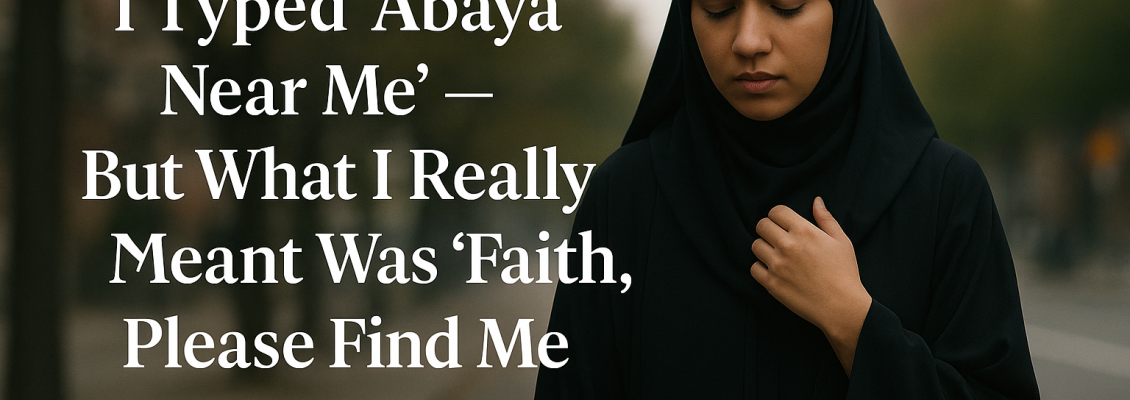
Leave a Comment