I was too British for my relatives, too Muslim for my coworkers — but my abaya dress in the UK made space for both.
Bismillah, wa salatu wa salam ‘ala Rasulillah ﷺ —
The rain hadn’t even stopped when I found myself standing outside that tiny halal café in West London, coat dripping, abaya clinging to my legs, hijab catching the wind like a sail. It was June 27th, 2025 — but if you asked me to describe the day, I’d only remember how the cold felt warmer than the tension in my chest. That was the morning I realized I was living between two places that didn’t fully see me. Not my relatives with their side-eyes about “how British I’ve become.” Not my colleagues, who flinched at every Arabic word I said aloud. And yet there I was — soaked in modesty and contradiction — held together by fabric, faith, and fatigue.
Writing this now, I wonder how many of us carry these invisible negotiations in our clothing. Not just what to wear — but what it says. Who it protects. Who it provokes. My abaya dress became more than just modest wear — it became a quiet rebellion, a spiritual comfort, a bridge I never saw coming. And this post? It’s not just about fashion. It’s a journal entry from the in-between. A love letter to those of us trying to be enough in two languages. A deep breath for the woman who doesn’t want to choose between her British passport and her Muslim soul.
So walk with me. One memory at a time. One thread of fabric. One prayer whispered beneath an abaya that made space for both my worlds to breathe.
When did I start editing myself just to be easier to digest?
I think it started small. The way these things often do. A second guess before speaking Arabic in a coffee shop. A softer “salaam” under my breath so the cashier wouldn’t look up. Folding the ends of my abaya dress tighter when entering certain spaces. Not out of shame, I told myself — just out of… awareness. Consideration. Being polite. But the truth is, somewhere between trying to fit in and trying not to offend, I chipped away at who I was.
And the hardest part? No one asked me to. My coworkers didn’t tell me to speak less Arabic. My relatives didn’t explicitly ask me to act “more Muslim.” But I could feel the discomfort hanging in the air like incense gone stale. I adjusted myself for their ease. I edited my tone, my wardrobe, my presence — until what was left was palatable, but painfully incomplete.
When did niyyah start leaking into people-pleasing?
I used to stand in front of my wardrobe like it was a battlefield. Not between modesty and immodesty — but between modesty and safety. Between sincerity and survival. I asked myself every morning: “Is this too Muslim for work?” or “Is this too modern for the masjid?” Somewhere in between those two fears, I forgot to ask the one question that should have guided me all along: “Is this for Allah?”
It wasn’t always like this. I remember when I first fell in love with modest fashion — the softness of a flowing abaya dress, the way it felt like wrapping myself in a du’a. I didn’t care who saw me. My niyyah was clear. My heart was full. But over time, that love became diluted by performance. I started wondering if my sleeves were long enough *for them*, if my hijab style looked *acceptable to others*, if my abaya was “too Arab,” “too plain,” “too much.”
I was still covering — but I was uncovered in all the ways that mattered. Spiritually exposed. Emotionally threadbare.
Modesty as Devotion vs. Modesty as Defense
What used to be a symbol of closeness with Allah became a shield against judgment. And maybe that’s what hurts the most. Not the fact that I edited myself — but that I called it righteousness when it was really self-erasure.
| Modesty as Fabric (Devotion) |
Modesty as Fear (Defense) |
| Choosing outfits with barakah and joy |
Choosing outfits to avoid stares or comments |
| Dressing with love for Allah's pleasure |
Dressing to not “stand out” too much |
| Feeling spiritually grounded in your choice |
Feeling anxious about being judged or misunderstood |
| Wearing the abaya like a form of du’a |
Wearing it to “prove” you belong |
The moment I felt invisible in plain sight
I remember being at a masjid for a women's halaqah. I had worn a light grey abaya — soft, flowy, a color I loved. Nothing flashy. But as I entered, a group of aunties stared at me. Not a word, just eyes scanning every inch. And just like that, my spine curled in on itself. I tugged at the sleeves. I adjusted the neckline. I walked faster, smaller. All of a sudden, I wasn’t a servant of Allah anymore — I was a suspect under social surveillance.
And then — worse — I did the same thing to another sister that very week. She wore a pink abaya and red lipstick to Jummah. And while I didn’t say a word, I judged her in my heart. That’s when I realized: fear-based modesty doesn’t just hurt us, it turns us against each other. I wasn’t editing just myself. I was starting to “edit” other women too.
Ya Allah, forgive me for performing what I should have done purely
There was a night I broke. After tahajjud, alone in my room, I whispered a du’a I hadn’t dared admit aloud before:
Ya Allah… I’ve been dressing for them more than for You.
I’ve worn my abaya like armor instead of 'ibadah.
I’ve chased approval more than Your mercy.
Please help me start again.
It was the first time I cried not because of a harsh comment or judgmental glance — but because I missed the intimacy I once had with my intention. I missed dressing *for* something — not against something. I missed the joy, the softness, the love. The niyyah that whispered, “This is for Allah. Just for Him.”
The slow return to sincerity
Healing didn’t happen overnight. I still catch myself hesitating before leaving the house. I still wonder if I’ll be “too much” or “not enough” for someone else’s gaze. But now, I ask different questions. Not, “Will this make them comfortable?” but “Will this make me conscious of Allah?”
Now, when I reach for my abaya dress, I try to do it with the softness of worship — not the stiffness of defense. I try to let my niyyah guide my hands. I try to wear what reminds me of who I am in private, not what pleases them in public.
And you, dear sister reading this — I know what it feels like to shrink yourself. To carry your identity like it’s something to apologize for. I pray you remember that Allah never asked you to be less so others could be more comfortable. He asked you to be sincere. To walk with ihsan. To love your modesty like you love your salah — not because of who’s watching, but because of Who you’re facing.
So when did I start editing myself just to be easier to digest?
Probably the same day I forgot that I was always enough in His eyes — exactly as I am.
Was it the tea, the silence, or the accent that made me feel foreign in both worlds?
It wasn’t one moment. It was many. A series of small fractures that built into an invisible border between me and the people who were supposed to be “mine.” The kind of foreignness that doesn’t show up on a passport — but spills into your tea, your speech, your silence. The kind that turns your identity into a negotiation every time you enter a room, a family gathering, a workplace meeting. I didn’t feel fully “here” or “there.” I was stitched together by pauses and disclaimers. By overthinking and overexplaining. By tea that was too milky for my aunties and too sweet for my colleagues.
It started with my accent — British, clean, punctuated — the kind that made relatives ask if I thought I was “too good” for my roots. Then came the silence. The choice not to mention how I prayed Dhuhr in the staff room, or how I didn’t go clubbing on Fridays. I wasn’t hiding — not really. But I wasn’t fully arriving either. Just hovering somewhere in between. And then there was the tea — the symbol of so much more. My coworkers drank Earl Grey with oat milk and no sugar. My family steeped strong chai with elaichi, poured high from dented kettles, and judged you if you didn’t finish the cup. Me? I liked both. And neither.
The duality that split me open
I remember a family brunch once. Someone had brought up how “these girls in the West take modesty too far” — and everyone laughed. My abaya that day was simple, black, with pearl buttons down the sleeve. I suddenly felt overdressed in my own family’s living room. As if I had worn my sincerity too loud. No one said anything directly to me — but I felt it. The pause in conversation when I walked in. The way my cousin adjusted her scarf like she suddenly became aware of it. The way someone whispered, “Oh mashAllah, look at her — straight from Saudi, huh?”
I laughed with them. I made a joke about having “converted to modesty” and moved on. But inside, I wilted. Because modesty was never supposed to be a punchline. And I wasn’t trying to be dramatic. I just… didn’t want to compromise anymore. Didn’t want to shrink anymore. But every time I dressed in a way that made me feel closer to Allah, I felt further from my blood.
Then at work — it was the reverse
When I started covering more consistently, I noticed how my colleagues paused before speaking to me, as if I had become fragile or unfamiliar. I’d get compliments like, “Oh wow, that’s elegant!” followed by silence, then, “But doesn’t it get hot?” — as if my wardrobe was a protest. Or a costume. One woman even asked me if I was “allowed to wear colour.” I smiled politely and nodded. But something in me started chipping away again. Not because of what they said — but because of what it cost me to explain, over and over, who I was, and why I chose what I wore.
Modesty was never supposed to divide me from myself
I began to ask myself, who am I dressing for? Why am I tired before I even leave the house? I realized that even though I wore my abaya dress with sincerity, I was carrying the weight of proving that I wasn’t “too much” — not for Allah, but for people. That burden doesn’t come from Islam. It comes from trying to belong in two rooms that both make you feel foreign.
And the painful truth is, I was losing parts of my niyyah to fear. I dressed with devotion, yes — but beneath that, I also dressed with anxiety. I was performing clarity when my soul was confused. I was wrapping myself in khimar and confidence — but battling whispers of, “Will they misunderstand this?”
A table of spiritual exhaustion
It felt like every space was asking me to compromise — but not in words. In subtle cues. In the way people looked at me when I wore full-length abayas to Eid. In the way my colleagues changed topics when I walked in wearing jilbab. In the way my own relatives teased my Arabic pronunciations. I didn’t belong in their worlds unless I edited mine.
| Western Spaces |
Cultural Family Spaces |
| “Are you oppressed?” |
“Are you extreme now?” |
| “It’s just fashion, right?” |
“You think you’re better than us?” |
| Tokenized or misunderstood |
Dismissed or mocked |
| Curiosity laced with distance |
Familiarity laced with shame |
And still, I choose sincerity over safety
The truth is, I still feel foreign sometimes. In both worlds. But now I ask a different question: “Am I foreign to them — or faithful to Him?” There’s a du’a I cling to when I feel the ache of in-betweenness:
Ya Allah, You are closer to me than my jugular vein.
Let that be enough for the days I am misunderstood.
You are the One I am returning to.
Let my modesty be a step closer to You — not away from them.
So maybe it wasn’t the tea, or the silence, or the accent alone. Maybe it was the longing to be known in full — and the grief of being fragmented to survive. But now, I wear my abaya not to prove anything — but to reclaim wholeness. My niyyah is not a performance. My modesty is not an apology. It is a prayer stitched into fabric. A softness I won’t trade for comfort. A truth I won’t dilute for belonging.
Because if foreignness is the price of sincerity — then I’d rather feel foreign in their rooms than feel distant in my salah.
How do you explain to your cousins why your Britishness isn’t betrayal?
I used to dread those visits back “home.” The way the eyes lingered longer than necessary when I walked into the courtyard. The way the laughter would quiet when I spoke — not because of what I said, but how I said it. Clean English. Rounded vowels. The accent of someone who’s been elsewhere too long. To them, I wasn’t “British” in a fun or neutral way. I was distant. Suspicious. “Whitewashed,” someone whispered once when they thought I couldn’t hear. But I did hear. And worse, I internalized it.
I wanted to scream, “This isn’t betrayal — it’s just my upbringing.” But how do you explain that your Britishness was never a rejection of your roots, just the soil you happened to grow in? How do you explain that you can crave fish and chips and your mum’s biryani with equal love? That you can speak English with confidence without forgetting how your grandmother says your name? That you can wear an abaya in London and still weep at the sound of your uncle’s adhaan in Karachi or Casablanca?
The guilt I never knew how to name
There’s a kind of shame that doesn’t have a language. It’s not like the guilt of sin or the regret of mistakes. It’s the shame of being perceived as “other” by your own blood. It’s the feeling that your Britishness is always under inspection — that you have to prove you’re still “one of them,” still worthy, still “Muslim enough,” still “cultural enough.” It’s carrying your passport like a wound and your accent like a flag you didn’t ask for.
My cousins didn’t mean harm. I know that now. But it didn’t change the fact that when they asked, “Why do you speak like that?” or “Do you even know how to cook real food?” — something in me flinched. I wanted to fit in. But I also didn’t want to perform an identity I no longer inhabited fully. I wasn’t less than them — just shaped differently. But at the time, that difference felt like a betrayal I couldn’t defend.
And then came the abaya
It’s strange how a single piece of fabric can become the bridge between two worlds. My abaya dress — simple, British-bought, soft grey with delicate embroidery on the cuffs — didn’t just cover me. It gave me clarity. It wasn’t the same style as the traditional jalabiyas my cousins wore during Eid. It wasn’t flashy or tight or “modern” either. It was just me. Honest. Still. Balanced.
For the first time, I wasn’t dressing to appease either side. I wasn’t proving my Britishness or compensating for it. I was just dressing with intention. With devotion. For Allah. And something about that sincerity — that refusal to play sides — started healing the rift between me and my cousins. Slowly. Quietly. They didn’t always understand. But they began to respect it.
| Misconception |
Reality |
| “Britishness means forgetting your culture” |
Britishness was simply the environment I was raised in — not a rejection of my heritage |
| “Speaking English fluently means you’re ashamed of your mother tongue” |
I cherish the languages of my lineage, even if they aren’t my first reflex |
| “Western dress means immodesty” |
My modesty is intentional, rooted in faith, not location |
| “Modern education makes you arrogant” |
Knowledge is a trust, not a competition — I carry it with humility |
The niyyah that silenced my self-defense
At some point, I stopped trying to “explain” and started trying to *embody*. My niyyah became less about proving I was still “authentically Muslim” and more about being authentic before Allah. I wore my British accent the same way I wore my abaya — without shame, but also without superiority. I smiled when I was teased about my tea preferences. I learned to answer criticism with softness. I remembered that Allah doesn’t ask me to convince — only to be sincere.
Ya Allah,
You chose where I was born.
You chose the languages I speak.
Let me honour both my cultures — and never make one feel like a betrayal.
Let my modesty be rooted in truth, not in proving anything.
We’re not confused — we’re complex
Dear sister, if you’ve ever stood in the middle of a room and felt like you needed to justify your upbringing — I see you. I know the ache of feeling “not enough” for your own people. But you are not a betrayal. You are a bridge. You are not divided — you are layered. And your abaya, your language, your silence, your laughter — they can all exist in harmony when you stop performing and start standing in your truth.
So how do you explain to your cousins that your Britishness isn’t betrayal? You don’t. You live it. You dress with dignity. You speak with adab. You hold space for both chai and scones. You pray in Arabic and speak in English. You make du’a in whichever language your heart cries in. You reclaim your belonging — not through apology, but through sincerity.
Because Allah never asked you to be less British to be more beloved. He asked you to be more conscious. More present. More you.
Why did being visibly Muslim at work feel like walking a tightrope in heels?
I remember the first day I wore my abaya dress to work. It wasn’t dramatic. No one gasped. No one whispered. But everything shifted. The way people glanced up and then quickly away. The way conversations paused a half-second longer when I entered the room. The way I suddenly became “the Muslim woman” — capital M, capital W — even if no one said it out loud. I was still the same colleague. Still capable, kind, funny. But now, I was wrapped in fabric that said something before I ever spoke. And every step I took down those glossy office hallways felt like walking a tightrope in heels — balancing conviction with caution, faith with fitting in.
It’s strange, isn’t it? The very act of dressing for Allah can make you feel hyper-visible to everyone else. I didn’t start covering to make a statement. I started because something in my heart whispered it was time. But once I did, I realized that visibility is not the same as belonging. Being seen isn’t the same as being safe. Especially at work — where modesty can be read as mystery, silence as suspicion, and conviction as confrontation.
The unspoken weight of being “the hijabi” in the room
No one gave me a handbook on how to navigate meetings where someone jokes about fasting without remembering I fast. Or how to respond when a client compliments my “costume” on Eid. Or when someone leans in with wide eyes and asks, “So… do you actually believe women should dress like that?” I wasn’t offended — not always. But I was exhausted. Constantly. From the mental gymnastics. From smiling through stereotypes. From softening my truth to make it easier to digest.
And yet, I never stopped wearing it. The abaya. The khimar. The visible signs of a deeper truth I was clinging to. Not because I was trying to prove anything to them — but because I was proving something to myself. That I could still be present, professional, respected — without peeling off my principles like an outer layer at the door.
But some days, I cracked
I’d lie if I said I always walked with confidence. Some mornings, I second-guessed myself in the mirror. “Is this too much?” “Will they think I’ve become ‘radical’?” “Should I go with the less flowing one today — maybe the navy one, so it blends in more than the cream?” I wasn’t choosing outfits anymore. I was choosing emotional risk levels. Calculating how visible I could afford to be that day.
Modesty, once my private act of devotion, began to feel like a social performance. The fabric that was supposed to free me was becoming heavy with other people’s projections. And yet — I couldn’t let go. Not because I feared judgment from Allah more than judgment from people (although that’s part of it). But because deep down, I knew the discomfort was sacred. It was reminding me who I was. Whose I was.
Modesty as worship vs. modesty as warfare
There’s a difference between dressing to honour Allah — and dressing to survive scrutiny. The former is rooted in love. The latter in fear. Somewhere along the way, I’d slipped into the latter without even realizing. I wasn’t walking into work to serve. I was walking in to defend. My identity. My wardrobe. My right to exist unapologetically.
| Modesty as Worship |
Modesty as Warfare |
| Rooted in sincerity |
Rooted in defense |
| Worn for Allah |
Worn with fear of judgment |
| Soft, quiet, intentional |
Hyper-aware, strategic, guarded |
| A shield of barakah |
A target of suspicion |
My du'a in the elevator
I still remember one day — it was winter. I wore a slate grey abaya with a belt that cinched gently at the waist. I stepped into the elevator and a woman looked at me, smiled awkwardly, and said, “You look very… committed.” I laughed lightly and nodded, but in my heart I made a du’a:
Ya Allah,
Make me more committed to You than I am concerned with their comfort.
Let my walk reflect yaqeen, not anxiety.
Let my presence remind them of mercy — not mystery.
Let my clothing whisper da’wah, not debate.
That day, I stopped walking like I owed them an explanation. I started walking like I owed Him sincerity. And somehow, the tightrope got a little easier. The heels steadied. I still wobble — of course. I’m human. But I know where the rope leads now. I’m not balancing for applause. I’m walking toward Jannah.
To the sister walking into work tomorrow in her abaya
I see you. I honour you. You are not alone. Every stare you endure, every micro-aggression you absorb, every awkward moment you rise above — it’s all seen. And it’s not in vain. You're not a diversity hire or a symbol of anything. You're a servant of Ar-Rahman in a world that tries to rename you. Hold your head high. Let your modesty be your dua in motion. And remember:
Your job might give you a desk. But your dignity comes from your Rabb.
What was I supposed to wear — to not be too much, or too little — at the same time?
There were mornings I would stand in front of my wardrobe for what felt like hours, my hand hovering between two abayas. One was simple, black, loose — safe. The other was a soft blush, subtly embroidered at the cuffs. Dignified, yes — but maybe too soft. Too feminine. Too seen. And I would freeze there, paralyzed by the calculation that had quietly replaced intention. Would I be too visible? Too invisible? Too modern? Too “extreme”? What was I supposed to wear — to not be too much, or too little — at the same time?
I don’t think I realized how much my clothing had stopped being for Allah and started being a tool of survival. A way to deflect assumptions. A way to shape how I was perceived. Not out of arrogance — but out of exhaustion. I didn’t want to offend. I didn’t want to disappear. I didn’t want to explain myself. And so I began dressing not for comfort, or beauty, or barakah — but for neutrality. I tried to disappear into the in-between.
When niyyah becomes negotiation
I used to whisper the du’a for dressing with full presence. “O Allah, I ask You for its goodness and the goodness it was made for...” But slowly, my whispers were replaced by second-guessing. “Will this make my relatives say I’ve gone too far?” “Will my coworkers think I’m oppressed?” “Will my friends say I’m trying too hard?” Even when I chose the “right” outfit — it didn’t feel right anymore. Because I wasn’t dressing for Allah. I was dressing for damage control.
The fabric became a negotiation. I wasn’t asking, “Is this pleasing to Allah?” I was asking, “Will this make them more comfortable?” And with every step toward their comfort, I lost a little of mine. It wasn’t about the abaya anymore — it was about the way it made other people feel. And somewhere in that loss, I forgot how to feel anything myself.
The tug-of-war in my reflection
There was a day — and I remember it vividly — I wore my cream abaya with the light lilac trim. I loved it. It reminded me of spring, of renewal, of softness. But as I walked past a shop window and caught my reflection, I panicked. “Too elegant,” I thought. “Too much.” I nearly turned back home. But then I paused. Who told me this was “too much”? Who made me afraid of softness? When did I start measuring my worth by the absence of attention — rather than the presence of intention?
And I realized: I had let other people’s discomfort define the boundaries of my modesty. I had handed over the compass of my soul to voices that did not know its journey. And I was dressing not for Allah, but against fear.
Modesty wasn’t supposed to suffocate me
When I first discovered modest fashion, it felt like coming home. Like my body and my soul were finally on the same page. But over time, I let that peace be stolen. Replaced by the burden of being palatable. Safe. Quiet. And it hurt — deeply — because I still believed in the power and beauty of modesty. But I no longer felt it.
I had to relearn what it meant to dress for Allah. To return to the original softness. The original niyyah. The quiet strength of a woman who is covered not out of fear — but out of devotion. I had to believe that Allah never asked me to be invisible. He asked me to be sincere.
| Too Much |
Too Little |
Just Enough — For Allah |
| Bright colors, fear of judgment |
Muted tones, fear of erasure |
Whatever color aligns with sincerity |
| Feeling “showy” for liking beauty |
Feeling guilty for desiring softness |
Remembering beauty is also a mercy |
| Assuming modesty means austerity |
Assuming invisibility equals safety |
Choosing presence with humility |
My new rule: dress like a du’a
I don’t always get it perfect. Some days, I still hesitate. Still wonder if I’m being “too much.” But now, I try to dress like a du’a. Not like an apology. I ask myself: If no one saw me today but Allah — would I feel proud of what I wore? Would I feel that it reflected the peace I’m trying to live by? That’s the metric now. Not trends. Not opinions. Just that simple question: Does this feel like an offering — or a performance?
Ya Allah,
Let me be modest in form, but bold in my devotion.
Let me choose softness over shame, and sincerity over silence.
Let my abaya be a witness to my worship — not a prison of people’s expectations.
To the sister standing in front of her wardrobe tomorrow, holding two abayas and wondering which one makes her “too much” or “too little” — I see you. I know that weight. But I also know this: You are allowed to feel beautiful. You are allowed to be seen. You are allowed to dress in a way that reflects your love for Allah and your joy in being His. You don’t have to shrink to be accepted. You just have to be sincere.
And when you finally put it on — when you tie the last loop or fix the last button — remind yourself: This isn't for them. This isn't for the algorithm. This isn't even for the mirror. This is for the One who sees me when no one else does. And that will always be enough.
Why did choosing an abaya dress feel more political than spiritual?
There was a time when choosing an abaya dress felt like a love letter to my faith. A simple act of devotion — quiet, intentional, deeply personal. I would run my hands over the fabric and ask, “Ya Allah, let this be enough. Let this be sincere.” But somewhere along the way, that stillness became noise. That softness turned into scrutiny. And the moment of choosing an abaya — once tender and worshipful — became charged with something else entirely. It felt less like worship… and more like a protest I never signed up for.
Every abaya I picked up seemed to carry a weight beyond its fabric — a message, an assumption, a defense. Am I too visible? Too plain? Too Arab? Too cultural? Not cultural enough? I wasn’t just choosing a garment anymore. I was choosing how I’d be read. And that decision wasn’t between me and Allah anymore — it was between me and the world.
My dressing room wasn’t private anymore
I remember the exact store. The fluorescent lights buzzed overhead, and I stood barefoot on the cold tile floor of the fitting room, holding two abayas — one black with clean tailoring, the other mauve with delicate lacework at the sleeves. And I froze. I wasn’t asking myself, “Which one makes me feel closest to Allah?” I was asking, “Which one will offend less people today?”
Because even in Muslim spaces, choices like mine became loaded. “Too Western,” one auntie might whisper. “Trying to show off,” another might judge. And in non-Muslim spaces, that same abaya was either a threat or a curiosity — rarely just a dress.
When modesty became a battlefield
I didn’t grow up knowing that choosing to cover would come with so many assumptions. That my sincerity would be dissected, that my spirituality would be questioned, not by enemies of Islam — but by its own children. And so, modesty stopped being spiritual and started being strategic. Political. Exhausting.
One sister once told me, “When I wear black, they say I’m radical. When I wear color, they say I’m vain. When I cover my face, I’m oppressed. When I smile in hijab, I’m flirting. What do they want from us?” And I remember just nodding, because I felt it too. That sense that no matter what I wore, it would be read as a statement — never simply as submission.
The fear of interpretation
There’s a strange kind of exhaustion that comes from knowing you’re always being translated. That your abaya dress isn’t just fabric — it’s a headline, a political statement, a badge, a warning sign, an open question. And that interpretation changes from one community to the next. I found myself constantly thinking: Will my coworkers see this as resistance? Will my masjid uncles see it as rebellion? Will my family say I’m “too modern” or “not enough”?
But what about what Allah sees? When did that stop being the only gaze I dressed for?
A table I never asked to sit at
Choosing an abaya dress once felt like a way to step away from the noise. To anchor myself in something timeless. But instead, it felt like I had sat down at a table of political debate, with everyone arguing over the meaning of my presence. I didn’t choose to be the spokesperson. I didn’t ask to represent anything. I just wanted to feel close to my Rabb. And I found myself exhausted by the performance of neutrality.
| Spiritual Intent |
Political Weight |
Emotional Cost |
| Dressing for Allah's pleasure |
Seen as a “statement” by society |
Fatigue, anxiety, overthinking |
| Modesty as devotion and dignity |
Scrutinized by both Muslims & non-Muslims |
Fear of misrepresentation |
| Abaya as sacred self-expression |
Reduced to cultural or political symbolism |
Loss of joy and spontaneity |
Returning to the niyyah
It took time, and deep unlearning, to remind myself that sincerity cannot be seen by others — only by Allah. That I could be misunderstood, mislabeled, misjudged — and still be right with my Lord. That my abaya dress didn’t need to speak for the entire ummah. It just needed to be an offering from me to Him. A whisper of “I’m trying.” A shield. A softness. A sign of submission, not strategy.
So now, before I get dressed, I don’t ask myself how I’ll be seen. I ask myself what this abaya reminds me of. What prayer it carries. What silence it honors. What parts of me it’s helping me protect. And on those mornings when the anxiety returns — when the noise is louder than my peace — I pause, I breathe, and I whisper:
Ya Allah,
Let this abaya be a garment of taqwa, not tension.
Let it speak of my servitude, not my politics.
Let it remind me that every thread wrapped around me is a mercy — not a message.
Let it bring me closer to You, and free me from the gaze of the world.
To the sister who’s tired of decoding the “right” way to dress, tired of navigating the unspoken politics of being visibly Muslim — I see your heart. I feel your quiet battle. And I want to remind you: your abaya dress is not a slogan. It is a prayer. Walk in it like a woman who knows her worth isn’t in how the world defines her — but in how her Creator sees her. That is where your freedom lives.
How did my abaya dress become the line between rejection and remembrance?
I didn’t realise how sacred a garment could feel until it also became the thing that cost me acceptance. My abaya dress — that quiet, flowing symbol of my commitment to Allah — slowly transformed into the thing that got me side-eyes at family dinners and silence at office meetings. It was no longer just a spiritual anchor. It was the line drawn, again and again, between being included and being understood. Between being remembered for who I was — or rejected for what I looked like.
I remember the first time I wore my abaya dress to a family wedding. Not a black one. Not something “safe.” It was a deep emerald green, loose but elegant, modest but proud. It carried the softness of silk and the weight of intention. I wore it because I wanted to honour myself and my faith, but the looks I received didn’t feel like honour. They felt like judgment. One of my cousins whispered, “Trying to prove something?” I smiled. But my chest sank.
When your worship feels like a rebellion
I didn’t set out to make a statement. I set out to obey Allah. To honour the dignity He bestowed on me. But somewhere along the way, my obedience started being interpreted as opposition — to culture, to family, to norms. I hadn’t changed. I had just started remembering who I was. Who I belonged to. And that remembrance came with a cost I wasn’t prepared to pay: being misunderstood by those who once held me close.
It hurt in ways I couldn’t articulate. Not because I needed validation — but because I longed for them to see that this wasn’t rejection. This was reverence. This was love. This was healing. And instead, it felt like every step closer to Allah took me further away from them.
The mosque doors didn’t always offer refuge either
It would be easier if I could say the masjid felt like safety — but even there, my abaya was sometimes met with quiet judgment. Not “covered enough.” Or “too extravagant.” Or “trying to be Arab.” Suddenly, even in places of prayer, I felt I was on trial. Who was I performing for? Who was watching? And why had something meant to be sacred started to feel so exposed?
The shame didn’t come from my abaya dress. It came from the way people projected their fears and expectations onto it — onto me. And in the process, what began as remembrance — a return to divine intimacy — started to blur with rejection. My niyyah was being weighed by eyes that couldn’t see it.
Modesty became my silent plea
Some days, I’d walk into work and feel like I was split in two. The British me who knew how to navigate small talk and tea etiquette, and the Muslim me who longed for Jumu’ah more than Friday drinks. And my abaya dress? It was my bridge. My way of saying, “I’m both. I belong. Don’t erase me.” But instead of bridging, it often widened the gap.
Colleagues would avoid eye contact. Compliments would taper off. Invitations would quietly stop. I wasn’t loud. I wasn’t preachy. I was just… visible. And that visibility became a quiet rejection. A withdrawal. A reminder that my remembrance made others uncomfortable — even when all I wanted was to be whole.
A table of fear and freedom
| Wearing Abaya as Worship |
Wearing Abaya as Rebellion |
| Intention to please Allah alone |
Assumed rejection of family or culture |
| A sacred step toward remembrance |
Seen as ‘too much’, ‘too visible’, ‘too devout’ |
| Symbol of trust in divine protection |
Mistaken for a personal challenge to others |
My du’a beneath the fabric
I remember one night after a painful encounter — being told I was “pushing Islam too hard” just by wearing my abaya — I stood in front of my mirror, eyes full, heart heavier than my sleeves. And I whispered a du’a that I’ve come to whisper many times since:
Ya Allah,
Let my abaya be my remembrance, not my rejection.
Let it speak of love, not defiance.
Let those who misunderstand my sincerity be softened by Your Mercy.
And let me never trade Your acceptance for the approval of creation.
The abaya as sanctuary
Over time, I began to separate the noise from the niyyah. I began to realise that the abaya didn’t change. The world around it did. And my heart needed to stop asking, “Will they accept me?” and start asking, “Have I honoured Him?”
To the sister who stands at the edge of rejection because of the way she remembers Allah — I want you to know: your abaya dress is not the problem. Your remembrance is not the rebellion. The rejection you feel? That is not from your Lord. He draws near to those who remember Him in the quietest corners. Even when the world turns its face away.
So keep remembering. Keep dressing with love. Keep walking in your abaya like a woman whose heart knows what it’s wrapped in. Not politics. Not rebellion. But worship, humility, and the sweetness of being seen by the One who knows you completely.
Can an abaya dress be both heritage and healing — or am I just pretending?
Sometimes I stare at the abaya hanging on the back of my door and wonder what it means — not just to me, but to all the versions of me I’ve been. The child who watched her mother fold one over her prayer clothes before Maghrib. The teenager who stuffed hers into a backpack before stepping into the masjid, terrified someone might say she was "doing too much." The woman now, hesitant before each outing, asking herself whether her modesty will be misunderstood — again.
Can one garment carry both the inheritance of generations and the weight of my inner healing? Or am I just dressing up the ache? Am I wearing this abaya dress because I’m ready to reclaim something sacred… or because I’m still trying to feel like I belong somewhere, anywhere?
The silence I inherited, stitched into seams
I come from women who knew how to hold a household together with nothing but quiet du’as and stitched hems. My grandmother wore an abaya in a shade of charcoal so deep it looked like dusk had been woven into it. She never called it a symbol. It just was. It existed like breath — natural, assumed, unannounced. But somewhere between her generation and mine, it stopped being something I inherited and started feeling like something I had to explain.
My abaya dress, now, is a conversation. Sometimes even a confrontation. “You don’t have to wear that here, you know.” Or “Isn’t it a bit extreme?” Or the subtler ones — the glances, the pauses, the second-long smiles that don’t quite reach their eyes.
It’s like the fabric holds a memory I haven’t finished understanding. I wear it and feel connected. But I also wear it and feel questioned. And on the worst days, I wonder — am I just performing? Am I hiding under my heritage, hoping it’ll shield me from the ache I haven’t named?
Where performance and prayer meet
I remember trying on an abaya dress in a boutique tucked into a corner of east London. The lighting was too bright. The mirror too honest. And yet, for a brief second, I saw myself — whole. The garment hugged nothing but carried everything. And as I pulled the sleeves over my wrists, I whispered a private du’a:
Ya Rabb,
Let this be for You.
Not for them. Not for the looks. Not even for the likes.
Just You.
But the moment I stepped outside, I felt the shift. On the tube. In the queue at Pret. In the awkward distance kept at work. I wasn’t just a woman in a dress — I was suddenly a woman with a message. A woman being read before being heard. And I wondered: had my healing been hijacked by others’ perceptions?
Modesty as a veil — or as a mirror?
For a long time, I thought modesty was a veil — something that shielded, protected, hid. But lately, I’ve begun to see it as a mirror. One that reflects back to me all my fears, my inconsistencies, my longing to be both devout and desired, accepted and authentic.
Sometimes I catch myself adjusting my abaya in public not because it’s slipped, but because I’ve slipped — into insecurity, into worry, into wondering what they'll think. I wrestle with this thought often: is this heritage I’m honouring? Or am I just afraid to show my wounds?
Let’s be honest: the abaya doesn’t fix the ache
There are days I wear it and still feel unseen. Still feel like a stranger in both rooms — the family gathering where I’m “too western” and the work meeting where I’m “too Muslim.” But the abaya doesn’t promise to fix the ache. It just gives it a place to breathe. A soft place to land. A fabric that listens even when others don’t.
Sometimes healing isn’t loud or instant. It’s subtle. It’s choosing to wrap yourself in your grandmother’s legacy even when you’re not sure you’ve earned it. It’s trusting that even in the discomfort, there’s dignity. That maybe, just maybe, your softness is your strength.
A table for the doubting and the devoted
| Heritage |
Healing |
| Wearing what the women before me wore |
Dressing to reconnect with who I really am |
| Honouring a lineage of devotion and dignity |
Allowing my wounds to be clothed in beauty |
| Symbol of cultural belonging |
Tool for spiritual remembrance |
I’m not pretending. I’m piecing myself back together.
To the sister who wonders if she’s performing: I see you. I’ve been you. And I need you to know — you are not pretending. You are praying. You are not faking it. You are finding your way home.
The abaya dress on your shoulders may be heavy some days, but only because it holds generations, revelations, and quiet revolutions. Let it be both your heritage and your healing. Let it be the cloth that binds what was broken. And if others don’t understand that? That’s okay. You do. And your Lord always has.
This isn’t about pretending. This is about persevering — in beauty, in faith, in sincerity. May your abaya always remind you that you are enough, even when you’re still becoming. Especially then.
Why did the mirror feel less cruel when I wore my abaya dress in the UK?
There’s a strange intimacy in standing before a mirror — a moment where all the masks fall away and only the raw edges of our soul remain visible. For years, the mirror was my fiercest critic. It reflected back every insecurity, every fracture of self-doubt, every fear that modesty had become performance rather than devotion. But something shifted when I started wearing my abaya dress in the UK. Suddenly, the mirror’s gaze softened. The reflection was less cruel — almost tender.
Why? How could a simple garment, a piece of fabric, change the way I saw myself? The answer lies not in the abaya itself, but in the fragile, healing space I found around it — the UK, with its complexities and contradictions, gave me room to breathe, to belong, and to wrestle honestly with my identity.
The mirror as a battlefield
Before the UK, the mirror was a battlefield. It was a site of endless comparison and self-criticism. Growing up in a community where modesty was tightly policed, my reflection was a constant reminder that I could never get it quite right. Was my hijab neat enough? Was my abaya long enough? Was I invisible enough, or did I stand out too much?
In those moments, modesty was no longer about submission to God’s command or an intimate act of worship. It was a performance for people — a balancing act between being “pious” and not “too much.” The mirror didn’t just show my face; it showed every judgment I feared, every whispered criticism I overheard.
The UK — a strange kind of refuge
When I moved to the UK, I carried that same mirror, those same doubts, but something about the new environment cracked open a different kind of space inside me. Here, modesty didn’t come with the same expectations. The abaya dress wasn’t just clothing — it became a symbol of my roots and my resilience, a way to hold onto my faith in a landscape that often felt foreign.
In the UK, the mirror began to reflect a softer truth: that I could wear my faith visibly and still be valued. That modesty could be a source of pride rather than fear. It was here I started to untangle the web of people-pleasing and instead learn what it meant to dress for Allah alone.
The spiritual cost of people-pleasing
There were still moments of doubt, of course. The changing rooms, the masjid doors, the scrolling through social media feeds filled with images of “perfect modesty” — they all chipped away at my confidence. I asked myself constantly: Am I wearing this abaya for Him, or to avoid judgment? Am I dressing to connect with my Creator or to fit into a picture others expect?
These questions haunted me, but the UK gave me the freedom to wrestle with them openly. No longer bound by the suffocating gaze of my old community, I could face the mirror with less fear. The reflection didn’t demand perfection — it asked for honesty.
A table for understanding modesty: Fabric vs. Fear
| Modesty as Fabric |
Modesty as Fear |
| An expression of faith and devotion |
A performance to avoid judgment or shame |
| A comforting cloak of spiritual identity |
A burden heavy with expectations |
| Rooted in intention (niyyah) towards Allah |
Driven by the fear of others’ opinions |
Qur’anic whispers in my quiet moments
During these reflections, I clung to the verse from Surah An-Nur (24:31): "And tell the believing women to lower their gaze and guard their private parts and not expose their adornment except that which [necessarily] appears thereof..." The words were never meant to be a straightjacket but a guide — a tender reminder that modesty is an internal state before it becomes external.
I made du’a in quiet moments, asking Allah to purify my intention and ease the tension between my heart and the world’s gaze. “Ya Allah, make me steadfast. Let my abaya be a sign of my closeness to You, not a shield from others.”
A moment of exposure despite covering
There was a day I felt utterly exposed despite every layer I wore. I was at the masjid in London, waiting outside after Jummah. A group of strangers whispered and stared, their eyes sharp with judgment. My abaya was impeccable, my hijab neat, yet I felt naked under their scrutiny. The mirror in my mind cracked and I was forced to confront the truth: no amount of fabric can protect the heart from feeling misunderstood.
That day, the mirror felt less cruel not because my appearance had changed, but because my heart had started healing. I realized that the abaya is not a fortress, but a declaration — a promise to myself and to Allah that my worth is not decided by others’ approval.
The mirror as a friend, not an enemy
Now, when I stand before the mirror wearing my abaya dress in the UK, I don’t see a woman trying to hide. I see a sister embracing complexity. A soul learning to be both soft and strong. A heart that chooses intention over fear, love over judgment.
The mirror is less cruel because I am kinder to myself. Because the abaya is no longer a mask but a mantle of remembrance — of who I was, who I am, and who I am becoming.
So, sister, when you feel the mirror’s harsh gaze, remember this: sometimes the fabric of modesty is soft enough to catch your tears. Sometimes the abaya is less about what others see, and more about what your soul remembers — your covenant with Allah, wrapped in light, resilience, and hope.
What do I owe the girl who first wore an abaya dress in secret?
There’s a quiet reverence I feel when I think back to that girl — the one who first slipped on an abaya dress behind closed doors, her heart pounding with a mixture of hope and fear. That girl carried a secret so heavy, so tender, that it shaped everything I am today. She was not just putting on a garment; she was stepping into a world that felt both sacred and dangerous, beautiful and fraught with judgment.
What do I owe her? So much more than just gratitude. I owe her the truth, the compassion, and the freedom she never fully found in that moment. I owe her the space to be seen beyond the fabric, beyond the fears, beyond the silent battles she fought every time she looked at herself in the mirror and wondered if modesty could ever be gentle.
The abaya as a silent rebellion
That first secret abaya was more than modesty — it was rebellion. Not the loud kind, but the quiet resistance of a soul craving belonging and peace. She wasn’t dressing to impress or to perform; she was dressing to hide, to protect herself from eyes that might not understand. Fear whispered in her ear: "Be careful. Be small. Be invisible."
And yet, beneath that fear was an ember of devotion — a desire to honor Allah in her own way, even if it meant hiding that devotion from those around her. It was a complex dance of intentions, tangled with the fear of judgment and the hunger for spiritual authenticity.
The cost of people-pleasing in modesty
Wearing the abaya in secret came with a price. It demanded a silent performance, a careful navigation between who she was and who others expected her to be. Shame crept in, disguised as humility. Fear masked itself as piety. And every time she glanced in the mirror, she wrestled with this question: “Am I dressing for Allah — or to avoid the gaze of others?”
This question became a haunting refrain in my own journey. I realized that the spiritual cost of people-pleasing in modesty is often invisible — but it erodes the soul, turning a sacred practice into a heavy chain.
A table to see the divide: Modesty as Fabric vs. Modesty as Fear
| Modesty as Fabric |
Modesty as Fear |
| Clothing chosen with intentionality and love for Allah |
Clothing chosen to avoid judgment or criticism |
| A gentle covering, a physical act of worship |
A shield to hide insecurities and fears |
| Rooted in personal spiritual connection |
Rooted in societal expectations and pressures |
Private du’as and inner dialogues
In the silence of my room, I often whisper du’as for that girl — the one who felt unseen, unheard, and misunderstood. “Ya Allah, grant her peace in her heart. Heal the wounds of fear that wrapped around her like the folds of her abaya.”
Her internal monologue was probably filled with quiet questions, the kind that only a soul wrestling with identity asks: “Am I enough? Is my modesty sincere? Will I ever be free to express my faith without fear?” These questions echo through time, and I answer them now for both of us.
A moment of feeling exposed despite covering up
Despite the layers of fabric, despite the care she took, there were moments when that girl felt utterly exposed. I remember one such moment — a fleeting glance from a family member, a whispered comment, a social media post that felt like a public verdict. It didn’t matter how perfectly she covered herself; she felt stripped bare.
That feeling of vulnerability, that paradox of covering yet feeling naked, is a wound many of us carry. But it’s also a doorway — a painful, necessary step toward healing and reclaiming our truth.
What I owe her now
I owe her the freedom to step out from the shadows of secrecy. I owe her the courage to wear her abaya dress openly, with pride and peace. I owe her the understanding that modesty is not a cage but a cloak — one that can enfold us in grace, dignity, and spiritual liberation.
To that girl who first wore the abaya in secret: I see you. I honour your journey. And I promise to walk forward with the intention to heal, to love, and to let my faith shine without fear.
Is it weakness to want my aunties to be proud of me — or just human?
There’s a question that has haunted me for years, whispered in the quiet corners of my mind late at night: Is it weakness to want my aunties to be proud of me — or is it just human? This isn’t a simple question. It digs deep into the heart of identity, belonging, and the complex dance of faith and family.
When I first chose to wear the abaya, it was supposed to be an act of devotion — a simple, sincere step towards dressing for Allah alone. But the reality was tangled with the voices of my family, especially my aunties. Their eyes carried expectations, their words sometimes thinly veiled judgments, and their smiles a silent measuring stick that left me questioning myself more than I should.
Wanting their pride felt like a craving for validation that I feared might dilute my faith. Was it a form of weakness — a people-pleasing impulse I needed to outgrow? Or was it something natural, a fundamental part of our shared humanity? I realized it’s the latter, but understanding this didn’t erase the inner conflict.
The spiritual cost of people-pleasing
Modesty, I learned, is meant to be softness, beauty, and sincere intention. But too often it turned into performance — a tightrope walk between what I believed and what others expected. Fear and shame crept into my niyyah (intention), replacing the purity of dressing for Allah with a desire to avoid criticism or gain approval.
Every time I stepped into a changing room, scrolling through social media for inspiration, or entered the masjid doors, I wrestled with the question: Was I dressing for my Creator, or for the approving nod of my aunties? This spiritual cost weighed heavily, twisting a beautiful act of worship into a source of anxiety and self-doubt.
Modesty as Fabric vs. Modesty as Fear
| Modesty as Fabric |
Modesty as Fear |
| Clothing chosen with love and devotion to Allah |
Clothing chosen to avoid judgment or criticism from family |
| A symbol of personal faith and identity |
A shield against shame and fear of rejection |
| Softness, beauty, and spiritual intention |
Performance, anxiety, and people-pleasing |
Qur’anic reflections and private du’as
In those moments of doubt, I found myself turning to the Qur’an and heartfelt du’as. “Indeed, Allah does not look at your appearance or wealth, but rather He looks at your hearts and deeds” (Surah Al-Hujurat, 49:13). This verse reminded me that the true measure lies within — not in the approval of my aunties or anyone else.
Yet, my heart wrestled with loneliness. The desire to be seen and cherished by those who raised me was real, human, and deep. My private prayers became pleas for strength to balance this yearning with sincerity of intention: “Ya Allah, help me dress for You alone, but heal the ache for acceptance that lives in my soul.”
A moment of feeling misunderstood despite covering up
I remember one gathering where I wore my abaya, feeling both proud and vulnerable. Despite all the fabric that covered me, I felt exposed — the whispered comments and sideways glances suggested I was still “too much” or “not enough.” In that moment, I realized how painful it is to wear modesty yet feel misunderstood by those closest to you.
This paradox of covering up yet feeling naked under the gaze of family is a wound many of us carry quietly. It’s a reminder that modesty is not just about the clothes but about the safety and love we crave beneath them.
Why wanting their pride is human, not weak
Wanting my aunties to be proud isn’t weakness. It’s human. It’s the longing to belong, to be loved and accepted by family — the very people who shape our sense of self. This desire doesn’t diminish my faith; it coexists with it, complex and real.
Recognizing this truth has been freeing. It has allowed me to hold space for my own feelings without guilt, and to approach my modesty journey with both vulnerability and strength. It’s not about choosing between faith and family approval — it’s about embracing the messiness of both and finding peace in that tension.
So, sister, if you ever wonder whether it’s weak to want your aunties’ pride, know this: You are not alone, and your feelings are valid. What matters most is how you navigate that longing with honesty and intention — dressing for Allah first, but honoring your humanity along the way.
How did my coworkers' stares make me question a fabric that once felt like worship?
I remember the first day I wore my abaya to work like it was yesterday. The fabric felt like a soft prayer on my skin — a sacred wrap that connected me to Allah and my faith. I had chosen it with care, with intention, believing it was an outward symbol of my inner devotion. But what I didn’t expect was how the stares from my coworkers would begin to unravel that quiet, holy feeling.
At first, the looks were subtle — a sideways glance, a quick double take. But over time, they grew heavier, loaded with questions I didn’t want to answer and judgments I wasn’t prepared to bear. The abaya, which once felt like a garment of worship, started to feel like a barrier between me and the world around me. I began to wonder: Was this fabric still a symbol of my faith, or had it become a source of discomfort, fear, and self-doubt?
The shift from devotion to performance
Modesty, for me, was never meant to be a performance. It was softness, beauty, and sincerity — an act of devotion meant only for Allah’s eyes. But in the workplace, surrounded by unfamiliar stares and whispered assumptions, modesty became a kind of performance. I found myself hyper-aware, walking a tightrope between staying true to my niyyah (intention) and managing others’ perceptions.
The fear of being “too different” replaced the gentle confidence I once had. I started adjusting how I wore my abaya — sometimes loosening the fabric, sometimes pairing it with less conspicuous accessories — all in an effort to blend in, to soften the gaze. But each compromise felt like a small betrayal of the original reason I wore it: to honor Allah.
Modesty as Fabric vs. Modesty as Fear
| Modesty as Fabric |
Modesty as Fear |
| Clothing chosen with pure spiritual intention |
Clothing adjusted to avoid judgment or alienation |
| An expression of identity and faith |
A mask worn to manage others’ comfort |
| Softness, dignity, and peace |
Anxiety, shame, and self-policing |
Wrestling with my niyyah: Was I dressing for Allah — or hiding from people?
Each day, I silently wrestled with my niyyah. Was I still dressing for Allah’s sake, or had the fear of being “othered” crept in? This question haunted my heart, turning what should have been an act of worship into a source of spiritual exhaustion.
It was during a quiet moment of prayer, tears brimming, that I whispered to Allah, “Ya Rabb, purify my heart. Let my abaya be for You alone, not a shield for my fears.” That du’a became a turning point, a reminder that the fabric itself is neutral — it’s the heart behind it that matters.
A moment of feeling exposed despite covering up
There was a day when, despite all my covering, I felt painfully exposed. During a team meeting, someone asked me outright, “Why do you dress like that?” The room felt suddenly small, and every eye was on me. I struggled to answer without faltering, but inside, I felt misunderstood — as if my faith and intention were invisible beneath the cloth.
This moment crystallized the spiritual cost of people-pleasing in the name of modesty. I realized that covering isn’t a shield from misunderstanding or rejection — sometimes, it draws a sharper line of difference. And yet, it remains a deeply personal journey of faith and resilience.
Qur’anic insights to heal the doubt
When self-doubt gnawed at me, I returned to the Qur’an for solace: “And whoever fears Allah – He will make for him a way out” (Surah At-Talaq, 65:2). This verse comforted me, reassuring that despite the stares and judgment, my sincerity will be rewarded, and my path will be eased.
My abaya, once questioned by others, became a symbol of my trust in Allah’s plan. It reminded me that my worth isn’t measured by others’ acceptance but by my devotion and intention.
Closing reflection for my sister who feels the same
Sister, if you feel that your modest dress — that fabric once wrapped in worship — now feels heavy with the weight of others’ gazes, know that your feelings are valid. It’s a hard journey to navigate, but your heart’s sincerity is what truly matters.
Remember, you are not alone in this. There is strength in your vulnerability, beauty in your struggle, and light in your faith. Keep holding onto your niyyah, keep praying, and know that the fabric you wear is just a small part of the greater devotion within.
Your journey is a quiet revolution — one stitch, one step, one prayer at a time.
What if the abaya dress was never meant to hide me — but to hold me?
There was a time when I thought the abaya was a shield — a way to disappear, to become invisible to the world’s harsh eyes. I wore it thinking it would hide the parts of me that felt too vulnerable, too fragile, too “other.” But somewhere along the way, that feeling began to shift, and a quiet question settled in my heart: What if the abaya dress was never meant to hide me — but to hold me?
This question carried a weight I hadn’t expected. Because it meant facing the truth that maybe modesty isn’t about hiding away in fear or shame, but about being gently held and embraced in softness and dignity. It meant untangling the knots of people-pleasing that had wrapped themselves tight around my soul and learning to see my abaya — and myself — through a different lens.
The emotional shift: from hiding to holding
In the beginning, modesty felt like a protection — a fabric fortress against judgment and misunderstanding. The abaya was a way to cloak myself, a barrier between me and those who didn’t understand, who questioned, who stared. But that fortress began to feel like a prison, and the weight of people’s eyes made me question if I was really being true to my faith or just trying to appease their fears.
Then came the realization: the abaya isn’t a weapon or a wall; it’s a mantle of care, a soft wrap around the soul. It’s not meant to erase me but to hold me — to remind me of my worth beyond what anyone else can see or say.
Modesty as Fabric vs. Modesty as Fear
| Modesty as Fabric |
Modesty as Fear |
| A gentle embrace of identity and faith |
A cloak to conceal insecurities and doubts |
| An outward symbol of inner peace and intention |
A mask to guard against judgment and exclusion |
| Softness, dignity, and reverence |
Anxiety, shame, and self-censorship |
The spiritual cost of people-pleasing
What I didn’t realize at first was how much energy I was spending trying to please others — trying to make my modesty “acceptable” in their eyes. It was exhausting, and it hollowed out the softness and beauty that modesty had originally inspired in me.
There were moments — in changing rooms, scrolling through social media, and standing at the masjid door — when I caught myself wondering if I was dressing for Allah or hiding from the world’s judgment. This internal wrestling wore on my spirit, making my devotion feel more like a performance and less like a heartfelt connection.
A moment of exposure despite “covering up”
I’ll never forget the day I felt most exposed despite every layer of fabric wrapped around me. It was a simple conversation with a coworker, one where I tried to explain why I wore the abaya, but their words hung in the air like an unspoken question: “Are you sure you’re doing this for yourself, or are you just trying to fit in somewhere?”
That moment cracked something open inside me — the doubt, the fear, the exhaustion. I realized that no amount of fabric could shield me from being misunderstood, but maybe it wasn’t supposed to.
Qur’anic insights and whispered du’as
In those quiet moments, I turned to the Qur’an for strength, finding solace in the words: "Indeed, Allah is with those who fear Him and those who are doers of good." (Surah An-Nahl, 16:128). This reminded me that my abaya and my faith are intertwined not by others’ expectations but by my relationship with Allah.
I also found comfort in private du’as, whispering to Allah to soften my heart and strengthen my intention: “Ya Allah, hold me in Your mercy, hold me in Your love, and let my modesty be a source of healing, not fear.”
Closing reflection for my sister
Sister, if you find yourself trapped between wearing the abaya as a shield and yearning to feel held by it instead, know that this tension is part of a greater journey. You are not weak for feeling this — you are human.
Allow your abaya to be more than fabric that hides. Let it be the fabric that holds your faith, your softness, your story. You are held by Allah first and foremost, and your modesty is a sacred space where your soul can breathe and grow.
So wear it gently, not as armor, but as a tender reminder that you are cherished — by your Creator and by yourself.
Have you ever prayed in a bathroom stall just to stay unseen?
Sister, let me tell you something raw and true — I have. More times than I can count. Times when my heart was so heavy with fear, shame, and self-doubt that the only safe space I could find to pray was inside a cold, cramped bathroom stall. A place far from the eyes of others, far from judgment, far from the weight of what it meant to be “visibly Muslim” in a world that often felt unwelcoming.
There’s something deeply painful about needing to hide your worship — the very act of connecting with Allah — because the world around you feels too hostile or unforgiving. It’s a quiet, invisible struggle, like walking on a tightrope between devotion and survival. And if you’ve ever prayed in a bathroom stall just to stay unseen, know this: you are not alone. Your story matters.
The shift from devotion to performance
When I first embraced modesty, it was a tender thing — a pure intention between my heart and Allah. My abaya was a cloak of love, a symbol of my submission and trust. But somewhere, slowly, fear crept in. Fear of being misunderstood, judged, or rejected. Fear that my modesty was no longer a personal act of worship but a public performance.
The bathroom stall prayers became a symptom of this shift. I wasn’t praying to be seen or admired; I was praying to hide. To protect myself from prying eyes, whispers, or the uncomfortable stares that sometimes came with wearing the abaya or hijab in places where it felt “different.”
Modesty as Fabric vs. Modesty as Fear
| Modesty as Fabric |
Modesty as Fear |
| Prayer as heartfelt connection with Allah |
Prayer as hidden survival mechanism |
| Softness and intention in every gesture |
Anxiety and self-consciousness in every move |
| A sacred act of devotion |
A quiet act of hiding |
The spiritual cost of people-pleasing
It’s exhausting — this constant balancing act of wanting to please Allah and simultaneously wanting to avoid the judgment of people. The spiritual cost runs deep. Instead of prayer being a moment of peace, it becomes a reminder of the barriers and walls built around our hearts.
I remember once sitting on a cold bathroom floor, head bowed, hands trembling slightly. The fear of being caught praying there pressed on me, but so did the yearning to connect with Allah — a desperate need to remind myself that I was not alone in this invisible battle.
A moment of exposure despite “covering up”
Even fully covered, I’ve felt exposed — vulnerable — misunderstood. One afternoon, at work, I found myself ducking into a restroom stall for prayer after a coworker’s unkind words about my dress. I was “covered up,” but inside, I felt naked, stripped of my confidence and faith.
That moment was painful and eye-opening. The abaya, my fabric of modesty, could not shield me from the internal war between faith and fear. But it was also the place where I learned to be honest with myself about my niyyah — my intention.
Qur’anic insights and private du’as
In these moments of hidden prayer, I clung to the Qur’an and whispered du’as that reminded me of Allah’s mercy and closeness. “And We have already created man and know what his soul whispers to him, and We are closer to him than [his] jugular vein.” (Surah Qaf, 50:16)
My du’a was simple yet profound: “Ya Allah, help me pray for You — not to hide, but to be seen by You. Hold me when I feel afraid. Remind me that my modesty and my prayers belong to You alone.”
To my sister who prays unseen
If you have ever prayed in a bathroom stall, or anywhere you felt unseen and unsafe, I want you to know: your worship is beautiful. Your struggle is real, and it’s valid. But more than that, your soul is worthy of being held, honored, and seen by Allah first and foremost.
Prayer is not about performance or hiding. It’s about intimacy with the One who knows you best. So when the world feels too harsh, and you find yourself seeking shelter in unexpected places, remember: you are never truly alone. Your abaya, your prayers, your soul — they are all part of a sacred journey of healing and truth.
When did my abaya dress stop being “too much” — and start being enough?
Sister, this question — it cuts deep, doesn’t it? When did the weight of judgment lift from my shoulders? When did the whispers in my head quiet down enough for me to finally wear my abaya not as a shield against the world, but as a garment of grace that felt like home? When did my abaya stop feeling like “too much” — and start feeling like enough?
For years, I wrestled with the tension between who I was inside and how the world saw me outside. The abaya was supposed to be a symbol of modesty, of faith, a soft embrace of devotion to Allah. But often, it felt like armor — a fabric heavy with the pressure to perform, to appear “just right,” never too loud, never too quiet. I was trapped between extremes: too much for some, not enough for others, and always caught in the gaze of judgment.
The early days: modesty as performance
At first, wearing the abaya felt like stepping onto a stage. I was hyper-aware of every fold, every movement. Did my abaya cover enough? Was it dark enough? Was it plain enough? Or was it too plain, too showy, too “different” from what others expected? I wasn’t dressing for Allah — at least, not entirely. I was dressing for the eyes watching me, the aunties, the cousins, the strangers. People-pleasing disguised as piety.
There was a moment in a busy changing room, fluorescent lights glaring, mirrors everywhere. I tried on three different abayas, each one rejected silently by the echoes in my mind: “Too flashy,” “Too dull,” “Too much.” I remember the heaviness in my chest, the sting of shame, and the question: “Is this really for me? Or just for them?”
Modesty as Fabric vs. Modesty as Fear
| Modesty as Fabric |
Modesty as Fear |
| Clothing as a sacred expression of faith |
Clothing as a shield from judgment |
| Softness and intention behind every fold |
Anxiety over others’ opinions |
| A moment of spiritual connection |
A performance to fit societal expectations |
The turning point: rediscovering niyyah
The shift didn’t happen overnight. It was a quiet, painful journey inward — peeling back layers of fear and people-pleasing until I found the fragile core of my intention. Was I dressing for Allah, or was I hiding from people?
One evening, standing in front of the mirror, I whispered a du’a: “O Allah, purify my intention. Let this abaya be for You — not for their eyes, not for their approval.” That prayer was a soft turning point. The mirror stopped feeling like a judge and started becoming a witness to my soul’s longing for sincerity.
A moment of exposure and grace
Despite my covering, there was a day at the masjid when I felt more vulnerable than ever. A harsh comment about my choice of abaya stung deeply. I had dressed with love and care, yet felt misunderstood and exposed. But in that raw moment, I chose to remind myself of Allah’s words:
“Indeed, Allah does not look at your appearance or wealth, but rather He looks at your hearts and deeds.” (Sahih Muslim)
That verse cradled my heart. I realized that my abaya wasn’t about what others saw — it was about how I carried my faith inside, softly, with dignity and enoughness.
Why enoughness feels like freedom
When my abaya stopped being “too much” and started being enough, it was freedom. Freedom from the exhausting cycle of second-guessing, fear, and shame. Freedom to wear my faith boldly without apology or explanation. It was a reclaiming of my story, my identity, and my relationship with Allah.
I could finally walk through the masjid doors, scroll through social media, or stand in changing rooms with a calm heart. The fabric on my skin was no longer a mask or a battleground — it was a soft prayer, a quiet declaration, a dress rehearsal for my soul’s true self.
To my sister still struggling
If you are still caught in the storm of “too much” or “not enough,” please hear me: you are enough. Your abaya, your faith, your journey — they are all sacred. The world’s opinions don’t define your worth, and the mirror is not your enemy. Your niyyah — your intention — is the compass that will guide you back to peace.
Let your abaya be the fabric that holds your heart, not the weight that breaks it. Let it be a testament to your devotion, not a performance for approval. When you find that place of enoughness, you will see — it’s not about the fabric you wear, but the love you carry within.
What softened inside me the first time I walked through London in a black abaya dress?
Sister, there’s a memory I hold close — that first time I stepped out into the vast, bustling streets of London, wrapped in my black abaya dress. It wasn’t just fabric on skin; it was a moment charged with so many layers of emotion I wasn’t ready for. I want to speak to you about what softened inside me that day, because it’s a story that many of us carry quietly.
Before that moment, my relationship with my abaya had been complicated. At times, it was my armor — a barrier against the world’s gaze, a silent plea for acceptance. Other times, it felt like a performance, where every fold and drape had to measure up to expectations: those of family, community, even strangers online. The pressure to appear modest, devout, yet “modern” enough was crushing. The abaya became less about worship and more about what others thought.
Walking those London streets, I felt eyes on me. Some curious, some judgmental, some indifferent. And that’s when the unexpected happened: instead of fear or shame, a surprising softness bloomed inside. A quiet surrender. The kind that doesn’t demand perfection or hide behind people-pleasing.
The emotional shift: from armor to embrace
It wasn’t immediate. The city’s noise and rush could have swallowed me whole. But as I moved through the crowd, a strange peace settled. My abaya, once a fabric heavy with fear, began to feel like a soft embrace — holding me together when the world wanted me to break.
That day, I caught my reflection in a shop window. For the first time in a long time, I didn’t see a performance. I saw a sister whose intention was pure, whose niyyah was sincere. It was humbling — a moment where I realized my abaya wasn’t just about covering, but about uncovering the truest parts of my soul.
Modesty as Fabric vs. Modesty as Fear
| Modesty as Fabric |
Modesty as Fear |
| Softness and intention woven into every fold |
Heavy layers to hide from judgment |
| Freedom to express faith sincerely |
Performance to meet others’ expectations |
| Peace in identity and belonging |
Anxiety over being “too much” or “not enough” |
The spiritual cost of people-pleasing
On that London street, I finally felt a subtle lifting of the burden I’d been carrying — the burden of trying to fit into others’ boxes. People-pleasing had crept into my faith, and my abaya was its canvas. The cost? A softened heart, a dimmed intention, and a soul weighed down by fear rather than lifted by love.
I remember scrolling through social media that morning, seeing posts about how modesty should look a certain way, feeling the pressure tighten around me like the fabric I wore. But then stepping outside, feeling the cool breeze brush against my abaya, I whispered a du’a: “Ya Allah, help me wear this not for their eyes, but for Your pleasure.” That whispered prayer was the start of that softness.
A moment of vulnerability and grace
There was a moment near the masjid, when a stranger’s curious glance felt piercing. Instead of shrinking away, I held my head high and reminded myself of Allah’s words:
“O you who have believed, do not raise your voices above the voice of the Prophet or be loud to him in speech like the loudness of some of you to others…” (Qur’an 49:2)
It was a reminder to be confident in my faith and in my choice of dress, to let my niyyah guide me more than the noise of the world.
What softened inside me
It was a mixture of acceptance and surrender. Acceptance that I cannot control how others see me, and surrender to the fact that Allah sees my heart. My abaya was no longer a burden or a mask — it became a silent prayer carried on my skin, a dress rehearsal for my soul’s journey to peace and purpose.
That day in London, I learned that softness doesn’t mean weakness. It means resilience wrapped in humility. It means choosing to walk with intention, despite fear. It means reclaiming the beauty and sacredness of modesty — not as a performance, but as a devotion.
To you, my sister still finding softness
If your heart is heavy with the weight of eyes and expectations, know that softness is waiting inside you. It is not lost. It can be found in quiet du’as, in honest self-reflection, and in the courage to wear your faith for Allah’s sake alone.
Your abaya is not a symbol of judgment or shame — it is a fabric of your story, your healing, your heritage. Walk gently with yourself and know that what softens inside you first is your soul’s readiness to be truly free.
Can I be fully Muslim, fully British — without apologizing to either side?
Sister, this question weighs heavy on so many hearts — especially those of us navigating the tender space between cultures, faith, and identity. Can I really be fully Muslim, fully British, without feeling the need to apologize to either side? Without feeling like I’m constantly caught between two worlds that don’t quite see me as whole?
I want to speak to you raw, real, and deep — because this struggle isn’t just cultural or political. It is spiritual, emotional, and soul-deep. It’s about belonging, authenticity, and the fierce desire to wear both identities proudly without shame or compromise.
The invisible tug-of-war inside
For years, I felt that pull — the tug-of-war between the Muslim expectations from my family, community, and the British culture I was born into, breathed in, and loved. On one side, modesty was devotion, yet often enforced as performance — a checklist of how to “look” Muslim enough. On the other, Britishness came with an unspoken pressure to assimilate, to soften my faith, to hide parts of myself so I wouldn’t stand out.
Every morning was a battlefield of choices. Should I wear the abaya or a coat? Hijab or hood? Was I dressing for Allah’s pleasure or to soften the stares from passersby? The duality haunted me. And I felt it was a constant apology — to one side for being “too religious,” to the other for not being “enough.”
When modesty became performance — and fear crept in
Modesty, which should have been a beautiful devotion, often felt like a performance staged for others’ approval. I remember standing in front of the mirror, adjusting my abaya, not for my own comfort or faith, but to avoid judgment — both from the mosque’s elders and the office’s curious eyes. The softness and beauty of modesty faded, replaced by fear: fear of rejection, shame, and misunderstanding.
Scrolling through social media, I saw stories and images telling me how to look Muslim “properly.” And yet, on the streets of London, I felt invisible or scrutinized. The emotional cost was steep — anxiety, self-doubt, and a creeping sense of not belonging anywhere fully.
Truths whispered in quiet du’a
But then, in the quiet moments alone, I found my refuge in du’a. I whispered, “Ya Allah, help me be fully me — fully Muslim and fully British — without apologies, without fear.” It was a prayer for freedom, for authenticity, for acceptance from the One who knows my heart better than anyone else.
It reminded me of the Qur’anic verse:
“O mankind, indeed We have created you from male and female and made you peoples and tribes that you may know one another. Indeed, the most noble of you in the sight of Allah is the most righteous of you.” (Qur’an 49:13)
This verse is a reminder that diversity in identity is a blessing — not a burden — and that righteousness is the true measure, not the origin or the cultural labels we carry.
Modesty as Fabric vs. Modesty as Fear
| Modesty as Fabric |
Modesty as Fear |
| An intentional covering rooted in love for Allah |
A hiding mechanism from judgment and exclusion |
| Freedom to express faith alongside cultural identity |
Conforming to others’ expectations to avoid conflict |
| Confidence rooted in sincerity and purpose |
Anxiety fueled by external pressure and self-doubt |
The moment I stopped apologizing
I remember the exact moment when I realized I didn’t owe apologies for being both. It was during Jummah prayers in a mosque where I felt neither fully seen nor fully accepted. Sitting there, I made a choice: to embrace my identity fully, even if others couldn’t understand it.
I looked around and saw women like me — some wearing hijabs, some in western dress, some in abayas with bold colors or simple blacks. We were a mosaic, imperfect but real. I whispered a du’a for strength and authenticity. And in that moment, I felt peace — a softening inside that was worth any external discomfort.
To my sister still caught between worlds
If you feel torn — wondering if you can be fully Muslim and fully British without apology — know this: your soul is not divided. You are whole. Your faith and your culture are threads in the same tapestry woven by Allah’s design.
Walk in your truth. Wear your abaya or your jeans. Speak your faith and live your Britishness unapologetically. Your sincerity, your intention, your niyyah — that is what truly matters. The rest is noise, sister, noise you do not have to carry.
Why does this abaya dress feel like my du’a finally stitched into fabric?
Sister, have you ever worn something that felt like more than just fabric? Like the threads and folds carried whispers of your prayers — your hopes, your struggles, your deepest yearning? That’s exactly how this abaya dress feels to me now. It’s not just a garment; it’s my du’a finally stitched into fabric.
For years, modesty was a burden wrapped in fear. It was about hiding — from eyes, from judgment, from vulnerability. I dressed in black so I wouldn’t be seen, yet the fear made me feel more exposed inside. The softness, the intention, the purity of devotion got lost under layers of people-pleasing and shame.
I remember standing in the changing room, clutching abayas that felt heavy not because of their weight, but because of what they represented. A performance for others. A shield against scrutiny. Not a sincere act of worship.
Scrolling through social media, I saw images of women whose modesty shone with grace — not fear. They wore their hijabs and abayas like armor, but also like poetry. It sparked something inside me: the realization that modesty can be beautiful, soft, and soulful. That it can be an intimate conversation between me and Allah, not a show for the world.
The shift from fabric as armor to fabric as embrace
This abaya dress changed that for me. When I finally wore it, I didn’t feel the usual knot of anxiety in my chest. Instead, there was a quiet peace. Like my du’a — all the silent prayers for acceptance, courage, and belonging — had been woven into the very fibers of this dress.
It reminded me of the du’a of the Prophet Yunus (Jonah), whispered in the belly of the whale:
"La ilaha illa anta, subhanaka inni kuntu min adh-dhālimīn." — “There is no deity except You; exalted are You. Indeed, I have been of the wrongdoers.”
This abaya became my own humble acknowledgment of my flaws and my reliance on Allah’s mercy — a visible reminder of my spiritual vulnerability and strength intertwined.
Modesty as Fabric vs. Modesty as Fear
| Modesty as Fabric |
Modesty as Fear |
| A tender act of worship, worn with intention |
A defense mechanism against judgment and shame |
| Freedom to express spirituality authentically |
Conforming to external pressures, losing self |
| Softness and beauty rooted in sincere devotion |
Hardness and rigidity fueled by people-pleasing |
A moment of exposure, a moment of grace
There was a moment, walking into the masjid wearing this abaya for the first time, where I felt unexpectedly seen — not with judgment, but with gentle acceptance. A sister smiled at me, and I caught a glimpse of my own reflection in the window: not a shadow hiding, but a soul softly shining.
That moment pierced through years of doubt and fear. I realized the real veil was never the fabric covering my hair or body — it was the veil of insecurity, shame, and people-pleasing that I was finally shedding.
The personal wrestle with niyyah
But sister, this journey hasn’t been easy. I still wrestle with my niyyah — am I dressing for Allah’s sake or to hide from the world? The answer isn’t always clear. But this abaya reminds me daily to check my heart. To return to intention. To make every fold and seam a silent prayer — a du’a embodied.
When I struggle, I turn to private moments of du’a, asking Allah to purify my heart and keep my modesty sincere. I remind myself that the beauty of modesty is not perfection, but striving — the raw, honest effort to worship in body and soul.
To the sister holding her own du’a in fabric
If you’re reading this and your abaya feels heavy with expectation or judgment, I want you to know it doesn’t have to be that way. Your abaya can be your du’a — a tender stitch of your faith, your hopes, and your true self. Not a performance, but a prayer you wear with quiet pride.
Let your modesty be a soft song between you and Allah — a sacred space where fear melts and faith flourishes. Your fabric can hold your du’a. Your heart can hold your intention. And in that sacred holding, sister, you are free.
Did my grandmother ever dream of this kind of visibility — or fear it?
There are moments when I catch myself wondering about my grandmother’s world — the one before mine, steeped in tradition, resilience, and quiet strength. Did she ever dream of the visibility I have now, or did she fear it? As I wear my abaya walking the streets of a city where cameras, eyes, and opinions are everywhere, I ask myself: what did modesty mean to her, and how much of it was devotion, how much was survival?
Growing up, I saw my grandmother as a figure wrapped in layers of faith and tradition. Her abaya was never flashy, never designed for attention. It was a simple cloak of protection — a boundary between her and the world’s harsh gaze. But in her eyes, modesty seemed like an armor forged out of necessity, not choice. I imagine her moments of invisibility, not because she wanted to disappear, but because the cost of being seen was too high.
In contrast, here I am — navigating a landscape that demands visibility yet punishes difference. My abaya is a statement; it’s a declaration of identity. But this visibility comes with its own fears: judgment, stereotyping, misunderstanding. I wrestle daily with whether I am wearing my abaya for Allah’s sake, or for the world’s eyes. Was my grandmother’s modesty softer because it was shielded from this kind of scrutiny? Or was it harder because it was forced into silence?
The shift from devotion to performance
My grandmother’s modesty felt like a sacred duty — deeply personal, often unseen, and rarely questioned. It was about submission to Allah and respect for family and culture. But in today’s world, modesty can become a performance. Social media scrolls filled with “modest fashion” influencers, comments on what’s “acceptable” or “trendy” — it can start to feel less like worship and more like a spotlight.
That performance brings an emotional cost. The softness and beauty that should come from intention get replaced by fear and judgment. It’s a weight that presses on the soul, a pressure to conform to external standards that shift daily.
Table: Modesty as Fabric vs. Modesty as Fear
| Modesty as Fabric |
Modesty as Fear |
| Rooted in sincere devotion and inner peace |
Driven by fear of judgment and social surveillance |
| Clothing as an extension of faith and identity |
Clothing as armor against misunderstanding and prejudice |
| Freedom to be spiritually authentic |
Constrained by societal expectations and fear of exposure |
Moments of feeling exposed despite “covering up”
There were times I felt naked in my abaya, paradoxically more exposed than when I wasn’t covering up. Walking through airport security, waiting in line at a café, or simply stepping into a crowded London street — those stares, whispers, and sideways glances carved deep into my spirit. Was I truly covered, or merely visible in a way that made me vulnerable?
My grandmother never had to face these modern-day complexities. Her modesty was private, cloaked in a world less connected but more constricted by tradition. I find myself longing for her strength — that quiet certainty that modesty is enough, that faith is enough, even if unseen by others.
Qur’anic reflections and private du’as
In my most vulnerable moments, I return to the Qur’an, seeking comfort and clarity. Surah Al-Ahzab (33:59) reminds us: "O Prophet, tell your wives and your daughters and the women of the believers to bring down over themselves [part] of their outer garments. That is more suitable that they will be known and not abused." This verse speaks of protection, dignity, and spiritual safety — a reminder that modesty is both a shield and a light.
My du’a becomes a quiet plea: "Ya Allah, protect me from the fear that dims my faith. Let my modesty be a light, not a burden. Help me walk in this world with the grace my grandmother dreamed of."
The spiritual cost of people-pleasing
What I’ve learned is that the deepest struggle isn’t about fabric or style, but the cost of people-pleasing in the name of modesty. Trying to fit the mold — whether family expectations, community judgment, or social media ideals — drains the soul. It turns modesty from a gift into a cage.
My grandmother’s modesty wasn’t about performance. It was about survival, faith, and identity. Mine feels like a balancing act between honoring her legacy and forging my own path in a world that watches closely, sometimes with love, often with suspicion.
To the sister grappling with visibility and fear
If you’re reading this and wondering if you can navigate these pressures without losing yourself — know this: You are not alone. Your modesty, your abaya, your presence in this world carry weight beyond fabric and fear. They carry history, faith, and hope.
Maybe your grandmother dreamed of this kind of visibility — a world where you can be seen and respected for your faith. Or maybe she feared it, knowing the cost that comes with exposure. Either way, your journey is a continuation of hers, and your courage is part of the tapestry of our shared story.
So walk on, sister, wrapped not only in cloth but in the prayers of those who came before you. Let your visibility be a testament to your faith, not a source of fear.
Is it possible that my abaya dress made me more me, not less?
Sister, lean in close because this is the question that stopped me in my tracks — the one I wrestled with long after the echoes of judgment faded and the whispers of doubt tried to settle deep in my heart. Is it possible that my abaya dress, that fabric once heavy with expectation and fear, actually made me more me, not less?
For so long, modesty felt like a cage. I thought it clipped my wings, shrunk my presence, dimmed my light. The abaya was the symbol of that shrinkage — a garment to hide behind, to disappear into. But what if that story isn’t the whole truth? What if beneath the folds and the fabric, something else was growing — something stronger, more authentic, and unapologetically mine?
The shift: from hiding to becoming
When I first slipped on my abaya, it was tangled in fears. Fear of being seen, fear of judgment, fear of not belonging. The mirror reflected a girl who felt less, not more. Yet over time, those very folds began to hold more than just cloth. They held my intentions, my prayers, my evolving identity.
It wasn’t about the fabric anymore — it was about what I carried inside while wearing it. The abaya became a canvas on which I painted my faith, my dignity, and my resilience. It stopped being a mask and started becoming a mirror — reflecting not what I was trying to hide, but what I was choosing to protect and celebrate.
Modesty as Fabric vs. Modesty as Fear
| Modesty as Fabric |
Modesty as Fear |
| A choice rooted in devotion and self-respect |
A response to external pressure and judgment |
| Expression of inner strength and authenticity |
Masking vulnerability with anxiety and shame |
| Freedom to connect deeply with faith |
Constraint by the fear of being misunderstood or attacked |
The spiritual cost of people-pleasing
I remember the nights scrolling through Instagram, seeing “modest fashion” accounts filled with carefully curated abaya looks. The subtle competition, the unspoken rules of “right” and “wrong” ways to wear modesty — it all piled up in my chest like bricks. I asked myself constantly, was I dressing for Allah, or for the eyes of others? Was I trying to hide, or was I trying to perform?
That cost wasn’t just emotional. It was spiritual. It chipped away at my niyyah — my pure intention. Every time I picked an outfit to avoid a gaze or to fit in with a certain crowd, I drifted farther from the peaceful surrender that modesty should embody.
A moment of clarity: exposed but whole
One afternoon, standing outside the masjid, I felt the weight of every stare, every whisper. I was “covered,” but I felt more vulnerable than ever. I wondered if anyone really saw me — or if they just saw the abaya as a symbol, a stereotype. It was in that raw moment of feeling exposed that I realized something vital: the abaya didn’t diminish me. It revealed me — with all my fears, my faith, my flaws, and my strength.
That day, I whispered a du’a that became my anchor: “Ya Allah, help me wear this abaya as a symbol of my submission to You, not as a shield from the world. Make me more, not less.”
Walking the path of authentic modesty
This journey is not linear or perfect. Sometimes, modesty slips back into fear. Sometimes, I find myself lost in people’s expectations again. But with every step, I’m learning to own my story — to let the abaya be a garment of grace and power, not restriction and shame.
Is it possible that my abaya dress made me more me? I believe it is. Because beneath the fabric is a soul learning to embrace her worth — not by hiding, but by honoring every part of her journey.
To you, dear sister, wrestling with the same questions, I say: your abaya, your modesty, your faith — they can hold you, free you, and make you whole. Not less, but more.
What happens when your modesty becomes your message — without saying a word?
Sister, this is the quiet weight we carry — when the fabric we wear does not just cover, but speaks. What happens when our modesty, without uttering a single syllable, becomes a message? When it tells stories before we even open our mouths? This is a reflection for you who has felt that silent spotlight — the eyes that watch, the whispers that follow, the assumptions that build themselves around your abaya, your hijab, your very presence.
There was a time I believed modesty was solely an intimate act between me and my Creator — a shield for my heart, a declaration of faith. But slowly, that purity became entangled with performance. Modesty started feeling less like devotion and more like a script I had to follow to avoid criticism, to fit into expectations, to placate those watching from the sidelines.
The invisible audience
Imagine standing at the edge of a crowded room, knowing all eyes are on you — not because of what you say, but because of how you are dressed. Each fold of fabric becomes a billboard, each step a statement. The burden of modesty shifts from an internal act of worship to an external performance for an invisible audience that judges, praises, or dismisses without understanding.
This was my reality on many days: walking into work, the masjid, the marketplace, wondering if my abaya was “too plain,” “too flashy,” “too something.” I scrolled endlessly through social media, where modesty was commodified and curated, and I asked myself, “Am I doing this for Allah? Or for their approval?”
The cost of silent communication
When modesty becomes a message to others, it carries a heavy cost. It silences the softness, the beauty, the intention behind the choice to dress modestly. Instead, it breeds fear — fear of being misunderstood, of being stereotyped, of being judged harshly. It can suffocate the spiritual light modesty is meant to nurture.
People-pleasing becomes a trap. You find yourself adjusting your dress, your demeanor, your entire self, trying to fit an unseen mold. You lose sight of your true niyyah — the sincere intention that once made modesty a freeing act. Instead, modesty becomes armor, but armor worn not for protection, but for survival.
Modesty as Fabric vs. Modesty as Fear
| Modesty as Fabric |
Modesty as Fear |
| A sacred, conscious choice rooted in love for Allah |
A defensive reaction to societal pressure and judgment |
| An expression of identity and inner peace |
A mask hiding insecurities and fears |
| Freedom to connect deeply with faith and self |
Constriction by the fear of being “othered” or misunderstood |
A moment of feeling seen — and unseen
I remember once praying in the masjid, fully covered, feeling exposed not by the eyes of strangers, but by the weight of their assumptions. My modesty was speaking — but was anyone truly listening? That day, my heart felt the sting of invisibility beneath the fabric that was supposed to make me whole.
In that silence, I prayed — a raw, aching du’a:
“Ya Allah, let my modesty be for You alone. Let it be a shelter for my soul, not a spotlight for others. Help me find peace between what I wear and who I am.”
Reclaiming modesty’s true message
Modesty should not feel like a performance. It is not a message we owe to the world, but a gift we give to ourselves and our Creator. When we reclaim that sacred intention, modesty becomes a quiet power — a presence that doesn’t scream but gently commands respect.
So, sister, if you feel the weight of the silent message your modesty carries, remember this: your true message is the one spoken in your heart. Not the one shaped by fear, shame, or judgment. Your modesty is a prayer in motion, a testimony of your faith, and a refuge for your spirit.
Wear it for yourself, for Allah, and watch how your silence becomes a powerful sermon — not because it’s loud, but because it’s real.
How did my abaya dress begin to answer questions I didn’t know I was asking?
Sister, I want you to sit with me in this moment of raw honesty. The abaya I wore wasn’t always just fabric draping my body. At first, it was a simple garment — a modest shield, a mark of identity, a layer of protection. But over time, that abaya began to answer silent questions in my soul I didn’t even realize I was asking. It became a mirror reflecting fears, hopes, and the unspoken desires of my heart.
When I first put on my abaya, it felt like an act of devotion — a way to align my outward self with my inward faith. Yet, somewhere between the changing rooms and the cautious glances of strangers, it turned into something more complicated. The softness I expected from modesty was replaced by a sharp edge of self-consciousness. I was wrestling with more than fabric; I was wrestling with identity, belonging, and intention.
The first cracks: questioning who I was dressing for
I remember standing in a small, brightly lit changing room, the harsh fluorescent light unforgiving against the black fabric that was supposed to cover me. I looked at myself, not through the lens of faith, but through the eyes of others. Was I dressing for Allah, or was I dressing to avoid judgment? To hide? To blend? This was the first question the abaya silently answered — exposing a deeper struggle within me.
That moment cracked open the wall I’d built around my niyyah — my pure intention. The abaya, which once symbolized protection and peace, now seemed heavy with expectation and fear. I was caught between two worlds: the spiritual devotion I longed for and the performative modesty that society demanded.
When the abaya became a language I wasn’t fluent in
Walking through the masjid doors, scrolling through social media feeds filled with perfect hijabs and curated modest fashion, I realized the abaya had become a language I was trying to learn — a message I wanted to send but wasn’t sure how to speak. Was I saying “I am faithful” or “I am afraid”? “I am strong” or “I am hiding”? The abaya was answering those questions, sometimes confusingly, sometimes clearly.
In those moments of reflection, I whispered du’as asking for clarity. “Ya Allah, purify my intention. Let my dress be for You and not for the eyes that judge.” The abaya was no longer just fabric; it was a vessel carrying the complexity of my faith journey.
Modesty as Fabric vs. Modesty as Fear
| Modesty as Fabric |
Modesty as Fear |
| An outward expression of inner peace and devotion |
A reaction to anxiety about judgment or misunderstanding |
| A soft, intentional wrapping of the soul |
A rigid armor worn to shield from scrutiny |
| A gentle reminder of faith and submission |
A mask hiding vulnerability and doubt |
The spiritual awakening hidden in fabric
One day, as I adjusted the folds of my abaya in front of a mirror, I realized it was answering the deepest question I had never dared to voice: “Who am I beneath the fabric?” It invited me to look beyond the surface, to embrace the sacred vulnerability of being fully seen — not just by others, but by myself and Allah.
That revelation was like a soft dawn breaking through a long night. I began to pray with renewed intention, seeking not perfection but authenticity. I asked Allah for the courage to wear my abaya as a reflection of my true self — imperfect, growing, and deeply loved.
Moments of exposure despite covering
Even though I was covered, there were moments when I felt more exposed than ever. Like the time I caught the sharp glance of a coworker or felt the silent judgment in a crowded room. The abaya, despite its physical coverage, could not shield me from the rawness of being misunderstood. But slowly, I understood that this was part of the journey — a path to reconcile how I am seen with how I see myself.
Sister, if your modesty feels like a question you don’t have the answer to yet, know that you are not alone. The abaya is not just fabric; it’s a canvas for your spiritual journey, answering in whispers what your heart cannot yet say.
Wear it gently. Wear it honestly. And let it be a prayer — stitched not just into fabric, but into your soul.
Can I love the masjid and the market — and still feel like I belong in both?
Sister, this question — this aching, trembling question — it lives deep inside many of us. Can I love the sacred space of the masjid, with its quiet prayers and humble submission, and also find belonging in the lively chaos of the market, with its bustling crowds and worldly distractions? Can I wear my abaya in both places and not feel torn, not feel like I’m two halves struggling to meet? The answer is more complex than yes or no. It is a journey of the soul, of wrestling with identity, fear, and intention.
For years, I lived as if these worlds were separate, almost incompatible. The masjid was where my faith was nurtured, where my modesty was pure, soft, and free. But step outside, and the market seemed to demand a different version of me — cautious, guarded, often defensive. I worried: Was I too “Muslim” for the market? Too “market” for the masjid? I wondered if the abaya I wore could hold all the parts of me, or if it would fracture under the weight of judgment.
Modesty: Between Devotion and Performance
What starts as a humble intention to dress modestly for Allah sometimes becomes a performance for others. The market's eyes, social media’s endless scroll, even whispered words in the masjid — all can turn modesty into a currency of approval or rejection. I caught myself adjusting the folds of my abaya, not for my soul’s peace, but to avoid stares, to quell doubts about whether I “fit in” here or there.
This shift—the emotional cost—is subtle but profound. The abaya, once a soft fabric wrapped in devotion, became an armor layered with fear: fear of being too much, or too little, in either space.
A Table to Reflect: Modesty as Fabric vs. Modesty as Fear
| Modesty as Fabric |
Modesty as Fear |
| An expression of inner faith and peace |
A shield against judgment and misunderstanding |
| Soft, intentional presence in both worlds |
Rigid posturing to meet others’ expectations |
| Freedom to be wholly myself |
Constant self-monitoring and self-doubt |
Real-life moments that fractured belonging
I remember once walking out of the masjid after Fajr, my abaya wrapped just so, feeling the spiritual calm in my chest. Then, stepping into a busy market later that day, I caught a glance that felt like a question: “Why are you dressed like that here?” My heart tightened. In that instant, the abaya no longer felt like my soft armor, but a spotlight — exposing my difference.
Social media wasn’t much kinder. Scroll after scroll of “perfect modesty” images made me question if I was doing it right. Was my niyyah pure, or was I hiding behind fabric to escape real belonging?
A personal wrestle with niyyah
Was I dressing for Allah, or was I dressing to hide from people? This question echoed in my quiet prayers. There were moments of doubt, moments where I longed to be “seen” for my faith and also accepted in the everyday world without apology or compromise.
In those moments, I returned to Qur’anic reflections — especially the words reminding me of Allah’s closeness and acceptance, “And He is with you wherever you are” (Qur’an 57:4). This became a balm to my fractured sense of belonging. If Allah is with me in both the masjid and the market, then can I not find peace there too?
Embracing belonging on my own terms
Over time, I began to redefine what belonging meant. It was not about fitting perfectly into one box or another but about embracing the complexity of my identity. Loving the masjid with its sacred calm and the market with its vibrant life — both parts made me whole.
The abaya, once a battleground for fear and judgment, became a testament to this wholeness. It held my prayers, my fears, my courage, and my imperfect belonging. Wearing it, I learned to hold space for the sister who sometimes faltered and the woman who kept striving.
Sister, if you feel torn between worlds, know this: you can love the masjid and the market, and still belong wholly in both. Your abaya is not just fabric; it is the cloth of your journey, your prayers, and your becoming.
What kind of strength does it take to wear an abaya dress with joy, not defense?
Sister, this strength I speak of is unlike any other. It’s not the kind we see in headlines or read about in stories of warriors and leaders. It’s quieter. More profound. It’s the strength to stand vulnerable, to wear your abaya not as armor but as an embrace — a joyful declaration of your faith, your identity, your soul. To wear it without shrinking, without bracing yourself against judgment or fear. To wear it with the lightness of intention and the weightless peace of knowing you are seen first and foremost by Allah.
For years, I wore my abaya as a shield. Each fold and fabric was a barrier — against curious eyes, whispered doubts, and my own internal fears. I would smooth the edges obsessively, trying to control what others might perceive. It was less about the abaya and more about protection, hiding parts of me I thought the world might reject.
This kind of defense—while understandable—comes at a spiritual cost. It drains the joy from what should be a sacred expression of modesty, transforming it into a performance weighed down by people-pleasing and self-judgment. The abaya becomes a heavy cloak of fear rather than a light garment of devotion.
When joy replaces defense: A spiritual awakening
It took me years to understand that the strength to wear my abaya with joy was a different kind of courage altogether. It meant wrestling with my fears and insecurities, acknowledging the pain of misunderstanding and rejection, and then choosing, moment by moment, to rise above them.
I remember the moment clearly — standing at the masjid door, heart pounding, feeling both seen and unseen. This time, instead of shrinking or stiffening, I breathed deeply and embraced my abaya as a symbol of love for Allah, not as a shield against the world.
That day, joy seeped into every thread of my abaya. The fabric wasn’t just cloth — it was a living prayer, stitched with intention and surrender.
Modesty as Fabric vs. Modesty as Fear
| Modesty as Fabric |
Modesty as Fear |
| Embracing beauty and softness as a reflection of faith |
Clenching tight to avoid judgment and exclusion |
| Wearing the abaya as an act of love and submission |
Wearing the abaya as a mask to hide pain or fear |
| Freedom to be fully present and authentic |
Constant self-monitoring and fear of exposure |
Du’a for courage and joy
In the quiet of my prayer, I found the words I needed to ask Allah for this strength — the strength to wear my abaya with joy, free from fear.
“O Allah, grant me strength that softens my heart, courage that frees my soul, and joy that fills my steps. Let my modesty be an act of love for You, not a shield from others. Guide me to wear my faith with lightness and grace.”
A moment of exposure, and yet grace
I once stepped out wearing a new abaya, my heart swelling with hope. But a passing glance, a whispered comment, pierced through my joy. I felt exposed — misunderstood despite covering up. For a moment, the old fear crept back in. But then I remembered the du’a, and with it, a warmth blossomed in my chest. I was not alone. My strength was not mine alone to carry.
This was a turning point. It taught me that strength isn’t the absence of fear, but the choice to keep going, to keep loving, to keep wearing my abaya with joy.
To you, my sister
If you find yourself caught between defense and joy — know this: Your strength is real. It is in every breath you take when you choose intention over fear. It is in every step you make forward when the world tries to hold you back.
Wearing your abaya with joy is not just about fabric or fashion; it is a soulful revolution, a reclaiming of peace, beauty, and spiritual freedom. It takes courage, yes — but that courage is already inside you, waiting to be awakened.
So wear your abaya with your head held high, with laughter in your heart, and with the knowledge that you are beloved — by Allah first, and by yourself, always.
Who would I be now — if I had never put on that abaya dress at all?
Sister, this question lingers in the quiet moments between heartbeats: Who would I be now if I had never put on that abaya dress at all? It’s not just about cloth or fashion—it’s about identity, faith, courage, and the unseen spiritual journey that began the moment the fabric touched my skin. This question doesn’t ask for easy answers; it demands raw honesty, a reckoning with what was lost and what was found.
I remember the first time I hesitated at the threshold of that changing room, clutching the abaya like it held the weight of my future. Would I become the woman I hoped for, or a stranger to myself? Would this modesty be a liberation or a prison? So many questions collided in my mind, but the moment the abaya settled around me, something shifted—subtly, quietly, irrevocably.
The abaya as a gateway — not just fabric
If I had never worn it, would I still have discovered the strength to be seen on my own terms? The abaya was never just a garment; it was my soul’s whispered invitation to step into a new chapter. Without it, would I have found the courage to face judgment, the courage to say “I am enough” even when the world tried to tell me otherwise?
Or would I have remained hidden behind the masks of people-pleasing, blending into shadows of shame and fear? The abaya forced me to confront my niyyah—was I dressing for Allah or for the anxious eyes of others? It challenged me to choose authenticity over performance.
Real-life moments: the changing room, the masjid door, the social media scroll
How many times did I stare at myself in the mirror—turning, adjusting, breathing deep—trying to reconcile the woman in the reflection with the one inside? The changing room was a battlefield of fear and hope. The masjid door, a portal where vulnerability met faith. And the endless scrolling through social media, a twisted mirror reflecting both inspiration and insecurity.
Without ever putting on that abaya, would I have ever entered these spaces with the same mixture of trepidation and resolve? Would I have learned to hold my head high, or would fear have kept me locked away?
Modesty as Fabric vs. Modesty as Fear
| Modesty as Fabric |
Modesty as Fear |
| A deliberate act of love and submission to Allah |
A defensive shield against judgment and exclusion |
| Wearing peace and intention with every fold |
Hiding behind layers to avoid vulnerability |
| Rooted in self-acceptance and spiritual clarity |
Fueled by shame, anxiety, and people-pleasing |
Qur’anic whispers in moments of doubt
In my deepest doubts, the Qur’an’s words became my refuge. “Indeed, Allah does not look at your appearances or wealth, but He looks at your hearts and deeds” (Surah Al-Hujurat 49:13). These words pierced through the fog of insecurity, reminding me that my worth is not sewn into the fabric I wear, but in the purity of my heart and intention.
I whispered this du’a many nights, praying for clarity: “O Allah, make my modesty a reflection of my love for You, not a cage built from fear. Help me to walk in this world with courage and peace.”
A moment of exposure — misunderstood despite covering up
There was a day when I felt utterly exposed despite being “covered.” At a community event, a passing glance full of judgment made me question everything. Did they see my abaya as a symbol of faith, or as an oddity to be critiqued? That moment stung deeply, threatening to unravel the fragile confidence I had built.
But I held onto my du’a and my truth. I remembered that covering is not meant to hide me from the world but to guard my soul’s sanctity. This realization healed the ache and gave me new strength.
Who would I be now?
If I had never put on that abaya, perhaps I would be someone still searching for her voice in the noise of others’ expectations. Maybe I’d be someone cloaked not in fabric, but in doubt and disconnection. But sister, here I stand—wearing my abaya as a badge of honor, a symbol of a journey that shaped me into the woman I am becoming.
The abaya was never just about modesty in dress—it was about modesty in soul. It was the first step in a path that led me to embrace my faith, my identity, and my worth, unapologetically.
So I ask you to reflect: What would your journey have missed if you never embraced your own abaya? What parts of your spirit would remain undiscovered? And what strength lies waiting to be awakened, just beneath the fabric?
Remember, sister, the abaya is not what defines you—it is the love, intention, and faith stitched into the moments you choose to wear it.
About the Author: Amani
Amani’s Islamic journey is one of heartfelt discovery and resilience. From embracing modesty as a young revert to becoming a passionate advocate for soulful, intentional modest fashion, she has navigated the complex balance between faith and self-expression with grace and honesty.
Her deep knowledge of modest fashion comes not just from years of wearing the abaya with pride, but also from immersing herself in its cultural and spiritual significance. Amani writes to uplift sisters who wrestle with niyyah, fear, and societal judgment — inviting them to find strength and joy in their unique path.
With warmth and sincerity, Amani signs off reminding you: “Your modesty is not just fabric — it’s the poetry your soul writes every day. Wear it with love, and let your heart lead.”
Frequently Asked Questions
What is an abaya dress and why is it important in Muslim culture?
An abaya dress is a long, flowing garment traditionally worn by Muslim women, designed to cover the body modestly in accordance with Islamic principles. Originating primarily in the Arabian Peninsula, the abaya has become a symbol of modesty, faith, and cultural identity across many Muslim-majority and Muslim-minority countries worldwide. The significance of the abaya goes beyond its physical fabric—it embodies a spiritual and emotional connection for many women, representing devotion to Allah and a commitment to uphold modesty as prescribed in the Qur’an and Sunnah.
The abaya’s importance in Muslim culture can be traced back to the Qur’anic injunctions about modesty, specifically the verses that urge women to guard their modesty and dress in a way that does not attract undue attention. While interpretations and cultural adaptations vary widely, the core purpose remains consistent: to maintain dignity, respect, and humility in public spaces. For many Muslim women, wearing an abaya is an outward expression of an internal spiritual journey, a manifestation of their faith and identity.
It is essential to understand that the abaya is not simply a cultural costume or a fashion statement; it is deeply intertwined with personal intention (niyyah). Wearing an abaya consciously involves wrestling with questions about identity, societal judgment, and self-expression. Some women wear it proudly as a source of strength, while others may initially feel vulnerable or misunderstood. The abaya can simultaneously serve as armor, comfort, and a quiet declaration of faith in a complex social world.
Over time, the abaya has evolved stylistically, incorporating modern fabrics, colors, and embroidery, reflecting the wearer’s personality and the cultural milieu. However, its spiritual significance remains intact—an invitation to reflect inwardly on why we choose modesty and how that choice impacts our self-worth, community connection, and relationship with Allah. Ultimately, the abaya is a vessel that holds stories of resilience, courage, and a longing for spiritual authenticity.
How can I choose the right abaya dress that aligns with my faith and personal style?
Choosing the right abaya dress is a deeply personal journey that involves balancing faith, cultural expectations, personal style, and practical considerations. At its core, an abaya should fulfill the fundamental Islamic principle of modesty — covering the body appropriately — while allowing the wearer to feel comfortable, confident, and authentic in their expression of identity.
Begin by reflecting on your intention (niyyah) for wearing the abaya. Are you dressing primarily to fulfill your spiritual devotion to Allah, or are you influenced by social pressures and expectations? This internal clarity helps shape how you approach your abaya wardrobe. An abaya that reflects your authentic self will feel empowering rather than burdensome.
Fabric choice is crucial. Lightweight, breathable materials such as crepe, chiffon, or georgette offer comfort, especially in warmer climates. For colder seasons, heavier fabrics like wool blends or velvet might be appropriate. Consider how the fabric drapes and moves — a soft flow can symbolize the gentle humility of modesty, while stiff, structured materials might feel restrictive.
Style matters too. Some prefer classic, simple black abayas that convey timeless elegance; others enjoy subtle embroidery, lace, or muted colors that add a personal touch without compromising modesty. Think about your daily activities — do you need an abaya that allows ease of movement for work, study, or prayer? Functionality should complement faith and style.
Practical details such as sleeve length, neckline, and ease of layering also play a role. It’s helpful to try different cuts and styles in changing rooms or with trusted advice to find what truly fits your body and spirit.
Finally, consider how the abaya fits into your community and cultural context. Some environments encourage traditional styles, while others embrace modern interpretations. Trust yourself to navigate these nuances thoughtfully, prioritizing your connection with Allah over external validation.
In summary, choosing an abaya that aligns with your faith and personal style is an act of self-love and spiritual commitment. It’s a process of listening to your heart, embracing your unique journey, and wearing your modesty with joy, not fear.
Why do some women feel fear or judgment when wearing an abaya dress?
The experience of fear or judgment while wearing an abaya dress stems from a complex interplay of societal attitudes, cultural misconceptions, and personal vulnerabilities. While the abaya is a symbol of modesty and faith, in many parts of the world it is misunderstood, politicized, or unfairly stereotyped, leading some women to feel exposed or even targeted despite the garment’s intent to provide protection and dignity.
Fear often arises from external pressures — whether it’s the gaze of strangers, discriminatory remarks, or social exclusion. In some communities, the abaya can attract unwanted attention, ranging from curious stares to overt hostility. This can make the act of wearing it feel like a performance under scrutiny rather than a peaceful expression of belief.
Judgment can also come from within the Muslim community itself. There are times when women who wear an abaya face criticism for their style choices — too embellished, too plain, or "not authentic enough." This internal policing adds emotional weight, as it pits the sisterhood against itself and creates confusion about what modesty "should" look like.
On a personal level, fear and judgment may emerge from insecurities about identity, belonging, or the desire to be accepted. The abaya can unintentionally become a barrier to social integration, making some women wrestle with whether they are dressing for Allah or hiding from people. This internal conflict can evoke shame or doubt, especially when modesty is framed as a rigid, fear-based obligation rather than a joyful spiritual practice.
It’s important to remember that these feelings are real and valid. A woman’s relationship with her abaya is not only about fabric and fashion — it’s about navigating a world that often misunderstands her intentions and her faith. Healing comes from reclaiming the narrative around modesty, focusing on the heart’s intention, and surrounding oneself with supportive, empathetic communities.
Ultimately, the abaya should be a source of strength and peace. Recognizing and addressing the fears and judgments surrounding it allows women to move towards wearing their abaya with confidence, grounded in the understanding that their worth and identity come from Allah, not from external approval or condemnation.
How can I maintain my spiritual intention (niyyah) when wearing an abaya dress daily?
Maintaining spiritual intention, or niyyah, when wearing an abaya dress daily is an essential but often challenging aspect of a Muslim woman’s journey. The abaya is more than just a garment; it is an outward expression of an inward commitment to modesty, faith, and connection with Allah. To keep this intention alive and genuine, several mindful practices can help deepen the spiritual relationship with the abaya.
First, regularly revisit your purpose for wearing the abaya. Ask yourself why you choose modesty in this way — is it to please Allah, to nurture humility, or to protect your dignity? Journaling or quiet reflection can help reaffirm your intentions, making the abaya a sacred symbol rather than a social expectation.
Prayer and du’a (supplication) are powerful tools to align your heart with your outward appearance. Before putting on your abaya, take a moment to make a sincere du’a asking Allah to purify your intentions and make your modesty a source of spiritual strength. Reciting verses from the Qur’an related to modesty and self-respect can also anchor your mindset.
Surround yourself with supportive people who respect and encourage your choice. Sisterhood that honors your niyyah can provide comfort and accountability, especially when the world feels judgmental or confusing. Share your struggles and victories to foster mutual growth.
Be mindful of how social media and societal pressures influence your perception of modesty. Constant exposure to curated images and opinions can cloud your heart with comparison and performance anxiety. Instead, curate your feed to include content that uplifts your soul and strengthens your faith.
Finally, allow your abaya to be a form of spiritual armor — a reminder that your value is rooted in Allah’s love, not in how others perceive you. This mindset shift transforms the daily act of dressing into a sacred ritual that nurtures both body and soul.
Maintaining niyyah is an ongoing process, requiring patience, honesty, and vulnerability. But when nurtured, it allows the abaya dress to become not just clothing, but a heartfelt dua stitched into fabric.
What challenges do Muslim women face when wearing an abaya dress in non-Muslim countries?
Muslim women who wear an abaya dress in non-Muslim countries often encounter a unique set of challenges that span social, cultural, and psychological dimensions. These challenges can range from misunderstanding and discrimination to internal struggles related to identity and belonging.
One of the most visible challenges is facing prejudice or Islamophobia. In some countries, wearing an abaya or any visible symbol of Islamic faith can provoke suspicion, stereotyping, or even hostility. Women may experience rude comments, exclusion, or difficulties accessing services and employment. This external pressure can make wearing the abaya a courageous and sometimes isolating act.
Cultural disconnects also play a significant role. The abaya, while deeply meaningful within Muslim contexts, can be misunderstood as oppressive or foreign in secular or Western societies. This misunderstanding can create feelings of alienation or compel women to explain or justify their choice constantly, which can be emotionally exhausting.
Internally, Muslim women may wrestle with balancing cultural integration and religious identity. The abaya may mark them as different, prompting questions about how to “fit in” without compromising faith. Social interactions, workplace dynamics, and educational settings can all become arenas where identity is contested or challenged.
Practical issues can arise as well, such as finding abayas suitable for different climates, accessing modest clothing that fits well, or navigating local dress codes and laws. These everyday challenges require resilience and creativity.
Despite these difficulties, many Muslim women in non-Muslim countries find strength in their abaya as a symbol of faith and resistance. They often build supportive communities and become bridges between cultures. Their journeys highlight the complex interplay between visibility, faith, and belonging in diverse societies.
Ultimately, the challenges faced underscore the importance of empathy, education, and intercultural dialogue to foster respect and understanding for Muslim women’s expressions of modesty worldwide.
How does wearing an abaya dress affect a Muslim woman’s sense of identity and belonging?
Wearing an abaya dress significantly shapes a Muslim woman’s sense of identity and belonging, both within the Muslim community and in broader society. The garment functions as a visible marker of faith, cultural heritage, and personal values, influencing how a woman perceives herself and is perceived by others.
Internally, the abaya often becomes intertwined with self-understanding. For many women, it is a daily reminder of spiritual commitments and a source of inner strength. It can foster a sense of empowerment, especially when worn with intention and joy rather than fear or obligation. The abaya helps many women claim their religious identity proudly in a world where their faith may be misunderstood or marginalized.
However, the abaya also complicates feelings of belonging. Within the Muslim community, there can be expectations or judgments about how modesty should be expressed, creating pressure to conform or fear of not being “enough.” Externally, the abaya can make a woman hyper-visible or “othered” in secular or multicultural settings, sometimes leading to feelings of isolation or vulnerability.
Navigating these tensions requires resilience and self-awareness. The abaya can both unify and divide, symbolizing solidarity with a global sisterhood while marking difference in diverse social landscapes.
Ultimately, wearing the abaya is a dynamic process of identity formation. It challenges women to reconcile their faith with their lived realities, cultivating a nuanced and deeply personal sense of belonging that honors both self and community.
This balance reflects the broader spiritual journey captured in the blog—the transformation from modesty as performance to modesty as authentic self-expression rooted in faith.
Can wearing an abaya dress be a source of empowerment rather than restriction?
Absolutely, wearing an abaya dress can be a profound source of empowerment rather than restriction. While some outside observers may see the abaya solely as a symbol of limitation, for many Muslim women it is a deliberate choice that embodies autonomy, faith, and dignity.
Empowerment through the abaya begins with intention. When a woman chooses to wear the abaya to honor her beliefs and express her modesty on her own terms, it becomes a source of personal strength. It’s not about hiding or being oppressed; it’s about choosing how to present oneself to the world in a way that aligns with one’s values.
The abaya offers freedom from societal beauty standards that often objectify women’s bodies. It shifts focus away from external appearance to internal character, allowing women to be valued for their intellect, kindness, and faith. This can be deeply liberating in a culture obsessed with looks.
Moreover, the abaya can create a spiritual armor that fosters confidence. When worn with joy, it signals that the woman is anchored in something greater than fleeting trends or judgments. This spiritual grounding can empower her to face challenges with resilience.
The fashion evolution of the abaya also allows for creativity and individuality. Embroidery, fabrics, cuts, and colors enable women to express their personality while maintaining modesty, further enhancing empowerment.
However, it’s essential to recognize that empowerment is tied to choice. The abaya is empowering when it is worn freely and with full consciousness of its meaning, not when imposed by external pressures or fear.
In essence, the abaya can transform from perceived restriction into a vibrant declaration of selfhood, faith, and joy.
How do I care for and maintain my abaya dress to ensure its longevity?
Caring for and maintaining an abaya dress properly ensures that it remains a cherished part of your wardrobe for years to come. Given the spiritual and emotional significance attached to the abaya, preserving its quality honors not just the garment but also the personal journey it represents.
First, always check the care label for specific washing instructions. Many abayas are made from delicate fabrics such as chiffon, georgette, or crepe that require gentle handling.
For machine washable abayas, use a delicate or gentle cycle with cold water. Place the abaya inside a laundry bag to prevent snagging or stretching. Use mild detergent, preferably one designed for delicate fabrics, and avoid bleach or harsh chemicals.
Hand washing is often recommended, especially for embellished or embroidered abayas. Use lukewarm water and a small amount of gentle detergent. Soak the garment briefly, then gently agitate and rinse thoroughly without wringing or twisting.
Drying should be done by laying the abaya flat on a clean towel or hanging it on a padded hanger to retain shape. Avoid direct sunlight, which can fade colors and weaken fibers.
Ironing should be done on a low heat setting, and placing a cloth between the iron and the fabric protects delicate materials. Steamers are an excellent alternative for removing wrinkles without direct contact.
Store your abaya in a cool, dry place away from heavy items that could crush or distort the fabric. Consider garment bags to protect against dust and moths.
Regular maintenance, such as checking for loose threads or minor repairs, prevents small issues from becoming bigger problems.
Ultimately, caring for your abaya mindfully reflects your respect for the garment and the spiritual significance it holds.
Is it appropriate to wear an abaya dress in non-Muslim professional settings?
Wearing an abaya dress in non-Muslim professional settings is entirely appropriate when approached with awareness of both religious conviction and workplace culture. The abaya is a modest, respectful garment that can align well with professional dress codes if styled thoughtfully.
Many Muslim women successfully wear abayas in diverse workplaces around the world. The key is to choose abayas that are neat, clean, and well-fitted without compromising modesty. Classic black abayas or those with subtle, elegant details work well for formal environments.
Pairing the abaya with simple, professional accessories and comfortable footwear can help maintain a polished look. Attention to grooming, such as tidy hijab styling and minimal makeup, also contributes to a professional presence.
It’s useful to understand your workplace’s dress policy and culture. Some organizations may be more familiar with Islamic attire and welcoming, while others may require gentle education or conversation to foster understanding.
Wearing an abaya can be an opportunity to share your faith and promote diversity in the workplace respectfully. It demonstrates confidence and authenticity.
However, if you encounter resistance or misunderstanding, it’s important to seek support from HR or diversity officers and connect with local Muslim professional networks.
In essence, the abaya is not a barrier to professionalism but a garment that, when worn with intention and care, can embody dignity, competence, and respect.
How can I style my abaya dress to feel modern while honoring tradition?
Styling an abaya dress to feel modern while honoring tradition is a beautiful way to embrace both faith and contemporary identity. The abaya’s versatility allows women to explore fashion creatively without compromising modesty or spiritual values.
Begin with fabric choice. Lightweight materials like satin, crepe, or silk blends offer fluid movement and a contemporary feel. Incorporating subtle patterns or muted colors alongside classic black can freshen your look.
Layering is key. Pair your abaya with chic hijabs in complementary colors or textures, such as silk scarves, to add dimension. Consider adding a belt or sash at the waist for shape while maintaining coverage.
Embroidery, lace trims, or minimalist embellishments modernize the abaya while respecting its modest silhouette. Choose designs inspired by cultural motifs or nature to keep a connection with tradition.
Footwear and accessories also impact your overall style. Elegant flats, loafers, or low heels can modernize the outfit. Minimalist jewelry—such as delicate rings or a simple bracelet—adds personality without overpowering modesty.
Don’t be afraid to mix and match. Pairing your abaya with statement bags or sunglasses can create a fashionable yet respectful ensemble.
Social media platforms and modest fashion blogs offer endless inspiration from Muslim designers who specialize in contemporary abaya styling.
Remember, modernizing your abaya is about feeling confident and authentic in your faith and identity—fashion becomes a joyful expression of your spiritual journey.
What role does the abaya dress play during religious occasions like Umrah or Ramadan?
The abaya dress holds a special, elevated role during religious occasions such as Umrah and Ramadan, symbolizing purity, devotion, and spiritual renewal. During these sacred times, the abaya becomes more than daily attire; it transforms into a garment that prepares the heart and body for profound worship.
During Umrah, many women wear simple, often white or light-colored abayas, reflecting the Ihram spirit of purity and equality before Allah. This choice marks a spiritual dress rehearsal—where external simplicity mirrors inner humility and surrender. The abaya serves as a physical reminder to focus on prayer, reflection, and detachment from worldly distractions.
Ramadan calls for increased mindfulness and spiritual discipline. Wearing the abaya can enhance this mindset by visually reinforcing modesty and self-restraint. Many women choose elegant but understated abayas for nightly prayers (Taraweeh) and community gatherings, balancing beauty and reverence.
The abaya’s role during these occasions also connects women across generations and cultures, creating a shared identity rooted in faith. It’s a symbol of solidarity in collective worship and personal transformation.
Wearing the abaya with intention during these sacred times invites a deepened connection with Allah, fostering a sacred space for the soul to flourish.
Thus, the abaya is both garment and spiritual vessel, enriching the experience of religious observance.
How do I handle criticism or misunderstanding about my abaya dress from family or friends?
Handling criticism or misunderstanding about your abaya dress from family or friends is a delicate yet vital aspect of navigating your spiritual and social journey. It’s not uncommon for loved ones to question or challenge your choice to wear an abaya, often out of concern, cultural differences, or lack of awareness.
The first step is to cultivate patience and empathy. Recognize that criticism often stems from love or unfamiliarity rather than malice. Approach conversations with calmness and openness, aiming to educate rather than confront.
Sharing your personal story and the intention behind your abaya can foster understanding. Explain how the abaya connects you spiritually and emotionally, transforming it from a mere piece of clothing into a symbol of your faith and identity.
Setting clear boundaries is essential. Respectfully assert your right to dress according to your beliefs without feeling the need to justify every choice. It’s okay to say, “This is important to me, and I ask for your respect.”
Seek support from communities or friends who uplift and affirm your journey. Connecting with sisters who share similar experiences can provide emotional strength and practical advice.
Remember, wearing an abaya is your personal expression of faith. While it’s natural to desire acceptance, your ultimate accountability is to Allah. Trust that with time, patience, and honest dialogue, bridges of understanding can be built.
In moments of hurt, turn to prayer and self-compassion, grounding yourself in your spiritual center.
Are there specific Quranic verses or du’as related to wearing modest clothing like an abaya dress?
Yes, several Quranic verses and du’as inspire and guide Muslim women in their practice of modesty, including the wearing of garments like the abaya dress. These texts emphasize the spiritual essence of modesty and the importance of intention in how we present ourselves.
One foundational verse is from Surah An-Nur (24:31), which instructs believing women to "draw their veils over their bosoms and not display their beauty except what is apparent." This verse establishes modesty as a means of protecting dignity and fostering spiritual humility.
Another powerful passage is in Surah Al-Ahzab (33:59), where Allah commands the Prophet to tell his wives and believing women to "draw their cloaks (jalabib) all over their bodies" as a means to be recognized and not harmed. This highlights the protective and identifying role of modest clothing.
Alongside the Qur’an, many women find comfort in du’as that seek purity of heart and sincerity in their practice. For example, the du’a: "O Allah, make me sincere in my deeds and intentions," reminds us that clothing modesty must be paired with inner devotion.
Reciting verses before dressing can also be a meaningful ritual, such as seeking refuge from the evil eye or from showing off: "I seek refuge in Allah from the accursed Satan" (Surah An-Nahl 16:98).
These texts collectively encourage women to wear modest clothing like the abaya not as a burden but as an act of worship and self-respect. They remind us that the outer garment reflects an inner spiritual state rooted in love, humility, and submission to Allah’s guidance.
Integrating these Quranic insights and du’as into daily practice transforms the abaya from fabric into a living prayer.
People Also Ask (PAA)
What is the meaning and significance of an abaya dress?
The abaya dress is a traditional, modest garment primarily worn by Muslim women, designed to cover the entire body except for the face, hands, and feet. Its meaning and significance go far beyond its fabric and design—it embodies principles of modesty, faith, cultural identity, and spiritual connection.
At its core, the abaya is rooted in Islamic teachings that emphasize modesty as a form of respect toward oneself and Allah. The Qur’an instructs believers to dress modestly, and the abaya serves as a physical manifestation of this divine guidance. However, the abaya’s significance is deeply personal as well, representing a woman’s devotion, her journey of self-acceptance, and her desire to present herself with dignity and humility.
Spiritually, the abaya is often described as a shield or armor that protects the wearer from unwanted attention and helps cultivate a heart focused on inner beauty and righteousness. It is a constant reminder of the wearer’s niyyah—the pure intention behind her choice to uphold modesty in a world that often values outward appearance over substance.
Culturally, the abaya connects women to centuries of Islamic tradition while also adapting to the contemporary fashion landscape. It fosters a sense of belonging to a global sisterhood united by faith.
Ultimately, the abaya dress holds multi-dimensional significance: it is an expression of identity, a vehicle for spiritual growth, and a tool for navigating complex social environments with grace and strength.
How do I choose an abaya dress that fits both my modesty and style preferences?
Choosing an abaya dress that balances modesty and style is a personal, reflective process that involves understanding your spiritual intentions, lifestyle needs, and aesthetic preferences. The goal is to find an abaya that allows you to feel comfortable, confident, and authentic while fulfilling Islamic guidelines for modesty.
Start with clarifying your niyyah—the intention behind wearing the abaya. Is it primarily for worship, social settings, or daily activities? This helps determine the style and fabric you might prefer.
Fabric is a key consideration: lightweight, breathable fabrics like crepe and chiffon are ideal for warmer climates, while thicker materials suit colder weather. The fabric should drape modestly without clinging to the body.
Style-wise, some women gravitate towards classic black abayas, which are timeless and versatile. Others enjoy subtle colors, elegant embroidery, or modern cuts that maintain modesty but allow personal expression. Pay attention to sleeve length, neckline coverage, and length to ensure full coverage.
Practicality matters too—think about ease of movement, how it pairs with your hijab style, and maintenance requirements.
Lastly, try different options in stores or order from trusted online retailers with good return policies. Seeking advice from trusted sisters or modest fashion influencers can provide inspiration.
By blending intention, comfort, and personal style, you can find an abaya dress that feels both spiritually meaningful and beautifully you.
What are common challenges faced by women wearing abaya dresses?
Women who wear abaya dresses often face a unique set of challenges spanning social perceptions, cultural expectations, and personal struggles. Understanding these challenges helps cultivate empathy and resilience.
Socially, women may encounter stereotyping or prejudice, especially in non-Muslim majority countries. Wearing an abaya can provoke curiosity, misunderstanding, or even hostility. This may lead to feelings of isolation or vulnerability despite the abaya’s protective intent.
Within Muslim communities, pressure to conform to certain styles or levels of modesty can create judgment and internal conflict. Women might feel scrutinized over their choice of fabric, color, or embellishments, complicating what should be a personal spiritual decision.
Personal challenges include wrestling with the niyyah—wondering if they are dressing for Allah or people-pleasing to avoid criticism. Fear of judgment can turn modesty into a performance rather than an authentic practice, leading to emotional exhaustion.
Practical issues also arise, such as finding well-fitting abayas that suit different body types, climates, and occasions, as well as managing fabric care and maintenance.
Navigating these challenges requires strong self-awareness, a supportive community, and continual reflection to reclaim modesty as an act of devotion rather than fear or obligation.
Ultimately, the journey of wearing an abaya is deeply personal and spiritual, often requiring courage and perseverance.
How does wearing an abaya dress impact a woman’s spiritual journey?
Wearing an abaya dress profoundly impacts a woman’s spiritual journey by serving as a tangible expression of faith and modesty. It transforms the abstract concept of spirituality into a daily lived experience, fostering mindfulness, humility, and intentionality.
The abaya functions as an external reminder of internal commitments to Allah, helping women cultivate discipline and consciousness in their behavior and interactions. It encourages self-reflection, prompting questions about intention, authenticity, and the balance between societal expectations and divine obedience.
Many women describe the abaya as a form of spiritual armor—protecting their hearts from worldly distractions and helping maintain focus on worship and moral conduct. It can also serve as a visual representation of their identity, connecting them to the global Muslim community and reinforcing a sense of belonging.
On the other hand, the spiritual journey involving the abaya can include struggles such as battling fear, judgment, or confusion about niyyah. These challenges often lead to deeper introspection and growth.
Integrating Quranic teachings and du’as about modesty further enriches this journey, making the act of dressing a sacred ritual.
Ultimately, wearing an abaya is not just about fabric but about embodying values that nurture the soul and draw one closer to Allah.
What are the best fabrics and styles for abaya dresses in different climates?
Selecting the right fabrics and styles for abaya dresses depends largely on climate, personal comfort, and modesty requirements. Understanding fabric properties and design features ensures the abaya serves its spiritual and practical purposes effectively.
In hot and humid climates, lightweight, breathable fabrics such as crepe, chiffon, georgette, or lightweight cotton blends are ideal. These fabrics allow airflow, reduce sweating, and drape gracefully without clinging. Styles with looser cuts and wide sleeves promote ventilation, making daily wear comfortable.
For cold climates, thicker materials like wool blends, velvet, or heavy polyester offer warmth. Layered abayas with inner linings or thermal layers can be practical. Darker colors absorb heat but can also be worn with light layers underneath.
In transitional climates, versatile fabrics like satin blends or mid-weight crepes allow adaptability. Styles with removable layers, such as detachable linings or open front abayas, provide flexibility.
Additionally, consider care requirements—delicate fabrics may require hand washing, while sturdier ones withstand machine wash.
Style-wise, classic black abayas remain timeless, but modern cuts, subtle embellishments, and muted colors allow personalization while maintaining modesty.
Ultimately, choosing fabric and style that align with climate and personal needs enhances the abaya’s role as a source of comfort, modesty, and spiritual focus.
How can I style my abaya dress for special occasions without compromising modesty?
Styling an abaya dress for special occasions while maintaining modesty is an art that blends elegance, faithfulness to Islamic principles, and personal creativity. The goal is to honor the sacredness of modesty while celebrating life’s joyful moments.
Start with fabric and embellishments. Luxurious fabrics like silk, satin, or high-quality crepe elevate the abaya’s appearance. Embroidery, beadwork, or lace trims add sophistication without drawing excessive attention.
Opt for colors beyond traditional black if culturally appropriate—deep jewel tones, pastel hues, or classic whites can create a festive atmosphere while respecting modesty.
Accessories should complement without overpowering. Delicate jewelry, elegant hijabs in coordinating colors, and tasteful clutch bags enhance the look.
Layering can add depth: for instance, a beautifully embroidered cape over a simple abaya creates a striking effect.
Pay attention to the fit—ensure it is loose and flowing but well-tailored to avoid unintentional exposure.
Finally, style your hijab to frame your face gracefully, choosing materials that match the occasion’s formality.
This thoughtful approach allows you to shine with confidence and joy while preserving the spiritual essence of modesty.
What is the history and cultural evolution of the abaya dress?
The abaya dress has a rich history and cultural evolution deeply intertwined with Islamic traditions and the diverse societies where Muslim communities have thrived. Originating in the Arabian Peninsula centuries ago, the abaya began as a simple cloak worn to maintain modesty and protect against harsh desert climates.
Over time, the abaya evolved both stylistically and symbolically. While the original purpose was purely functional and religious, it became a marker of cultural identity, social status, and regional aesthetics.
Different Muslim-majority countries have adapted the abaya to reflect their unique cultural narratives. For example, Gulf countries favored simple, black abayas, while other regions incorporated colors, patterns, and embroidery reflective of local heritage.
The global spread of the abaya in recent decades is tied to increased mobility, diaspora communities, and the rise of modest fashion industries. This evolution includes a shift from purely traditional designs to contemporary fashion statements, balancing modernity and modesty.
Despite variations, the abaya’s core meaning remains—symbolizing modesty, faith, and identity.
Understanding this history enriches appreciation for the abaya not just as clothing but as a living tradition that adapts while honoring its spiritual roots.
How do I maintain the quality and longevity of my abaya dress?
Maintaining the quality and longevity of your abaya dress is essential to preserve its beauty, comfort, and spiritual significance over time. Proper care begins with understanding the fabric and construction of your garment.
Always check care labels for washing instructions. Many abayas are made from delicate materials that require gentle hand washing or use of a delicate cycle in cold water. Avoid bleach or harsh detergents.
Use mild soaps formulated for fine fabrics, and consider placing the abaya in a mesh laundry bag to prevent damage during machine washing.
For embellished abayas, hand washing is preferable to protect embroidery and beading.
Drying should be done flat or hung on padded hangers away from direct sunlight, which can fade colors and weaken fabric fibers.
Iron on low heat or use a garment steamer to remove wrinkles without damaging delicate textiles.
Store abayas in breathable garment bags to protect against dust and insects, ensuring they are not crushed by heavy items.
Regularly inspect your abaya for loose threads or damage and repair promptly.
By caring mindfully for your abaya, you honor the garment’s role as a companion in your spiritual and personal journey.
Is wearing an abaya dress mandatory in Islam?
The question of whether wearing an abaya dress is mandatory in Islam is nuanced and varies depending on cultural interpretations and individual beliefs. Islamic teachings emphasize modesty (haya) as a core value for both men and women, but the specific garments fulfilling this principle differ across cultures.
The Qur’an instructs believing women to dress modestly, covering their adornments and drawing their cloaks over their chests (Surah An-Nur 24:31, Surah Al-Ahzab 33:59). These verses form the basis for Islamic modest dress but do not explicitly mention the abaya.
The abaya, as a traditional garment, is a cultural manifestation of these principles, especially prominent in Arab countries. However, Muslim women worldwide may choose different modest garments based on local customs, such as jilbabs, cloaks, or layered clothing.
What is mandatory is fulfilling the essence of modesty—covering the body in a way that protects dignity and aligns with faith. The abaya is one valid expression but not the sole requirement.
Scholars differ in their interpretations, and many emphasize intention (niyyah) over form, underscoring that modesty is primarily an internal spiritual state reflected outwardly.
Ultimately, wearing an abaya is a personal choice made in the context of faith, culture, and individual conviction, rather than an absolute mandate.
How do abaya dresses differ across various Muslim cultures?
Abaya dresses differ significantly across Muslim cultures, reflecting the rich diversity within the global Muslim community. While the core concept of modesty unites these variations, style, color, fabric, and adornment vary widely based on regional traditions, climate, and cultural values.
In the Arabian Peninsula, particularly in Saudi Arabia and the Gulf states, the abaya is traditionally black, loose-fitting, and floor-length, often worn with a matching hijab or niqab. These abayas tend to be minimalist but may feature subtle embroidery or embellishments along the sleeves or edges.
In North Africa, abayas might include colorful accents, intricate embroidery, or different cuts influenced by Berber and Arab aesthetics. Materials often reflect the Mediterranean climate, favoring breathable fabrics.
South Asian Muslim women may wear the abaya alongside or as an alternative to the shalwar kameez, with richer patterns, vibrant colors, and heavier embellishments, especially for special occasions.
Southeast Asian countries like Indonesia and Malaysia adapt the abaya style with lightweight fabrics suitable for tropical weather, often incorporating batik patterns or floral motifs.
In Western contexts, Muslim women experiment with modern cuts, layering, and modest fashion trends, blending cultural heritage with contemporary styles.
These cultural differences enrich the abaya’s story, demonstrating how one garment can beautifully adapt while maintaining its spiritual essence of modesty and faith.
What is the difference between an abaya and other Islamic garments like jilbab or chador?
Understanding the difference between an abaya, jilbab, and chador involves exploring their styles, cultural contexts, and specific uses within the broader framework of Islamic modest dress.
The abaya is a long, loose cloak traditionally worn by Muslim women primarily in the Arabian Peninsula. It typically covers the entire body except the face, hands, and feet, and is often black but can come in other colors and styles.
The jilbab is a more general term for a garment covering the body, including various styles across the Muslim world. It can range from a loose coat to a full-body cloak and may or may not cover the head. In some contexts, jilbab refers to a loose dress that covers the body fully, sometimes worn with a hijab.
The chador is a full-body cloak worn mainly in Iran and some Shia communities, often black or dark-colored, covering from head to toe, including the hair but leaving the face exposed. It is draped over the head and around the body without buttons or zippers.
While all three garments serve the purpose of modesty, their regional usage, cultural significance, and styles differ. The abaya is often associated with the Gulf region, jilbab with a broader spectrum, and chador with Iranian tradition.
Choosing between them depends on cultural background, personal preference, and religious interpretation, but all reflect the shared Islamic value of modesty.
How do modern fashion trends influence the design of abaya dresses today?
Modern fashion trends have significantly influenced the design of abaya dresses, transforming them from purely traditional garments into versatile, stylish pieces that balance contemporary aesthetics with Islamic modesty.
Designers around the world now incorporate elements such as varied fabrics, colors beyond black, intricate embroidery, lace, and beadwork. Silhouettes have evolved to include tailored cuts, asymmetrical hems, and layered looks that allow personal expression.
Influences from global fashion trends—like minimalist design, bohemian flair, and even streetwear—are visible in modest fashion lines, appealing to younger generations seeking both faithfulness and style.
The rise of modest fashion influencers on social media has propelled abayas into the international spotlight, inspiring creative styling tips that mix traditional abayas with modern accessories and footwear.
Moreover, sustainability and ethical fashion movements have encouraged designers to use eco-friendly fabrics and fair-trade production, aligning with Islamic values of stewardship and justice.
Despite these trends, the abaya’s core purpose remains intact: to provide modest, respectful coverage. The fusion of fashion and faith has enriched the abaya’s relevance in today’s dynamic cultural landscape, making it both a spiritual symbol and a fashion statement.
This evolution exemplifies how tradition and modernity coexist, allowing Muslim women to wear their faith confidently in diverse settings.
-300x93.png "Amani's Islamic Design House")


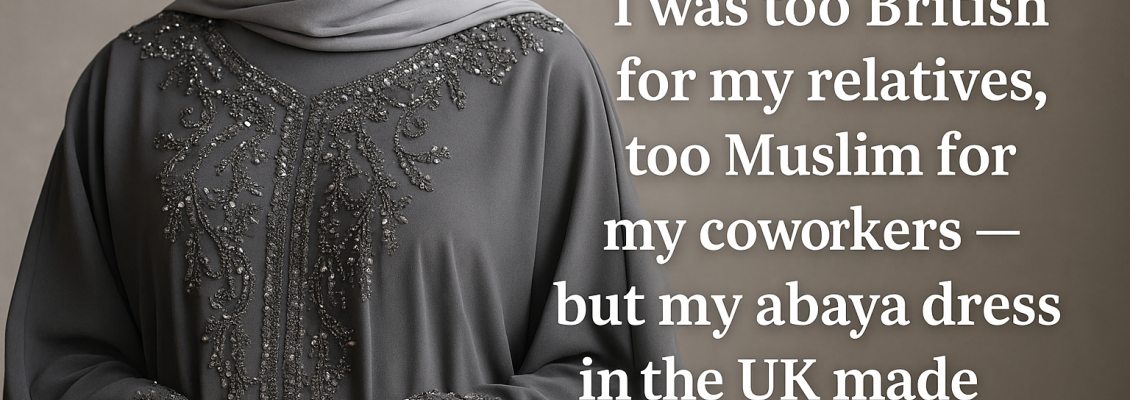
Leave a Comment