Abayas, A Traditional Wear For Muslim Women
Wearing abayas has been regarded as a necessity in conservative Islamic countries like Morocco, where women are expected to be modest in public. However, bays have also become popular with ordinary women from different cultures who opt to wear them for practicality and ease of movement. Styles vary, and abaya designs come in light, long, and thick fabrics. Abayas can be worn outside and indoors. Some ebay designs are loose fitting and others are snug-fitting to give the wearer maximum comfort and functionality.
In addition to the traditional abaya design for women, there are abaya styles for women who want to sport an abaya while swimming, hiking, or doing housework and chores around the house. Designs include kaftans, which cover the entire lower half of the body; the koftas abaya, which cover the lower half of the thighs; and the leggings abaya, which cover the lower half of the legs. Other abaya designs include long and short abayas for women who want to wear abayas while doing household chores. Long abayas are usually meant for older women.
There are away designs for women who want to show off their ethnic and cultural roots. Some bays feature Arab art and patterns, which give abayas its unique identity. There is a wide array of colorful abayas to choose from. These bays range from dull black to bright, vibrant colors. Black abaya styles are usually worn in standard black color, but some abayas are available in a variety of colors including green, blue, red, pink, yellow, and peach. Most of these bays are lightweight, functional, and elegant.
Another type of abaya design that is popular among Muslim women is the trendy abaya dress. This type of bay, which covers the entire body except for the hands and feet, can be worn during casual occasions. It can be paired with other accessories to create an elaborate outfit, or it can just be a basic cover up for everyday wear. The online ebay stores sell a wide array of trendy abaya dresses for both women and men. You can find an abaya that fits your personality and style, and you will look stunning in it.
In order to keep away designs current and in style, abaya boutiques have launched their line of latest ebay designs. Some of these designs include floral prints, bright colors, classic styles, and trendy cuts. The online ebay stores are now selling abaya designs from some of the best designers in the industry. You can choose a design that matches your personal preferences and that goes well with your religious beliefs. You can also choose an abaya design that has interesting embellishments, embroidery, and zardozi work.
Many women prefer the traditional hijabs, known as kaftans, over kalima abayas. Traditional tartan is made of black fabric and can either come with a matching hijab or with plain stitches. Traditional kaftan style cabanas are usually more formal and often used for official affairs. However, many women now choose to wear fashionable bays, which are available in trendy designs such as the new kaftan styles. In addition, abaya styles such as the contemporary kaftan, which is made of light cotton, come in a variety of colors such as white and green.
Another hot topic in the fashion industry is Muslim clothing, specifically bays, which are considered to be a must-have wardrobe essential for Muslim women. There is a great deal of concern about Muslim fashion in Western media, which portrays Muslim women as modest and covered up. This has led to a backlash against women who wear abayas, causing a great deal of diversity in clothing for Muslim women in the Western world. Abayas are very much in demand by Muslim women, both women and men, and abaya styles have become extremely popular in the past few years. The success of abaya styles has inspired many fashion designers to create their own versions of abayas, including Emaani and Zahara Elba, who have created the popular Emaani Online T-Shirt, Emaani Scarf, and Zahara Scarf.
For those who want to wear abayas, but cannot wear them while swimming, there is hope. There are now a large number of companies that design abayas with a tank top, camisole top, or a sleeveless jersey dress that conceals the abaya. These bays, which are also called abayas scarf or abaya tunic, are now available for everyday wear. Many online merchants offer these types of styles at low prices. If you do not like the styles that are available, you can have your clothing custom designed.
Easy Way to Shop For Muslim Fashion Abayas
Abayas are one of the most important traditional Islamic clothes, which are known to give a bride the required elegance and charm. Many online shops sell elegant cabanas online at affordable rates. If you are looking for the best quality abaya at affordable rates, then shop online. You will definitely find hundreds of online sellers offering cheap abayas for sale. To buy an abaya is not a tough job and does not take much time. You can find out more about bay design, color and materials used in our site.
Many online merchants offer elegant cabanas for women at cheap rates. You can find out the basic dress code for abaya collection online. Many of us are still not aware about which dress code to follow when wearing an abaya collection. So, know how hard it is to find a simple abaya for each event, and that's why online store has a wide assortment of elegant designs - so that you can easily piece together a perfect outfit to match your lifestyle.
Online ebay shop is known to sell full-length and ankle abayas with full-length loose tunics and ankle tunics. You can also get glamorous abayas and wraps, which can make you look gorgeous and elegant. You can also find stylish abayas with embellished designs, zardosi work, beads, sequins, and rhinestones. The elegant bay designed with exquisite embroidery and stunning embellishments will give you a classy and trendy look.
If you are looking to purchase cheap abayas online, you should be careful to avoid fraudulent websites. It is always advisable to choose an online store that is popular and well-established. Reputable online ebay shop will offer you authentic dresses at competitive prices. They will also provide you with excellent tips and suggestions that will help you create your perfect outfit. Whether you want to buy abayas or any other kind of fashionable clothing, you should do a thorough research to find the best online store.
There are several beautiful dresses that you can find in reputable ebay shop. You can choose from long, short, abaya tops, away pants, abaya shawls, abaya wraps, and away dresses. You can choose a dress that will hide your sins and at the same time make you stand out elegantly. The modest abayas online sold in the ebay shop will help you make the right choice.
Most of the online ebay shop will offer you Muslim fashion at competitive prices. You can shop at your convenience and choose from Muslim clothing that has been created by talented designers online. Most of these shops also have high quality away dresses for your purchase. You will also find exquisite abaya dress in many colors online.
Online shopping for Muslim fashion abacus will help you save a lot of your money. You will also be able to choose an ideal outfit for the special occasions during your stay at home. You can make your favorite outfits with your creativity and fashion sense. It is important to mention here that there are several bays online but not all of them will offer you a unique experience in terms of style, design, quality and fit. Therefore, before buying your favorite outfit, it is very important to select the right shop from a reputable online ebay shop.
Most of the online ebay shops offers you great deals in every conceivable size and style. They also offer you various customized services that will help you create your own style statement. When you shop abayas online, you will get to choose an elegant abaya with simple designs or one that is embellished with beautiful embellishments. However, you must keep in mind to choose an outfit that is simple and elegant.
How to Shop For hijabs?
The history of hijab is very interesting but highly complicated too. It's commonly worn by Muslim women for security and personal privacy purpose. It bills lots of dignity in a Muslim woman. However, whatever kind of hijabs you buy, they all adhere to the same Islamic norms. So when it comes to buying them, you should always be careful about their authenticity.
A typical Muslim woman wears hijabs during prayers at a mosque. It acts as a kind of headdress and covers the head from front to back. It doesn't have any other function except that. However, Islamic law specifies that women must wear hijab according to the extent of modesty. Hence, some women wear full veils as well. Some wear it just to hide face and hair; others wear it as a scarf.
In fact, there are so many types of hijabs available in the market. They are made of different fabrics and made of different metals too. Different kinds of artisans are specialized in producing different fabrics of these hijabs such as velour, charmeuse, silk, crepe, net and satin. Based on these different types of fabrics, colors are available too.
For example, abayas are the most popular choice for hijabs in light fabrics. Nowadays, abayas come with sleeves. Some come with hooded style too. They are basically knee length pajamas or long pants, light fabrics.
Another popular style is the Hijab scarf. These are called the designer hijabs because they are made by some highly famous designers of the Muslim fashion industry. These designs are considered to be contemporary and innovative. Hijab shawls are also made of light fabrics in various colors and patterns. They can be used during day time and night time too.
Then, we have the hijabs with printed patterns on them. They are called as the fashionable hijabs, as they add more glitz to the wearer's attire. The printed scarf styles usually look exquisite and elegant. Moreover, they are considered to be more modest than the plain and traditional long shawls.
For those who are looking for the best types of hijabs, they can choose the hijab scarves, which come in two major types. There are the Type I turban, Type IIa hibiscus, Type IIb square scarf, Type IIIa large square scarf and Type IIIb large square scarf. These different types of hijabs offer different looks, feel, and even prices. For instance, Type I is the least expensive, so if you are a modest person, you may want to get yourself a Type I.
On the other hand, Type IIa and Type IIb are considered to be the most fashionable. Those who would like to own Type IIa should be ready to shell out a little more. In terms of materials used, the light fabrics are usually used for the hijabs of Type I, medium fabrics for Type II and heavy materials for the Type IIb. The square scarves of Type III are considered to be the most elegant and most modern in the market today. Thus, if you are a Muslim, who wants to wear an Islamic apparel that adds more beauty to your attire and makes you more charming to others, consider getting a hijab scarf and show off your elegant and stylish side.
If you have no choice but to shop for hijabs because you are a modest person and cannot afford anything expensive, then shop for affordable hijabs. There are various types of affordable hijabs, which come in light and heavy fabrics, square styles, contemporary and traditional. You can easily find one within your price range that will fit your needs and style.
Another option that you have in choosing the perfect hijab style for you is to shop for hijabs made from polyester. Polyester fabric is resistant to colors, stains and mildew and thus, these types of hijabs are great for those who are allergic to cloth. These hijabs are also very fashionable and therefore, a great addition to your wardrobe. Some types of polyester hijabs that you can choose from are flat polyester, embroidered polyester, thick polyester and also DuraCord.
Lastly, you can opt for the traditional and modern types of hijabs. If you want to wear traditional hijab styles, you can try out long full length hijabs or medium length ones. On the other hand, if you would rather buy modern hijab, then you can try out square or triangular hijabs. In addition, there are various styles of Islamic hijabs, such as the classic black type, the white type, the opaque type and the designer types.
The latest trend in Islamic clothing is a garment known as the crinkle hijab. The designers of this garment have created a modern version of an Islamic head scarf. The head scarves are worn by Muslim women all over the world. The Muslim religion does not prohibit wearing the head scarves. They are considered to be a form of art by many women throughout the world.
The fashion industry has taken full advantage of this new venture. The new line of headwear is modeled after traditional Islamic patterns. They are available in many trendy colors and patterns. Like their traditional counterparts they come with beautiful printed motifs and rich, deep colors.
Unlike the traditional head scarves that can curl, crinkle head scarves do not curl. This gives them the appearance of folds which draw attention to the facial features. Some women prefer the crinkle scarf because it allows them to wear their head scarves while still looking stylish. This is very beneficial to busy women who cannot stay still long enough to apply traditional head scarves.
The designs of the scarf differ depending on the manufacturer. In Indonesia, for example, the design features palm trees with Arabic writing written symbols on them. The palm tree motif is used to represent peace and happiness. The Indonesian flag is also incorporated into the design. This adds to the beauty of the garment and makes it very appealing to women from many cultures and backgrounds.
The crinkle scarf comes with beautiful floral images and patterns. These add to its attractiveness and make it suitable for women who are passionate about flowers. The floral design can be small or large in size. It can be placed above the hairline or it can be styled into a band around the hairline.
The full head cover is stylish and comfortable to wear. It covers the entire head, except the eyes. Women from Islamic societies need to keep their heads covered when they are outside of the house. Using a scarf to do so makes it more practical than other types of head coverings that do not require religious observance. This is why this type of head scarf is very popular with women from this culture.
The crinkle hijab has been made available to women in a variety of sizes. It is suitable for women who have short hair and for women who wear it as a loose shawl. Women can even wear a full-length version, if they choose to. The full head scarf can be worn with a simple blouse or a trendy pair of jeans. It can be paired up with a long veil, if the woman chooses to wear one.
The crinkle hijab is very attractive and fashionable. It adds instant fashion to any outfit and can be worn by young and old women alike. Because it is designed with an open mesh, this type of head scarf can easily be stored when not in use. This is why many women who are not in the traditional Muslim culture wear this trendy fashion item as a symbol of their religion and culture.
Although this head accessory looks pretty, the price is reasonable. It costs around $50 and is affordable for every woman on every budget. This is also one of the few fashion items that will never go out of style. In fact, it has been popularized by celebrities and trendsetters such as Sarah Jessica Parker, Britney Spears, Halle Berry, and Jennifer Lopez.
Many celebrities choose to wear this head accessory because it looks smashing on anyone. It is not gender specific and can be worn by women of all ages. A lot of women also choose to wear them because they are very easy to wear. They don't have to be tied using special charms, there is no need to wear heavy beading, and they are very flexible.
As a result, anyone can wear head scarves without being worried about certain dress codes imposed by cultures. It can be worn at any time and by any person. Some women even choose to wear this while they are swimming and in the ocean. Even when going to a formal function, they can still sport their own unique head scarf.
If you are looking for an exciting new piece of fashionable headwear, the crinkle Hijab scarf is definitely the one to buy. It has been available for quite some time now and is still a top choice when it comes to head coverings. So, start sporting your own crinkle hijabs today.
Introducing our limited edition 3-piece Cloak Abaya set. This stunning set brings elegance, comfort and modesty for special occasions such as Eid and..
Introducing our limited edition 3-piece Cloak Abaya set. This stunning set brings elegance, comfort and modesty for special occasions such as Eid and..
Introducing our limited edition 3-piece Cloak Abaya set. This stunning set brings elegance, comfort and modesty for special occasions such as Eid and..
Elevate your style with Amani's elegant 24k gold plated set. Perfect for all occasions, this set ensures a stunning and regal appearance with its eleg..
This beautiful farasha style baati dress is made from soft cotton fabric that is both lightweight and airy, ideal for the warm summer months. Its rela..
Wearing the Hijab Wasn’t My Struggle — Letting Go of Who I Was Before It Was
It’s 2025, and modesty is everywhere — trending, tagged, and talked about. But behind every woman in hijab, there’s a story the mirror doesn’t show. One that isn't always wrapped in confidence or conviction. One that quietly unfolds between sujood and sorrow, between closet doors and inner whispers.
If you're here, reading this, maybe you're standing at that edge — the one between who you used to be and who you’re trying to become. Maybe the scarf was never your battlefield. Maybe you tied it with ease. Maybe the real tug-of-war wasn’t with fabric or fear — but with memories, habits, and the girl who once walked freely under a different gaze.
This blog isn’t about how to wear the hijab. It’s about what it costs — and what it gives back. It’s for the sisters who didn't struggle to cover their heads… but are still struggling to unclench their hearts. For the reverts, the raised-Muslim girls, the night dua-makers, and the ones who changed outside before they were ready inside.
Let this be our tea table, our journal, our late-night call. May these words sit with you the way a gentle sister would — not to instruct, but to walk beside you. Because wearing the hijab wasn’t my struggle — letting go of who I was before it was.
Table Of Contents
When I looked in the mirror and saw someone I didn’t recognize anymore
I remember the first time I caught my reflection after deciding to wear the hijab. It was early morning. The house was quiet. The world hadn’t yet stirred. And there I stood — wrapped, covered, almost... unfamiliar. I didn’t gasp. I didn’t cry. I just stared. The girl looking back at me wasn’t someone I hated. But she wasn’t someone I knew either.
It wasn’t the hijab itself that unsettled me. It was how much of me I no longer saw. The curves of my hairline, the glint of earrings that had once made me feel “me,” the bold lip color I used to swipe on as an act of silent rebellion — all gone. And in their place was a quieter presence. A deeper stillness. But also a strange hollowness I hadn’t prepared for.
No one tells you that the mirror becomes a battlefield — not of beauty, but of identity. That for some of us, the struggle isn’t “will I wear the hijab?” but “who will I be once I do?”
The layers that came off when the fabric went on
People often speak about the hijab as something that covers. But for me, it uncovered. It peeled away parts of me I’d grown used to — parts that had been stitched into my sense of self. Fashion choices that made me feel bold. Accessories that said I was in control. The flirtatious energy I could conjure with a single look. And suddenly, with one intentional act of submission, I laid all of that down.
Before the Hijab
After the Hijab
Statement earrings, bold lipsticks, styled hair
Plain scarves, neutral tones, hidden adornments
“Feminine power” shaped by media and validation
Quiet dignity defined by obedience to Allah
Aesthetic confidence, worldly approval
Inner conflict, spiritual awakening
“Me” as I’d built her for the world
“Me” as I was rebuilding for Allah
Looking in the mirror, I realized something that pierced deeper than any comment ever could: I didn’t miss the way I looked. I missed the way I felt when I looked that way. In control. Effortlessly accepted. Seen — but on my terms. The hijab took that illusion and shattered it gently. Now, I was being seen through a lens I didn’t control. Judged for my religiosity, my choices, my sincerity. And I wasn’t sure if I was ready for any of it.
Whispers that made me question myself
There were moments I’d stand in front of the mirror for too long, adjusting, readjusting, doubting. I’d ask myself questions that didn’t come with clear answers:
“Do I look like a real hijabi, or like I’m pretending?”
“Will they think I’m just doing this for attention?”
“Is this really me — or just a phase I’ve guilted myself into?”
And then the worst whisper of all: “Have I lost her — the version of me I used to love?”
That thought lingered longer than I care to admit. I’d scroll back through old photos — not out of vanity, but out of grief. I wasn’t mourning the looks. I was mourning the memories attached to them. The carefree nights, the inside jokes, the adventures that now felt like another lifetime. Was I allowed to grieve her? Or did that mean I hadn’t fully submitted?
The turning point: a conversation with my Rabb
One night, unable to sleep, I sat on my prayer mat and just… talked. No grand dua. No perfect Arabic. Just me, raw and shaking:
“Ya Allah, I don’t hate the hijab. I just don’t know who I am in it yet. Help me love this version of me. Help me see what You see.”
That was the beginning of something new. I stopped demanding that the mirror confirm my identity. I stopped looking for the old spark. Instead, I asked: what does sincerity look like on me? What does obedience feel like in my bones?
And slowly, new signs began to emerge. A sister smiled at me in the grocery store. A non-Muslim coworker asked thoughtful questions. A little girl pointed at me and whispered “mama, look, she’s Muslim like you.”
Piece by piece, the reflection began to feel familiar again — not because I looked like my old self, but because I recognized my own sincerity in my eyes. I saw a woman trying. A woman surrendering. A woman transforming, even if clumsily.
I don’t miss her anymore. I pray for her.
The girl I was before the hijab? I don’t resent her. She did the best she could with what she knew. But the woman I’m becoming now — she knows Whom she’s dressing for. She knows what kind of gaze matters most. And she doesn’t flinch at the mirror anymore.
If you’re standing where I once stood — unsure, unsteady, unseen even by your own reflection — know this: your face hasn’t changed. Only your compass has. And the woman you’re becoming is far more radiant than the one you left behind.
“The mirror didn’t lie. It just stopped reflecting who the world wanted me to be, and started revealing who Allah was calling me to become.”
Was I still me if I no longer dressed like her?
I didn’t expect the grief to come from fabric. Or rather, from the absence of it — the cropped jackets, the skinny jeans, the bold prints and statement heels that once lined my closet like little declarations of who I was. When I chose hijab, it wasn’t just a spiritual decision. It was a quiet burial of an identity I had carefully, consciously curated over years. And once I laid it to rest, the question that haunted me wasn’t about modesty or obligation. It was deeper. More frightening. More personal:
“Am I still me... if I no longer dress like her?”
See, nobody talks about the quiet identity death that modesty sometimes requires. Not the joyful, liberating rebirth — we hear a lot about that — but the actual mourning period. The awkward in-between. The mirror moments when your outfit says ‘obedience’ but your heart whispers, ‘Where did I go?’
Clothes were never just clothes
I used to think I dressed for fun. For flair. For function. But once I started packing away my old wardrobe, I realized I was dressing for a thousand other reasons too:
Why I Dressed That Way
What It Actually Reflected
To feel confident at work
My need to prove I belonged in any room
To turn heads in social settings
My desire to be seen, to be valued without words
To experiment with trends
My fear of missing out, of becoming invisible
To express “my personality”
My deep confusion about where identity truly lives
I didn’t realize how much I relied on my clothing to speak for me — until I replaced it with garments meant to speak for Allah. And in that shift, a silence grew. A void. I wondered: if my clothes no longer said “me,” what did?
Style, silence, and the soul
For weeks, I felt muted. My modest wardrobe was still new — not yet “mine.” The colors were safe. The cuts were loose. The flair I once curated so confidently now felt replaced with blandness. I didn’t feel beautiful. I didn’t feel strong. And worst of all, I didn’t feel like myself.
Friends who knew me before didn’t say it outright, but I could sense it in their awkward glances — as if they were watching me dissolve. I laughed less at brunch. I took fewer selfies. I stopped posting outfits of the day. I even shrank in photos, like I was apologizing for taking up space.
And every morning, as I tied my hijab, the same question whispered at the back of my mind: Was I still me?
Reclaiming the “me” I had buried
One night, I pulled out my old clothes. Not to wear — just to feel. I laid them on the bed like old photographs and remembered what each piece had meant. The floral skirt I wore to my first interview. The red dress from my graduation dinner. The leather jacket that always made me feel unbreakable. And I cried. Not because I missed the clothes — but because I finally gave myself permission to grieve what they represented.
And then something unexpected happened. I asked myself: what parts of *her* still live in me now? The answer surprised me.
She still writes poetry in the margins of her notebooks.
She still lights up at thunderstorms and Turkish tea.
She still curates color palettes, even if now they’re more muted.
She still dances — just now, mostly in private, between her and her Lord.
I realized I hadn’t lost *me*. I had just shed the armor. The masquerade. The external identity I once mistook for truth.
Style didn’t disappear. It deepened.
Eventually, I began to discover a new style language — one where modesty wasn’t erasure but elegance. Where beauty wasn’t disobedience, but dignity. I learned how to layer. I found local Muslim designers whose clothes made me feel radiant again. I explored natural fabrics, earthy tones, and silhouettes that allowed me to breathe.
Over time, getting dressed became an act of worship — not a loss of creativity. I started dressing for barakah, not attention. For peace, not applause. For Jannah, not the algorithm.
“I didn’t stop being me. I just stopped outsourcing my identity to clothing.”
You are still you, dear sister — just holier in your intention
So if you’re standing in your closet wondering where you went — if you’re staring at abayas or hijabs and thinking “this doesn’t feel like me” — I want to gently remind you:
Your essence never lived in fabric. Your soul is not stitched into patterns or brands. Your identity is not undone by dressing differently — it’s revealed by the choices you now make for the sake of Allah.
You are still funny. Still brilliant. Still radiant. And even if the world doesn’t recognize this new version of you — your Lord does. And that is more than enough.
“She is still me. But now she walks with purpose. She dresses with reverence. And she lives for something — Someone — far greater than herself.”
I thought I accepted the hijab — so why did I feel like I disappeared?
When I made the decision to wear the hijab, I didn’t expect fireworks. But I did expect peace. A quiet sense of righteousness. Maybe even spiritual applause from the angels. And in many ways, I got that. My heart softened in places I didn’t know were hard. My salah felt heavier with meaning. I started walking differently — not just in how I dressed, but in how I carried my intentions.
But no one warned me that along with the spiritual gains, there’d be an emotional loss. A strange vanishing. Like I had walked into a sacred garment… and disappeared inside it.
Not from Allah. But from the world. And sometimes, even from myself.
Acceptance doesn’t always feel like clarity
I had accepted the hijab with love. I knew it was truth. I wasn’t coerced. There was no dramatic event. Just a deepening — a pull I couldn’t ignore. And still, a few weeks in, I caught myself saying things like:
“I don’t feel like me anymore.”
“Why does everyone look past me now?”
“Maybe I wasn’t as ready as I thought.”
“Did I just trade visibility for obedience?”
The hardest part was that I couldn’t really talk about it. Because how do you tell people — especially other Muslims — that you feel invisible in the very thing that’s meant to make you spiritually radiant?
“I wore the hijab to honor Allah, but I didn’t expect it to feel like I was erasing myself.”
When visibility was part of my identity
Before hijab, I never realized how much of my worth was tied to being seen. Compliments. Likes. Eye contact. Smiles from strangers. Being remembered after a meeting. Being invited to sit closer, speak louder, shine more.
But after hijab, the social dynamics shifted. I didn’t get complimented as often. Sometimes I got overlooked entirely. In coffee shops, baristas asked the person behind me what they wanted before looking at me. On walks, men no longer smiled or nodded. Women didn’t always compliment my outfit. At work, colleagues stopped commenting on how I looked “put together.”
And while none of that was bad — in fact, it was part of what I wanted — it still left a void. Not because I needed the attention, but because I had unknowingly built part of my identity around it.
Hijab didn’t erase me — it exposed what I thought made me visible
Here’s the truth I learned the hard way:
Before Hijab
After Hijab
What I Realized
Compliments validated me
Silence made me doubt myself
I was more reliant on external approval than I thought
I felt “seen” through my style
I felt hidden behind modesty
Visibility and value are not the same thing
I believed I was confident
I realized my confidence was conditional
True confidence is inward, not outfit-based
“Me” was tied to my aesthetics
“Me” became tied to my silence
Silence isn't absence — it's a space for presence
Disappearance was a mercy in disguise
As painful as it was, disappearing from the gaze of the world became the very thing that allowed me to appear before Allah — raw, unfiltered, and finally unmasked. The hijab stripped away the noise. It distanced me from the performative version of myself I didn’t even know I was curating.
It was lonely. It was quiet. But in that silence, I heard something for the first time in years: my own soul.
She wasn’t gone. She wasn’t diminished. She was just waiting. For the space. For the stillness. For the certainty that who I am isn’t shaped by how the world sees me — but by how Allah sees me.
What I gained when I “disappeared”
✨ A deeper relationship with my Lord
✨ A sincere circle of sisters who valued my presence, not my outfit
✨ A freedom from the pressure to constantly “present well”
✨ A joy in beautifying my soul instead of just my reflection
✨ A humility that allowed me to finally see others more clearly too
I realized that disappearing from the world’s stage gave me access to a more sacred spotlight — the one that shines within. The one that Allah placed in every sincere heart. The one that doesn’t need filters or attention or applause to feel whole.
“Maybe I didn’t disappear. Maybe I just emerged — under layers of faith, with more light than ever before.”
To the sister who feels like she’s fading
If you feel like the hijab is hiding you… you’re not alone. If you feel like you’ve become less seen, less noticed, less praised — that’s okay. Allah is drawing you inward, not erasing you. You are not lost. You are being redefined — according to truth, not trends.
There is a version of you that shines without spotlight. That radiates without ruffles. That is so breathtakingly beautiful, it doesn’t need the world’s approval — because it already has Allah’s love.
“I thought I disappeared. But really, I was just being remembered — by the One who never forgets.”
Why did it feel like modesty took something instead of giving it?
There’s a stillness that comes with modesty. But sometimes, in the early days, that stillness doesn’t feel like peace — it feels like absence. An emptying. A taking away.
And it’s strange because we know — deep in our hearts — that modesty is a gift. A command from Allah. A mercy. A protection. But then why does it sometimes feel like loss? Like something beautiful was stripped from us instead of given to us?
I remember standing in front of my closet, holding outfits I used to love. Ones that made me feel radiant, confident, expressive. And I thought to myself: “Am I allowed to grieve this?”
“I embraced modesty for the sake of Allah — but my heart still missed the version of me that used to bloom through style.”
The silent mourning no one talks about
When we talk about modesty, especially hijab, the conversation is often framed around obedience — and rightly so. But rarely do we hold space for the *emotional cost* of that obedience. Especially for sisters who once found joy, creativity, or even identity in how they dressed.
I didn’t feel resentment — just confusion. Like I should’ve felt fulfilled, empowered, maybe even elevated. Instead, I felt muted. Dimmed. Like modesty had taken color from me… and replaced it with grayscale.
But the truth was more complex. Modesty didn’t take my light. It revealed what I’d been using to fuel it — and it wasn’t always the right source.
What I thought modesty would give me vs. what it actually gave me
Let me be honest: I had expectations. I thought modesty would immediately make me feel more respected. More dignified. More whole. Instead, I felt stripped of tools I’d used for confidence. Compliments vanished. Social ease faded. I wasn’t used to being unnoticed.
What I Expected
What I Experienced
What I Learned
Instant spiritual fulfillment
Lingering emotional confusion
Spiritual growth isn’t always immediate — it unfolds slowly
Respect from society
Judgment, invisibility, assumptions
Modesty isn’t for their eyes — it’s for Allah’s gaze
Stronger identity
Questioning who I was without my old style
My identity had been shaped by things that were never truly me
Empowerment
Silence and stillness that felt like shrinking
Sometimes stillness is the first stage of spiritual blooming
The real “taking” was a mercy in disguise
I had to unlearn the idea that every sacred choice would come with immediate ease. That’s not the way growth works. Sometimes Allah removes things we love — not to punish us, but to protect us from mistaking them for our essence.
Modesty took away the easy path of external validation. But in that absence, Allah gave me something deeper:
A resilience that didn’t need compliments to breathe
An inner confidence rooted in truth, not trends
Freedom from being consumed by the need to constantly curate myself
A private joy — the kind that exists quietly between me and my Lord
So yes, modesty took something. But it gave me back myself — the version of me who was no longer a performance, no longer seeking applause, no longer dressing for belonging in a world that never loved me fully anyway.
Learning to reframe the “loss”
When I began seeing modesty as subtraction, I felt bitterness. But when I reframed it as refinement, I felt mercy. Because maybe Allah wasn’t taking — He was chiseling. Sculpting something quieter, cleaner, more sincere.
There’s a Hadith that says:
“You will never give up something for the sake of Allah, but Allah will replace it with something better.” (Ahmad)
I read it once, and wept. Because I had been holding my grief in one hand, and my shame for feeling that grief in the other. But this Hadith gave me permission to hope. That my loss wasn’t the end — it was the space being made for better.
What modesty eventually gave me
It gave me new eyes. Eyes that stopped looking for mirrors, and started looking for meaning. Eyes that sought women of light, not just women of influence. Eyes that recognized the quiet strength of a sister who covers not because it’s easy — but because it’s sacred.
And somewhere along the way, I became that sister too.
“Modesty didn’t take away my color — it revealed the hue of my heart.”
To the sister who feels like modesty took something
I see you. I know it feels like you lost something beautiful. But I promise you — Allah replaces. You may have lost a version of you that felt vibrant, expressive, admired. But what you’re gaining is a version of you who’s closer to Jannah. Closer to sincerity. Closer to the woman you were always meant to be.
Let yourself grieve — but don’t let that grief turn you away from what’s true. The beauty you’re mourning was never the real source of your light. Allah is. And when you choose Him over the world’s idea of beauty, you don’t shrink — you ascend.
“I thought modesty took something from me. But now I see — it was returning something I forgot I had: dignity, depth, and divine closeness.”
The clothes changed, but my heart didn’t — and I was afraid it never would
I thought once I put it on, everything inside me would shift. That the cloth would carry the change into my bones. That covering myself would also transform me. But it didn’t. Not right away.
On the outside, I looked like someone who had submitted. Someone who had turned a page, embraced something higher, committed to Allah. But inside… it still felt like I was pretending. Like my heart hadn’t caught up with my wardrobe.
I would stand in front of the mirror, adjusting my hijab with practiced hands and an unpracticed soul. It was like dressing a stranger. A part of me feared I had only changed my costume — not my character.
“I wore the clothes of a woman transformed, but my nafs still whispered like before.”
The unseen tension between appearance and sincerity
There’s a quiet kind of despair that comes when your outsides are doing the right thing but your insides feel untouched. You wonder: Am I being fake?Is this hypocrisy? Or worse: What if this is as far as I ever get?
I used to compare myself to sisters who wore the same clothes but radiated a light I couldn’t seem to access. They looked at ease. Their tongues flowed with dhikr. Their steps were soft with taqwa. And me? I still flinched at stares. Still fought the urge to reach for old clothes. Still struggled with the same distractions, the same sins.
What was I missing?
Understanding the layers of transformation
We often assume that spiritual change is linear — that the heart shifts first, then the actions follow. But sometimes it’s reversed. Sometimes the actions come first, shaky and unsure, while the heart lags behind in doubt and discomfort.
Outer Change
Inner Reality
What It Revealed
Wearing hijab
Still craving validation
I had equated self-worth with beauty for too long
Praying on time
Heart distracted during salah
Routines don’t equal presence
Modest outfits
Missed the “fun” of dressing up
My joy was rooted in being seen — not being sincere
Quiet gatherings with sisters
FOMO for old events and parties
I hadn’t fully disconnected from dunya’s grip
This dissonance didn’t mean I was a bad Muslim. It meant I was human. And healing.
When sincerity follows structure
Sometimes, Allah asks us to walk first — and lets our hearts catch up later. Think of the companions of the Prophet ﷺ. Many of them took gradual steps in obedience. Allah revealed things in stages for a reason. Because transformation takes time. It is not instant — it is intimate.
The Prophet ﷺ said:
“Indeed, actions are but by intentions...” (Bukhari & Muslim)
But what happens when our intentions are still forming? When we don’t *feel* the spiritual high we thought would come with change?
We keep going. That’s the answer. We hold on — not because we already love it, but because we want to. And Allah sees that yearning. He honors that struggle. He meets us halfway.
The fear of never becoming “her”
I used to look at sisters who glowed with imaan and wonder: Will I ever feel like that? Will my heart ever be light? Will this ever feel like home?
But I’ve come to realize something. That kind of heart doesn’t arrive all at once. It’s not gifted on day one. It’s carved through effort. Shaped by showing up. Softened through du’a, night after night, even when you don’t yet feel worthy of it.
And slowly, without announcement, change begins.
Your gaze drops more naturally
You start to choose silence over gossip
You turn down music because it disrupts your peace
You smile at your hijab, not in frustration, but gratitude
And one day, without realizing it, your heart has arrived.
How I knew my heart had changed — quietly, beautifully
I was folding laundry. Just an ordinary day. And I picked up my old blouse — one of my pre-hijab favorites. I held it, and instead of longing, I felt… compassion. For the girl I used to be. For what she didn’t know. For how hard she was trying to belong.
But I didn’t want to be her anymore. I wanted what I had now: a quieter confidence. A connection to Allah that didn’t depend on appearances. A sense of being *held* — even when uncelebrated by the world.
“The clothes had changed. And eventually, my heart had too. Not because of the fabric — but because of Who I was wearing it for.”
If your heart hasn’t caught up yet…
Dear sister, give yourself grace. You’re not behind. You’re becoming. The act of covering — of choosing to obey even when your nafs resists — that is worship. That is sincerity in motion.
Keep going. The heart is not a light switch. It’s a garden. And gardens take seasons to bloom.
Plant the hijab. Water it with prayer. Shade it with good company. Feed it with knowledge. Protect it from the winds of comparison and the droughts of doubt.
And trust the Gardener. He never wastes what is planted for His sake.
“I thought I had to feel ready to obey. But I obeyed — and Allah made me ready.”
Was I holding on to dunya or just grieving who I used to be?
At some point in my journey, I found myself trapped in a silent question that gnawed at my soul: Was I clinging to the fleeting comforts of this world—dunya—or was I simply mourning the loss of who I once was?
It’s a delicate and confusing space to inhabit. Because on the surface, these two feelings look alike. The ache for what’s gone can mimic the pull of worldly attachments, and vice versa. But the root beneath them is vastly different.
The confusion between attachment and grief
When I first wore the hijab, the external change was immediate and visible. But internally, I was tangled in emotions I hadn’t anticipated. I felt a deep sorrow—not because I wanted the dunya’s glamor, but because I missed the identity I had crafted for myself. The style, the freedom, the carefree laughter that once defined me.
This sorrow felt heavy, like a loss without closure. Was I clinging to the past because I loved the world? Or was I grieving the innocence and joy that felt like they slipped through my fingers?
How I started to differentiate holding on vs. grieving
With time, I began to recognize some signs that helped me understand my heart’s true state:
Signs of Holding On to Dunya
Signs of Grieving Who I Used to Be
I constantly compared my modest style to flashy trends and felt envy
I reminisced about past moments with bittersweet fondness but didn’t crave the old lifestyle
My thoughts were mostly about appearances, status, and approval from others
I found myself reflecting quietly about how my values and desires were evolving
I felt restless and dissatisfied with modest clothing, wishing for more freedom
I experienced moments of sadness, but also gratitude for my spiritual growth
I resisted religious practices when they felt inconvenient or unpopular
I struggled with change but still yearned for closeness with Allah and peace
It was a painful but beautiful learning curve. Recognizing that grief is not sinful—it’s part of human nature. It means you had something precious, and now it’s different. It means your heart is tender and capable of deep love.
Why grief in spiritual transformation is natural and necessary
Letting go of a former self is a kind of spiritual death and rebirth. It’s a process that Allah honors, because through it we come closer to Him.
Grief is the soul’s way of clearing the old to make room for the new. When Prophet Muhammad ﷺ lost his beloved wife Khadijah and uncle Abu Talib, he grieved deeply. Grief didn’t weaken his faith—it purified it. It showed his humanity and his strength to endure.
So when I grieved my old identity, I realized I was in the company of prophets and pious women who also faced loss and transformation. This gave me courage to sit with the discomfort instead of running from it.
How I learned to honor my grief without falling back into dunya
One of the hardest parts was learning to grieve without falling into the trap of worldly attachment. Because it’s easy to mistake nostalgia for desire — to romanticize the past until it clouds your present.
Here’s what helped me:
Du’a for patience: Asking Allah for sabr to bear the pain and wisdom to grow through it.
Journaling reflections: Writing down my feelings to give them shape and release.
Connecting with sisters: Sharing my vulnerability and hearing their stories of transformation.
Reframing loss: Viewing my old self as a teacher, not a rival or enemy.
Seeking knowledge: Studying Quranic stories of change and mercy to rebuild my hope.
Each of these steps felt like soft rain on dry earth, slowly nurturing the garden of my heart back to life.
The moment I realized I wasn’t holding on anymore
I remember one evening sitting quietly after prayer. A wave of peace came over me, sudden and unexpected. I realized I no longer felt restless about the past or envious of worldly life. The sorrow was still there—but it was gentle, like a mother’s love for a child who has grown.
In that moment, I knew I had transitioned from holding on to grieving—and beyond that, to acceptance and love. I embraced the woman I was, the woman I am becoming, and the One Who holds both.
“Grieving was my heart’s way of saying, ‘I’m ready to grow.’ Holding on was its way of asking for comfort. Now I walk forward with both in balance.”
If you feel torn between old and new, you’re not alone
Sister, it’s okay to feel lost in between. It means you’re human, and you’re in a sacred process. Your heart is learning to navigate its new rhythms, its new loves, its new purpose.
Don’t rush your healing. Don’t judge your feelings. And never forget: Allah’s mercy is greater than your doubts. He is the Most Merciful, the Best of Planners, and He knows the whispers of your soul even when you don’t.
Bismillah, take your time. Your grief is a sign of growth. Your holding on is a call for healing. And both are beautiful parts of your journey to becoming the woman Allah designed you to be.
The silence from old friends was louder than I expected
There’s a unique kind of heartbreak that comes not from harsh words or visible battles, but from silence — the quiet absence of those who once knew you so well. When I started wearing the hijab, I was prepared for challenges with strangers or family, but the silence from old friends hit me harder than I ever imagined.
It wasn’t just the empty spaces in group chats or the missed invitations; it was the weight of invisibility that settled around me like a shadow. The same people who had shared laughter, late-night talks, and dreams suddenly became distant echoes. Their quiet withdrawal felt like a loud message: “You don’t belong here anymore.”
Why did silence hurt more than confrontation?
At first, I thought I could handle disagreements or even criticism. Those felt honest, at least. But silence? Silence carries a deep loneliness — it creates a void where connection once lived. It leaves you questioning yourself endlessly:
Did I do something wrong?
Was my decision to wear the hijab really that unbearable?
Were those friendships only skin-deep, never truly rooted in acceptance?
This silence was a loud reminder of how much I had changed, or at least how much I was perceived to have changed. It felt like a sudden invisibility cloak was thrown over my identity, and I had no choice but to sit with the quiet and wonder if I’d lost a part of myself in the process.
The stages of processing friendship silence
Reflecting back, I recognized distinct emotional stages I went through as I faced this silence:
Stage
Emotion
Reflection
Shock
Confusion and disbelief
"How could those who once knew me so well simply disappear?"
Hurt
Sadness and loneliness
"I miss the connection. Why am I being excluded silently?"
Anger
Resentment and frustration
"Is this judgment for my faith or my choices? Why won’t they just speak?"
Reflection
Introspection and self-questioning
"What did those friendships really mean? Were they conditional?"
Acceptance
Peace and understanding
"Some people walk with us for a season, and that’s okay."
Growth
Renewed faith and new connections
"I can find sisterhood in unexpected places, grounded in shared values."
What I learned from the silence
As hard as it was, the silence forced me to confront some truths about friendship, identity, and faith. Here’s what I learned:
Not all friendships are built to last forever. Some serve their purpose for a season, and parting ways is natural, even if painful.
True acceptance doesn’t require words. It’s reflected in consistent love, respect, and support — silence can be a sign of lacking these.
My identity isn’t defined by others’ approval. Wearing the hijab was a choice I made for my faith, not to please anyone else.
Loneliness can be a doorway to deeper connection. When old friends fell silent, new sisters and spiritual companions entered my life in unexpected ways.
How I rebuilt connection on my own terms
Facing this silence, I realized I had two choices: cling to the past or embrace the unknown. I chose the latter, even though it felt scary at first. Here’s how I started rebuilding:
Reaching out with honesty: I messaged a few old friends and shared my feelings. Some responded with kindness, others with distance — and I accepted both without resentment.
Joining communities aligned with my values: Whether it was a local mosque group, an online sisterhood, or a study circle, I sought spaces where I could be seen and supported.
Creating new rituals: From small du’as to monthly gatherings, I fostered new traditions that nurtured my heart and soul.
Allowing myself to grieve: I acknowledged that losing old friendships was a form of grief and gave myself permission to feel sad without guilt.
Each step was a reminder that while silence can be deafening, it’s also an invitation to listen — to my heart, my faith, and the whispers of new beginnings.
A heartfelt du’a for those navigating silence
“O Allah, soften the hearts of those who have turned away. Replace their silence with kindness, their distance with understanding. Grant me patience in the loneliness, strength in the solitude, and open doors to sisterhood rooted in Your love. Make this silence a passage, not a prison.”
Sister, if you feel the sting of silence from those you once called friends, know that your feelings are valid. Your faith is precious, and your journey is sacred. May you find peace in the quiet, and may Allah surround you with companions whose love never fades.
I said bismillah — but part of me whispered, am I sure?
The moment I decided to wear the hijab, I remember saying “Bismillah” — in the name of Allah, a hopeful, powerful start. But beneath that outward declaration was a quieter, hesitant voice, whispering: “Am I sure? Can I really do this?”
That whisper was not just doubt; it was a swirl of emotions, fears, and questions. It’s natural to feel uncertain when embarking on a path that will visibly change how the world sees you and how you see yourself.
What does “Bismillah” really mean in moments of doubt?
“Bismillah” is more than a word — it’s a declaration of trust, a surrender to divine guidance. Yet, it does not erase human feelings of hesitation or fear. Saying “Bismillah” means stepping forward with faith, even when the path feels unclear.
In many ways, the whispered question “Am I sure?” is a sign of humility. It acknowledges the weight of this decision and respects its impact on your life. It also reveals the tension between heart and mind, faith and fear.
Common doubts and fears before fully embracing hijab
Many sisters face similar doubts. Below is a table summarizing common fears and the truths that can help soothe them:
Common Doubts
Underlying Fear
Truth to Remember
“Will people accept me?”
Fear of rejection and social isolation
True acceptance comes from Allah and those who love you genuinely.
“Can I handle the changes in lifestyle?”
Fear of losing freedom or identity
Modesty enriches identity; it’s not a loss but a rediscovery.
“What if I’m not ready?”
Fear of failure or not being perfect
Growth is a process; sincerity and effort matter more than perfection.
“Will I regret this decision?”
Fear of making a permanent choice too soon
Faith is a journey; you can always learn and grow along the way.
How I navigated my inner whisper
Those whispers of doubt didn’t vanish overnight. Instead, they became moments of reflection and growth. Here’s how I navigated them:
Pausing to acknowledge my feelings: I allowed myself to feel uncertain without guilt, understanding that doubt is a natural part of change.
Seeking knowledge and support: I read books, attended lectures, and connected with sisters who had walked this path before me. Their experiences reassured me.
Praying for clarity: I made du’a consistently, asking Allah to guide my heart and remove confusion.
Taking gradual steps: Instead of rushing, I incorporated modest changes slowly, giving myself space to adjust mentally and emotionally.
Journaling my journey: Writing down my thoughts helped me track my progress and see how far I’d come, even on days I felt uncertain.
The power of “Bismillah” as a commitment, not a guarantee
Saying “Bismillah” is not a magical guarantee that everything will be easy or perfect. It is a commitment to try, to trust Allah’s plan even when it feels daunting. It means:
Starting with intention — sincerely wanting to grow closer to Allah.
Accepting that struggles and doubts are part of the journey.
Welcoming support from community and faith-based resources.
Being patient with yourself as you learn and evolve.
Encouragement for those who whisper “Am I sure?”
If you hear that whisper, know you are not alone. It is a sign that your heart is processing the weight of this important choice. Here are some gentle reminders:
It’s okay to feel unsure. Faith grows in both certainty and uncertainty.
Seek knowledge, not just opinions. Understanding your reasons helps strengthen your conviction.
Surround yourself with compassionate support. Find sisters who uplift without judgment.
Give yourself time. Growth is rarely instant — patience is a form of faith.
Remember that Allah’s mercy is boundless. Your effort and sincerity matter most.
A final reflection
The moment I said “Bismillah” marked the beginning of a profound spiritual journey. Yes, a part of me whispered, “Am I sure?” — but that whisper led me to deeper reflection, stronger faith, and ultimately, peace. Wearing the hijab became not just an external act, but an inward transformation shaped by trust, struggle, and hope.
“Say, ‘My prayer and my sacrifice and my life and my death are for Allah, Lord of the worlds.’” — Quran 6:162
To every sister stepping into this path, hold onto your “Bismillah” and honor the whispers of your heart. They are part of your unique journey — one that Allah sees, understands, and rewards.
Is it okay to miss the girl I used to be, even if she wasn’t good for me?
Change is a complicated journey, especially when it involves shedding old identities that once felt familiar, even if they weren’t always healthy. When we grow and evolve—especially in matters of faith and personal values—it’s natural to sometimes look back and miss the girl we used to be. But what if that “girl” wasn’t truly good for us? Is it okay to feel nostalgic for a past self that no longer serves our best interest?
The honest answer is yes, it’s okay. Missing the girl you used to be doesn’t mean you want to go back to unhealthy patterns or choices. Rather, it reflects the human need to grieve and acknowledge a past chapter before fully embracing what lies ahead.
Understanding the emotions behind missing your past self
We often associate nostalgia with positive memories — laughter, friendships, simpler times. Yet, missing your old self can be more complex, blending bittersweet feelings:
Comfort in familiarity: Even if the past self had flaws, she was known and predictable.
Loss of identity: Major life changes can feel like losing a part of who you are.
Regret or guilt: Sometimes missing the old self comes with sorrow for past mistakes or lost opportunities.
Fear of the unknown: Letting go means stepping into uncertainty, which can be intimidating.
Why it’s natural to miss the old you — even if she wasn’t good for you
Leaving behind old habits, mindsets, or lifestyles can feel like losing a friend. It’s important to recognize this grief as part of healthy transformation:
Reason for Missing Old Self
Explanation
How to Cope
Attachment to routine
Old habits create comfort and reduce uncertainty.
Create new routines gradually; find healthy rituals that feel comforting.
Fear of losing social connections
Changing can alienate friends or family who knew your old self.
Seek new supportive communities aligned with your values.
Identity crisis
Major changes can cause confusion about “who am I now?”
Practice self-reflection and journal your evolving identity.
Unfinished emotional processing
Some feelings from the past may remain unresolved.
Allow yourself to grieve and consider therapy or mentorship for healing.
How missing your old self can be a sign of growth
Ironically, feeling nostalgic or even sad about who you were can indicate positive things happening inside you:
Awareness: You’ve gained insight into what parts of your past no longer serve you.
Capacity for change: You’re strong enough to face discomfort and uncertainty.
Compassion for yourself: You honor your journey, including mistakes and struggles.
Desire for authenticity: You want to live in alignment with your true values.
Practical tips for embracing your present self while honoring the past
Missing your old self doesn’t mean you have to stay stuck in the past. Here are ways to acknowledge your feelings and move forward with grace:
Give yourself permission to feel: Don’t rush or judge your emotions. Grieving a former self is part of healing.
Reflect on lessons learned: Write down what you’ve gained from your past experiences—even the difficult ones.
Celebrate your progress: Recognize how far you’ve come and the values you now uphold.
Set small, achievable goals: Build confidence by gradually embodying your new self.
Connect with others on a similar path: Sharing stories can normalize your feelings and provide support.
What Islamic teachings say about change and self-reflection
Islam encourages self-improvement and acknowledges human imperfection. The Prophet Muhammad (peace be upon him) said, "The best among you are those who improve themselves." (Sahih al-Bukhari)
Islamic teachings emphasize:
The mercy of Allah for past mistakes.
The power of sincere repentance and renewal.
The importance of intention (niyyah) in all actions.
That growth is a lifelong journey, not a fixed destination.
This perspective can help ease the tension between missing who you were and embracing who you are becoming.
Final thoughts: Loving yourself through every chapter
It’s completely human to miss the girl you used to be — the familiar, the comfortable, even the flawed. That feeling doesn’t negate your growth or commitment to a better path. Instead, it’s a sign of a heart that cares deeply and a spirit willing to evolve.
Remember, your journey is uniquely yours. Honor your past without clinging to it. Embrace your present with patience and compassion. And trust that with time, the new you will feel just as familiar—and just as lovable—as the girl you once were.
The moment I realized hijab wasn’t hiding me — it was exposing the real me
For many, the hijab is often misunderstood as something that conceals identity, masks personality, or restricts freedom. Early on in my journey, I shared some of these misconceptions. I thought the hijab was a barrier — a way to hide myself from the world. But then, one transformative moment shattered that illusion and revealed the deeper truth: the hijab wasn’t hiding me; it was exposing the real me.
This realization was not instantaneous. It was a gradual unveiling — a process of unlearning, reflecting, and embracing vulnerability. What I once perceived as a constraint, I later understood as a powerful form of self-expression and liberation.
Why the hijab feels like hiding at first
When I first wore the hijab, it felt like a shield that made me disappear. There were moments of doubt and fear:
Fear of being judged: Would people see me differently? Would I lose friends or opportunities?
Uncertainty about identity: Was I still the same person under this new exterior?
Pressure to conform: I worried about fitting into stereotypes or expectations tied to modesty.
At times, I felt like the hijab was a mask that obscured who I really was, limiting my freedom to express myself through fashion or appearance. These feelings are common for many who begin wearing hijab and confront a world full of assumptions.
The turning point: from hiding to exposing
The shift happened slowly, as I started to explore the meaning behind hijab beyond its physical form. I realized that:
Hijab is not about hiding beauty, but about redefining it: It invites us to cultivate inner qualities — kindness, humility, strength — that define true beauty.
Wearing hijab clarifies my values: It reminds me daily who I want to be, independent of external validation.
Hijab empowers authenticity: By choosing to wear it for myself and not others, I embraced my true identity rather than masking it.
How hijab exposes the real me
By covering certain external aspects, hijab shifts the focus to what truly matters — character, intentions, and actions. Here’s a breakdown of how hijab acts as a mirror reflecting the real self:
Aspect
Before Hijab (Hiding)
After Hijab (Exposing the Real Me)
External appearance
Focused on trends, makeup, and societal beauty standards
Shifted to modesty, simplicity, and personal dignity
Self-identity
Defined by external validation and social acceptance
Anchored in faith, values, and inner conviction
Interactions with others
Often shaped by surface impressions and assumptions
Centered on genuine character and respect
Confidence
Dependent on appearance and approval
Rooted in self-respect and spiritual fulfillment
Freedom
Perceived as unrestricted but often bound by superficial norms
Redefined as freedom to be authentic and true to oneself
The spiritual and emotional liberation behind hijab
Hijab is not only a physical garment but a profound spiritual journey. It challenges us to grow emotionally and mentally by:
Building resilience: Standing firm in personal convictions despite societal pressures.
Encouraging mindfulness: Constantly reminding oneself of intention and purpose.
Fostering humility: Recognizing that worth is beyond surface-level attributes.
Through these dimensions, hijab opens the door to a deeper relationship with oneself and with Allah, revealing layers of identity previously hidden beneath the noise of external appearances.
Addressing common misconceptions about hijab
Many misunderstand hijab as a tool of oppression or concealment. Here are some common myths contrasted with reality:
Myth
Reality
Hijab restricts freedom
Hijab is a personal choice that can increase spiritual and emotional freedom.
Hijab hides personality
Hijab highlights true personality by shifting focus to character and actions.
Hijab is only about modesty
Hijab encompasses faith, identity, empowerment, and a connection to self.
Hijab isolates women socially
Hijab can strengthen community bonds among those who share similar values.
Practical ways hijab exposed the real me
Since embracing hijab with intention, I noticed several tangible changes in how I live and interact:
Greater self-respect: I became less tolerant of negativity and more protective of my peace.
Clearer boundaries: My interactions gained purpose and meaning.
Stronger voice: I spoke up more authentically and confidently about what mattered to me.
Deeper relationships: Friendships formed on values rather than superficial interests.
Conclusion: Hijab as a journey of self-discovery
The moment I realized hijab wasn’t hiding me but exposing the real me was liberating beyond words. It taught me that true identity isn’t found in how much we reveal outwardly, but in how deeply we connect with our inner truth.
Hijab, far from being a veil of invisibility, is a lens of clarity — helping us see ourselves more honestly and live more authentically. It invites us to step out of shadows of doubt and into the light of self-acceptance, strength, and faith.
For anyone struggling with the idea of hijab as hiding, I encourage you to look beyond appearances. Explore the spiritual, emotional, and personal freedom that can come from choosing to expose the real you, one mindful step at a time.
My faith was visible now, but my insecurities were louder than ever
Wearing the hijab marked a visible declaration of my faith. It was a profound milestone — a symbol of devotion, commitment, and identity. Yet, paradoxically, as my faith became more visible to the world, my insecurities grew louder than ever inside me.
This internal struggle is one that many experience when their outer transformation doesn’t immediately quiet the doubts and fears within. While faith and confidence should ideally grow hand in hand, the reality is often more complicated.
The paradox of visibility and vulnerability
When my faith became visible through hijab, it invited a spotlight — not just admiration, but scrutiny. Suddenly, I was no longer anonymous; I was a representative of something larger than myself.
Visibility increased pressure: Every action, every word seemed to be judged not just as me, but as “the hijabi.”
Internal insecurities amplified: I questioned if I was “good enough” spiritually, socially, and personally.
Fear of judgment and rejection: Would I be accepted by old friends? Would strangers see me only as my faith?
In this paradox, I felt exposed — my faith was on display, but my confidence was fragile. The more visible I became, the more my insecurities whispered their doubts.
Common insecurities faced after outward change
It’s important to recognize that insecurities aren’t unique to any one person or faith. Here’s a breakdown of common insecurities many face after making a visible change like adopting hijab:
Insecurity
Description
Impact
Ways to Overcome
Fear of Judgment
Worrying about how others perceive your appearance or faith
Leads to social anxiety and hesitation in interactions
Focus on self-approval and reminders of personal intention
Self-Doubt
Questioning spiritual sincerity or authenticity
Creates inner conflict and spiritual discouragement
Engage in reflective prayer and seek guidance from mentors
Loss of Social Circles
Fear that old friends will drift away due to changes
Feelings of loneliness and isolation
Build new communities with shared values and interests
Body Image Concerns
Uncertainty about self-worth beyond physical appearance
Low self-esteem despite modest dress
Practice self-compassion and affirm inner qualities
How I faced my insecurities head-on
Recognizing my insecurities was the first step toward healing. Here’s what helped me navigate that challenging internal landscape:
Mindful self-reflection: Journaling my thoughts helped identify specific fears and their roots.
Seeking support: Talking to trusted friends, family, and mentors provided encouragement and perspective.
Spiritual practices: Prayer, meditation, and reading Quran reminded me of my purpose beyond appearances.
Setting realistic expectations: Accepting that growth is a process and insecurities don’t vanish overnight.
The role of faith in overcoming insecurity
Faith became my anchor when my insecurities threatened to pull me under. I learned that:
Faith isn’t about perfection: It’s about striving, struggling, and growing despite imperfections.
Vulnerability is a strength: Being honest about doubts allowed me to seek help and build resilience.
Divine acceptance surpasses human judgment: My worth is ultimately defined by God, not by people’s opinions.
Practical tips to quiet insecurities after outward change
If you’re feeling overwhelmed by insecurities after making a visible shift in your faith or identity, consider these strategies:
Strategy
Description
Benefits
Affirmations
Daily positive statements reinforcing self-worth and faith
Boosts confidence and rewires negative thought patterns
Community Engagement
Joining groups or forums that share your beliefs and experiences
Provides a sense of belonging and shared encouragement
Professional Support
Seeking counseling or coaching for anxiety or self-esteem issues
Offers tools and techniques to manage insecurities healthily
Mindfulness Practices
Activities like meditation or breathing exercises to stay present
Reduces anxiety and fosters emotional balance
Reflection: The evolving nature of faith and self-confidence
My journey taught me that faith and confidence don’t always grow in perfect sync. There are moments when faith shines outwardly but inner doubts rage quietly. This is normal and human.
The key is patience with oneself — understanding that insecurity does not mean failure, but an opportunity for growth. Every time I faced my insecurities, I uncovered a deeper layer of faith and self-acceptance.
Conclusion: Embracing vulnerability as part of faith
My faith being visible did not erase my insecurities, but it gave me the courage to face them. The hijab and outward expressions of faith are not shields from vulnerability; they are invitations to embrace it.
For anyone feeling overwhelmed by insecurities after a visible change in faith or identity, know that you’re not alone. Your insecurities do not define you — your courage to keep moving forward does.
With faith as my foundation and vulnerability as my strength, I continue to grow, learning to balance outward visibility with inner peace.
When every outfit felt like a costume I hadn’t earned yet
There’s a unique kind of discomfort that comes with putting on clothes that don’t yet feel like “you.” When I first began dressing modestly and wearing the hijab, each outfit felt less like an authentic expression of myself and more like a costume — something I was wearing temporarily, something I hadn’t fully earned or grown into. It was as if the clothes were speaking a language I hadn’t yet mastered.
This feeling is common for many who transition into a new way of dressing tied deeply to identity and faith. The outward change happens faster than the inward transformation, leaving a sense of disconnect between appearance and self.
Why did my clothes feel like a costume?
The clothes I wore symbolized a new chapter, but I hadn’t yet internalized the beliefs and confidence that would make those clothes truly mine. Several factors contributed to this sensation:
Impostor syndrome: Feeling like I was pretending to be someone I wasn’t yet.
Social pressure: Concern about how others would perceive me in my new attire.
Lack of personal style integration: Struggling to reconcile modest fashion with my personality and taste.
Uncertainty about my spiritual journey: Questioning if I was “worthy” of this new identity.
The stages of adapting to new clothing styles
Adjusting to a new dress style connected to faith or identity is a process that can be mapped into stages. Understanding these can help ease the discomfort:
Stage
Description
Typical Feelings
What Helps
Initial Change
First days/weeks of wearing new style
Excitement mixed with awkwardness, feeling like a “costume”
Patience and self-compassion; reminders of your intention
Adjustment
Trying to find balance between modesty and personal style
Uncertainty, experimenting with looks, occasional doubt
Explore modest fashion blogs, connect with others
Integration
Gradually feeling more comfortable and authentic
Growing confidence, feeling clothes are “mine”
Celebrate small wins, embrace imperfections
Embracing Identity
Clothes and inner self align
Authenticity, peace, pride in appearance and faith
Continued self-growth and reflection
How to move from feeling like a costume to authentic expression
The shift from “costume” to “true self” is an emotional and spiritual journey. Here are some practical steps that helped me and can help others:
Allow yourself time: Recognize that authenticity evolves over months or even years, not overnight.
Personalize your style: Incorporate colors, fabrics, and accessories that resonate with your personality.
Connect with community: Surround yourself with others who understand the journey and can offer encouragement.
Reflect on your intentions: Revisit why you chose this path and let that anchor you in moments of doubt.
Practice self-compassion: Be gentle with yourself on days when the clothes still feel “off.”
Why fashion is more than fabric: Identity and perception
Clothing is deeply tied to identity. When our appearance changes, it challenges not only how others see us, but also how we see ourselves. The tension arises because:
We often define ourselves through familiar aesthetics and habits.
Sudden changes disrupt these mental anchors, leading to feelings of unfamiliarity or imposter syndrome.
Societal and cultural perceptions add external pressure to “perform” an identity.
Understanding this helps normalize the discomfort and shows it is part of a larger identity shift, not a personal failing.
Reflection: What does “earning” your outfit really mean?
The idea that I “hadn’t earned” my clothes was rooted in self-doubt and unrealistic expectations. What I truly craved was alignment between how I felt inside and what I wore outside. Earning this alignment meant:
Embracing my imperfections and doubts as part of growth.
Allowing faith and self-love to build gradually.
Recognizing that no outfit or external symbol can define my worth.
This realization transformed my relationship with clothing from a performance to a form of self-expression and spiritual reflection.
Final thoughts: Clothing as a journey, not a destination
Every outfit I wore once felt like a costume. Now, many years later, I see clothing not as a label but as a journey — a series of steps toward becoming more comfortable in my skin and my faith.
If you are in this place of discomfort, know it is temporary and meaningful. The “costume” will become your uniform of authenticity with time, patience, and kindness toward yourself.
I dressed the part — but when would my heart follow?
There’s a profound gap that can exist between outward appearance and inner feelings, especially during times of personal transformation. I found myself “dressing the part” — wearing the hijab and modest clothes, outwardly signaling my commitment — but my heart often felt like it was lagging behind, hesitant, uncertain, or even resistant. This dissonance was painful, confusing, and deeply human.
This section explores that emotional and spiritual gap many experience when external change precedes internal acceptance, and how the journey toward authentic alignment can unfold.
The disconnect between appearance and feeling
At first, the clothes and hijab felt like a label I put on myself to meet expectations — from family, faith communities, or my own aspirations. But inside, my emotions hadn’t fully caught up. I struggled with questions like:
“Am I really ready for this change?”
“Is this who I truly want to be?”
“Why do I feel so lost when I’m wearing the clothes of faith?”
This internal conflict can cause feelings of guilt or inadequacy, making it harder to reconcile the visible signs of commitment with the invisible struggles within.
Why does the heart lag behind?
The heart can lag behind for many reasons. Understanding them helps reduce self-judgment and fosters patience.
Reason
Description
How it affects the heart
Emotional processing
Adapting to new identity requires emotional adjustment
Mixed feelings of doubt, fear, and hope slow inner acceptance
Past wounds
Unresolved pain or experiences shape resistance
Old fears or traumas can block wholehearted commitment
External pressures
Pressure from society, family, or peers can cause internal conflict
Heart may feel forced rather than willingly committed
Spiritual growth pace
Personal spiritual journeys happen at different speeds
Heart needs time to grow comfortable with new beliefs and practices
Identity struggle
Balancing old self and new self
Heart may resist change as it mourns what’s left behind
How to nurture your heart to catch up with your outward change
The journey toward internal alignment is gradual and requires tender care. Here are practical ways to nurture your heart:
Practice self-compassion: Accept that your feelings are valid and part of growth.
Reflect regularly: Journal or meditate on your feelings to understand what’s holding you back.
Seek community support: Connect with people who understand your journey without judgment.
Engage in spiritual practices: Prayer, reading, and contemplation can open the heart over time.
Allow time: Recognize that genuine change often unfolds slowly.
Personal story: When my heart finally followed
For months, I wore the hijab and modest clothes, but my heart felt like an outsider to my own transformation. I was scared to admit that sometimes I resented the change, even though I believed it was right for me. Over time, through quiet moments of prayer, honest conversations with trusted friends, and learning to forgive myself for feeling “behind,” I began to feel a softening inside.
The breakthrough came not from a sudden epiphany, but from consistent small steps—allowing myself to be vulnerable and open, to question without fear, and to lean into faith even when I felt fragile. Gradually, the clothes I wore started feeling less like armor and more like an expression of the woman I was becoming.
Why “dressing the part” is still valuable
Even when the heart lags, dressing the part matters. It signals commitment—to yourself and to the values you aspire to embody. It creates an external environment that can eventually support inner growth. Sometimes the action leads the feeling, not the other way around.
Think of it like learning to swim. You don’t wait to feel confident before you get in the water — you start moving, and confidence builds as you practice.
When to seek help
While some heart lag is natural, persistent feelings of anxiety, depression, or alienation shouldn’t be ignored. Seeking guidance from counselors, spiritual mentors, or mental health professionals can be vital in navigating these complex emotions and fostering healing.
Summary table: Heart vs. Appearance
Aspect
Outward Change
Inner Feeling
Path to Alignment
Appearance
Hijab, modest clothing, visible markers
May feel “costume-like” or “forced” at first
Practice patience and explore personal style
Heart
Desire for authenticity and faith
May experience doubt, fear, or resistance
Engage in reflection, prayer, and self-compassion
Identity
New outward identity presented
Old identity mourning or struggle
Balance acceptance and growth, seek support
Final thoughts
The gap between dressing the part and having your heart truly follow is a deeply human experience on the path to transformation. It’s not a sign of failure or insincerity but a natural part of growth. By honoring your feelings, seeking support, and giving yourself grace, your heart will gradually catch up to your outward expression, making your journey more whole and authentic.
Why did I fear being seen more now that I was covered?
It might seem paradoxical at first: after choosing to cover myself, to embrace modesty through hijab and modest clothing, why would I feel more exposed rather than less? Why would I fear being seen more, when the very act of covering was supposed to provide privacy and protection? This question haunted me deeply, revealing a complex emotional and psychological landscape beneath the surface of my outward transformation.
This section delves into the layered reasons behind this fear, the societal and personal factors at play, and how learning to navigate this fear became a crucial part of my journey.
The paradox of visibility through covering
Covering is often thought to shield one from attention, creating a barrier between the individual and the outside world. However, for many women who choose hijab, the opposite can happen — the act of covering can make one more visible in certain ways.
This paradox exists because:
Hijab and modest clothing mark you as “different” in many societies, attracting curiosity or scrutiny.
Covering can shift attention from physical appearance to identity and beliefs, making you more “seen” as a representative of faith.
Preconceived notions and stereotypes around covered women can create unwanted judgment or assumptions.
Understanding why I feared being seen more
Reflecting on my feelings, I realized several intertwined fears contributed to my anxiety about visibility after covering:
Fear
Description
Impact on Me
Fear of judgment
Being visibly identified with a faith or lifestyle can invite unsolicited opinions, stereotypes, or criticism.
I worried about being misunderstood or unfairly labeled.
Fear of standing out
Covering made me visibly different from peers or society’s dominant norms.
I felt isolated, self-conscious, and afraid of drawing attention.
Fear of losing anonymity
Previously, blending in allowed a kind of emotional safety and freedom.
I felt vulnerable as a visible symbol of faith or identity.
Fear of confrontation
Concerns about verbal or physical harassment due to visible faith markers.
I anticipated hostility, which increased anxiety about being “seen.”
Fear of internal exposure
Feeling that covering exposed not just my body, but also my beliefs and vulnerabilities.
I feared emotional exposure alongside physical visibility.
The societal lens: How external perceptions shaped my fear
In many Western or secular contexts, hijab and modest clothing are often misunderstood or politicized. Media portrayals and public discourse sometimes paint covered women with stereotypes — as oppressed, overly religious, or unapproachable.
This external narrative infiltrated my consciousness, making me wary of how others might interpret my choice. I feared being reduced to a caricature rather than being seen as a whole person.
Moreover, in mixed or non-Muslim communities, the hijab can be a visible marker of difference, which can lead to questions, stares, or even discrimination. This “othering” made me hyper-aware of my appearance, intensifying my fear of being seen.
The internal struggle: Reconciling identity and visibility
Covering made me confront not only how others saw me but also how I saw myself. There was a tension between wanting to express my faith openly and wanting to protect my privacy and vulnerability.
Internally, I struggled with:
Feeling exposed emotionally, as covering made me more consciously connected to my faith and values.
Worrying about living up to the ideals and expectations associated with being a visibly practicing Muslim woman.
Reconciling pride in my identity with fear of rejection or misunderstanding.
How I learned to embrace being “seen”
The journey from fearing visibility to embracing it was gradual and required intentional effort. Here’s what helped me along the way:
Redefining what “being seen” means: Instead of viewing visibility as vulnerability, I began to see it as a form of courage and authenticity.
Building a supportive community: Surrounding myself with others who shared my experience lessened feelings of isolation.
Educating others: I found empowerment in explaining my choice when asked, transforming curiosity or judgment into dialogue.
Practicing self-acceptance: Accepting my fears without shame helped me gradually reduce their hold over me.
Focusing on intention: Reminding myself that my purpose in covering was for spiritual growth, not to please or avoid others.
Table: From fear to empowerment
Fear
Empowering Shift
Outcome
Fear of judgment
Viewing others’ opinions as reflections of their own limitations, not my worth
Increased confidence and reduced anxiety
Fear of standing out
Embracing uniqueness as a strength and form of self-expression
Stronger sense of identity and pride
Fear of losing anonymity
Finding safety in faith and community rather than invisibility
Greater emotional resilience
Fear of confrontation
Preparing mentally and spiritually to respond with patience and grace
Reduced fear and increased preparedness
Fear of internal exposure
Accepting vulnerability as a path to deeper connection with self and God
Emotional growth and authenticity
Final reflections
Fear of being seen more after covering is a complex, multifaceted experience that touches on identity, society, and spirituality. It’s natural to feel vulnerable when your appearance signals something deeply personal and sometimes misunderstood.
But this fear can be transformed into a powerful force for growth. By embracing visibility with courage and compassion, I learned that being “seen” isn’t just about the outside world noticing me — it’s about honoring my truth, owning my story, and stepping into the light of my own faith and self-acceptance.
The day a stranger called me “sister” — and I felt it in my soul
Sometimes, the smallest moments leave the deepest marks. For me, one such moment was when a complete stranger, someone I had never met before, called me “sister.” It was a simple word, a single term of connection, but in that instant, it echoed far beyond its syllables — it reached deep into my heart and stirred something profound within me.
This section reflects on that transformative encounter, exploring the power of belonging, identity, and human connection through one word — “sister.”
The context: A world that often feels disconnected
In our modern world, people often feel fragmented and isolated despite the digital connectivity around us. We crave belonging, yet genuine human connection can be elusive, especially for those navigating identity shifts or feeling caught between different cultures or beliefs.
For me, wearing hijab and adopting a more modest way of life sometimes felt like walking a lonely path. I was visibly different, and often misunderstood. The feeling of being “othered” was heavy. The sense of community and sisterhood I longed for felt distant.
The encounter that changed everything
One ordinary day, while I was going about my routine, a woman I had never met before smiled warmly and addressed me simply as “sister.” It was not a question, not a comment — just a recognition, a term that instantly made me feel seen, accepted, and connected.
In that moment, the word “sister” carried layers of meaning:
Recognition: An acknowledgment of shared faith and identity.
Belonging: A sense that I was part of a larger family, a global community of women bound by more than just appearance.
Compassion: An unspoken kindness and warmth from a stranger.
Empowerment: A reminder that I was not alone on this journey.
Why the word “sister” mattered so much
“Sister” is a powerful word in many cultures and faiths, especially within Islam. It signifies:
Meaning
Description
Impact on Me
Spiritual kinship
In Islam, the word “sister” reflects a bond transcending blood — a spiritual connection rooted in faith and shared values.
It made me feel part of a sacred sisterhood.
Emotional support
The term conveys solidarity, empathy, and mutual care among women.
I felt comforted, understood, and less alone.
Identity affirmation
Being called “sister” affirmed my choice to live modestly and visibly as a Muslim woman.
It validated my journey and strengthened my sense of self.
Community belonging
It reminded me that I am part of a global Muslim community, bound by shared faith and experiences.
I felt connected beyond borders and backgrounds.
The emotional ripple effect
After that encounter, I noticed subtle shifts in my feelings and mindset:
Increased confidence: The recognition bolstered my self-esteem and helped me carry my faith with pride.
Heightened empathy: It inspired me to reach out and offer kindness to others on similar journeys.
Deeper faith: The sense of belonging deepened my spiritual connection and commitment.
Renewed hope: I realized that sometimes, strangers can remind us of our humanity and worth.
How this moment teaches us about human connection
This experience highlighted the profound power of simple, kind gestures and words. It reminded me that:
Recognition and acceptance can come from unexpected places.
Small acts of kindness have ripple effects far beyond the moment.
Words like “sister” can bridge divides, heal loneliness, and build community.
Applying this lesson in daily life
Inspired by this moment, I made a conscious effort to extend the same warmth and recognition to others, especially those who might feel isolated or different.
Some practical ways to foster connection include:
Greet others warmly, using inclusive language.
Offer genuine compliments or words of encouragement.
Listen actively and with empathy.
Reach out to those who seem lonely or disconnected.
Table: Transformative Power of a Simple Word
Action
Impact on Receiver
Impact on Giver
Calling someone “sister” or similar terms
Creates instant belonging and affirmation
Fosters empathy and community spirit
Offering a warm smile or greeting
Breaks down barriers, reduces isolation
Builds personal confidence and kindness
Listening with attention and care
Provides emotional support and validation
Deepens relationships and self-awareness
Final thoughts
That day, when a stranger called me “sister,” I was reminded that even in moments of loneliness and uncertainty, we are never truly alone. Human connection — in its simplest form — can heal wounds, inspire courage, and light the way forward.
For anyone feeling isolated or invisible, remember that sometimes, all it takes is one word from a stranger to touch your soul and remind you of your beautiful place in this vast world.
Maybe letting go doesn’t mean losing — maybe it means becoming
Letting go is often seen as a loss. We imagine it as a painful parting, a surrender, or an ending — something that leaves us diminished or incomplete. But what if letting go isn’t about losing at all? What if, instead, it’s about becoming? Becoming someone new, someone truer to ourselves, someone freer and more whole?
In this section, we’ll explore the transformative power of letting go — not as a loss, but as a vital step toward growth and self-discovery. We’ll unpack how releasing old patterns, identities, or expectations can open the door to becoming the person we were meant to be.
The fear of loss in letting go
When faced with the idea of letting go, many of us resist because of fear:
Fear of losing identity: Clinging to familiar roles, habits, or appearances that define us.
Fear of uncertainty: Not knowing what comes next once we release the past.
Fear of regret: Wondering if letting go means giving up something valuable forever.
These fears are natural. After all, the past feels safe because it is known. But growth demands stepping beyond safety into the unknown.
What does it really mean to let go?
Letting go can take many forms, depending on our personal journeys:
Type of Letting Go
What It Looks Like
What It Enables
Letting go of old identities
Shedding roles or labels that no longer fit (e.g., “I used to be carefree, now I’m modest”)
Creates space for a more authentic self to emerge
Letting go of toxic relationships
Distancing from people who drain energy or discourage growth
Frees emotional energy and promotes healing
Letting go of limiting beliefs
Releasing doubts and fears that hold us back (e.g., “I’m not worthy,” “I’ll never fit in”)
Opens the mind to new possibilities and confidence
Letting go of past mistakes
Forgiving ourselves for errors and moving beyond regret
Allows peace and forward momentum
Becoming through letting go: The transformation process
Letting go is not a single act but a process that unfolds in stages:
Awareness: Recognizing what no longer serves you, whether it’s a habit, thought, or attachment.
Acceptance: Allowing yourself to feel the discomfort or grief that comes with release.
Release: Actively choosing to step away from the old, even if it’s scary.
Embrace: Welcoming the new self, new mindset, or new way of living that arises.
Growth: Cultivating the changes, building confidence, and integrating your evolving identity.
The emotional landscape of letting go
It’s common to experience a complex mix of emotions when letting go:
Emotion
Description
How to Navigate It
Grief
Mourning what you’re leaving behind, whether it’s a person, phase, or belief.
Allow yourself to feel and express it fully; journaling or talking helps.
Fear
Apprehension about the unknown future.
Practice mindfulness and remind yourself that growth requires stepping into uncertainty.
Relief
A sense of freedom from burdens or restrictions.
Embrace it as a sign of progress and encouragement.
Hope
Optimism about what’s possible ahead.
Let this motivate you to continue forward with courage.
Real-life examples of becoming through letting go
Many people have found that their greatest transformations began with letting go:
A woman who let go of societal expectations about beauty and found self-love through modest dress.
Someone who released toxic friendships and built a supportive, faith-centered community.
An individual who forgave past mistakes and stepped confidently into a renewed spiritual journey.
Practical tips to embrace letting go as becoming
To shift your mindset and start viewing letting go as becoming, try these steps:
Reflect: Journal about what you feel ready to release and why.
Seek support: Talk with trusted friends, mentors, or counselors.
Create rituals: Mark your letting go with meaningful actions, such as writing a letter to yourself or a symbolic ceremony.
Visualize: Picture the new you emerging, growing stronger and freer.
Be patient: Growth is gradual; honor your pace and celebrate small wins.
Table: Letting Go vs. Becoming Mindset
Letting Go Mindset
Becoming Mindset
I am losing something precious.
I am making room for something better.
This is scary and uncertain.
This is an opportunity to grow and evolve.
I must hold on to what I know.
I trust myself to navigate the unknown.
Letting go means giving up.
Letting go means stepping into my true self.
Closing reflections
Letting go is not the end of your story; it’s a powerful new chapter. By releasing what no longer serves, you create space to become more authentically you — stronger, wiser, and more aligned with your deepest values.
So when you find yourself hesitating at the edge of change, remember: maybe letting go doesn’t mean losing at all. Maybe it means becoming.
I stopped asking “what will they think?” and started asking “what will Allah think?”
One of the most profound turning points in my journey of faith and modesty was when I shifted my mindset from worrying about people’s opinions to seeking the pleasure of Allah. For years, I was trapped in a cycle of self-consciousness and fear, constantly measuring myself against the ever-watchful eyes of society. “What will they think?” was my daily internal question. It dictated what I wore, how I spoke, and even how I moved through the world. But when I started asking instead, “What will Allah think?” everything changed.
The weight of societal judgment
Living in a world that constantly projects beauty standards, social expectations, and cultural norms can be exhausting, especially when trying to live a life of modesty. I found myself overwhelmed by the invisible pressure to conform — to dress a certain way, act a certain way, and blend in rather than stand out. The fear of being judged, misunderstood, or excluded was immense.
This fear manifests in many subtle ways:
Avoiding certain outfits because they might draw unwanted attention.
Altering personal choices to fit in with friends or family.
Silencing my own voice to avoid controversy or criticism.
Why do we care so much about “what will they think?”
Humans are inherently social creatures; we seek connection and acceptance. The opinions of others often feel like a mirror reflecting our worth. But this mirror can be distorted, making us question ourselves endlessly. When you constantly prioritize others’ opinions, you risk losing touch with your own truth.
The turning point: shifting focus from people to Allah
What changed for me was realizing that my life isn’t meant to please people — it’s meant to please Allah. This shift didn’t happen overnight, but once it did, it freed me in unexpected ways. Instead of being paralyzed by fear of judgment, I started living intentionally for a higher purpose.
How asking “What will Allah think?” transforms your perspective
This question redirects your focus inward and upward, toward accountability to your Creator rather than society. It brings clarity and peace:
When I asked “What will they think?”
When I asked “What will Allah think?”
Fear of judgment limited my choices.
Intentionality empowered my decisions.
I sought validation from others.
I sought approval from Allah.
I changed to fit in.
I stayed true to my faith.
I felt anxious and insecure.
I felt peace and confidence.
The role of faith in overcoming fear
Faith provides a foundation that is unshakable when external circumstances fluctuate. Knowing that Allah sees your intentions and efforts — beyond the surface — allows you to stand firm even when people misunderstand or judge you. This trust nurtures resilience.
Practical steps to shift your mindset
If you’re struggling with what others think and want to realign your focus, here are some practical ways to start:
Daily reflection: Begin or end your day by asking yourself, “Did I act today in a way that pleases Allah?” This builds mindfulness and accountability.
Seek knowledge: Read Quranic verses and Hadith that emphasize sincerity, modesty, and inner faith.
Surround yourself with support: Engage with a community or friends who value faith over social validation.
Set boundaries: Limit exposure to negative influences that fuel insecurity or comparison.
Practice dua (supplication): Ask Allah for strength to prioritize His approval over societal opinions.
Common challenges and how to address them
Changing such a deep-rooted habit isn’t easy. You might still feel anxious or slip into old thought patterns. Here’s a quick guide to challenges you may face and ways to handle them:
Challenge
Why It Happens
How to Overcome
Fear of criticism or rejection
Attachment to social approval
Remind yourself of Allah’s promise of reward for steadfastness
Feeling isolated or misunderstood
Difference in values or lifestyle
Find like-minded communities or online groups for support
Self-doubt and insecurity
Internalized societal standards
Practice positive affirmations rooted in faith
Old habits of people-pleasing
Comfort in familiarity
Consistent self-reminder and prayer for strength
Stories of transformation
Countless women have shared similar journeys — the moment they stopped fearing societal judgment and started living for Allah was a breakthrough. They describe feeling an immense sense of liberation, a quiet confidence that no external opinion can shake. This inner peace radiates outward, inspiring others and deepening their own spiritual connection.
Final reflections
Asking “What will Allah think?” is more than just a question — it’s a compass guiding you through life’s complexities. It grounds you in faith, giving you the courage to be authentic and the strength to endure criticism. When you stop living for the gaze of the world and start living for the pleasure of your Creator, you begin a journey not just of modesty in dress but modesty in heart and soul.
Remember: the approval that truly matters is Allah’s. When you live with this mindset, you are not just surviving society’s judgments — you are thriving in your faith.
The liberation I never knew I needed came when I stopped performing
In a world obsessed with appearances, approval, and constant validation, it’s easy to fall into the trap of performing—not just on a stage or in front of a camera, but in everyday life. For me, the journey to modesty and faith was tangled with this invisible performance, and only when I consciously stopped performing did I discover a deep, unexpected liberation.
What does it mean to “perform” in the context of faith and modesty?
Performing isn’t just about putting on a show for others; it’s about living inauthentically to meet expectations, whether real or imagined. For many, this performance manifests as:
Wearing modest clothes but feeling disconnected from the intention behind them.
Smiling and acting a certain way to please others, rather than expressing true feelings.
Following religious practices superficially, focusing on outward appearances rather than inner conviction.
Hiding doubts and struggles behind a façade of perfection.
The pressure to “perform” and its consequences
The pressure to maintain an image—whether it’s the “perfect Muslimah,” the “fashionably modest,” or the “pious friend”—can be exhausting. When your actions are driven primarily by what others might think or expect, it’s easy to lose yourself. This performance creates a cycle of anxiety and self-judgment, because:
You’re constantly monitoring your behavior and appearance.
You fear being “found out” as imperfect or struggling.
Your spiritual growth stalls because it’s based on external validation.
How I realized I was performing — and not living
Looking back, I can see so many moments where I was acting out of obligation or fear rather than genuine faith. I dressed modestly, yes—but with my heart elsewhere. I prayed, but often just to check a box or avoid judgment. The joy and peace that are meant to accompany spiritual growth were missing. Instead, there was a constant tension, a feeling of living behind a mask.
The moment I stopped performing
My liberation began the moment I decided to stop performing—to be honest with myself and with Allah. I gave myself permission to:
Be vulnerable about my doubts and fears.
Dress modestly because it felt right for me, not because I was being watched.
Pray and worship sincerely, not mechanically.
Accept that spiritual growth is a journey, not a perfect destination.
The impact of stopping performance on my spiritual and emotional well-being
Once I shed the need to perform, the weight lifted. I began experiencing:
Before I stopped performing
After I stopped performing
Constant anxiety about others’ opinions.
Peace rooted in sincerity and self-acceptance.
Performing acts of worship out of obligation.
Engaging in worship out of love and devotion.
Feeling disconnected from my faith.
Feeling deeply connected and authentic in my spirituality.
Fear of being judged for imperfections.
Embracing imperfections as part of the human journey.
Why stopping performance is a form of liberation
Performing is exhausting because it creates a false self that needs constant maintenance. When you stop performing, you stop chasing approval and start embracing authenticity. This liberation is profound because it:
Allows you to live in alignment with your values and beliefs.
Frees you from the exhausting cycle of comparison and judgment.
Invites peace, self-compassion, and genuine growth.
Practical tips to stop performing and embrace authenticity
If you recognize yourself in this struggle, here are some ways to begin the journey toward liberation:
Reflect daily: Take a moment each day to check in with your intentions. Are you acting out of fear, obligation, or genuine faith?
Journal your feelings: Writing can help reveal hidden pressures and encourage honesty.
Practice vulnerability: Share your struggles with trusted friends or mentors to release the burden of pretending.
Set realistic goals: Accept that perfection isn’t the goal; progress and sincerity are.
Make dua (prayer): Ask Allah for the strength to be authentic and sincere.
Common fears about letting go of performance — and how to overcome them
Letting go of performance can feel scary because it means exposing your true self, flaws and all. Here are common fears and ways to address them:
Fear
Why It Happens
How to Overcome
Fear of rejection or judgment
Concern about losing social acceptance
Remember Allah’s unconditional acceptance and focus on His pleasure
Fear of seeming weak or imperfect
Societal pressure to appear flawless
Embrace vulnerability as strength and a path to true connection
Fear of losing identity
Confusion about who you really are beyond the performance
Explore your authentic self through reflection and faith
Conclusion: Embracing liberation through authenticity
The liberation I never knew I needed wasn’t about changing my clothes, actions, or external circumstances. It was about stopping the performance, peeling back the layers of fear and expectation, and stepping into the truth of who I am. This journey toward authenticity transformed not just my relationship with modesty and faith, but with myself and the world around me.
For anyone feeling trapped by the need to perform, remember: your worth is not in the approval of others, but in your sincerity and connection to Allah. When you stop performing and start living authentically, you’ll find a freedom more beautiful than anything the world can offer.
My dua wasn’t for strength to wear it — but for peace to carry it
The journey of embracing modesty, particularly wearing the hijab, is often framed as a test of strength. Many believe that the main struggle lies in the ability to wear it, to resist societal pressures, or to withstand judgment. But for me, the deeper, more profound challenge wasn’t about the strength to wear the hijab—it was about finding peace to carry it. This subtle, yet powerful distinction transformed my entire experience.
Strength versus peace: Understanding the difference
At first glance, strength and peace might seem like similar concepts, but they serve very different roles in the spiritual and emotional journey. Strength often implies endurance, perseverance, and fighting through hardship. Peace, on the other hand, is about acceptance, calmness, and harmony within oneself.
Strength
Peace
Focus on willpower and resilience
Focus on calm acceptance and inner tranquility
Often accompanied by struggle and resistance
Involves surrender and ease
Can lead to exhaustion or burnout if over-relied upon
Fosters sustainable growth and emotional balance
External—responding to challenges
Internal—finding harmony within
Why I initially prayed for strength
When I first decided to wear the hijab, I believed that the hardest part would be to face the world wearing it—to endure stares, comments, and sometimes even rejection. So naturally, my dua was for strength: strength to resist the temptation to remove it, strength to face criticism, strength to remain steadfast. I imagined that if I had enough strength, I could “carry” the hijab well.
But as days turned into weeks, I realized that strength alone wasn’t enough. I could physically wear the hijab, but internally, I felt turmoil, anxiety, and a deep unrest. The hijab felt heavy—not just on my head but on my heart.
The deeper need for peace
It was only when I shifted my dua from strength to peace that I began to feel a true lightness. Peace gave me the grace to accept the hijab not as a burden or a struggle, but as a beautiful expression of my faith and identity.
Peace helped me:
Quiet the inner doubts and fears.
Embrace imperfections without harsh judgment.
Find joy in the journey instead of focusing on obstacles.
Connect with Allah beyond external appearances.
What peace to carry the hijab looks like
Carrying the hijab with peace means:
Confidence without arrogance: Feeling sure of yourself and your choice, without feeling the need to prove anything to anyone.
Grace in the face of criticism: Responding with calm and kindness rather than defensiveness or anger.
Acceptance of the journey: Knowing that every day will have ups and downs, but embracing them with patience.
Inner alignment: When your heart and actions are in harmony, the hijab becomes a source of empowerment rather than stress.
The emotional and spiritual transformation that peace brings
Finding peace to carry the hijab didn’t just change how I wore it; it changed who I was underneath it. I became more patient, more self-compassionate, and more connected to my faith. This transformation can be seen in three key areas:
Before Peace
After Peace
Wearing hijab felt like a test I was barely passing.
Wearing hijab felt like a gift and a choice I embraced.
Internal dialogue full of doubt and judgment.
Internal dialogue characterized by kindness and acceptance.
Constant worry about others’ opinions.
Focus on personal spiritual growth and relationship with Allah.
Feelings of isolation and pressure.
Feeling connected to a community and supported in faith.
How to cultivate peace in your journey with modesty
Peace is not something that magically appears; it is cultivated intentionally. Here are some practical steps to invite peace into your journey:
Make sincere dua: Ask Allah not just for strength, but for tranquility and ease in your heart.
Practice mindfulness: Be present in your daily actions and notice when anxiety or fear arise.
Engage in self-reflection: Journal your feelings and track your progress with kindness.
Surround yourself with support: Find friends, mentors, or communities who uplift and understand your path.
Embrace imperfection: Accept that doubts and struggles are part of growth, not signs of failure.
Common misconceptions about strength and peace in modesty
Many misunderstand the role of strength and peace in faith. Here are some myths and the reality behind them:
Myth
Reality
Strong people never struggle or doubt.
True strength includes acknowledging struggles and seeking peace.
Peace means giving up or being passive.
Peace is an active, powerful choice to accept and move forward with calm.
Wearing hijab is only about external discipline.
It’s deeply connected to internal peace and spiritual sincerity.
Conclusion: The dua that transformed my journey
My dua shifted from asking for strength to wear the hijab to asking for peace to carry it, and that shift changed everything. Strength gave me the ability to begin, but peace gave me the freedom to continue joyfully and sincerely. This peace allowed me to embrace the hijab not as a burden or obligation, but as a beautiful expression of my faith and identity.
For anyone embarking on or struggling with this path, remember: strength helps you start the journey, but peace sustains you on it. Seek peace in your heart, and you will find that carrying the hijab becomes a source of empowerment, not pressure.
I no longer dress for approval — I dress for a purpose
For many of us, especially before embracing modesty or hijab, clothing can be deeply intertwined with the desire for approval. We dress to fit in, to be admired, or to meet societal expectations. But the moment I shifted my mindset from seeking approval to dressing with purpose, everything changed. This shift not only transformed my wardrobe but reshaped my self-esteem, my faith, and my daily experience.
The cultural pressure of dressing for approval
It’s no secret that fashion and appearance are often tools for social validation. From a young age, many women are taught—sometimes subtly, sometimes overtly—that how they dress affects how others perceive them. This often creates a cycle where:
Outfits are chosen to impress peers or attract attention.
Trends dictate self-expression, sometimes overriding personal comfort or values.
Self-worth becomes tied to external validation.
This pressure can be exhausting and emotionally draining, leaving us vulnerable to insecurity and superficial judgments.
What it means to dress for approval
Characteristics
Effects
Choosing clothes based on trends or peer expectations
Loss of individuality and pressure to conform
Seeking compliments or validation from others
Dependence on external approval for self-esteem
Changing appearance frequently to “fit in”
Insecurity and lack of authentic self-expression
The turning point: Realizing I needed a deeper reason
My journey towards modesty began with curiosity and religious inclination, but at first, I still struggled with wearing hijab or modest clothes because I feared losing the approval of my friends, family, or even strangers. I realized that as long as my motivation was to be liked or accepted, my peace was fragile.
The turning point came when I asked myself a powerful question: “Why do I really dress the way I do?” When the answer was “to be approved” or “to look good for others,” I knew I needed a deeper, more meaningful purpose.
What it means to dress for a purpose
Dressing for a purpose means making intentional choices grounded in your values, beliefs, and inner convictions rather than external approval. For me, that purpose became:
Expressing my faith and commitment to Allah.
Honoring my own dignity and self-respect.
Living authentically, aligned with my inner beliefs.
Inspiring and uplifting others who share similar values.
How dressing for a purpose transformed my relationship with clothes
Before: Dressing for Approval
After: Dressing for Purpose
Clothes chosen to impress others
Clothes chosen to reflect personal values and faith
Feeling anxious about others’ opinions
Feeling confident in my own identity
Constantly seeking external validation
Finding inner validation through self-respect and spirituality
Frequent changes to keep up with trends
Focused on timeless modesty and purposeful expression
The spiritual significance of dressing with purpose
In Islam, the way we dress is not just about appearance; it’s a reflection of our inner state and our relationship with Allah. Dressing with purpose connects us to a higher meaning:
Obedience: Wearing modest clothing is an act of worship and obedience to divine guidance.
Humility: It reminds us to be humble and to guard our dignity.
Self-empowerment: It frees us from the need for approval and empowers us to define our own identity.
Practical steps to shift from approval to purpose
Making this mindset shift is a process that requires patience and reflection. Here are practical steps that helped me and can help anyone else:
Reflect on your motivations: Regularly ask yourself why you choose certain outfits.
Set clear values: Define what modesty and faith mean to you personally.
Find role models: Look for inspiring figures who dress with purpose.
Practice self-compassion: Accept that change takes time and effort.
Focus on inner growth: Strengthen your relationship with Allah through prayer and knowledge.
Overcoming challenges
Transitioning away from dressing for approval isn’t always smooth. You may face:
Social pressure or misunderstanding from friends and family.
Moments of doubt or insecurity.
Conflicts between personal values and societal trends.
But remember, dressing for purpose is a lifelong journey. Each day you reinforce your intentions, your confidence will grow.
Summary: Dressing for approval vs. dressing for purpose
Aspect
Dressing for Approval
Dressing for Purpose
Motivation
External validation, fitting in
Faith, self-respect, authenticity
Emotional Impact
Anxiety, insecurity, dependence
Confidence, peace, empowerment
Consistency
Fluctuates with trends and opinions
Steady, grounded in values
Expression
Surface-level, trend-driven
Deeply meaningful, spiritually aligned
Final thoughts
Dressing for a purpose transformed not only my style but my entire outlook on life and faith. It freed me from the exhausting cycle of people-pleasing and gave me a profound sense of dignity and empowerment. If you’re struggling with the pressures of appearance, I encourage you to pause, reflect, and ask: Am I dressing to please others, or am I dressing to honor my true self and faith?
When you start dressing with purpose, you don’t just wear clothes—you wear your values, your identity, and your commitment to a higher path. That is a freedom unlike any other.
The version of me I mourned was never the one I was meant to be
Change is never easy—especially when it feels like you’re leaving behind a version of yourself that you once loved, or at least thought you loved. For many of us, embracing modesty or hijab means mourning a past identity, a former lifestyle, or a way of being that seemed integral to who we were. But over time, I realized something profound: the version of me I grieved so deeply was never truly the one I was meant to be.
Understanding grief in personal transformation
When we undergo significant life changes—whether spiritual, emotional, or physical—there’s often a sense of loss. Grief is natural and valid, even when the change is positive. Mourning the “old self” can involve feelings such as:
Sadness for lost freedoms or pleasures.
Confusion about identity and belonging.
Longing for past habits or social circles.
Fear of never being “the same” again.
These feelings can create inner conflict, making the journey toward a new self difficult.
Why did I mourn the old me?
Looking back, I mourned because the “old me” represented comfort zones and familiar narratives. This version of myself:
Seemed carefree and unrestricted.
Was accepted by certain social groups.
Had a clearly defined lifestyle, even if flawed.
Yet, this mourning was partly due to an illusion—the belief that this version was the “real” me, the one I was meant to be. In reality, it was a persona shaped by external pressures, cultural norms, and youthful experimentation.
The truth about the “meant to be” self
Our true selves are not static but dynamic, evolving with growth, experience, and spiritual awakening. The version of me I mourned was a chapter, not the entire book. My “meant to be” self was always aligned with authenticity, purpose, and faith—qualities that emerged as I embraced modesty and deeper meaning.
Comparison of “Mourned Me” vs. “Meant to Be Me”
Aspect
Mourned Me
Meant to Be Me
Identity
Defined by external validation and societal norms
Rooted in faith, inner values, and self-awareness
Freedom
Superficial freedom based on external choices
True freedom through inner peace and spiritual alignment
Belonging
Dependent on social approval and peer groups
Centered on community of shared values and spiritual kinship
Self-worth
Fragile, dependent on appearance and acceptance
Stable, grounded in divine worth and self-respect
Purpose
Often unclear or externally dictated
Clearly defined by personal faith and values
How mourning can become a bridge, not a barrier
Recognizing that the version of me I mourned wasn’t the one I was meant to be doesn’t mean dismissing those feelings. Mourning is an essential step in transformation—it acknowledges that something important was left behind. But it can also become a bridge, connecting past experience with future growth.
Instead of clinging to an outdated identity, mourning can help us:
Heal wounds caused by societal or self-imposed pressures.
Release attachments to limiting beliefs or behaviors.
Gain clarity about who we truly are and want to become.
Find gratitude for lessons learned along the way.
Personal reflections on embracing my meant-to-be self
When I finally allowed myself to grieve without judgment and accepted that my past self was a stepping stone, I found a deep sense of liberation. It was like shedding a heavy cloak of expectations and stepping into lightness and clarity. My faith deepened, my confidence grew, and I felt more at home in my own skin—even as that skin was covered in modesty.
Lessons learned through mourning and growth
Identity is fluid: We are not bound to one fixed version of ourselves.
Grief is part of growth: Letting go can hurt, but it clears the way for renewal.
Purpose provides direction: A strong sense of purpose steadies us during transitions.
Self-compassion is key: Treat yourself kindly through the process of change.
Practical ways to honor your past while embracing your future
Here are some mindful practices that helped me—and might help you—navigate mourning the old self while welcoming the new:
Journaling: Write letters to your past self expressing gratitude and farewell.
Reflection: Meditate on the lessons learned and the growth gained.
Community support: Surround yourself with people who respect your journey.
Spiritual practices: Engage in prayer, reading, or meditation that centers your faith.
Set intentions: Focus daily on who you want to be, not who you were.
Final thoughts
Mourning the version of yourself that you thought defined you is a natural part of transformation. But it’s vital to remember that the self you grieve was never the full picture. Your true self—the one you were meant to be—is far richer, more authentic, and deeply connected to your values and faith.
When you stop holding on to what no longer serves you and start embracing who you truly are becoming, you step into a life of purpose, peace, and profound self-love. The past is a chapter, not your entire story, and your meant-to-be self awaits with open arms.
I let go of her gently — with tears, with love, with tawakkul
Letting go is one of the most difficult yet transformative acts we can undertake in life. When I finally decided to release the version of myself that no longer aligned with my values and faith, it wasn’t a sudden or harsh break. Instead, it was a gentle, tender process—marked by tears, wrapped in love, and grounded firmly in tawakkul (trust in Allah). This section explores what it truly means to let go with grace, and how embracing tawakkul helped me find peace in surrender.
The weight of letting go
Letting go can feel like losing a part of yourself. It can be scary, overwhelming, and filled with uncertainty. I often wrestled with emotions such as:
Sadness for the past and what was left behind.
Fear of the unknown future.
Guilt for “losing” the old identity.
Loneliness as relationships shifted.
But the gentle part of letting go came from recognizing that this process was an act of self-compassion, not self-abandonment. It was an invitation to grow, to trust, and to heal.
The role of tears: release and renewal
Tears are a powerful sign of vulnerability and healing. When I cried during this process, it wasn’t weakness—it was a sacred release. Tears helped me:
Express grief for what was ending.
Let go of pain and resistance.
Open my heart to acceptance and hope.
Crying became a spiritual cleansing, a way to unburden my soul and prepare for the new chapters ahead.
Love as the foundation
Letting go with love means holding your past self—and the memories attached—with kindness. Instead of harsh judgment or resentment, I chose to honor the girl I once was:
Recognizing her struggles and strengths.
Thanking her for the lessons she taught me.
Accepting that she was doing her best at that time.
This loving attitude softened my heart and made transition less painful.
Understanding tawakkul (trust in Allah)
Tawakkul is the Islamic concept of placing full trust in Allah’s plan while making sincere effort. It was the anchor during my letting-go process. Tawakkul taught me to:
Release control over outcomes.
Trust that every step was part of divine wisdom.
Find peace even amid uncertainty.
Embracing tawakkul shifted my mindset from fear to faith, from resistance to surrender.
Stages of gentle letting go
Stage
Description
Emotional Focus
Acknowledgment
Recognizing the need to let go of past identities or habits
Acceptance, clarity
Grief
Allowing yourself to mourn what is lost or changed
Sorrow, vulnerability, tears
Compassion
Showing kindness and forgiveness toward yourself and your past
Love, gentleness
Surrender
Trusting Allah’s wisdom and releasing control
Faith, peace, calm
Renewal
Opening to new possibilities and embracing your evolving self
Hope, confidence, joy
How to cultivate gentle letting go in your own life
If you’re struggling with change or transition, these practices can help you release with tenderness and tawakkul:
Practice self-reflection: Journal your feelings about what you need to let go of and why.
Allow space for emotions: Don’t rush grief or suppress tears; honor your emotional process.
Speak kindly to yourself: Replace negative self-talk with affirmations of love and acceptance.
Engage in dua (prayer): Ask Allah for strength, guidance, and peace in your journey.
Trust the process: Remind yourself that letting go opens space for growth and blessings.
Personal reflections: tears that healed and love that freed
In my own journey, the tears I shed were not just for loss—they were prayers in their own right. Each drop carried my hopes, fears, and surrender to Allah’s plan. Letting go with love transformed pain into gratitude, and uncertainty into trust. Tawakkul became the bridge that carried me from fear to faith, allowing me to embrace a new identity with open arms and an open heart.
Closing thoughts
Letting go gently is an act of courage and faith. It is about honoring your past, nurturing your present, and trusting your future. When done with tears, love, and tawakkul, it becomes a sacred journey of transformation—a journey that leads you to deeper peace, greater purpose, and a truer version of yourself.
I found sisterhood in the quiet nods of other women who knew
In the often noisy and fast-paced world we live in, some of the most profound connections are found in the quietest moments. For me, those moments came in the form of subtle, yet powerful, nods exchanged between women who understood the journey of modesty, faith, and identity without needing to say a word. This section explores the deep sense of sisterhood I discovered through these unspoken acknowledgments—quiet nods that spoke volumes—and how they became a source of strength, comfort, and belonging during a time of change.
The power of silent understanding
When I first embraced modest dressing and started wearing the hijab, I felt isolated. I feared judgment and misunderstood intentions. However, over time, I noticed something beautiful: a simple nod from a fellow Muslim woman, or even a glance of recognition, became a silent signal that said, “I see you. I understand you.” These non-verbal exchanges carried a weight far greater than words could convey.
This quiet sisterhood was built on shared experience and empathy. Without needing explanations, these women acknowledged the struggles, doubts, and triumphs that came with living a faith-centered life in a world that often seemed indifferent or hostile.
Why quiet nods mean so much
There is a sacred intimacy in being seen and understood without the need for elaborate conversations. Quiet nods and knowing looks create a bridge of empathy that transcends spoken language:
Recognition: They acknowledge the courage it takes to wear hijab or modest clothes publicly.
Solidarity: They affirm that you are not alone on this journey.
Respect: They communicate mutual respect for personal choices and faith.
Encouragement: They offer silent encouragement to keep moving forward.
Stages of building sisterhood through unspoken connection
Stage
Meaning
Emotional Impact
First recognition
Acknowledge a shared journey or struggle through a glance or nod
Validation, relief
Repeated encounters
Build subtle trust and unspoken understanding over time
Comfort, safety
Mutual support
Offer silent encouragement and respect in public or private spaces
Empowerment, belonging
Deep connection
Sometimes evolve into verbal friendships rooted in shared faith and values
Joy, sisterhood
The role of cultural and social contexts
The significance of these quiet nods varies depending on cultural and social settings. In some communities, modest dressing and hijab are common and widely accepted, so these nods reinforce a shared cultural identity. In others, they can feel like small acts of rebellion or courage, strengthening the bond even more deeply among women who face misunderstanding or discrimination.
Regardless of context, these moments create a powerful sense of unity that transcends language, nationality, and background.
How I embraced this sisterhood
At first, I was hesitant to reach out or accept connections from women I barely knew. But over time, I learned to cherish these quiet nods as a reminder that I was part of something bigger—a community of women walking similar paths. Here are some ways I embraced this sisterhood:
Mindfulness: Paying attention to subtle signs of recognition around me.
Openness: Allowing myself to be vulnerable and accepting gestures of support.
Reciprocation: Offering my own nods or smiles to others to create mutual encouragement.
Growth: Gradually turning silent connections into meaningful friendships when the moment felt right.
Benefits of sisterhood in the journey of modesty and faith
Finding this sisterhood enriched my spiritual and emotional well-being in profound ways:
Emotional support: Feeling less alone during difficult times.
Validation: Affirming that my struggles and choices were seen and respected.
Inspiration: Drawing strength from the courage of others.
Belonging: Creating a sense of community and shared purpose.
Quotes from sisters who shared this bond
“That simple nod made me feel like my faith wasn’t invisible. It reminded me that I wasn’t walking this path alone.” — Aisha
“Sometimes words aren’t necessary. Just knowing another sister sees your struggle quietly and supports you is enough.” — Fatima
Encouragement to cultivate your own sisterhood
If you’re on a similar journey of faith and modesty, I encourage you to notice these quiet signs of sisterhood around you. Even a small gesture—a nod, a smile, a brief look—can be a lifeline. And don’t hesitate to offer that same gesture to others; you might be giving someone the courage to keep going.
Final reflections
The quiet nods of other women who knew became a sacred language of sisterhood—a testament to empathy, courage, and shared faith. In those moments, I found not only connection but also empowerment, peace, and a deep sense of belonging. Sometimes, the most powerful support doesn’t come from grand gestures or words, but from the silent, steady presence of women who understand and walk beside you, even in the quietest of ways.
I’m not who I used to be — and Alhamdulillah, I never will be again
Change is inevitable in life, but few transformations are as profound and personal as the journey of faith and identity that reshapes who we are at our core. For me, this transformation was marked by a deep realization: I am not the person I used to be—and Alhamdulillah (all praise be to God), I never will be again. This section reflects on the beauty and complexity of that change, the challenges it brings, and the gratitude that comes with embracing the new self.
The inevitability of change in spiritual journeys
When we embark on a spiritual journey—whether through adopting modest dress, embracing hijab, or deepening our faith—change isn’t just expected; it’s essential. The person who begins that journey often encounters new beliefs, values, and perspectives that challenge old patterns and ways of being. This transformation can sometimes feel uncomfortable or disorienting because it means leaving behind familiar parts of ourselves, including old identities, habits, and relationships.
What changed — and why it matters
My change was not just external; it was deeply internal. The shift in how I dressed was just a visible sign of a more profound change in my mindset, priorities, and understanding of who I am as a Muslim woman and a human being. Here’s a table that contrasts some of the key differences between who I used to be and who I have become:
Before
After
Significance
Driven by societal expectations
Guided by spiritual values
Shift from external validation to internal conviction
Focused on appearance and trends
Focused on modesty and purpose
From fleeting styles to lasting principles
Seeking approval from peers
Seeking approval from Allah
Realigning priorities toward divine satisfaction
Feeling disconnected and confused
Feeling grounded and purposeful
Inner peace replacing uncertainty
Valued material success above all
Valuing character and faith
Redefining success beyond the material
Gratitude for the transformation
While the transformation was challenging—sometimes painful—I am deeply grateful for it. Saying “Alhamdulillah” is not just a phrase; it’s a heartfelt expression of thanks for every step of the journey, even the difficult ones. I am thankful because this change brought me closer to my Creator, to my true self, and to a community of sisters who uplift and inspire me.
The emotional landscape of becoming someone new
Change can stir up a complex range of emotions. Here are some common feelings I experienced, along with reflections on how they evolved:
Fear: Fear of losing friends, identity, or freedom. Over time, this gave way to courage rooted in faith.
Sadness: Mourning the loss of a former self. Eventually, this sadness softened into acceptance and hope.
Confusion: Questioning what it meant to truly live my faith. With patience and learning, clarity emerged.
Joy: Discovering peace and purpose. This became the dominant feeling as I embraced my new identity.
How this transformation impacts relationships
When you become someone new, relationships naturally shift. Some bonds strengthen, others fade, and new connections form. Navigating this can be tricky but ultimately enriching:
Type of Relationship
Before Transformation
After Transformation
Reflection
Old friends
Shared lifestyle and values
Sometimes distant due to different priorities
It’s natural for paths to diverge, not a failure but a realignment
Family
Familiar dynamics and expectations
Occasional tension but also deeper respect
Patience and communication become key
New sisters in faith
Mostly strangers or acquaintances
Supportive, understanding, and uplifting
Building a spiritual sisterhood that nourishes the soul
Self-relationship
Sometimes conflicted or disconnected
Growing self-acceptance and love
Most important relationship of all
Advice for those undergoing change
If you are on a similar path of transformation, here are some gentle reminders from my experience:
Be patient with yourself: Change doesn’t happen overnight.
Celebrate small victories: Every step forward is progress.
Seek support: Surround yourself with understanding friends and mentors.
Keep your intentions sincere: Focus on your connection with Allah.
Embrace the unknown: Growth often comes from discomfort.
Closing reflections
To say I’m not who I used to be is both an acknowledgment of loss and a celebration of gain. The old me had her own story, lessons, and beauty, but the new me is rooted in faith, purpose, and peace. I am grateful beyond words that Allah has guided me here. This transformation is ongoing, a lifelong journey of becoming the best version of myself with every step marked by Alhamdulillah.
This isn’t the end of my journey — it’s the beginning of my becoming
Life is a continuous journey — a path filled with twists, turns, and milestones that mark both endings and new beginnings. For many, especially those embracing modesty and faith, it’s easy to see a significant change as the “end” of one chapter. But in truth, it’s often the start of something far more profound: the beginning of becoming the truest version of ourselves.
The illusion of endings
When I first embraced hijab, modesty, or a renewed spiritual commitment, it felt like an ending — the closing of a door on my past self. That self was familiar, comfortable, and tied to a specific identity shaped by culture, peer influence, and personal history. But with that “ending” came fear, doubt, and even grief. Was this really the path I wanted? Could I sustain it? Was I giving up too much?
These questions are natural. But the key realization is that what we perceive as an “ending” is often just a transition — a shedding of old layers to reveal something fresh and more authentic underneath.
Becoming: more than just a destination
“Becoming” is not about reaching a fixed destination. It’s an ongoing process of growth, learning, and evolving. It means allowing yourself to change, to adapt, and to deepen your understanding of yourself and your faith over time. It’s the continuous unfolding of your potential.
Think of becoming like the growth rings in a tree: each year adds a layer of strength and depth. Similarly, every experience, challenge, and success shapes who you are and who you will be.
Table: The Journey from Ending to Becoming
Perception of Change
Emotional Response
Reality of Becoming
Encouragement
End of old identity
Fear, loss, uncertainty
Start of authentic self-discovery
Embrace uncertainty as opportunity
Loss of friendships or habits
Grief, loneliness
Creation of deeper, meaningful connections
Value quality over quantity in relationships
Giving up old comforts
Discomfort, resistance
Building resilience and inner peace
Trust the process of growth
Feeling unsure or lost
Confusion, doubt
New clarity and purpose emerge
Be patient with yourself
New beginnings seen as hard
Hesitation, anxiety
Exciting path of ongoing transformation
Celebrate small wins daily
The power of intention
At the heart of this journey is intention. The intention to grow, to be sincere in your faith, and to seek the pleasure of Allah above all else. This intention transforms every act—whether it’s dressing modestly, praying, or simply being kind—into a meaningful step on your path of becoming.
Without intention, actions can feel hollow or forced. But when your heart is in the right place, even the smallest actions become seeds that grow into a beautiful tree of faith and character.
Lessons learned along the way
Through this ongoing process of becoming, I’ve learned several invaluable lessons that continue to shape my journey:
Growth is rarely linear: There are ups, downs, and sometimes plateaus. Each is necessary.
Self-compassion is essential: Be kind to yourself when mistakes happen.
Community matters: Surround yourself with supportive people who uplift you.
Patience is a form of worship: Trusting Allah’s timing is key to peace.
Faith evolves: Allow your relationship with Allah to deepen and change over time.
Visualizing your ongoing journey
Sometimes it helps to visualize your journey not as a finish line but as a spiral staircase — continuously moving upward, revisiting themes, but each time at a higher level of understanding and peace. Here’s a simple representation:
Stage
Feelings
Actions
Outcome
Starting Point
Uncertainty, hope
Taking first steps, asking questions
New awareness begins
Struggle & Reflection
Confusion, doubt
Seeking knowledge, patience
Deeper understanding
Commitment
Determination, fear
Consistent practice, intention
Growth in faith and character
Challenges & Growth
Resilience, perseverance
Facing hardships, learning
Stronger identity and peace
Renewed Becoming
Gratitude, clarity
Continued growth, mentorship
Living authentically, inspiring others
Embracing the journey ahead
It’s empowering to realize that the journey isn’t about perfect outcomes or rigid destinations. It’s about the ongoing process of becoming—embracing who you are, who you’re meant to be, and who you will continue to evolve into with the grace of Allah. Each day is an invitation to grow, to reflect, and to deepen your connection to your faith and yourself.
Final thoughts
So if you feel like you’re at an ending, a crossroads, or a moment of uncertainty, remember this: It’s not the end. It’s the beginning of your becoming. Trust in Allah’s plan, be patient with your heart, and welcome each step with hope and gratitude. Your journey is uniquely yours, filled with infinite possibilities, and Alhamdulillah, it is just beginning.
Closing Reflections: More Than a Journey — A Shared Purpose
As you’ve traveled through this deeply personal journey of embracing the hijab, the struggles, the fears, and the ultimate peace, remember that this path is never walked alone. It is woven with the stories, support, and strength of a community that understands the heart behind the veil. Modesty is more than just clothing — it is a transformation of the soul, a reclaiming of purpose, and a connection to something far greater than ourselves.
At Amani’s, this belief is at the very core of why we exist. We’re not just a modest fashion brand — we are a family dedicated to uplifting others through generosity and faith. Inspired by the legacy of our beloved founder, who returned to her Creator on 22/12/2020, we continue her mission by donating proceeds from every sale to those in desperate need.
Our commitment extends beyond clothing. We are actively working towards building a community water well to provide clean, life-giving water to those who need it most. We are also striving to establish a madarasa, a center for free education, so children can learn, grow, and become empowered citizens — Insha Allah.
Clean water and education are basic human rights, and together with your support, we hope to make a tangible difference in countless lives. Your choice to shop with Amani’s is not only a choice for modesty and faith but also a choice for compassion and hope.
From our hearts to yours, thank you for being part of this journey — the journey of modesty, faith, and purposeful giving. May Allah bless you abundantly for your kindness and support. As-salamu alaykum wa rahmatullahi wa barakahtu.
“Inna lillahi wa inna ilayhi raji’un” — Verily, we belong to Allah, and verily to Him do we return.
About the Author: Amani
Amani’s journey into Islam and modest fashion is deeply personal and inspiring. Having embraced hijab several years ago, Amani understands the complexities, insecurities, and the profound transformation that comes with choosing a path of modesty — not just in clothing, but in life.
As the founder and heart behind Amani’s, she combines her passion for faith and fashion to create beautiful, high-quality modest wear that empowers women to feel confident, comfortable, and true to themselves. Her work is grounded in authenticity, rooted in community, and motivated by a commitment to generosity and kindness.
With heartfelt gratitude and faith, Amani
Frequently Asked Questions
1. What does wearing the hijab truly represent beyond just covering the hair?
Wearing the hijab is often misunderstood as simply covering one’s hair, but it carries much deeper significance that extends to identity, spirituality, and personal empowerment. At its core, the hijab is an act of obedience to God, a symbol of modesty and privacy in Islamic tradition. However, for many women, it becomes a profound expression of their faith and values.
Beyond the physical aspect, the hijab represents a visible commitment to a lifestyle aligned with spiritual principles. It is a reminder to the wearer and those around her to uphold dignity, respect, and mindfulness in interactions. For some, the hijab is also a personal journey of self-acceptance and an assertion of identity, especially in societies where Muslim women may face stereotypes or prejudice.
Wearing the hijab can also foster a sense of community and sisterhood, as it visibly connects women to a global network of believers. Psychologically, it may help the wearer cultivate inner strength and resist societal pressures that often objectify or commodify women’s bodies.
Importantly, the hijab is not just about concealment; it’s about revealing a deeper, authentic self that prioritizes spiritual growth over superficial judgments. Many women describe their hijab journey as transformative — a way to reclaim their narrative and express who they truly are beyond societal expectations. This journey often involves overcoming internal doubts and external challenges, which strengthens resilience and self-confidence.
Additionally, the hijab can serve as a personal reminder to the wearer to embody virtues like humility, kindness, and patience. It symbolizes a commitment not only to how one dresses but also to how one lives—honoring God’s guidance while navigating the complexities of modern life.
In summary, the hijab transcends its physical function as a covering. It is a deeply spiritual symbol of faith, identity, empowerment, and a call to live with intention and authenticity. For many women, wearing the hijab is an ongoing personal and spiritual evolution that shapes their worldview and how they relate to others.
2. How can modest fashion like abayas and jilbabs be stylish while respecting religious guidelines?
Modest fashion, including abayas and jilbabs, often faces misconceptions that it is dull or restrictive. However, the rise of modest fashion globally has shown that it is entirely possible to adhere to religious guidelines while expressing individuality and style. The key lies in understanding the principles of modesty and creatively applying them to modern fashion trends.
At its core, modest fashion aims to cover the body in a way that is respectful and dignified, avoiding tight or revealing clothing. Abayas and jilbabs traditionally provide loose, flowing coverage, creating a graceful silhouette without compromising modesty. Designers today are innovating by experimenting with fabrics, cuts, colors, and embellishments to make these garments both modest and fashionable.
For example, abayas no longer have to be plain black cloaks; they can feature embroidery, lace details, subtle prints, or color blocking, allowing the wearer to make a personal statement while maintaining modesty. Jilbabs, similarly, are being crafted with soft fabrics like chiffon or satin to enhance comfort and elegance.
Accessorizing also plays a significant role in stylish modest fashion. Coordinated hijabs, belts, statement bags, and jewelry can elevate an outfit while still respecting religious boundaries. Footwear choices, like elegant flats or modest heels, complement the look without drawing undue attention.
Many modest fashion influencers and brands focus on sustainable and ethical clothing production, adding an extra layer of intention to the fashion choices. This aligns well with the spiritual values of mindfulness and responsibility.
Importantly, modest fashion is highly personal. Some may prefer minimalist styles, while others might embrace bold colors or intricate designs. The essence is to balance personal taste with the values of humility and respect. Modesty doesn't mean sacrificing beauty or creativity; rather, it challenges us to rethink fashion in a way that honors both body and soul.
Ultimately, modest fashion like abayas and jilbabs empowers women to celebrate their faith and identity while enjoying contemporary styles. This blend fosters confidence, comfort, and a sense of belonging in both religious and social spheres.
3. What challenges do Muslim women face when choosing to wear modest clothing in non-Muslim majority societies?
Muslim women who choose to wear modest clothing such as abayas, jilbabs, and hijabs often navigate complex challenges, especially in societies where Islam is a minority faith. These challenges can be social, cultural, and sometimes legal, affecting their sense of identity, safety, and acceptance.
Socially, Muslim women may face misunderstandings, stereotyping, or even discrimination. Modest clothing, which visibly marks religious identity, can unfortunately make them targets of prejudice or Islamophobia. This might manifest as rude comments, exclusion from social settings, or workplace discrimination. Many women report feeling hyper-visible and judged simply for their choice of attire.
Culturally, the mainstream beauty standards often emphasize body exposure and certain aesthetics that contrast sharply with modest fashion principles. This can cause Muslim women to feel isolated or pressured to conform. They may also face pressure from family or community members who hold differing views on what modesty should look like.
Legally, in some countries or institutions, there are restrictions or bans on religious attire in public spaces or schools, complicating the ability to wear modest clothing freely. These laws can impact education, employment, and public participation, placing Muslim women in difficult positions.
Emotional challenges are equally significant. The act of choosing modest clothing in a non-Muslim context often requires courage and resilience. Women may grapple with internal conflicts, feeling torn between personal faith and societal acceptance. This tension can sometimes lead to feelings of isolation or loneliness.
However, many women find ways to overcome these challenges by building supportive networks, engaging with like-minded communities, and educating others about the meaning and beauty of modest dress. Social media has become a powerful platform where Muslim women share their stories, inspire confidence, and challenge misconceptions.
Ultimately, while the challenges are real, many Muslim women view wearing modest clothing as an empowering choice, a statement of faith and identity that transcends external judgments. Their resilience and commitment often inspire broader conversations about diversity, inclusion, and respect in society.
4. How can one maintain a balance between personal style and religious modesty when choosing an abaya or jilbab?
Balancing personal style with religious modesty when selecting an abaya or jilbab is a journey of self-expression within the framework of faith. It’s about honoring religious principles while embracing individuality and confidence.
The first step is understanding the core principles of modesty in Islam: loose-fitting clothes that cover the body appropriately, avoiding transparency and excessive adornment that draws undue attention. With these foundations in mind, women can explore fabrics, cuts, colors, and designs that resonate with their personal taste.
For instance, while traditional abayas are often black, modern designs offer a palette of soft pastels, earth tones, and jewel hues. Some feature subtle patterns or embroidery that add personality without compromising modesty. Choosing the right fabric is also essential—lightweight materials like crepe, chiffon, or satin allow for elegance and comfort.
Styling accessories thoughtfully can elevate the outfit while maintaining balance. A coordinated hijab in complementary colors, a modest belt to define shape without tightness, or tasteful jewelry can reflect style without overshadowing the modest silhouette.
Experimenting with layering—such as wearing a jilbab over a long dress or tunic—allows for creative expression while adhering to modesty guidelines. It also adds dimension and versatility to the wardrobe.
Importantly, confidence and intention shape how the clothing is perceived. When the wearer feels comfortable and aligned with their values, their personal style shines through authentically. Modest fashion is not about restriction but liberation—finding beauty in simplicity and purpose.
Seeking inspiration from modest fashion influencers, local designers, or community members can help spark ideas. It’s also helpful to keep practicality and context in mind—choosing styles that suit climate, occasion, and personal lifestyle ensures sustainability in wearing modest garments.
In essence, the balance between personal style and religious modesty is a dynamic, evolving process that allows women to honor their faith while celebrating their unique selves.
5. What role does community play in supporting women who wear abayas and jilbabs?
Community plays a crucial and multifaceted role in supporting women who choose to wear abayas and jilbabs. It provides a network of solidarity, encouragement, and shared experience that strengthens individual confidence and spiritual commitment.
On a social level, being part of a community where modest dress is understood and respected helps women feel accepted and valued. It reduces feelings of isolation, especially in environments where modest clothing is rare or misunderstood. Shared community spaces—mosques, cultural centers, or social groups—offer opportunities for connection, advice, and mutual support.
Beyond social comfort, community influences practical aspects like fashion knowledge. Women exchange tips on where to find quality abayas or jilbabs, how to style them for different occasions, and where to access modest fashion brands. This shared wisdom makes navigating modest fashion more accessible and enjoyable.
Spiritually, community encourages accountability and growth. Participating in group prayers, religious study, or faith-based events alongside others who wear modest dress fosters a deeper connection to Islamic values. It reinforces the spiritual meaning behind wearing the abaya or jilbab beyond aesthetics.
In times of challenge—whether facing discrimination or personal doubts—the support from a community that understands the journey can be invaluable. Encouragement from peers can help women persevere, deepen their faith, and find peace with their choices.
Importantly, community also helps in reshaping societal perceptions. Visible presence of modestly dressed women in public and cultural spaces normalizes the attire and fosters broader acceptance. When communities come together to celebrate diversity, they create safer and more inclusive environments.
In summary, the role of community is both emotional and practical. It nurtures identity, faith, and resilience while providing resources and social capital that empower women wearing abayas and jilbabs to thrive confidently in their personal and public lives.
6. How can modest fashion brands ensure inclusivity and diversity in their designs?
Inclusivity and diversity are essential considerations for modest fashion brands aiming to serve a broad and varied customer base. This involves designing products that cater to different body types, cultural preferences, and personal interpretations of modesty, while also embracing ethnic and racial diversity in brand representation.
One of the key ways brands can ensure inclusivity is by offering a wide size range. Modest fashion is for all shapes and sizes, and having designs that accommodate different figures helps women feel confident and represented. This may involve adjustable features, varied cuts, and styles that flatter rather than conform to a narrow standard.
Cultural diversity is another vital factor. Modest fashion is practiced by Muslim women worldwide, but styles vary greatly between regions—from the flowing jilbabs popular in Southeast Asia to embellished abayas favored in the Middle East. Brands that research and incorporate these cultural nuances create authentic products that resonate with diverse customers.
Design flexibility is also important. Some women prefer very loose garments; others like modest fashion that hints at modern trends with layering or tailored fits. Offering mix-and-match collections, adjustable elements, and versatile pieces supports different modesty levels and style preferences.
Representation matters profoundly. Brands that showcase models of various ethnicities, ages, and backgrounds in their marketing materials send a powerful message of inclusion and acceptance. It builds trust and fosters a sense of belonging among consumers.
Brands can also engage with their communities, listening to customer feedback and collaborating with modest fashion influencers who reflect diverse experiences. This ongoing dialogue ensures designs evolve in alignment with real needs and aspirations.
Ethically, inclusivity extends beyond design to production practices. Using fair labor, sustainable fabrics, and transparent sourcing contributes to a brand’s integrity and appeals to socially conscious consumers.
In conclusion, modest fashion brands that embrace inclusivity and diversity foster a welcoming space where all women can find beautiful, modest garments that honor their individuality, culture, and faith.
7. What are the psychological effects of transitioning to modest clothing like the abaya or jilbab?
Transitioning to modest clothing such as the abaya or jilbab is often a significant psychological journey involving identity, self-esteem, and social dynamics. This transition can bring a complex mix of emotions, from empowerment to anxiety.
Initially, many women experience a sense of liberation and spiritual alignment. Choosing modest attire can feel like reclaiming control over one’s body and narrative, fostering increased self-respect and inner peace. It often symbolizes a commitment to personal values and a deeper connection with faith.
However, the transition also brings challenges. Women may feel self-conscious or vulnerable due to increased visibility as a religious minority. Concerns about fitting in socially or facing judgment can cause anxiety and uncertainty. This heightened self-awareness may lead to feelings of being “different” or misunderstood.
Internally, the shift requires reconciling past self-images with the new identity. Some women mourn aspects of their former lifestyle or appearance, leading to a grieving process. This can include confronting doubts, fears, and societal expectations, which impact mental well-being.
Support systems and community play a critical role in navigating these psychological effects. Positive reinforcement from family, friends, and fellow modest dressers helps bolster confidence and normalize the experience.
Over time, many women report increased resilience, authenticity, and satisfaction with their appearance and lifestyle. The process often encourages deeper self-reflection and growth, leading to enhanced self-esteem and purpose.
It’s important for women transitioning to modest clothing to practice self-compassion, seek supportive networks, and allow themselves time to adjust. Professional counseling or peer groups can also be helpful to address complex feelings.
In summary, the psychological effects of adopting modest dress are multifaceted, involving empowerment and challenge, loss and gain. With patience and support, the journey can lead to profound personal transformation and well-being.
8. How does modest fashion intersect with sustainability and ethical clothing practices?
Modest fashion and sustainability are increasingly intersecting as consumers and brands become more conscious of the environmental and social impacts of their clothing choices. The principles of modest fashion—emphasizing quality, timelessness, and mindful consumption—align well with sustainable and ethical fashion values.
Firstly, modest fashion encourages wearing clothing that lasts longer. Abayas, jilbabs, and similar garments are often designed to be classic, versatile pieces rather than fast fashion items. This longevity reduces waste and consumption, which are key goals of sustainability.
Many modest fashion brands are adopting eco-friendly fabrics such as organic cotton, bamboo, or recycled materials, minimizing harmful chemical use and pollution. These choices contribute to healthier ecosystems and safer working environments.
Ethical labor practices are a major focus for modest fashion brands committed to social responsibility. Ensuring fair wages, safe working conditions, and no exploitation aligns with Islamic ethical teachings and global human rights standards.
Additionally, modest fashion’s emphasis on layering and mix-and-match encourages consumers to buy fewer, higher-quality items and create multiple looks, reducing the need for constant purchases.
Consumers themselves play a vital role by choosing to support brands that prioritize sustainability and ethics, and by caring for their garments properly to extend their lifespan.
In conclusion, modest fashion presents a meaningful opportunity to embrace sustainable and ethical clothing, harmonizing faith-based values with contemporary environmental and social awareness.
9. Can modest fashion be inclusive of all body types and ages? How?
Absolutely, modest fashion is inherently inclusive and well-suited for all body types and ages. The focus on loose-fitting, comfortable clothing naturally accommodates diverse shapes and sizes without the pressure to conform to narrow fashion standards.
For different body types, modest garments like abayas and jilbabs can be tailored or styled to flatter individual shapes while maintaining coverage. For example, A-line cuts, empire waists, and layered looks can enhance comfort and aesthetics for various figures.
Age inclusivity is another strength of modest fashion. Its emphasis on timeless elegance rather than fleeting trends means women of all ages can wear similar styles with minor adaptations. Younger women might experiment with colors and accessories, while older women may prefer classic cuts and subtler palettes.
Brands increasingly recognize this diversity by offering a wide range of sizes, age-appropriate designs, and styling guides to inspire confidence at every stage of life.
Inclusivity in modest fashion also involves cultural sensitivity, recognizing how different communities interpret modesty and style. This broad perspective enriches the fashion landscape and empowers all women to participate.
In essence, modest fashion’s flexibility, comfort, and respect for dignity make it a welcoming choice for women regardless of body type or age.
10. What are some common misconceptions about wearing the abaya or jilbab, and how can they be addressed?
Common misconceptions about wearing the abaya or jilbab often stem from stereotypes and lack of understanding. These garments are sometimes wrongly perceived as symbols of oppression or backwardness, which undermines the diverse reasons women choose modest dress.
One misconception is that women who wear abayas or jilbabs are forced to do so. While coercion may occur in some contexts, for many women, wearing these garments is a conscious and empowering choice reflecting their faith and identity.
Another myth is that modest clothing is dull or limits self-expression. In reality, modest fashion is rich in creativity, allowing for personalized style through fabrics, colors, and accessories.
Some assume that modest dress isolates women socially. On the contrary, many women find strong community and support among modest fashion wearers, enhancing social connections.
Addressing these misconceptions requires education and dialogue. Sharing authentic stories, promoting diverse representations, and encouraging open conversations about faith and fashion help break down stereotypes.
Media and fashion industry inclusivity also play crucial roles in changing narratives, presenting modest fashion as a vibrant and respected choice.
Ultimately, understanding modest clothing through empathy and knowledge fosters respect and appreciation for the personal journeys behind the garments.
11. How has social media influenced the growth and perception of modest fashion worldwide?
Social media has revolutionized modest fashion by providing a global platform for visibility, creativity, and community building. It has transformed modest dress from a niche practice into a vibrant, influential movement.
Platforms like Instagram, TikTok, and YouTube enable modest fashion influencers to showcase styling tips, new collections, and personal stories, inspiring millions worldwide. This visibility challenges stereotypes and presents modest fashion as modern, diverse, and empowering.
Social media also facilitates access to modest fashion brands, connecting consumers with designers from various cultures and styles, broadening choices and market growth.
Importantly, social media fosters support networks where women share experiences, encouragement, and advice, mitigating feelings of isolation and building confidence.
However, the digital space also brings challenges like online criticism and the pressure to maintain curated images. Navigating these requires resilience and mindful engagement.
Overall, social media is a powerful tool that has democratized modest fashion, making it more accessible, innovative, and socially accepted worldwide.
12. What tips can help new wearers of abayas or jilbabs feel confident and comfortable?
For new wearers of abayas or jilbabs, building confidence and comfort is a gradual process that involves practical and emotional strategies.
Start with choosing the right fit and fabric. Opt for breathable materials suitable for your climate and body shape to ensure comfort. Trying different cuts helps find what makes you feel best.
Experiment with colors and styles that reflect your personality while respecting modesty guidelines. Wearing something you love boosts self-esteem.
Practice wearing your garments at home to get accustomed to the feel and movement. Gradually introduce them in public spaces where you feel safe and supported.
Surround yourself with supportive friends or community members who can offer encouragement and styling advice. Online modest fashion groups can also provide valuable resources and motivation.
Maintain a positive mindset. Remember that confidence comes from within and grows with time. Focus on the spiritual and personal reasons behind your choice rather than external judgments.
Lastly, be patient with yourself. Adjusting to new clothing and identities is a journey with ups and downs. Celebrate small milestones and stay open to learning and evolving.
These tips help new wearers embrace modest fashion with grace, comfort, and authenticity.
13. How do cultural differences influence the styles and traditions of abayas and jilbabs around the world?
Cultural differences profoundly shape the styles, fabrics, and traditions surrounding abayas and jilbabs globally. Though these garments share a core purpose—modest coverage—they manifest uniquely across regions, reflecting local aesthetics, climates, and social customs.
In the Arabian Peninsula, abayas tend to be black, long, and flowing, often made from lightweight fabrics suitable for hot climates. Embroidery, sequins, and other embellishments are popular for formal occasions, highlighting regional artistry.
In South Asia, jilbabs and similar garments might feature vibrant colors, intricate patterns, and rich textures like silk or brocade. These styles often incorporate cultural motifs and may be paired with colorful headscarves or dupattas.
Southeast Asian modest fashion blends traditional dress elements with Islamic principles, resulting in layered outfits with soft pastel colors and modern cuts. Malaysian and Indonesian designs emphasize comfort and elegance.
In Western countries, modest fashion often integrates contemporary fashion trends with religious modesty, using diverse fabrics, minimalist designs, and a broad color palette. This fusion caters to multicultural communities and personal style preferences.
Additionally, cultural celebrations and local customs influence when and how these garments are worn. For example, wedding abayas or jilbabs might be more ornate in some cultures compared to everyday wear.
Understanding these cultural nuances enriches appreciation of modest fashion’s diversity, showcasing how faith and heritage intertwine in clothing traditions worldwide.
People Also Ask (PAA)
1. How can wearing the hijab affect a woman’s sense of identity and self-perception?
Wearing the hijab can deeply influence a woman’s sense of identity and self-perception in multifaceted ways. On one hand, it may serve as a powerful emblem of faith and commitment to modesty, allowing women to express their spirituality and connect with a global community sharing similar values. This outward symbol often fosters a stronger internal sense of purpose and belonging.
However, the journey is rarely straightforward. Many women experience a complex emotional process as they adjust to how they see themselves in the mirror and how others perceive them. The hijab can initially create feelings of unfamiliarity—sometimes, women struggle to reconcile their new outward appearance with their internal self-image. This tension is natural as it reflects a period of transformation and growth.
Over time, many women find that the hijab becomes not a mask that hides them, but a revelation of their true selves—highlighting inner strength, confidence, and conviction. It challenges societal beauty standards focused on external appearance, redirecting focus to character and values.
The hijab also invites reflection on personal boundaries, encouraging women to embrace self-respect and set limits based on their faith and comfort. This redefinition of identity can boost self-esteem, giving a sense of empowerment through choice and intentionality.
Of course, reactions vary; some women face social challenges or misunderstandings, which can temporarily affect self-confidence. Nonetheless, many find that with time, support, and spiritual growth, their self-perception evolves into one of pride and authenticity, with the hijab as a symbol of their empowered identity.
2. Why do some women feel disconnected or lost after starting to wear the hijab?
Feeling disconnected or lost after beginning to wear the hijab is a common emotional experience many women face. This feeling stems from the profound personal and social shifts that accompany this change, impacting both inner self-understanding and external relationships.
Internally, the hijab represents a transformation of identity and lifestyle. Women who once dressed freely may struggle to reconcile their former self with the new version reflected in the mirror. This can provoke grief, mourning the loss of past habits, styles, or freedoms, even when the choice to wear the hijab was heartfelt.
Emotionally, this transition involves navigating insecurities, self-doubt, and fears of judgment. The hijab changes how others see a woman, and this altered social dynamic can feel isolating, particularly if friends or family respond with silence or disapproval.
Psychologically, women might wrestle with questions about authenticity—wondering if the hijab truly represents who they are or if it feels like a costume imposed by external expectations.
These feelings are natural as the journey toward spiritual alignment and self-acceptance is rarely linear. Over time, many find that patience, support from sisterhood, and deepening faith help transform these feelings of loss into renewed purpose and belonging.
3. How can women overcome societal pressures and criticism after adopting modest dress?
Overcoming societal pressures and criticism after adopting modest dress, such as the hijab, requires resilience, community support, and a strong foundation in personal conviction. Society often imposes narrow beauty standards and misunderstandings about modesty, leading to misconceptions, stereotypes, or even hostility toward women who choose to dress differently.
The first step is cultivating a clear understanding of one’s own reasons for choosing modest dress. When decisions are rooted in personal faith and values rather than external approval, women develop an internal shield against criticism.
Building a supportive network is equally important. Connecting with other women who wear hijab or modest attire creates a sense of belonging and shared experience. These sisterhoods provide emotional support, advice, and encouragement to persevere.
Educating others gently about the meaning and purpose of modest dress can also reduce misunderstanding and hostility. Sometimes, criticism comes from ignorance rather than malice, and patient conversations can open hearts and minds.
Mindfulness and self-compassion are crucial in this process. Women are encouraged to practice positive self-talk, affirm their worth beyond appearance, and seek solace in their spirituality. Ultimately, embracing modest dress as a form of empowerment helps women rise above societal judgment and live authentically.
4. What role does community play in supporting women who wear the hijab?
Community plays a vital role in supporting women who wear the hijab, acting as both an emotional anchor and a source of practical guidance. The transition to wearing hijab often comes with challenges such as social adjustment, confronting stereotypes, and navigating new identity dynamics.
Being part of a supportive community helps women feel understood and less isolated. Sisters who share similar experiences can empathize with the struggles and celebrate the milestones of embracing modesty.
Communities often provide mentorship, where more experienced women guide newcomers through styling tips, dealing with family reactions, and building confidence. This mentorship bridges gaps between different stages of the hijab journey.
Social events, workshops, and discussion groups foster connection and reinforce the sense that hijab is not just a personal choice but a collective expression of faith and identity. These gatherings nurture resilience and joy, combating feelings of alienation.
Moreover, community solidarity can provide practical help in confronting discrimination, offering legal advice or advocacy when needed. Knowing one is not alone empowers women to face challenges with courage and grace.
5. How does wearing the hijab influence personal confidence and self-esteem?
Wearing the hijab can have a transformative influence on personal confidence and self-esteem, although this impact varies throughout the journey. Initially, some women may feel vulnerable or self-conscious due to the visible nature of the hijab and reactions from society.
However, as women grow accustomed to their new appearance and internalize the reasons behind their choice, confidence often blossoms. The hijab becomes a source of pride—a symbol of agency, faith, and authenticity.
By shifting focus from physical appearance to character and spirituality, women develop deeper self-worth rooted in values rather than societal approval. This shift helps diminish insecurities tied to looks or fashion trends.
Additionally, hijab-wearing women often report a heightened sense of empowerment due to the intentionality behind their dress. This conscious decision-making strengthens personal boundaries and fosters respect for oneself and from others.
Social feedback also plays a role; positive reactions from supportive family, friends, and community enhance self-esteem. Challenges from criticism, when met with resilience, further reinforce inner strength.
6. What are common emotional challenges faced by women new to wearing hijab?
Women new to wearing the hijab often face a range of emotional challenges as they navigate this significant life change. One common struggle is the feeling of loss—mourning the person they used to be and the freedom to dress differently.
Anxiety and fear about how others will perceive them or react can also weigh heavily. Concerns about social acceptance, family reactions, or workplace discrimination create uncertainty.
Some women experience imposter syndrome or doubt whether they are “doing hijab correctly” or sincerely enough. This can generate guilt or pressure to meet perceived spiritual standards.
The hijab may also inadvertently draw unwanted attention or stereotypes, leading to frustration or sadness. Navigating these social dynamics requires emotional resilience.
Over time, with support and reflection, many women move from confusion or fear to acceptance and empowerment. Recognizing that these challenges are a natural part of growth helps ease the transition.
7. How can women find authentic personal style while adhering to modesty?
Finding authentic personal style while adhering to modesty is an exciting journey of creativity, self-expression, and faith alignment. Contrary to misconceptions, modesty does not mean sacrificing individuality or fashion sense.
Women can explore various fabrics, colors, and cuts that suit their personality and comfort while respecting modesty guidelines. Whether through layering, accessories, or unique combinations, modest fashion offers vast possibilities.
Experimenting with textures, patterns, and styles helps women define what feels right for them. Some prefer minimalist looks with neutral tones; others enjoy bold colors or statement pieces that respect modesty.
Social media and modest fashion influencers provide inspiration, showcasing how to balance tradition with modern trends. Local and online shops specializing in modest wear increase accessibility and variety.
Importantly, personal style within modesty reflects deeper values—choosing clothes that foster confidence and comfort, while honoring spiritual commitments.
8. What impact does hijab have on women’s relationships with family and friends?
The decision to wear hijab often significantly affects women’s relationships with family and friends. These impacts can be both positive and challenging depending on individual circumstances and cultural contexts.
In supportive families, the hijab can deepen bonds, as loved ones respect and celebrate the woman’s spiritual growth. Friends who share or respect similar values often become closer, creating nurturing social environments.
Conversely, some women face misunderstanding or disapproval, especially if their social circles are unfamiliar with or unsupportive of modest dress. This can lead to distancing or silence, which feels painful and isolating.
Open communication and patience often help bridge gaps, enabling family and friends to understand the motivations behind the change. Over time, many relationships adjust and even strengthen as authenticity emerges.
For some, the hijab inspires new connections and friendships within modest or faith-based communities, expanding social support networks.
9. How does adopting modest dress relate to spiritual growth and inner peace?
Adopting modest dress is often deeply intertwined with spiritual growth and the pursuit of inner peace. For many women, modesty is not simply a physical practice but a holistic expression of faith that nurtures the soul.
Wearing modest attire serves as a constant reminder to align actions, thoughts, and intentions with spiritual principles. It encourages mindfulness about how one presents oneself to the world and fosters humility.
This external practice can catalyze internal transformation, prompting reflection on personal values, patience, and reliance on divine guidance. Women often report feeling a sense of calm and clarity when their appearance matches their beliefs.
Additionally, modest dress can reduce anxiety related to appearance and social judgment, allowing women to focus on character and spirituality rather than conforming to fleeting fashion standards.
The journey toward modesty frequently involves surrendering control and trusting God, fostering tawakkul (reliance on God) and deep inner peace.
10. What are common misconceptions about women who wear the hijab?
Women who wear the hijab frequently encounter misconceptions that distort public perception and affect their experiences. A prevalent myth is that hijab-wearing women are oppressed or forced into modest dress, ignoring the agency many women have in making this choice.
Another misconception is that hijab limits a woman’s ambitions or social participation. In reality, many hijab-wearing women are highly active professionally, academically, and socially, balancing faith with diverse roles.
Some people assume that hijab signals uniformity, overlooking the rich diversity of styles, cultures, and personalities among hijabi women.
There is also confusion about the hijab’s meaning—some view it as a political symbol or cultural marker rather than a personal spiritual commitment.
Addressing these misconceptions requires education, dialogue, and amplifying the voices of hijabi women who share their stories, challenges, and triumphs authentically.
11. How can women balance personal expression with modesty requirements?
Balancing personal expression with modesty requirements is a nuanced process that involves creativity, self-awareness, and sometimes negotiation between cultural, religious, and personal standards.
Women can embrace this balance by exploring various fabrics, layering techniques, and accessorizing that respect modesty but reflect individuality. Personal expression may manifest in color choices, jewelry, or unique styles adapted within modesty guidelines.
Setting clear intentions about what modesty means personally versus culturally can clarify boundaries and opportunities for expression. Some cultures have more rigid expectations, while others allow broader interpretation.
Reflecting on one’s values, comfort, and spiritual goals helps maintain authenticity while honoring modesty. Fashion need not be sacrificed; it can be a tool to enhance confidence within ethical parameters.
Ultimately, the balance is dynamic and personal, evolving as women grow in faith and self-understanding.
12. What advice would you give to women struggling with the emotional transition to wearing hijab?
For women struggling with the emotional transition to wearing hijab, the most important advice is to be gentle with themselves and recognize that transformation is a journey, not an instant change.
It’s normal to experience mixed emotions—grief, fear, doubt, or loneliness—during this period. Acknowledge these feelings without judgment; they are part of growth.
Seek out supportive communities, mentors, or friends who understand the journey. Having a safe space to share struggles and victories provides encouragement and reassurance.
Focus on personal intentions and spirituality rather than external pressures or expectations. Revisit why the decision was made and let that purpose be a source of strength.
Practice patience and self-care. Celebrate small milestones and remember that authenticity develops over time. The hijab is not just a garment but a symbol of evolving faith, identity, and empowerment.
Spiritual Weaves of Wisdom 3 13 173 493
Embrace these reflections rooted in sincerity. 3 13 173 493


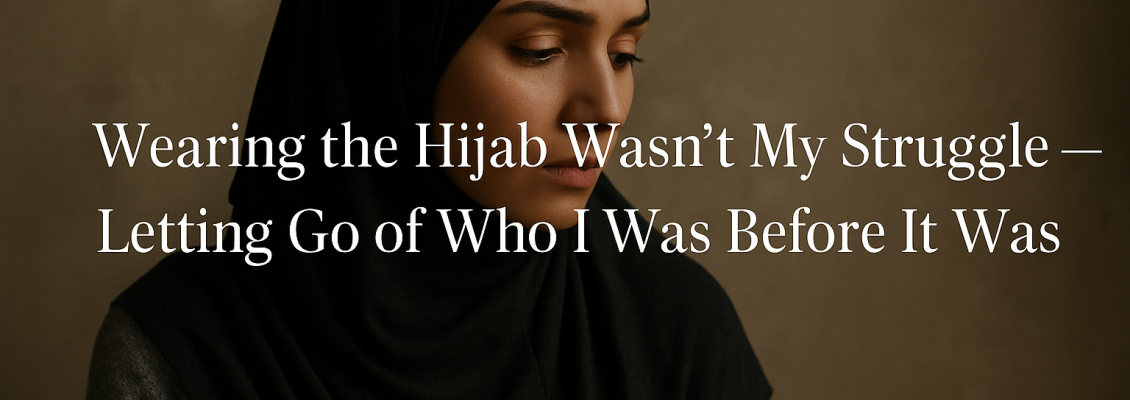

Leave a Comment