What Is an Abaya Dress? A Sacred Thread Between Faith, Femininity, and Freedom
She stood in front of the mirror — still, unsure — her fingertips gently brushing the sleeve of the abaya she had never dared to wear before. Was this her? Was she allowed to be this woman? Modest, covered, radiant not in skin but in submission? For many, “What is an abaya dress?” seems like a simple question. But for those who ask from the heart, it opens a portal into identity, dignity, womanhood, and divine belonging. This is not a guide to clothing. This is a journey into the fabric of faith itself.
The Mirror That Asked Me Back: What Is an Abaya Dress?
When you first hear the words “abaya dress,” it might sound like a simple fashion term — perhaps another kind of long dress, something loose and modest. But if you pause and look deeper, the question “What is an abaya dress?” opens the door to something much richer: the meeting point of faith, culture, identity, and femininity. It’s not just a piece of fabric that drapes from shoulders to ankles; it’s a tradition carried through centuries, rooted in revelation and lived experience.
The abaya (from the Arabic word ʿabāyah) is a long, flowing outer garment worn primarily by Muslim women, usually over everyday clothes. Its purpose is modesty — not as a restriction, but as a protection and expression of faith. It often features a simple, straight silhouette that covers the body loosely, and is typically paired with a hijab (headscarf) or niqab (face covering) depending on personal choice and cultural practice. But describing the abaya only in terms of fabric and function would be like explaining the Qur’an as “a book of pages and ink.” It misses the heart.
Why the Abaya Exists: A Deeper Purpose Beyond Clothing
The abaya is directly tied to the Qur’anic concept of ḥijāb, or covering, which refers not just to clothing but also to boundaries, humility, and dignity. In Surah Al-Ahzab (33:59), Allah commands the Prophet Muhammad ﷺ:
“O Prophet, tell your wives and your daughters and the women of the believers to bring down over themselves [part] of their outer garments. That is more suitable that they will be recognized and not be abused. And ever is Allah Forgiving and Merciful.”
This verse is central to the abaya’s meaning. It reminds us that the outer garment is not a cultural afterthought; it is a divine instruction that safeguards a woman’s dignity and publicly marks her as a woman of faith. The abaya dress, in this context, is more than fashion: it’s a visible act of devotion.
The Abaya Dress Through Time and Cultures
Many people assume the abaya is strictly a “Middle Eastern” garment, but this is a misunderstanding. While it is widely worn in the Arabian Peninsula — with regional variations in places like Saudi Arabia, the UAE, and Qatar — its principle has always been universal. In different parts of the Muslim world, the abaya takes other names and forms: the jilbab in North Africa, the chador in Iran, the boushiya in Egypt, or long flowing dresses in South Asia that fulfill the same requirements.
Today, the “abaya dress” is a term often used to refer to abayas that are designed with more aesthetic features — subtle embroidery, soft fabrics like crepe or chiffon, flared sleeves, or pastel colors. Unlike the traditionally plain black abaya, these newer styles allow Muslim women to maintain modesty while also embracing their personal style. It’s a reminder that Islam does not erase individuality; it simply frames it within divine wisdom.
Common Questions People Ask About the Abaya Dress
If you’re encountering the abaya for the first time, you might have questions like: Is it required? Is it cultural? Do Muslim women feel forced to wear it? These questions are natural. Here’s what you need to know:
- Is the abaya obligatory? The specific garment isn’t obligatory, but the principle of covering the body modestly (except for face and hands, according to the majority opinion) is. The abaya is simply one of the most common and practical ways to fulfill this command.
- Is it only cultural? No. While its style may vary culturally, the concept comes from the Qur’an and Sunnah, making it rooted in faith rather than just tradition.
- Do women feel forced? While sadly, some women may experience coercion in certain contexts, for the vast majority, the abaya is a choice of love and conviction. Many describe it as a source of inner peace and empowerment.
My First Encounter With the Abaya
I remember the first time I put on an abaya dress. It was heavier than I expected, like wearing a quiet responsibility on my shoulders. At first, I was self-conscious — would people think I was “too religious”? But as I walked outside, I felt something shift. The world looked at me differently, but more importantly, I looked at myself differently. The abaya became a shield, not a prison; a reminder that my worth was not in how much of me the world could see, but in the One who already knew me completely.
“I didn’t understand at first,” said Aisha, a revert from London. “But the day I wore the abaya, I felt a strange relief. I didn’t have to be perfect or ‘beautiful’ in everyone’s eyes anymore. I was enough for Allah. That’s a freedom no one talks about.”
Modern Abayas: Balancing Faith and Fashion
In recent years, designers have reimagined the abaya to be versatile, elegant, and even high-fashion. You’ll find tailored abayas for work, travel-friendly lightweight abayas, and wedding abayas adorned with lace or beadwork. But no matter the style, the essence remains the same: to maintain a woman’s modesty in public while giving her the dignity and beauty Islam celebrates.
This is where the phrase “abaya dress” often emerges in the modern market. It speaks to abayas that are structured more like full dresses — meaning women can wear them directly without layering much underneath. For many, this simplifies their lives while still fulfilling the requirement of covering. It’s a perfect example of how Islamic dress evolves without compromising principles.
The Abaya Dress in Non-Muslim Eyes
For non-Muslim readers, the abaya can feel mysterious or even misunderstood. Some might associate it with oppression because of negative media portrayals. But if you sit with Muslim women and hear their stories, a different picture emerges: one of agency, spiritual fulfillment, and beauty. The abaya is not about erasure; it is about elevation. It shifts the focus from a woman’s body to her mind, heart, and character.
So, what is an abaya dress? It’s the convergence of faith and fashion. It’s an outer garment with deep inner meaning. It’s a way Muslim women navigate the modern world while staying anchored to their Creator. And as you’ll discover in the chapters ahead, it is so much more than what first meets the eye.
Is This About Fashion or Faith? The Deeper Question Beneath the Fabric
Whenever someone asks, “What is an abaya dress?” there is often a hidden question behind it: *Is this really about religion, or is it just a cultural or fashion preference?* And if it is about religion, is it rooted in faith or simply imposed tradition? This deeper question must be addressed with sincerity, because without understanding its spiritual roots, the abaya risks being reduced to a mere trend — something to be worn when it feels convenient, or discarded when it doesn’t.
The Faith Foundation: Why the Abaya Exists
At its core, the abaya is about obedience to Allah and an expression of faith. It flows from a broader concept in Islam: modesty, or ḥayā’. The Prophet Muhammad ﷺ said:
“Indeed, every religion has a character, and the character of Islam is modesty.” (Sunan Ibn Mājah 4181)
This modesty is not restricted to clothing; it is a holistic quality that shapes how we speak, behave, and interact with others. But clothing is a visible and powerful expression of that inward state. The abaya fulfills the Qur’anic command for Muslim women to cover their beauty in public, shielding what is private and dignifying the woman in the eyes of her Lord.
This does not mean that women are ashamed of their bodies. On the contrary, the abaya celebrates the fact that a woman’s worth does not depend on how much she reveals. It affirms: *You are sacred, you are not for public consumption, and your value is not for sale.*
When Fashion Meets Faith
The modern abaya dress reflects how faith and fashion can coexist. Some Muslim women fear that beautifying the abaya too much risks defeating its purpose. Others believe that wearing a beautifully designed abaya can bring joy and encourage more women to adopt modesty. So, is this about fashion or faith? The answer is: both — as long as fashion does not overtake faith.
The Prophet ﷺ reminded believers to dress with dignity but not extravagance. He said:
“Eat, drink, give in charity and wear (good) clothes but without pride or extravagance.” (Sunan an-Nasa’i 2559)
A Muslim woman can wear an abaya that is elegant, comfortable, and reflects her personality, but it should remain loose-fitting and non-transparent. Fashion must never compromise the garment’s function: to fulfill the command of modesty and maintain humility before Allah.
The Difference Between Cultural Practice and Faith Command
Another key question is whether the abaya is simply a cultural garment from Arabia, irrelevant to Muslims elsewhere. This misunderstanding has caused many to dismiss it entirely. The truth is, the *principle* behind the abaya — modest covering — is universal and based on revelation. The *style* of the abaya is cultural, and may vary from country to country.
For example, in Turkey, modest women often wear long coats called *pardesu* or *ferace*. In Malaysia, the *baju kurung* fulfills the same purpose. In Morocco, women might wear the *djellaba*. These garments may look different, but they serve the same function: they are outer garments that conceal the body’s shape. This is why scholars explain that while the abaya is not obligatory as a specific garment, fulfilling its requirements of modesty *is* obligatory.
Voices from Women Who Choose the Abaya
For many Muslim women, the decision to wear the abaya comes with layers of thought, prayer, and personal growth. Here are some reflections from sisters who see it as both a fashion choice and an act of worship:
“I love how my abaya expresses my faith quietly. It’s not loud or flashy, but it tells the world what I stand for,” says Maryam, a 26-year-old student from Birmingham. “At the same time, I enjoy buying abayas in colors and cuts I like. That doesn’t make me less sincere; it makes me feel confident.”
“When I first wore the abaya, it wasn’t for the right reasons,” admits Fatima, a revert from Manchester. “I wore it because I was traveling to Saudi Arabia and thought it was expected. But over time, I realized its beauty. It protects me from unwanted attention and reminds me of who I belong to: Allah. Now I choose it every day.”
The Emotional Side: How the Abaya Transforms the Heart
There is a powerful psychological and spiritual shift that can take place when a woman begins wearing the abaya dress sincerely. She might feel nervous at first, wondering how others will perceive her. But as she walks out the door, she begins to notice the sense of security it gives. Many women describe feeling “shielded” from the pressure to display their bodies.
This is not about judging others or feeling “holier” than those who dress differently. It is about the relationship between the heart and the garment. Each time a woman wraps herself in the abaya, she is making a quiet statement: “I choose my Creator over societal trends. I choose self-respect over validation.” And that choice can transform her entire life.
The Role of Intention
The Prophet Muhammad ﷺ taught that “Actions are judged by intentions” (Sahih al-Bukhari and Muslim). A woman could technically be wearing an abaya, but if her intention is solely to impress others with the brand or design, she may miss its spiritual benefit. Conversely, a sister who wears the simplest black abaya with the intention of pleasing Allah may be elevated for that act alone.
So, the deeper question isn’t just about fashion or faith; it’s about intention. The abaya can be an empty shell if worn mechanically, or it can be a spiritual shield if worn consciously. That is why many Muslim women speak about their journey with the abaya as a journey of the heart.
In the end, the abaya dress is a blend of faith and personal expression. It allows a woman to practice modesty while embracing her femininity. It connects her to a global sisterhood of believers. And most importantly, it serves as a daily reminder that she is defined not by fleeting trends, but by her relationship with Allah.
Not Just Black Cloaks: Unraveling the Myths About the Abaya
If you’ve only ever encountered the abaya through television screens or brief encounters in airports, it’s easy to hold misconceptions about it. Popular media has long reduced the abaya to a “black cloak,” often portraying it as a symbol of female oppression. This narrative is not only inaccurate but deeply harmful because it erases the voices of Muslim women who choose to wear the abaya as an act of faith and personal dignity. So, what are the myths about the abaya, and what is the reality?
Myth 1: The Abaya is Oppressive
One of the most persistent misconceptions is that the abaya is forced upon women to control them. While it is true that in some places, cultural or governmental pressure exists, this is not the universal reality. For millions of Muslim women around the world, the abaya is a chosen garment — one that makes them feel protected, valued, and spiritually anchored.
The Qur’an’s guidance on modesty is addressed to women directly, as a divine command, not as a tool for men to exert power. Allah says in Surah An-Nur (24:31):
“And tell the believing women to lower their gaze and guard their private parts and not expose their adornment except that which [necessarily] appears thereof and to wrap [a portion of] their headcovers over their chests…”
This verse emphasizes personal responsibility. When a woman chooses to wear the abaya out of conviction, it becomes an act of worship, not a burden. As Sarah, a teacher from Leicester, shared:
“I used to think the abaya was something forced. But once I learned the meaning behind it, I realized it was about my relationship with Allah. No one makes me wear it — I choose it every day.”
Myth 2: The Abaya Must Be Black
Another common misunderstanding is that abayas must be black. While black is traditional in many Gulf countries because it is considered elegant and understated, Islamic guidelines do not specify a particular color. Across the Muslim world, abayas and modest outer garments come in every shade imaginable — from cream and olive to navy and maroon.
The key principle is that the clothing should be modest, loose-fitting, and not draw unnecessary attention. In fact, in some cultures, colorful abayas are more common than black ones. This variety demonstrates how Islam accommodates diversity while maintaining core values.
Myth 3: The Abaya is “Just Culture”
Some people dismiss the abaya as merely a cultural artifact from Arabia, irrelevant to Muslims in other countries. While it is true that the abaya as a specific garment originates in the Arabian Peninsula, the concept behind it is rooted in Islamic revelation, not culture.
As mentioned in earlier sections, the Qur’an and Sunnah instruct Muslim women to wear an outer garment in public that conceals their body shape and preserves modesty. The abaya is one of the most practical ways to fulfill this requirement, but it is not the only way. A jilbab in Morocco, a ferace in Turkey, or a long overcoat in the UK can all serve the same purpose. What matters is the function, not the name.
Myth 4: Abayas Make Women Invisible
Critics sometimes argue that the abaya erases a woman’s identity. But many women who wear it would say the opposite: the abaya frees them from being judged by their looks, allowing their true personality and intellect to shine.
As Yasmin, a university student from London, explained:
“When I wear my abaya, I feel seen for who I am, not for how I look. People talk to me differently — they focus on my words, not my body. That’s empowering, not erasing.”
Rather than erasing individuality, abayas have evolved to allow women to express themselves through different fabrics, cuts, and accessories — all while honoring modesty. This balance between identity and humility is what makes the abaya such a meaningful garment for so many.
Media Narratives and Misrepresentation
Much of the misunderstanding around the abaya comes from how it is portrayed in Western media. News reports and movies often show women in abayas as silent, submissive figures walking behind men, rarely giving them a voice. This skewed representation ignores the lived reality of Muslim women who wear the abaya by choice.
In reality, Muslim women are doctors, engineers, artists, entrepreneurs, and leaders — and many of them wear abayas while fulfilling these roles. The garment does not limit their contribution to society; it simply reflects their commitment to modesty.
The Danger of Stereotypes
These myths are not harmless. They shape public perception and can lead to discrimination and prejudice against Muslim women. Women in abayas often face stares, questions, or even hostility, especially in non-Muslim-majority countries. This makes it even more important to educate others about what the abaya really represents: a personal expression of faith.
When we reduce the abaya to a black cloak or a symbol of oppression, we strip it of its rich history and spiritual meaning. We also deny Muslim women the agency they exercise when they choose to wear it. As Hafsa, a lawyer from Manchester, said:
“People think my abaya is a prison, but they don’t see how much freedom it gives me. I don’t need to compete with beauty standards. I walk with dignity because I know my value doesn’t depend on what the world thinks.”
Reclaiming the Narrative
To unravel the myths about the abaya, we need to listen to the voices of Muslim women themselves. They are the ones who live the experience, who navigate both faith and society while wearing the garment. Their stories dismantle the false narratives and show the abaya for what it truly is: a garment of purpose, beauty, and divine connection.
Understanding the abaya means seeing it not as a symbol of restriction, but as a symbol of liberation from constant scrutiny. It allows women to define their worth on their own terms, guided by their Creator.
As we move forward in this journey of understanding “What is an abaya dress?”, it is essential to leave behind stereotypes and step into the reality of Muslim women’s lives. This is not just about fabric and fashion; it’s about faith, dignity, and identity.
A Dress Rooted in Revelation: What the Qur’an and Sunnah Say
Until now, we have explored the meaning, myths, and emotional depth behind the abaya. But to fully answer the question, “What is an abaya dress?”, we must turn to the primary sources of Islam — the Qur’an and the Sunnah. These divine texts and Prophetic teachings form the foundation of why the abaya exists. It is not simply a cultural artifact but a practice rooted in guidance from Allah and His Messenger ﷺ.
The Qur’anic Command for Modest Outer Garments
The clearest evidence for the abaya comes from the Qur’an. In Surah Al-Ahzab (33:59), Allah commands the Prophet ﷺ:
“O Prophet, tell your wives and your daughters and the women of the believers to bring down over themselves [part] of their outer garments. That is more suitable that they will be recognized and not be abused. And ever is Allah Forgiving and Merciful.”
The word used here for “outer garments” is jalābīb (plural of jilbab). Scholars explain that the jilbab is a loose, flowing garment that covers the body, worn on top of other clothing when a woman goes outside. The abaya fulfills this same function. By wearing it, a Muslim woman signals her faith and protects herself from harm and unwanted attention.
Another verse that speaks to modesty is in Surah An-Nur (24:31):
“And tell the believing women to lower their gaze and guard their private parts and not expose their adornment except that which [necessarily] appears thereof and to wrap [a portion of] their headcovers over their chests…”
These verses are not arbitrary rules; they are divine prescriptions designed to preserve dignity and honor. The abaya, when worn sincerely, is a direct application of these timeless commands.
The Sunnah’s Reinforcement of the Abaya
The teachings of the Prophet Muhammad ﷺ further explain how Muslim women should observe modesty. In authentic narrations, the wives of the Prophet and female companions adopted outer garments in response to these verses.
Umm Salamah (may Allah be pleased with her) narrated:
“When the verse ‘that they should draw their jalābīb (outer garments) close around them’ was revealed, the women of the Ansar came out as if crows were on their heads, wearing black outer garments.” (Abu Dawud 4101)
This hadith shows that the early Muslim women understood and implemented the command of Allah by adopting outer garments that concealed their bodies when in public. While black was common in Madinah at that time, the hadith does not make black obligatory; rather, it describes what the women chose.
Why the Abaya Matters Spiritually
The abaya is not just about fabric; it is about intention and connection to Allah. By wearing it, a woman places a visible marker of her faith on her body. She chooses to align herself with the women of the Prophet’s household and companions, emulating their obedience and dignity.
Some people may view the abaya as “just clothing,” but in Islam, even clothing can be an act of worship when worn for Allah’s sake. When a woman covers her beauty as He commanded, she is rewarded for every moment she remains in that state. This spiritual perspective transforms the abaya from a simple garment into a means of drawing closer to Allah.
The Universality of the Command
The Qur’an’s instruction applies to “the women of the believers,” not just those in Arabia. This means that the concept of the abaya, or any equivalent outer garment, is universal. While the style may differ from country to country, the requirement for a loose, concealing garment remains.
For example, in Indonesia, Muslim women often wear long tunics and skirts with overcoats that serve the same purpose as the abaya. In colder climates, a long coat can fulfill the requirement. The beauty of Islam is that it accommodates cultural diversity while maintaining its core principles.
The Wisdom Behind the Command
Allah’s commands always carry wisdom, even if we do not fully understand them at first. The instruction to wear an outer garment protects women from objectification and harm, as highlighted in Surah Al-Ahzab (33:59). But beyond that, it nurtures inner qualities: humility, self-respect, and a focus on pleasing the Creator rather than society.
Many women testify that wearing the abaya brought them a deep sense of spiritual liberation. As Hafsah, a doctor from Birmingham, shared:
“I used to dress to please everyone else. When I put on the abaya, it was like I finally started dressing for Allah. It freed me from people’s expectations and helped me feel closer to Him.”
The Role of the Abaya in Building Community
The abaya is also a unifying symbol among Muslim women. When worn, it publicly identifies a woman as a believer, creating bonds of sisterhood with others who share her faith. This sense of community was evident among the female companions of the Prophet ﷺ and continues today. Women often greet each other with warmth when they see another sister in abaya because they recognize the shared commitment it represents.
In a world where modesty is often undervalued, the abaya is a gentle yet powerful reminder that believers live by a higher standard — one that prioritizes spiritual values over societal trends.
Balancing Faith and Practicality
Some may wonder if the abaya is impractical in modern life. But Islam is a religion of balance. Women can choose abayas made from lightweight fabrics for warmer climates, or thicker materials for colder ones. Many designers now create abayas that allow for work, travel, and everyday tasks without compromising modesty.
The key is to ensure the abaya fulfills its religious function: it should be loose, opaque, and not designed to draw unnecessary attention. When these criteria are met, it is a garment that serves both the soul and daily life.
Ultimately, the abaya dress is rooted in revelation. It is a living tradition that connects Muslim women today to the earliest generations of believers. By wearing it, a woman aligns herself with the Qur’an’s guidance and the Sunnah of the Prophet ﷺ. It is an act of love for Allah — a statement that her faith is visible, and her dignity is untouchable.
Proof in the Threads: Verses, Hadith, and the Ulama on Abaya
As we continue to answer the question, “What is an abaya dress?”, we must take an even deeper look at the sources of Islamic law and the scholarly consensus surrounding this garment. Beyond the Qur’anic verses and Prophetic teachings already discussed, the interpretations and rulings of the ulama (Islamic scholars) play a vital role in helping us understand how the abaya fits into the broader framework of modesty and worship in Islam.
Revisiting the Qur’anic Proofs
The foundational verses commanding modest dress are found in Surah An-Nur (24:31) and Surah Al-Ahzab (33:59). These verses have been analyzed by scholars for centuries, who consistently concluded that women are required to wear an outer garment that conceals their shape when in the presence of non-mahram men (men they can marry). The abaya is one of the clearest ways to fulfill this requirement.
The term jalabib in Surah Al-Ahzab refers specifically to a garment worn over the clothes that extends to cover the entire body. Imam Al-Qurtubi, a 13th-century Andalusian scholar, wrote in his famous Tafsir:
“The jilbab is the cloak that covers the entire body. The scholars differed as to whether the face and hands should be covered, but they agreed that the jilbab should cover everything else.” (Tafsir Al-Qurtubi, 14/243)
This demonstrates that while there is a difference of opinion on whether the face should be covered, there is no difference regarding the need for an outer garment like the abaya.
Hadith Evidence on the Abaya and Jilbab
In addition to the Qur’an, numerous authentic hadith (Prophetic traditions) clarify how women at the time of the Prophet ﷺ implemented these instructions. One of the clearest narrations comes from Umm Atiyyah (may Allah be pleased with her), who said:
“We were ordered to bring out our women on the two Eids, including those who stayed in seclusion. The menstruating women were to stay away from the prayer area but still witness the goodness and the gathering of the Muslims. I said, ‘O Messenger of Allah, one of us does not have a jilbab.’ He said, ‘Let her sister lend her a jilbab.’” (Sahih Muslim 890)
This hadith highlights the jilbab’s importance. The Prophet ﷺ insisted that every woman attending the prayer, even those who typically stayed at home, should wear an outer garment. This shows that the jilbab (and by extension the abaya) was not optional, nor was it limited to specific circumstances.
Consensus Among the Scholars
Across the major schools of Islamic jurisprudence — Hanafi, Maliki, Shafi’i, and Hanbali — there is agreement that a Muslim woman must wear a loose outer garment in public. The style may differ, but the requirement remains.
Ibn Kathir, a leading scholar of Tafsir, explained the verse in Surah Al-Ahzab:
“Allah commanded the believing women to cover themselves with the jilbab so that they will be known as free women and not harmed by those with bad intentions. The jilbab is a cloak that covers the body completely.” (Tafsir Ibn Kathir, 6/422)
This statement reinforces that the abaya is part of a larger divine wisdom: it identifies a woman as a believer and protects her dignity in public spaces.
Scholarly Clarifications on Color and Style
One area of frequent confusion is whether the abaya must be black. Scholars clarify that black was common among the women of Madinah, but the color itself is not obligatory. Shaykh Ibn Uthaymeen (may Allah have mercy on him) said:
“It is permissible for women to wear abayas of different colors, provided that they are modest and not decorated in a way that attracts attention. The condition is that the abaya should be wide, not transparent, and should cover the whole body.” (Fatawa al-Mar’ah al-Muslimah, 1/391)
This shows that while traditional black abayas remain popular, Muslim women can wear abayas in other colors and fabrics as long as they maintain modesty.
The Question of Niqab and the Abaya
Some wonder whether the abaya implies that a woman must also cover her face with the niqab. While this is a separate issue with its own evidences and scholarly debate, the majority opinion is that the abaya fulfills the obligation of the jilbab even without a niqab, as long as it meets the criteria of covering the body. However, some scholars consider the niqab recommended or obligatory in certain contexts.
The abaya itself, though, is universally recognized as the most common and effective way to fulfill the jilbab requirement.
The Abaya in Modern Fatwas
Contemporary scholars have reaffirmed the abaya’s relevance in modern times. Shaykh Salih Al-Fawzan stated:
“The abaya is among the outer garments that Muslim women are commanded to wear when going outside. It should be worn over other clothes and must be wide, thick, and not decorated in a manner that attracts men’s attention.” (Al-Muntaqa min Fatawa Al-Fawzan, 3/359)
This ruling emphasizes that the purpose of the abaya remains unchanged: to maintain modesty and dignity in public.
The Wisdom Behind the Rules
These rulings are not meant to restrict women’s lives. Instead, they reflect Islam’s holistic view of protecting dignity and fostering a society based on respect. When women wear the abaya sincerely, they embody a tradition that stretches back to the Prophet’s time. They also earn spiritual reward for following the command of Allah and His Messenger ﷺ.
The abaya thus becomes more than just fabric — it is a thread that ties the modern Muslim woman to her spiritual heritage. As Zaynab, a young professional from Manchester, explained:
“When I learned how much evidence there was for the abaya, it became impossible for me to dismiss it. Now, every time I put it on, I remember that I am walking in the footsteps of the women who loved the Prophet ﷺ.”
The scholarly consensus on the abaya is clear: it fulfills a Qur’anic obligation, embodies prophetic practice, and remains a timeless symbol of faith. Understanding this proof strengthens the heart of the believer and answers any lingering doubt about whether the abaya is “just cultural.” It is, and always has been, an act of devotion.
The Freedom of Covering: Psychology of Modesty and the Self
One of the most misunderstood aspects of the abaya is how it affects a woman’s psychology and sense of self. From the outside, some may see it as a limiting garment. But for countless Muslim women, the abaya is a source of profound emotional liberation. To fully answer the question, “What is an abaya dress?”, we must explore its impact on the inner world — how covering can nurture self-worth, peace, and freedom in ways that modern culture rarely discusses.
The Pressure of Appearance in Today’s World
We live in an age where a woman’s value is often reduced to how she looks. Media, advertising, and social media constantly promote impossible beauty standards. Women are pressured to spend money, time, and emotional energy on their physical appearance, often at the expense of their mental and spiritual health. In this environment, the abaya stands in gentle defiance.
By its very design, the abaya removes the expectation that a woman’s body should be on display. It says: *Your worth is not determined by the eyes of strangers. You are more than your shape or your style.* This shift can be deeply healing for women who feel trapped by societal beauty pressures.
Fatima, a 24-year-old revert, shared her experience:
“I used to wake up worrying about how I looked every day — my clothes, my makeup, my weight. When I started wearing the abaya, it felt like I could finally breathe. People no longer saw my body first; they saw me. It was like taking off a mask I didn’t even know I was wearing.”
The Abaya as a Form of Psychological Protection
In addition to shielding the body, the abaya shields the heart. It reduces unwanted attention, allowing a woman to move through the world without constant scrutiny. Studies show that women who feel objectified are more likely to experience anxiety and lowered self-esteem. The abaya, by covering the contours of the body, creates a sense of safety and control over how one is perceived.
This does not mean that wearing the abaya eliminates all difficulties, but it does offer a spiritual and psychological buffer against the pressures of an image-obsessed world. It allows women to focus on their inner qualities — their character, knowledge, and faith — rather than being judged solely on outward appearance.
How Modesty Nurtures the Soul
Islamic teachings on modesty are not arbitrary; they nurture humility and strengthen a woman’s relationship with Allah. By choosing to wear the abaya, a woman aligns her physical reality with her spiritual values. She reminds herself daily that her identity is defined by her Creator, not by fleeting trends.
The Prophet Muhammad ﷺ said:
“Modesty is part of faith, and faith is in Paradise.” (Sunan Ibn Majah 4184)
Every time a woman steps outside in her abaya, she is embodying this prophetic teaching. She is demonstrating that her faith is not just an internal belief but an external commitment visible in her dress and demeanor.
Overcoming Initial Struggles
For many women, the journey to wearing the abaya is not easy. It can feel daunting to adopt a garment that publicly identifies you as a Muslim, especially in societies where Islam is misunderstood. Some women worry about standing out or being judged. These feelings are natural.
Aisha, a student from London, recalled:
“When I first wore the abaya, I felt so visible. I thought everyone was staring. But over time, that feeling faded. Now I feel invisible to the wrong kind of attention and visible to Allah. That’s what matters.”
This transformation — from fear to confidence — is part of the psychological liberation the abaya brings. It teaches women to prioritize the gaze of their Creator over the gaze of strangers.
The Inner Dialogue of Intention
Intention (niyyah) plays a critical role in how the abaya shapes the self. If a woman wears it reluctantly or solely due to external pressure, she may not experience its full spiritual benefit. But when she wears it as an act of worship, the abaya becomes a daily reminder of her faith. This internal shift fosters contentment and self-respect.
As the Prophet ﷺ said:
“Actions are but by intention, and every man shall have only that which he intended.” (Sahih al-Bukhari and Muslim)
This means that even the act of dressing can elevate the soul if done sincerely. The abaya, when worn with the right intention, transforms from cloth to shield, from fabric to faith in action.
The Abaya as a Source of Community and Confidence
Another psychological benefit of the abaya is the sense of belonging it brings. Seeing other women in abayas can create an immediate connection — a silent recognition of shared values. This bond strengthens a woman’s confidence and reduces feelings of isolation, especially for those living in non-Muslim-majority countries.
Maryam, a professional from Manchester, reflected:
“The first time another sister smiled at me on the street because I was wearing my abaya, I felt like I was part of something bigger. That small connection gave me so much courage.”
This sense of sisterhood is invaluable in a world where Muslims often face prejudice. The abaya becomes a symbol of collective identity and resilience.
Why Covering is Freedom, Not Constraint
It may seem paradoxical, but covering can be freeing. By drawing less attention to her physical form, a woman gains the freedom to focus on her purpose, her ambitions, and her faith. She no longer has to perform for a world that demands constant display. Instead, she lives by a higher standard — one set by Allah, who values her inner beauty above all else.
This freedom is not theoretical; it is felt deeply by women who wear the abaya. It is the freedom of stepping off the stage of constant comparison, of defining one’s own narrative rather than letting society define it.
Ultimately, the abaya is as much about the heart as it is about the body. It nurtures self-respect, reduces harmful scrutiny, and grounds the woman in a community of faith. In a world hungry for authenticity and peace, the psychological benefits of the abaya are a profound answer to modern struggles.
From Medina to London: How Abaya Lives in Muslim Women’s Worlds
The abaya dress is far more than a ceremonial garment worn on special occasions; it is a living, breathing part of Muslim women’s daily lives. From the bustling streets of Riyadh and the narrow alleyways of Marrakech to the busy pavements of London and New York, the abaya has adapted to countless cultural and geographic contexts. To understand “What is an abaya dress?” fully, we must explore how Muslim women experience it in their diverse lifestyles, professions, and communities.
The Abaya in Muslim-Majority Countries
In many parts of the Middle East and North Africa, the abaya is a familiar sight. In Saudi Arabia, for instance, it has long been customary for women to wear the abaya in public. The traditional Saudi abaya is typically black, flowing, and paired with a headscarf, though modern variations now include colors and subtle embellishments. In the UAE and Qatar, the abaya is often viewed as a marker of cultural identity as much as religious practice.
In North African countries like Morocco, the abaya’s equivalent is the djellaba — a long robe with a hood that serves the same purpose of modesty. In Egypt, many women opt for a jilbab (a tailored overcoat) or an abaya-style dress. These garments are part of the social fabric, and wearing them does not usually make a woman stand out. Instead, they blend seamlessly into public life, from workplaces to markets to family gatherings.
The Abaya in Western Contexts
For Muslim women living in non-Muslim-majority countries, the abaya carries a different set of dynamics. In cities like London, Paris, Toronto, and Chicago, wearing an abaya can feel like a public declaration of faith. Some women embrace this visibility as an opportunity for da’wah (inviting others to understand Islam through example). Others struggle with the stares or questions that come with wearing a garment not widely understood in Western society.
Amina, a teacher from East London, described her journey:
“I was nervous the first time I wore my abaya on the Tube. I felt like everyone was looking at me. But after a few weeks, I realized that most people didn’t care — and the ones who did sometimes asked genuine questions. Now, I see it as a chance to show that a Muslim woman can be professional, approachable, and confident in her faith.”
Many Western Muslim women adapt the abaya to fit their local climate and lifestyle. Lightweight fabrics are popular in warmer months, while thicker materials and layers work for colder weather. Some opt for open abayas worn over jeans and a long tunic, while others prefer closed, dress-like abayas that require minimal layering. The versatility of the abaya makes it suitable for every season and setting.
The Abaya in Professional Life
One common misconception is that wearing the abaya makes it difficult to work or pursue education. In reality, Muslim women around the world thrive in all fields while wearing abayas. Doctors, lawyers, teachers, entrepreneurs, and artists all find ways to make the abaya part of their professional attire.
Sophisticated, tailored abayas have emerged in response to these needs, featuring straight cuts, minimal embellishment, and practical details like pockets or adjustable sleeves. Many women pair their abayas with smart accessories — handbags, shoes, or discreet jewelry — to create a polished look suitable for the workplace.
Nura, a physician from Manchester, explained:
“My abaya doesn’t stop me from doing my job. I choose fabrics and cuts that allow me to move freely, and I always wear a lab coat on top when needed. Patients respect me for being true to my values, and it actually opens up conversations about faith.”
Special Occasions and Fashionable Abayas
While the abaya’s primary function is modesty, many women enjoy wearing more decorative abayas for special occasions such as weddings, Eid celebrations, or formal events. These abayas may feature intricate embroidery, beadwork, or luxurious fabrics like satin and chiffon.
Designers in the Gulf region, Turkey, and the UK have elevated the abaya into the realm of high fashion. Brands now release seasonal collections, offering styles that balance elegance with modesty. This evolution demonstrates that modest clothing can be both spiritually meaningful and aesthetically pleasing.
The Abaya as a Travel Companion
Another aspect of the abaya’s lifestyle adaptability is its practicality for travel. Many women find the abaya invaluable when visiting different countries because it simplifies packing and dressing. One versatile abaya can transition from day to night, from casual settings to mosques, without the need for multiple outfits.
Hiba, a university student from Birmingham, shared:
“When I travel, I always bring two abayas. They’re so easy — I don’t have to think about matching outfits, and I feel appropriately dressed wherever I go. It makes life simpler and keeps me connected to my faith no matter where I am.”
The Abaya and Community Identity
Beyond practicality, the abaya fosters a sense of community. Women often recognize each other’s abayas in public, leading to nods, smiles, or even conversations. This silent solidarity can be comforting, especially in places where Muslims are a minority.
In multicultural cities, the abaya also sparks curiosity and dialogue. Non-Muslims sometimes approach Muslim women to ask about the meaning behind their clothing, giving the wearer a chance to share her faith in a gentle and personal way. In this sense, the abaya becomes a tool for building bridges between communities.
Daily Life with the Abaya
Ultimately, the abaya fits seamlessly into the rhythms of daily life for millions of women. Whether heading to work, shopping for groceries, attending classes, or visiting friends, the abaya allows a woman to move through her day without compromising her values. Its simplicity is part of its power.
The Prophet Muhammad ﷺ said:
“Indeed, Allah loves modesty and shyness.” (Sunan Abu Dawud 4012)
This hadith reflects the essence of the abaya in everyday life. It is not a barrier, but a blessing — a garment that allows a woman to express her faith in every setting, from Medina to London and beyond.
The abaya adapts, travels, and evolves, yet its purpose remains unchanged. It connects women across continents and cultures, anchoring them to a shared commitment to modesty and dignity. In this way, the abaya is not just part of Muslim women’s worlds; it is a thread that ties those worlds together.
“This Covered Me When Nothing Else Did”: Muslim Women Speak
To truly understand “What is an abaya dress?”, we need to hear directly from the women who wear it. Beyond Qur’anic verses, scholarly discussions, and cultural contexts, the abaya is woven into the intimate lives and hearts of Muslim women. Each woman’s journey is unique, marked by struggles, breakthroughs, and a deepening sense of faith. In this section, we share their voices — unfiltered and unapologetic — as they explain how the abaya has shaped their identity and relationship with Allah.
The Journey of Choice: Why Women Adopt the Abaya
For some women, wearing the abaya is a natural extension of growing up in a Muslim environment where modesty was valued. For others, it is a deliberate choice made later in life, often after deep reflection. What unites them is the realization that the abaya is not about hiding or losing oneself; it is about rediscovering who you are in the light of faith.
“When I started university, I wasn’t wearing the abaya,” recalls Hana, a 22-year-old student from Birmingham. “I wanted to fit in, so I dressed like everyone else. But I felt a disconnect inside. When I learned the meaning of modesty in Islam, I decided to try the abaya. It was scary at first, but it felt like coming home. For the first time, I felt aligned with who I wanted to be.”
Hana’s story is echoed by many reverts to Islam, who often describe the abaya as a physical expression of a spiritual rebirth. It becomes a shield against old habits and a reminder of new priorities.
“As a new Muslim, I needed something to help me stay focused on my faith,” says Olivia, a 28-year-old revert from London. “The abaya did that for me. It wasn’t about what other people thought; it was about protecting my heart from distractions. Every time I put it on, it reminded me why I became Muslim.”
The Emotional Transformation of Covering
Many women describe the emotional shift that happens when they begin wearing the abaya. At first, they may feel anxious about how others will perceive them. But over time, the abaya instills a sense of dignity and confidence that is difficult to explain to those who haven’t experienced it.
“When I first wore the abaya, I felt like I was stepping into the unknown,” says Samira, a young mother from Leicester. “But slowly, I realized it was protecting me. People treated me differently — with more respect. I no longer felt pressured to meet unrealistic beauty standards. I could just be me, and that was enough.”
This shift is not about arrogance or superiority; it is about finding peace. The abaya quiets the noise of external judgment and allows a woman to focus on her internal growth. For many, it is the first step towards a more intentional and spiritually fulfilling life.
The Abaya as a Daily Reminder
The abaya is not reserved for special occasions. Women wear it every day — to work, school, errands, and social events. This constancy transforms it into a daily act of worship. Each time a woman puts on her abaya, she renews her intention to obey Allah and seek His pleasure.
“Sometimes I’m tired or rushed in the morning, and I think, ‘Maybe today I’ll just wear something easier,’” admits Layla, a teacher from Manchester. “But then I remember why I wear the abaya. It’s not for people; it’s for Allah. That thought alone gives me strength.”
The Prophet Muhammad ﷺ taught that small, consistent acts are beloved to Allah. Wearing the abaya daily is one such act. It is not about perfection, but about striving — and that striving brings immense spiritual reward.
Stories of Reverts and Second Chances
For reverts, the abaya often symbolizes a clean slate. It helps them separate from their past lifestyle and embrace their new identity as Muslims. It can also play a healing role for born Muslims who may have drifted away from their faith.
“I wasn’t practicing for years,” shares Farah, a 31-year-old from London. “When I decided to come back to Islam, I started with the abaya. It felt like a declaration: I belong to Allah again. It gave me the courage to pray, to read Qur’an, to change my habits. The abaya was my lifeline.”
These stories remind us that the abaya is more than a piece of clothing; it is a companion on the spiritual journey. It holds memories of tears, du’as, and moments of growth.
The Abaya in the Face of Challenges
Wearing the abaya is not without difficulties. Women may face judgment from family, discrimination at work, or harassment in public. But many testify that these trials strengthen their resolve.
“I’ve been stared at, questioned, and even mocked,” says Amal, a university student from Glasgow. “But those moments remind me that I’m doing this for Allah, not for acceptance. Every challenge makes my intention purer.”
These experiences also highlight the need for Muslim communities to support one another. When women feel encouraged and uplifted, they are better equipped to navigate the challenges of wearing the abaya.
Voices of Joy and Empowerment
Despite the challenges, the overwhelming sentiment from women who wear the abaya is one of joy and empowerment. They speak of feeling protected, valued, and connected to something greater than themselves.
“The abaya covered me when nothing else did,” says Mariam, a nurse from London. “It covered my insecurities, my past mistakes, and the pressures of the world. It reminded me that Allah sees me as more than my appearance. That truth has changed my life.”
When we listen to these voices, we understand that the abaya is not about erasing individuality. It is about freeing women from societal expectations and helping them live authentically as Muslims. It is about choosing faith over fleeting trends and finding strength in submission to Allah.
In every story, the abaya emerges as a garment of resilience, faith, and hope. It has been a companion in moments of vulnerability and a shield in times of trial. For the women who wear it, the abaya is not a constraint but a comfort — a reminder that they are loved and valued by their Creator beyond measure.
Judgment, Trauma, and Healing: When Abaya Isn’t So Simple
The abaya dress, while a profound symbol of faith and identity, is not without its complexities. To fully understand “What is an abaya dress?”, we must confront the nuanced realities behind this garment — the judgments, the trauma, and the healing that often accompany the choice to wear it. The abaya is not always a simple shield or a source of comfort; sometimes it becomes a battleground where personal struggles, social pressures, and cultural misunderstandings collide.
The Weight of Judgment From Within and Without
Many Muslim women report feeling judged not only by outsiders but also by members of their own communities. The abaya can become a symbol of perceived piety, and with that comes expectations — sometimes unrealistic and harsh.
Layla, a young professional from Birmingham, shares:
“Wearing the abaya made me a target for both sides. Some Muslim sisters questioned if I was ‘too religious,’ while non-Muslims stereotyped me as oppressed. It felt like no one saw the real me — just the garment.”
This dual judgment creates a heavy burden. On one side, Muslim women may feel scrutinized for how “correctly” they wear the abaya — is the fabric too flashy? Is the hijab styled properly? On the other side, they often face Islamophobic attitudes, ranging from curious questions to outright discrimination.
Trauma Linked to Compulsory Covering
While many women choose the abaya freely, others have experienced it as a mandate — imposed by family, culture, or societal pressure rather than personal conviction. This can lead to trauma and conflict.
Safa, a young woman from a conservative community, recalls:
“My parents forced me to wear the abaya before I was ready. I felt suffocated and angry. For a long time, I hated the abaya because it reminded me of control, not faith. It took years of counseling and self-reflection to reclaim it as my own choice.”
This distinction between voluntary and compulsory covering is vital. When the abaya is forced, it can become a symbol of oppression rather than empowerment. Healing from this trauma requires compassionate support and a reclamation of agency.
Cultural Variations and the Pressure to Conform
The abaya is interpreted and practiced differently across cultures, which sometimes leads to tension within families or communities. A woman may feel pressure to conform to a specific style or behavior that aligns with her cultural norms but conflicts with her personal beliefs.
Amina from Leeds explains:
“In my community, the abaya is always black and worn in a certain way. But I prefer colorful, modern styles. Some people called me disrespectful or not ‘properly Muslim.’ It’s hard to balance tradition and personal expression.”
This highlights that the abaya, while rooted in Islamic principles, is also influenced by local customs. Navigating these expectations can cause internal conflict and social friction.
The Intersection of Islamophobia and Modest Dress
In many Western countries, Muslim women who wear the abaya face discrimination and Islamophobia. The garment, unfortunately, sometimes becomes a target for prejudice, harassment, or exclusion.
Zahra, a student in Manchester, recounts:
“I’ve been followed in shops and asked insensitive questions on public transport. People sometimes assume I’m oppressed or extremist just because of my abaya. It’s exhausting to constantly defend my faith and my choice to wear it.”
These experiences contribute to emotional trauma and social isolation. They also highlight the need for greater education and empathy in broader society.
Healing Through Community and Faith
Despite these challenges, many women find healing through strong community support and renewed spiritual connection. Sisterhood within Muslim communities often provides a safe space to share struggles and encouragement.
Sana, a counselor and activist, observes:
“The abaya can become a source of trauma or healing, depending on the environment. When women feel accepted and supported, they reclaim their identity and find peace. Faith becomes the anchor that helps them overcome judgment and pain.”
Engaging with Islamic teachings on mercy, patience, and self-compassion helps women navigate difficulties with grace. The Qur’an reassures believers:
“Indeed, with hardship [will be] ease.” (Qur’an 94:6)
This promise fuels resilience and hope for those wrestling with complex feelings about the abaya.
The Role of Education and Open Dialogue
Open conversations about the challenges and nuances of wearing the abaya are essential. Silence or stigma often deepen feelings of isolation. By sharing stories — both positive and difficult — Muslim women help each other and educate their communities.
Workshops, support groups, and online forums have become vital spaces for this dialogue. They allow women to discuss topics like identity, cultural expectations, and mental health in relation to modest dress.
Fatimah, a community organizer, emphasizes:
“We must recognize that the abaya is not a one-size-fits-all experience. Every woman’s journey is unique, and we need to honor that. Compassion and understanding are key to healing.”
Looking Forward: Compassionate Practice of Modesty
As we reflect on these complexities, the abaya emerges as a living, evolving symbol — not just of modesty but of human struggle and resilience. It calls on us to practice compassion: towards ourselves, our sisters, and the wider society.
For the seeker asking “What is an abaya dress?”, the answer includes this awareness: the abaya is both a garment and a journey, often marked by challenge as much as blessing. It is a testament to faith in the face of hardship and a canvas for healing.
Ultimately, understanding the abaya fully means recognizing the shadows alongside the light, and walking with empathy toward every woman’s story.
It’s Not Just a Dress — It’s Who I Am Now
When someone asks, “What is an abaya dress?”, they might expect a simple answer — a long cloak, a modest garment worn by Muslim women. But as we have journeyed together through faith, history, culture, psychology, and lived experience, we realize the abaya is far more than cloth. It is a symbol of transformation, dignity, and divine belonging. It is not just a dress — it’s who I am now.
From Fabric to Faith: The Spiritual Metamorphosis
The abaya begins as a piece of fabric, but through intention and practice, it becomes a daily act of worship. It is a physical manifestation of the heart’s submission to Allah. This submission is not about restriction but about freedom — freedom to live authentically, with grace and purpose.
The Prophet Muhammad ﷺ said:
“Whoever gives up something for the sake of Allah, Allah will compensate them with something better.” (Sahih Muslim)
Wearing the abaya is often a sacrifice of worldly norms or pressures. Yet, this sacrifice opens the door to greater blessings — peace of mind, clarity of purpose, and spiritual upliftment. It invites a woman into a community of believers, bound not by appearance but by shared values of modesty, humility, and love for Allah.
The Abaya as an Emblem of Grace and Dignity
Grace and dignity are woven into every thread of the abaya. It allows a woman to walk through the world with quiet confidence, knowing that her beauty shines from within. The abaya does not erase individuality but enhances it by aligning external expression with inner virtue.
For many, the abaya is a refuge — a way to shield themselves from the superficial demands of society and to protect their hearts from harmful gazes. It declares to the world: I am more than what meets the eye, and my worth is measured by my character and faith.
Belonging to Something Greater
Wearing the abaya connects a woman to a global sisterhood spanning centuries and continents. It is a garment shared by women from diverse backgrounds united by a commitment to modesty and devotion. This connection transcends language, race, and culture.
As the Qur’an beautifully reminds us:
“And hold firmly to the rope of Allah all together and do not become divided.” (Qur’an 3:103)
The abaya is a rope — a tangible symbol of that divine unity. It is a call to solidarity, compassion, and shared identity rooted in the love of Allah.
A Call to Understanding and Compassion
For those outside the Muslim faith, understanding the abaya requires compassion and openness. It is not a symbol of oppression but of choice, faith, and empowerment. For Muslim women, it is a lifelong journey of faith, sometimes challenging, always rewarding.
The abaya invites all of us — Muslim and non-Muslim alike — to look beyond appearances and appreciate the unseen depths of faith and identity. It teaches us that clothing can be an expression of soul, a visible sign of invisible devotion.
Invitation to Explore Amanis Collections
If you are moved by this journey and want to explore the beauty and grace of abayas designed with soul and dignity, Amanis invites you to visit our collections. Each piece is crafted with care, honoring tradition while embracing modern elegance. Whether for yourself, your daughters, or loved ones, discover garments that celebrate modesty and femininity:
Final Reflection: The Abaya as a Living Testament
The abaya is a living testament to the resilience and beauty of Muslim women everywhere. It tells stories of faith, courage, and transformation. It honors the sacred balance between humility and strength, concealment and revelation.
As I close this reflection, I invite you to see the abaya not just as a garment but as a profound symbol — a sacred thread that connects hearts to Allah, sisters to one another, and the past to the present.
May we all move forward with greater understanding, empathy, and love — embracing the abaya’s message of grace, dignity, and divine purpose.
And remember, the abaya is not just what I wear. It is who I am now.
About the Author: Amani
Amani is a devoted Muslim woman whose spiritual journey has been deeply intertwined with her passion for modest fashion. Having embraced Islam in her early adulthood, she found in the abaya not just a garment but a profound expression of faith, identity, and feminine dignity. Through years of learning and lived experience, Amani has become a trusted voice in the modest fashion community, blending soul-centered da’wah with elegant style.
Her writing reflects a heartfelt desire to uplift Muslim women and gently educate seekers from all backgrounds. Amani believes modesty is a beautiful form of empowerment — a way to honor oneself and one’s Creator with grace and authenticity.
When she isn’t writing or curating modest collections, Amani enjoys connecting with sisters worldwide, sharing stories, and advocating for the spiritual beauty of modest living.
With warmth and faith,
Amani
Frequently Asked Questions About “What Is an Abaya Dress?”
1. What exactly is an abaya dress and how is it different from other Islamic garments?
The abaya dress is a distinctive, modest outer garment traditionally worn by Muslim women to fulfill the Islamic guidelines of modesty in dress. Unlike general loose clothing, the abaya is typically a long, flowing robe that covers the entire body except for the face, hands, and sometimes feet. It is designed to conceal the shape of the body, offering a dignified silhouette that aligns with the Islamic principles of hijab — which calls for modesty, decency, and respect.
What sets the abaya apart from other Islamic garments is its cultural and regional variations and its specific role. For example, while a jilbab is a broader term referring to any loose outer garment, the abaya usually refers to the black cloak style most common in the Arabian Peninsula. In contrast, the chador in Iran or the burqa in Afghanistan serve different cultural and religious nuances, often with different levels of coverage and styles.
The abaya’s primary function is to maintain modesty while allowing Muslim women the freedom to move through public spaces with confidence and dignity. It is traditionally paired with a headscarf or hijab and sometimes with a niqab, depending on individual choice and cultural context. The abaya is more than just clothing; it is a statement of faith, identity, and self-respect.
Modern abayas have evolved from purely functional garments into fashionable attire, incorporating varied fabrics, embroidery, and colors, while still honoring Islamic guidelines. This evolution reflects the dynamic relationship between tradition and contemporary expression among Muslim women worldwide.
In essence, the abaya dress is a garment deeply rooted in Islamic teachings and cultural practice, designed to uphold modesty, foster spiritual consciousness, and serve as an emblem of identity for millions of Muslim women globally.
Understanding the abaya means appreciating its religious significance, its cultural diversity, and its powerful role in the everyday lives of women who wear it as an act of faith and empowerment.
2. Why do Muslim women wear the abaya dress, and is it mandatory in Islam?
Muslim women wear the abaya dress for a combination of spiritual, cultural, and personal reasons deeply tied to the Islamic concept of modesty. The Quran instructs both men and women to dress modestly and guard their chastity, with specific guidance for women to cover their adornments in the presence of non-mahram men. The abaya serves as one of the most recognizable means for women to fulfill this guidance.
The question of whether wearing the abaya is mandatory in Islam is complex and depends on interpretation. The Quran does not explicitly mention the abaya by name, but verses such as Surah An-Nur (24:31) and Surah Al-Ahzab (33:59) instruct believing women to cover their bodies in a manner that protects their modesty. Scholars have historically interpreted these verses to mean covering the body except for the face and hands, though opinions vary.
In many Muslim-majority countries, the abaya is considered a traditional and practical garment fulfilling these requirements, but it is not the only acceptable form of modest dress. Some women choose different styles such as jilbabs, kaftans, or loose-fitting clothing, provided they meet the criteria of modesty.
For some, wearing the abaya is a personal act of devotion and identity rather than an obligatory religious rule. The decision can reflect a woman’s spiritual journey, cultural background, and personal comfort with modest dress. The abaya can provide a visible, tangible expression of faith, enabling women to live their beliefs openly.
However, it is important to recognize that the experience of wearing the abaya varies widely. For some women, it is freely chosen and empowering; for others, it may be culturally pressured or compulsory, which adds a layer of complexity. The heart of Islamic teaching emphasizes intention and sincerity, so the spiritual value lies in how and why a woman chooses to wear modest clothing, including the abaya.
In summary, the abaya dress is a significant expression of Islamic modesty for many women, but its necessity varies depending on individual belief, cultural context, and scholarly interpretation. Its role is deeply personal, blending religious duty with identity and empowerment.
3. How has the abaya dress evolved in fashion while maintaining its religious significance?
The abaya dress has a rich history that dates back centuries, originally serving as a simple, functional garment to fulfill Islamic modesty. However, over time, it has evolved dramatically, merging tradition with contemporary fashion trends while still maintaining its core religious significance.
Traditionally, the abaya was a plain black cloak, symbolizing modesty and uniformity. This simplicity allowed women to focus on their inner faith without attracting undue attention. But as Muslim women have sought to express their individuality and cultural identity, designers began incorporating new fabrics, embellishments, and cuts into the abaya.
Today’s abayas can range from minimalist and classic to elaborately embroidered or adorned with lace, beads, and delicate stitching. Fashion-forward designers in the Middle East, Turkey, and beyond have created seasonal collections that cater to women who want to balance religious observance with contemporary style.
Despite this evolution, the essential function of the abaya remains unchanged: to uphold the Islamic principle of modesty. Designers are careful to create pieces that cover the body appropriately and allow women to maintain their spiritual commitments while embracing beauty and elegance.
The abaya’s transformation reflects a broader shift in Muslim women’s lives — from solely traditional roles to dynamic participation in global culture, professional life, and creative expression. It bridges the gap between faith and fashion, allowing women to feel confident and dignified without compromising their beliefs.
Furthermore, the rise of modest fashion bloggers, influencers, and social media has helped popularize the abaya globally, encouraging innovation while educating audiences about its spiritual importance. This movement is changing perceptions around modesty, turning the abaya into a symbol of empowerment rather than restriction.
Ultimately, the abaya’s evolution in fashion exemplifies how Islamic principles can coexist harmoniously with modern aesthetics, creating a vibrant and meaningful expression of Muslim women’s faith and identity.
4. What cultural variations exist in abaya styles around the world?
While the abaya is commonly associated with the Arabian Peninsula, its styles and cultural expressions vary widely across the Muslim world. Understanding these variations enriches our appreciation of the abaya’s role in different societies and highlights the diversity within Islamic modest fashion.
In Saudi Arabia and the Gulf countries, the traditional abaya is typically black, loose-fitting, and floor-length, often worn with a matching black hijab and sometimes a niqab. These abayas tend to be simple but may include subtle embellishments like embroidery or sequins along the sleeves or hem, especially for formal occasions.
In countries like Morocco and Algeria, the abaya takes the form of the djellaba, a long hooded cloak made of heavier fabric suited for cooler climates. These often feature bright colors, stripes, and intricate embroidery, reflecting local artisan traditions.
In Turkey, modest dress often includes a variety of styles inspired by both Islamic teachings and Turkish cultural heritage. Turkish abayas may incorporate lighter fabrics, pastel colors, and modern tailoring while maintaining the principles of modesty.
Southeast Asia’s Muslim women, particularly in Indonesia and Malaysia, might wear the abaya alongside traditional garments like the baju kurung or baju kebaya, combining modesty with local styles and vibrant patterns.
In Western countries, Muslim women adapt the abaya to fit diverse environments and climates. Lightweight fabrics, open-front styles, or layered looks with jeans and tunics are popular, balancing modesty with practicality and personal style.
These cultural variations demonstrate that the abaya is not a monolith but a living tradition that reflects the geography, climate, and aesthetics of Muslim communities worldwide. The core spiritual intent remains the same: to honor modesty and faith while embracing cultural identity.
5. How can someone new to wearing the abaya dress choose the right style and care for it properly?
For someone new to wearing the abaya dress, selecting the right style can be both exciting and daunting. The key is to find a balance between personal comfort, cultural context, and adherence to Islamic principles of modesty.
First, consider the environment where you will wear the abaya. In warmer climates, lightweight and breathable fabrics like crepe, chiffon, or light polyester blends are ideal. In colder regions, thicker fabrics such as wool blends or velvet provide warmth without compromising modesty.
Next, reflect on your personal style and preferences. Beginners may prefer simple, classic black abayas with minimal embellishment, which are versatile and easy to accessorize. As confidence grows, experimenting with different cuts—such as open-front, kimono styles, or abayas with subtle embroidery—can add individuality while maintaining modesty.
Practicality is important too. Choose abayas with comfortable cuts that allow ease of movement, especially if you have an active lifestyle or a professional setting. Features like pockets or adjustable sleeves can add functionality.
When it comes to care, always follow the garment’s label instructions. Many abayas are best hand-washed or machine-washed on gentle cycles with mild detergent to preserve fabric and embroidery. Avoid bleach or harsh chemicals that may damage the material or color.
Ironing should be done carefully on low heat, particularly for delicate fabrics. Some abayas benefit from steaming to remove wrinkles without direct contact, preserving their smooth drape.
Investing in a quality hanger helps maintain the abaya’s shape when stored, and keeping it in a breathable garment bag protects it from dust and moisture.
Finally, seek guidance and inspiration from trusted modest fashion communities, designers, and retailers who understand the spiritual and practical aspects of the abaya. This support can help newcomers navigate the wide variety of options and find pieces that feel authentic and comfortable.
Choosing and caring for an abaya dress is part of a larger journey towards embracing modesty and faith — a journey that unfolds with patience, learning, and self-love.
People Also Ask About “What Is an Abaya Dress?”
1. How does wearing an abaya reflect a Muslim woman’s faith and identity?
Wearing an abaya is a profound expression of faith and identity for many Muslim women around the world. At its core, the abaya represents a physical embodiment of Islamic values, particularly modesty, humility, and submission to Allah’s guidance. The decision to wear the abaya often comes from a deeply personal place, reflecting a woman’s spiritual commitment and her desire to live authentically within the framework of her faith.
The abaya functions as a daily reminder of a woman’s relationship with Allah. It encourages mindfulness about behavior, speech, and character, because modest dress is not simply about appearance but about embodying dignity and respect in all aspects of life. For many women, slipping into the abaya each day is a sacred ritual — a moment of grounding in their faith before engaging with the outside world.
Beyond the spiritual dimension, the abaya also communicates identity. It connects women to a global community of believers who share similar values and traditions. This sense of belonging provides strength, especially in societies where Muslim women may face misunderstanding or prejudice. The abaya becomes a symbol of pride, resilience, and solidarity.
It is important to recognize that the abaya’s significance varies among women depending on cultural context and personal experience. For some, it is an inherited tradition that honors family and community customs. For others, it is a conscious choice reflecting a new or renewed faith journey.
Wearing the abaya also challenges common stereotypes. Far from being a symbol of oppression, many Muslim women describe it as liberating — freeing them from societal expectations based on physical appearance and allowing their inner qualities to shine. This transformative power reinforces the abaya as a rich, layered symbol of faith and identity.
Ultimately, the abaya is more than clothing; it is a visible expression of an invisible bond between a woman and her Creator, as well as her place within a diverse and vibrant Muslim community worldwide.
2. Can men wear an abaya, or is it strictly for women?
The abaya is traditionally a garment worn by Muslim women, designed to fulfill the Islamic requirements of modesty specific to female dress. However, the broader concept of modest outer garments exists for men as well, though these garments are distinct from the abaya in style, cultural meaning, and terminology.
Men’s modest dress in Islamic tradition often includes garments like the thobe or dishdasha, which are long robes that cover the body but differ in cut, fabric, and cultural connotations from the abaya. These garments serve the same fundamental purpose — promoting modesty and humility — but are gender-specific and culturally distinct.
Wearing an abaya for men would generally be considered culturally inappropriate because the abaya is tailored for women’s bodies and carries symbolic meaning linked to feminine modesty. In Islamic jurisprudence, men and women have different guidelines for modesty, reflected in their respective styles of clothing.
It is essential to understand that modesty in Islam is about fulfilling moral and spiritual values through behavior and dress, suited to one’s gender and social context. Men’s dress codes emphasize covering from the navel to the knee at minimum, with many choosing to wear long robes in various cultures.
Therefore, while men do wear modest garments with parallels to the abaya’s function, the abaya itself is a female garment and is not worn by men. Respecting these distinctions honors the diversity of Islamic dress traditions and the spiritual principles they embody.
3. How do modern designers balance fashion and modesty in abaya collections?
Modern designers of abayas face the unique challenge of balancing the timeless principles of Islamic modesty with contemporary fashion trends. This balance requires a sensitive understanding of religious guidelines, cultural expectations, and evolving aesthetics.
Designers begin by ensuring that their creations maintain the essential function of the abaya — providing full coverage that conceals the body’s shape while allowing comfort and ease of movement. Fabrics chosen are often opaque, breathable, and drape elegantly to fulfill these modesty requirements.
To infuse fashion into modesty, designers experiment with subtle embellishments such as embroidery, lace, beading, or appliqué that do not compromise coverage but add sophistication and individuality. Color palettes have expanded beyond traditional black to include soft neutrals, pastels, and even bold hues, catering to women’s diverse tastes while remaining respectful of modesty.
Cuts and silhouettes have also evolved. While the classic straight-cut abaya remains popular, many designers introduce A-line, kimono, or cape styles that maintain modesty but allow for personal expression. Some feature open fronts that can be layered with tunics or dresses, providing versatility.
Social media and modest fashion influencers have accelerated this trend by showcasing stylish abayas paired with modern accessories, shoes, and hijabs, making modest fashion accessible and aspirational worldwide.
Importantly, designers often collaborate with scholars and community leaders to ensure their work aligns with Islamic values. This partnership fosters trust and authenticity, allowing fashion to complement faith rather than compete with it.
The result is a thriving modest fashion industry where women can celebrate their spirituality and style simultaneously, finding empowerment in garments that honor both.
4. What is the significance of the abaya in different cultures within the Muslim world?
The abaya carries rich and varied cultural significance throughout the Muslim world, reflecting local traditions, climates, and social norms alongside its religious function. While unified by the principle of modesty, each culture infuses the abaya with unique meanings and styles.
In Gulf countries like Saudi Arabia, the abaya is a cultural hallmark — often black and simple yet elegant, symbolizing both religious devotion and national identity. It is worn daily by many women and is considered an essential aspect of social respectability.
Contrastingly, in North African countries such as Morocco and Tunisia, the abaya or its equivalents may feature vibrant colors, patterns, and intricate embroidery, celebrating local craftsmanship and heritage while adhering to Islamic modesty.
Southeast Asian Muslim communities, particularly in Indonesia and Malaysia, incorporate the abaya into traditional attire blended with regional textiles, bright colors, and sometimes batik prints. These abayas honor cultural aesthetics while maintaining modest dress.
In South Asia, where modest dress often includes the shalwar kameez or saree with a dupatta, abayas are less common but gaining popularity, especially among younger, more religiously observant women.
Western Muslim women may adapt the abaya to blend with contemporary fashion, using diverse fabrics, cuts, and layering techniques to navigate different social environments.
Across all these cultures, the abaya transcends mere clothing — it is a symbol of belonging, respect, and a visible marker of faith that harmonizes religious obligation with cultural identity.
5. How can wearing the abaya influence a Muslim woman’s personal and social experiences?
Wearing the abaya profoundly shapes many Muslim women’s personal and social experiences, influencing their sense of identity, confidence, and interaction with society. On a personal level, the abaya is often a source of spiritual comfort and empowerment, reinforcing a woman’s commitment to her faith and providing a visible expression of her beliefs.
Many women report feeling a greater sense of dignity and self-respect when wearing the abaya, as it shifts focus from physical appearance to character and conduct. This shift can encourage inner growth and mindfulness, fostering spiritual well-being.
Socially, the abaya can create a sense of community and solidarity among Muslim women, connecting them through shared values and experiences. It may also invite curiosity and questions from others, offering opportunities for positive da’wah and cultural exchange.
However, wearing the abaya can sometimes present challenges. In non-Muslim-majority societies, women may face misunderstandings, stereotyping, or discrimination. Navigating these experiences requires resilience and support from family, friends, and community networks.
Within Muslim communities, the abaya can sometimes become a subject of judgment or social pressure regarding style, adherence, or expression of faith, adding complexity to a woman’s experience.
Despite these challenges, many women find that the abaya enriches their lives — fostering self-confidence, faithfulness, and connection to a global sisterhood that transcends borders and cultures.
-300x93.png "Amani's Islamic Design House")


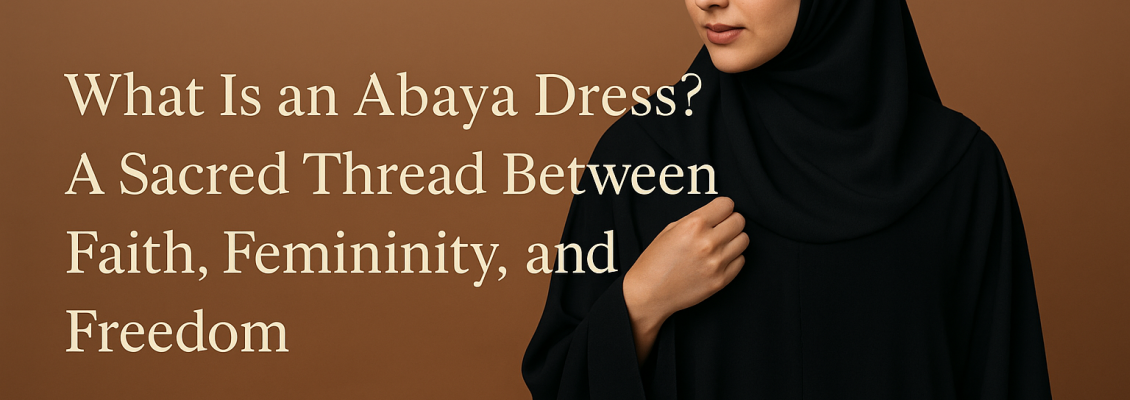


Leave a Comment