Abayas, A Traditional Wear For Muslim Women
Wearing abayas has been regarded as a necessity in conservative Islamic countries like Morocco, where women are expected to be modest in public. However, bays have also become popular with ordinary women from different cultures who opt to wear them for practicality and ease of movement. Styles vary, and abaya designs come in light, long, and thick fabrics. Abayas can be worn outside and indoors. Some ebay designs are loose fitting and others are snug-fitting to give the wearer maximum comfort and functionality.
In addition to the traditional abaya design for women, there are abaya styles for women who want to sport an abaya while swimming, hiking, or doing housework and chores around the house. Designs include kaftans, which cover the entire lower half of the body; the koftas abaya, which cover the lower half of the thighs; and the leggings abaya, which cover the lower half of the legs. Other abaya designs include long and short abayas for women who want to wear abayas while doing household chores. Long abayas are usually meant for older women.
There are away designs for women who want to show off their ethnic and cultural roots. Some bays feature Arab art and patterns, which give abayas its unique identity. There is a wide array of colorful abayas to choose from. These bays range from dull black to bright, vibrant colors. Black abaya styles are usually worn in standard black color, but some abayas are available in a variety of colors including green, blue, red, pink, yellow, and peach. Most of these bays are lightweight, functional, and elegant.
Another type of abaya design that is popular among Muslim women is the trendy abaya dress. This type of bay, which covers the entire body except for the hands and feet, can be worn during casual occasions. It can be paired with other accessories to create an elaborate outfit, or it can just be a basic cover up for everyday wear. The online ebay stores sell a wide array of trendy abaya dresses for both women and men. You can find an abaya that fits your personality and style, and you will look stunning in it.
In order to keep away designs current and in style, abaya boutiques have launched their line of latest ebay designs. Some of these designs include floral prints, bright colors, classic styles, and trendy cuts. The online ebay stores are now selling abaya designs from some of the best designers in the industry. You can choose a design that matches your personal preferences and that goes well with your religious beliefs. You can also choose an abaya design that has interesting embellishments, embroidery, and zardozi work.
Many women prefer the traditional hijabs, known as kaftans, over kalima abayas. Traditional tartan is made of black fabric and can either come with a matching hijab or with plain stitches. Traditional kaftan style cabanas are usually more formal and often used for official affairs. However, many women now choose to wear fashionable bays, which are available in trendy designs such as the new kaftan styles. In addition, abaya styles such as the contemporary kaftan, which is made of light cotton, come in a variety of colors such as white and green.
Another hot topic in the fashion industry is Muslim clothing, specifically bays, which are considered to be a must-have wardrobe essential for Muslim women. There is a great deal of concern about Muslim fashion in Western media, which portrays Muslim women as modest and covered up. This has led to a backlash against women who wear abayas, causing a great deal of diversity in clothing for Muslim women in the Western world. Abayas are very much in demand by Muslim women, both women and men, and abaya styles have become extremely popular in the past few years. The success of abaya styles has inspired many fashion designers to create their own versions of abayas, including Emaani and Zahara Elba, who have created the popular Emaani Online T-Shirt, Emaani Scarf, and Zahara Scarf.
For those who want to wear abayas, but cannot wear them while swimming, there is hope. There are now a large number of companies that design abayas with a tank top, camisole top, or a sleeveless jersey dress that conceals the abaya. These bays, which are also called abayas scarf or abaya tunic, are now available for everyday wear. Many online merchants offer these types of styles at low prices. If you do not like the styles that are available, you can have your clothing custom designed.
Easy Way to Shop For Muslim Fashion Abayas
Abayas are one of the most important traditional Islamic clothes, which are known to give a bride the required elegance and charm. Many online shops sell elegant cabanas online at affordable rates. If you are looking for the best quality abaya at affordable rates, then shop online. You will definitely find hundreds of online sellers offering cheap abayas for sale. To buy an abaya is not a tough job and does not take much time. You can find out more about bay design, color and materials used in our site.
Many online merchants offer elegant cabanas for women at cheap rates. You can find out the basic dress code for abaya collection online. Many of us are still not aware about which dress code to follow when wearing an abaya collection. So, know how hard it is to find a simple abaya for each event, and that's why online store has a wide assortment of elegant designs - so that you can easily piece together a perfect outfit to match your lifestyle.
Online ebay shop is known to sell full-length and ankle abayas with full-length loose tunics and ankle tunics. You can also get glamorous abayas and wraps, which can make you look gorgeous and elegant. You can also find stylish abayas with embellished designs, zardosi work, beads, sequins, and rhinestones. The elegant bay designed with exquisite embroidery and stunning embellishments will give you a classy and trendy look.
If you are looking to purchase cheap abayas online, you should be careful to avoid fraudulent websites. It is always advisable to choose an online store that is popular and well-established. Reputable online ebay shop will offer you authentic dresses at competitive prices. They will also provide you with excellent tips and suggestions that will help you create your perfect outfit. Whether you want to buy abayas or any other kind of fashionable clothing, you should do a thorough research to find the best online store.
There are several beautiful dresses that you can find in reputable ebay shop. You can choose from long, short, abaya tops, away pants, abaya shawls, abaya wraps, and away dresses. You can choose a dress that will hide your sins and at the same time make you stand out elegantly. The modest abayas online sold in the ebay shop will help you make the right choice.
Most of the online ebay shop will offer you Muslim fashion at competitive prices. You can shop at your convenience and choose from Muslim clothing that has been created by talented designers online. Most of these shops also have high quality away dresses for your purchase. You will also find exquisite abaya dress in many colors online.
Online shopping for Muslim fashion abacus will help you save a lot of your money. You will also be able to choose an ideal outfit for the special occasions during your stay at home. You can make your favorite outfits with your creativity and fashion sense. It is important to mention here that there are several bays online but not all of them will offer you a unique experience in terms of style, design, quality and fit. Therefore, before buying your favorite outfit, it is very important to select the right shop from a reputable online ebay shop.
Most of the online ebay shops offers you great deals in every conceivable size and style. They also offer you various customized services that will help you create your own style statement. When you shop abayas online, you will get to choose an elegant abaya with simple designs or one that is embellished with beautiful embellishments. However, you must keep in mind to choose an outfit that is simple and elegant.
How to Shop For hijabs?
The history of hijab is very interesting but highly complicated too. It's commonly worn by Muslim women for security and personal privacy purpose. It bills lots of dignity in a Muslim woman. However, whatever kind of hijabs you buy, they all adhere to the same Islamic norms. So when it comes to buying them, you should always be careful about their authenticity.
A typical Muslim woman wears hijabs during prayers at a mosque. It acts as a kind of headdress and covers the head from front to back. It doesn't have any other function except that. However, Islamic law specifies that women must wear hijab according to the extent of modesty. Hence, some women wear full veils as well. Some wear it just to hide face and hair; others wear it as a scarf.
In fact, there are so many types of hijabs available in the market. They are made of different fabrics and made of different metals too. Different kinds of artisans are specialized in producing different fabrics of these hijabs such as velour, charmeuse, silk, crepe, net and satin. Based on these different types of fabrics, colors are available too.
For example, abayas are the most popular choice for hijabs in light fabrics. Nowadays, abayas come with sleeves. Some come with hooded style too. They are basically knee length pajamas or long pants, light fabrics.
Another popular style is the Hijab scarf. These are called the designer hijabs because they are made by some highly famous designers of the Muslim fashion industry. These designs are considered to be contemporary and innovative. Hijab shawls are also made of light fabrics in various colors and patterns. They can be used during day time and night time too.
Then, we have the hijabs with printed patterns on them. They are called as the fashionable hijabs, as they add more glitz to the wearer's attire. The printed scarf styles usually look exquisite and elegant. Moreover, they are considered to be more modest than the plain and traditional long shawls.
For those who are looking for the best types of hijabs, they can choose the hijab scarves, which come in two major types. There are the Type I turban, Type IIa hibiscus, Type IIb square scarf, Type IIIa large square scarf and Type IIIb large square scarf. These different types of hijabs offer different looks, feel, and even prices. For instance, Type I is the least expensive, so if you are a modest person, you may want to get yourself a Type I.
On the other hand, Type IIa and Type IIb are considered to be the most fashionable. Those who would like to own Type IIa should be ready to shell out a little more. In terms of materials used, the light fabrics are usually used for the hijabs of Type I, medium fabrics for Type II and heavy materials for the Type IIb. The square scarves of Type III are considered to be the most elegant and most modern in the market today. Thus, if you are a Muslim, who wants to wear an Islamic apparel that adds more beauty to your attire and makes you more charming to others, consider getting a hijab scarf and show off your elegant and stylish side.
If you have no choice but to shop for hijabs because you are a modest person and cannot afford anything expensive, then shop for affordable hijabs. There are various types of affordable hijabs, which come in light and heavy fabrics, square styles, contemporary and traditional. You can easily find one within your price range that will fit your needs and style.
Another option that you have in choosing the perfect hijab style for you is to shop for hijabs made from polyester. Polyester fabric is resistant to colors, stains and mildew and thus, these types of hijabs are great for those who are allergic to cloth. These hijabs are also very fashionable and therefore, a great addition to your wardrobe. Some types of polyester hijabs that you can choose from are flat polyester, embroidered polyester, thick polyester and also DuraCord.
Lastly, you can opt for the traditional and modern types of hijabs. If you want to wear traditional hijab styles, you can try out long full length hijabs or medium length ones. On the other hand, if you would rather buy modern hijab, then you can try out square or triangular hijabs. In addition, there are various styles of Islamic hijabs, such as the classic black type, the white type, the opaque type and the designer types.
The latest trend in Islamic clothing is a garment known as the crinkle hijab. The designers of this garment have created a modern version of an Islamic head scarf. The head scarves are worn by Muslim women all over the world. The Muslim religion does not prohibit wearing the head scarves. They are considered to be a form of art by many women throughout the world.
The fashion industry has taken full advantage of this new venture. The new line of headwear is modeled after traditional Islamic patterns. They are available in many trendy colors and patterns. Like their traditional counterparts they come with beautiful printed motifs and rich, deep colors.
Unlike the traditional head scarves that can curl, crinkle head scarves do not curl. This gives them the appearance of folds which draw attention to the facial features. Some women prefer the crinkle scarf because it allows them to wear their head scarves while still looking stylish. This is very beneficial to busy women who cannot stay still long enough to apply traditional head scarves.
The designs of the scarf differ depending on the manufacturer. In Indonesia, for example, the design features palm trees with Arabic writing written symbols on them. The palm tree motif is used to represent peace and happiness. The Indonesian flag is also incorporated into the design. This adds to the beauty of the garment and makes it very appealing to women from many cultures and backgrounds.
The crinkle scarf comes with beautiful floral images and patterns. These add to its attractiveness and make it suitable for women who are passionate about flowers. The floral design can be small or large in size. It can be placed above the hairline or it can be styled into a band around the hairline.
The full head cover is stylish and comfortable to wear. It covers the entire head, except the eyes. Women from Islamic societies need to keep their heads covered when they are outside of the house. Using a scarf to do so makes it more practical than other types of head coverings that do not require religious observance. This is why this type of head scarf is very popular with women from this culture.
The crinkle hijab has been made available to women in a variety of sizes. It is suitable for women who have short hair and for women who wear it as a loose shawl. Women can even wear a full-length version, if they choose to. The full head scarf can be worn with a simple blouse or a trendy pair of jeans. It can be paired up with a long veil, if the woman chooses to wear one.
The crinkle hijab is very attractive and fashionable. It adds instant fashion to any outfit and can be worn by young and old women alike. Because it is designed with an open mesh, this type of head scarf can easily be stored when not in use. This is why many women who are not in the traditional Muslim culture wear this trendy fashion item as a symbol of their religion and culture.
Although this head accessory looks pretty, the price is reasonable. It costs around $50 and is affordable for every woman on every budget. This is also one of the few fashion items that will never go out of style. In fact, it has been popularized by celebrities and trendsetters such as Sarah Jessica Parker, Britney Spears, Halle Berry, and Jennifer Lopez.
Many celebrities choose to wear this head accessory because it looks smashing on anyone. It is not gender specific and can be worn by women of all ages. A lot of women also choose to wear them because they are very easy to wear. They don't have to be tied using special charms, there is no need to wear heavy beading, and they are very flexible.
As a result, anyone can wear head scarves without being worried about certain dress codes imposed by cultures. It can be worn at any time and by any person. Some women even choose to wear this while they are swimming and in the ocean. Even when going to a formal function, they can still sport their own unique head scarf.
If you are looking for an exciting new piece of fashionable headwear, the crinkle Hijab scarf is definitely the one to buy. It has been available for quite some time now and is still a top choice when it comes to head coverings. So, start sporting your own crinkle hijabs today.
Introducing our limited edition 3-piece Cloak Abaya set. This stunning set brings elegance, comfort and modesty for special occasions such as Eid and..
Introducing our limited edition 3-piece Cloak Abaya set. This stunning set brings elegance, comfort and modesty for special occasions such as Eid and..
Introducing our limited edition 3-piece Cloak Abaya set. This stunning set brings elegance, comfort and modesty for special occasions such as Eid and..
Elevate your style with Amani's elegant 24k gold plated set. Perfect for all occasions, this set ensures a stunning and regal appearance with its eleg..
This beautiful farasha style baati dress is made from soft cotton fabric that is both lightweight and airy, ideal for the warm summer months. Its rela..
Why was it so hard to find an abaya in the UK that felt like it belonged to my journey?
It was on a grey Wednesday in June when I stood in front of my closet again — heart aching, hands hovering, unsure what to wear. Outside, the rain painted the windows in streaks, but the real storm was internal. I whispered Bismillah, but even that felt like a question mark that morning.
My heart knew I wanted to dress in a way that pleased Allah — modest, beautiful, intentional — but everything hanging in front of me felt like a costume. Not haram. Just… hollow. I had tried. Searched. Ordered from countless “Abaya UK” stores, only to feel further from myself each time.
This blog isn’t just about fabric. It’s about the spiritual dissonance many of us carry when what we wear doesn’t reflect who we are. It’s about the pain of not seeing yourself represented, the joy of finally finding resonance, and the sacred act of dressing with niyyah.
If you’ve ever felt unseen in your modest fashion journey — especially here in the UK — this is for you. Let’s walk together.
Was it me, or did every abaya in the UK feel like it belonged to someone else’s story?
I remember standing in a bustling shop in East London, surrounded by rows of abayas — shimmering silks, heavily embroidered sleeves, deep jewel tones — and feeling, for the hundredth time, like an outsider in my own search for belonging. The call to modesty had settled into my heart years ago, gently and gradually, like rain seeping into dry earth. But when I reached for an abaya in the UK, hoping to reflect that sacred turning inward, I found garments that seemed to speak with someone else's voice.
Was it just me? Or did every abaya I tried on feel like it belonged to a story I hadn’t lived — a style that wasn’t mine, a culture that wasn’t quite familiar, a fabric that felt too distant from my daily life?
Where was the abaya that matched my niyyah?
I wasn’t looking for extravagance. I wasn’t seeking a social media-worthy outfit. I was searching for something that felt like home — spiritually, emotionally, and practically. And yet, the abayas I encountered often seemed like performances: stitched for weddings I wasn’t attending, for cultures I wasn’t raised in, for women I deeply respected but didn’t quite resemble.
And here lies the quiet heartbreak that many Muslim women in the UK — especially reverts, daughters of diaspora, or converts navigating both Western sensibilities and Islamic values — quietly carry. The abaya is more than cloth. It is a declaration, a dua, a longing for nearness to Allah. But when that longing is wrapped in an aesthetic that feels foreign, transactional, or disconnected from your reality, something deep within starts to ache.
The silent layers: fashion, identity, and faith
When I would slip into an abaya that didn’t quite feel “me,” it wasn’t just a matter of taste. It felt like I was wearing someone else’s narrative. And in those moments, I wondered — had I misunderstood this journey? Was I not “modest enough,” “cultural enough,” or “Islamic enough” to fit into this garment I had so deeply respected from afar?
My modesty wasn’t performative. It was raw. It was new. It was shaky but sincere. And so I needed an abaya that could carry that fragile beauty — not weigh it down under layers of sequins or alien silhouettes.
A table of contrast: What I saw vs. What I sought
What I Saw in UK Stores
What I Was Looking For
Heavily embellished abayas
Minimal, elegant, purpose-driven garments
Styles rooted in Gulf or South Asian aesthetics
Designs that spoke to my hybrid British-Muslim identity
Fabrics too delicate for daily wear
Durable yet graceful fabrics I could pray and walk in
Models I couldn’t relate to
Representation of sisters from diverse backgrounds
Trends over timelessness
Pieces that honored simplicity and intentionality
When the abaya became a mirror
The more I searched, the more I realized that my discomfort wasn’t about the abayas themselves — it was about the assumptions woven into them. Assumptions that modesty had to look a certain way. That faithfulness needed to wear a specific silhouette. That unless you grew up with a certain cultural reference, the abaya wasn’t really “yours.”
And that’s when the mirror turned inward. Maybe it wasn’t about the abaya. Maybe it was about the journey of claiming space — spiritual, sartorial, sacred — as a Muslim woman in the UK whose story didn’t fit neatly into any template. Maybe the real question wasn’t “Where is the abaya for me?” but rather, “Can I love my journey enough to design one that holds it?”
Meeting sisters who felt the same
Over time, in quiet prayer rooms and WhatsApp groups and late-night tea talks, I met other women who felt the same dissonance. Revert sisters, second-generation daughters, women who wore their Islam tenderly but struggled to find modesty garments that reflected their lives. We shared frustrations, yes — but also ideas, sketches, dreams.
One sister said, “I want an abaya I can wear to Jummah and Tesco.” Another shared how she was tired of being told to just “order from Dubai” when her body type or budget made that impossible. We weren’t asking for luxury. We were asking for dignity — a garment that respected our realities while honoring our aspirations.
The deeper question: Whose story are we dressing for?
In the end, the ache wasn’t just about clothing. It was about narrative ownership. The abaya, like every piece of clothing, tells a story — about the woman who wears it, about what she values, about where she’s heading. And for so long, I had been trying to wear a story that wasn’t mine. Hoping it would eventually fit. Hoping I would eventually grow into it.
But modesty doesn’t require impersonation. It invites authenticity. Allah does not ask us to erase ourselves. He asks us to purify ourselves — and sometimes that means shedding not just ego, but expectations too.
“O children of Adam, We have bestowed upon you clothing to conceal your private parts and as adornment. But the clothing of righteousness — that is best.” — (Qur’an 7:26)
So was it me? Or was it the story?
Maybe it was both. Maybe the abayas I saw were beautiful — just not written in my dialect of faith. Maybe I had to walk a little further to find the thread that matched my soul. And maybe — just maybe — part of the blessing is that I now get to help weave that thread into something other sisters can wear too.
Sister, if you’ve ever stood in a changing room and whispered “this doesn’t feel like me,” know that you’re not alone. Your story is valid. Your search is sacred. And the abaya that will feel like yours — soft on your skin, strong in your soul — is worth waiting for.
How do you dress with dignity when your soul feels out of place?
There were mornings I stood in front of the mirror, holding my abaya in one hand and my uncertainty in the other. My heart longed for Allah. My limbs ached for ease. But my environment — my workplace, my university hallways, even the corner shop — often made me feel like a stranger wrapped in fabric they couldn't understand. And so I asked myself quietly, tremblingly: how do I dress with dignity when my soul feels like it doesn’t belong here?
Dignity, in Islam, is intrinsic. It’s gifted, not earned. Yet for so many of us navigating modesty in a place where Islamic dress is misunderstood or politicised, maintaining that dignity outwardly becomes an uphill journey. When the society around you sees your clothing as alien, outdated, or even threatening — it begins to chip away at the confidence you once felt when you stood before your Lord and whispered, “I choose this for You.”
Wearing the abaya in a world that doesn’t understand it
In the UK, where the winds of cultural liberalism often blow strongly, dressing modestly as a visibly Muslim woman can be an act of courage. The abaya — long, flowing, simple — doesn’t blend in. It asks to be noticed. And that very visibility can feel suffocating when your soul is already wrestling with being unseen, unheard, and othered.
But here’s what I’ve come to understand, dear sister. The essence of dignity in Islam isn’t about how you’re perceived — it’s about who you’re serving. When you choose your clothing not for fashion but for faith, not for acceptance but for Allah, then even in your discomfort, you are adorned with honour. But getting to that place emotionally, spiritually, and practically requires immense inner work.
Table of reflections: External pressures vs. internal compass
External Pressure
Internal Response
“You’re too covered — are you oppressed?”
I am liberating myself from worldly expectations and serving the One who sees my heart.
Stares, whispers, microaggressions
My Lord witnesses me. Every moment of discomfort is written as sabr, inshaAllah.
Lack of modest fashion options
I will be creative, intentional, and patient — my dignity is not in the trend, but the tawbah.
Feeling too "different" in social spaces
Allah made me unique on purpose. My story is mine, and it’s beautiful in His sight.
Inner doubt and imposter syndrome
Even if I wobble, I return to Him. He is Ash-Shakur — He values every effort.
Clothing yourself in intention before fabric
One of the most healing things I did on this journey was rewrite the way I viewed clothing. Instead of seeing the abaya as something I had to force into a hostile environment, I began to see it as an inner sanctuary — something that reminded me who I was, even when the world tried to erase it.
I started dressing from the inside out. Not in terms of layers, but in terms of niyyah. I would whisper a du’a before getting dressed: “Ya Allah, clothe me in humility, in strength, in sincerity.” I would remind myself that the abaya was not an act of hiding, but an act of revealing the truth of my servitude.
And even when my soul felt displaced, when my surroundings didn’t reflect my values, I learned that my dignity came from choosing Allah — over and over again, even when it was hard.
When you feel like your modesty is too loud
I won’t pretend it’s easy. There were days I walked into rooms and felt every eye on me. Meetings where I sensed judgment. Cafés where I noticed people staring, not with curiosity, but with quiet suspicion. I remember one job interview where I wore my abaya with a smart tailored jacket, trying to strike a balance — and still felt like I was swimming upstream.
But what no one could see was the victory behind that fabric. That even as my hands trembled, I had chosen what pleased Allah. That my soul — no matter how out of place it felt — had still risen that morning to serve Him in my dress, my demeanor, my defiance of conformity.
Spiritual reminders for displaced souls
“Indeed, the most noble of you in the sight of Allah is the most righteous of you.” (Qur’an 49:13) — Dignity is not in how the world measures us, but in how Allah sees us.
Your abaya is your silent dhikr. Every step taken in it, every uncomfortable moment endured, is a form of worship if you intend it for His sake.
You don’t need to feel perfectly at home in this world. The Prophet ﷺ reminded us: “Be in this world as if you were a stranger or a traveler.”
Practical steps to preserve your dignity through dress
Create a sacred wardrobe: Fill it with garments that feel comfortable, intentional, and beautiful to you — not in the world’s eyes, but in your own soul.
Invest in quality, not quantity: Even a few well-chosen abayas that make you feel grounded in your identity are more valuable than a closet full of trends.
Make dua as you dress: Ask Allah to clothe you in haya (modesty), sabr (patience), and tawakkul (trust).
Build a sisterhood around you: Surround yourself with women who uplift your modesty, not question it.
Normalize the feeling of being different: Embrace it as part of your spiritual DNA.
“Whoever seeks the pleasure of Allah even though it displeases the people, Allah will suffice him from the people.” — Prophet Muhammad ﷺ (Tirmidhi)
Clothing as a shield, not a burden
If you’re reading this with a heart that feels displaced, a soul that longs for home, know this: your modesty is not your burden — it is your badge of resilience. You are not here to blend in. You are here to bloom in the path of Allah, even if the soil feels foreign.
So dress with dignity, not because the world makes it easy, but because Allah makes it worth it. Wrap yourself in His mercy. Let every thread be a testament to your struggle and your sincerity. And remember: even when your soul feels out of place, you are never out of place in His sight.
I used to think modesty was just fabric — until my heart started searching for meaning
I used to believe modesty was a checklist — a series of external steps that started with covering my limbs and ended with approval from the community. Long sleeves? Check. Loose trousers? Check. Hijab pinned securely? Check. Abaya, preferably in black or muted tones? Check. For years, I moved through the motions, thinking this was all modesty was — fabric layered over skin. A visual compliance.
But the truth is, my heart was dry. It felt like I had placed the outward symbols of piety onto a soul that was still unsure, still searching. I wasn’t dressing for Allah. I was dressing to be “good.” I was dressing so I wouldn’t be questioned, so I could blend in with the sisters who looked like they had it all figured out. It wasn’t hypocrisy — it was spiritual emptiness. And I didn’t even realise it until my life cracked open and the winds of loss, loneliness, and longing swept through.
When fabric isn’t enough
There was a moment — quiet, piercing — when I sat on the prayer mat after a particularly exhausting day and realised: my clothing looked modest, but my heart was desperate for connection. I wasn’t feeling the sweetness of hayaa (modesty). I was just going through the motions. The abaya had become a uniform, not an expression of my soul.
That’s when my heart started searching for meaning.
Table: External Modesty vs. Internal Modesty
External Modesty (Zahir)
Internal Modesty (Batin)
Loose, covering clothing
Humility before Allah and others
Hijab or abaya worn in public
Guarding the gaze and purifying the intention
Neutral or non-flashy colors
Detachment from the need to be seen or praised
Speaking with modesty
Controlling the tongue, avoiding gossip and arrogance
Wearing niqab or jilbab
Closeness to Allah and a heart that feels His gaze
Modesty as a state of the soul
I began to understand that hayaa is more than the length of your sleeves or the drape of your hijab. It is a condition of the heart — a perpetual awareness that Allah sees me, hears me, knows me. That awareness leads to softness. To caution. To reverence. And once I tasted that internal hayaa, the clothing I wore started to take on new meaning.
Suddenly, I didn’t wear my abaya because I was supposed to. I wore it because it made me feel held. It reminded me of my purpose. I wore it not to be seen, but to honour the One who sees everything. I wore it because it quieted the noise of the world and helped me listen to the whispers of my soul.
What shifted when my heart entered the conversation
I stopped seeking validation from others — The compliments and criticisms no longer swayed me, because I knew Who I was dressing for.
I started choosing pieces with more meaning — I chose fabrics that felt calming. Colours that reflected serenity. Cuts that allowed me to move, breathe, and pray with ease.
I began praying for my modesty to be accepted — Not just my hijab, but my speech, my interactions, my intentions.
I became gentler with myself and others — I no longer judged those who weren’t dressing like me, because I knew how long it had taken me to move from fabric to faith.
That’s the beauty of Islamic modesty: it is both a garment and a garden. The garment protects you, but the garden must be cultivated within. A sister can wear the most complete hijab and still feel spiritually starved. And another can begin with a single, sincere effort — a longer top, a looser fit — and be glowing with iman. The point is never perfection. It’s alignment. Intention. Love.
Spiritual modesty is for your own soul
One of the most liberating lessons I learned was that modesty wasn’t for others to perceive — it was for me to feel. It was for my soul to settle, for my limbs to surrender to something bigger than vanity, bigger than ego. Modesty, I realised, was an act of deep, personal mercy. A way to say: “I know my worth isn’t in how I appear to others, but in how I appear to Allah.”
That shift gave me peace. It allowed me to walk outside with a quiet confidence — not because I looked “put together,” but because I felt spiritually anchored. My clothing became part of my ibadah. Not perfect. Not always fashionable. But purposeful.
How to nurture modesty from the inside out
Revisit your intention often: Before you get dressed, ask yourself: “Am I doing this for Allah or for appearance?”
Read about the Prophetic character: The Prophet ﷺ was the most modest in heart and conduct. Learn from his gentleness and dignity.
Seek modesty in all areas of life: How you speak, how you earn money, how you spend your time. Let hayaa be your lens.
Surround yourself with sincere women: Their company reminds you that it’s not about trends, but about taqwa.
Make dua: Ask Allah, “Ya Allah, clothe my heart in sincerity, my body in modesty, and my soul in Your nearness.”
Conclusion: More than a garment
I used to think modesty was just fabric. A checklist. A dress code. But now I know it is a mirror — reflecting the state of my heart. It is a garden — delicate, intentional, requiring daily watering through prayer, intention, and love. It is a conversation between me and my Creator.
So if you find yourself wearing the abaya but still feeling distant, don’t despair. It might be that your soul is simply calling you deeper. Answer that call with tenderness. Let your modesty become more than a garment. Let it become a sanctuary — one that shields your body and shelters your soul.
Why did wearing an abaya in the UK feel like erasing pieces of myself?
The first time I wore an abaya in the UK, I felt like I had entered a costume party — only I didn’t know the theme, and everyone else seemed to. There I was, wrapped in flowing fabric that echoed tradition and piety, but inside I felt… absent. Disconnected. Like I had disappeared beneath someone else’s story. The abaya, instead of being a mirror of who I was, felt like a cover for a woman I didn’t fully recognise. And that dissonance — that ache — followed me quietly.
It wasn’t the garment itself that hurt. It was the way it seemed to flatten my identity — stripping away the softness, complexity, and cultural nuance of who I was. I was trying to honour Allah, yes. But in doing so, why did it feel like I was slowly erasing parts of myself — my history, my voice, my expression?
Wearing an abaya — but whose?
The UK modest fashion scene is strange. For all its options, I found myself circling the same colour palette: black, navy, charcoal. The cuts were often Gulf-inspired — boxy, regal, austere. And while that may have been empowering for some, I couldn’t shake the feeling that I had stepped into someone else’s silhouette. I was trying to step closer to Allah, but also trying to find myself in the process — and somehow, I kept losing both.
Every time I stood in front of the mirror, I wondered: where am I in all of this? Where is my heritage, my softness, my story? I was wearing a garment rich with Islamic symbolism, but it felt imported — not from overseas, but from a place that didn’t know me. And that gap, between modesty and selfhood, felt like a wound.
What I lost and what I feared losing
What I felt I was losing
Why it mattered
My cultural identity
The abaya felt rooted in Arab culture, not my own — and I didn’t know how to blend the two.
My creativity
The plain, muted colours made me feel invisible, when I longed to express beauty in quiet ways.
My personality
People assumed things about me — that I was ultra-conservative, silent, or detached. I wasn’t.
My voice
In trying to "belong," I spoke less, took up less space, and stopped questioning what didn’t sit right with me.
Conforming vs. belonging
In hindsight, I think I confused conformity with belonging. I thought: if I wear what they wear, I will be accepted. But wearing an abaya without truly understanding its depth, or adapting it to my journey, left me feeling like a stranger — not just in society, but in my own reflection.
True belonging in Islam isn’t about melting into a mold. It’s about returning to your fitrah — the natural disposition Allah gave you. When we try to erase our voice, our background, or our unique qualities in the name of “modesty,” we risk reducing the deen to appearance. But Islam doesn’t erase. It refines. It doesn’t mute your essence — it sanctifies it.
How I began reclaiming the abaya as part of *my* story
Slowly, I began to soften the narrative I had around the abaya. I stopped treating it like a test I had to pass and started treating it like a language I could learn to speak in my own dialect. I explored different fabrics — softer textures, ones that felt more like “me.” I introduced gentle colours: earth tones, dove greys, even dusky rose. I layered with meaning — not just with scarves and pins, but with intention.
I looked for abayas with subtle cultural motifs — embroidery that reminded me of my ancestry, details that felt familiar.
I gave myself permission to question trends — just because something is popular in the Gulf or on social media doesn’t mean it has to define me.
I started designing for myself — even if it was just a sketch, or choosing colours that felt more rooted in who I was.
I had heartfelt conversations with Allah — “Ya Allah, help me to worship You without losing myself.”
The abaya didn’t fail me — but my approach did
Looking back, I see that it wasn’t the abaya that erased me. It was my fear of not fitting in. It was my unspoken belief that in order to be “accepted,” I had to become invisible. But that was never the deen. The Prophet ﷺ never asked women to erase themselves. He uplifted them — Sahabiyyat who were eloquent, expressive, courageous, deeply themselves — all while being deeply modest.
The abaya is a canvas. What you paint onto it — through your intention, your grace, your dignity — that is what makes it beautiful. You are not betraying Islam by being your full self. You are honouring it by showing up with sincerity and ihsaan, however that may look.
Lessons I carry with me now
Modesty is not erasure — it is elevation.
You don’t have to choose between your deen and your identity. Both can coexist in harmony.
The abaya is not a one-size-fits-all symbol. Let it be a reflection of your soul, not a mask.
You can honour Allah without dishonouring your truth.
Conclusion: Becoming visible again, the right way
Wearing an abaya in the UK once felt like erasing pieces of myself. But now I see that it was a call — a quiet invitation to go deeper, to reclaim the garment as an act of devotion that includes my story, not erases it. I don’t have to disappear to be devout. I can show up — honest, whole, and present — in an abaya that feels like a part of me, not a costume I borrow.
Sisters, don’t fear disappearing. Fear not discovering the version of you that Allah created — the one who worships with truth, walks with grace, and wears her modesty like a crown, not a cage.
What happens when your wardrobe no longer speaks your language?
There was a time when I opened my wardrobe and it felt like a quiet conversation. My clothes spoke in soft dialects of who I was — colours that mirrored my moods, textures that echoed my upbringing, silhouettes that knew the shape of my becoming. But something shifted. Slowly. Subtly. And then, suddenly, my wardrobe went silent.
It wasn’t just that the clothes didn’t fit anymore — it was that they no longer felt like they belonged to me. Like I was borrowing someone else’s script, performing a version of myself I no longer recognised. I stood there, wrapped in garments that ticked boxes — modest, covered, culturally acceptable — but inside, I felt muted. Out of place in my own skin.
When clothing stops being expressive and becomes performative
Modesty, at its most sincere, is meant to be a reflection of our inner state. But what happens when that reflection is distorted? When our wardrobes are no longer curated with intention, but with obligation — or worse, fear? What once felt like devotion can begin to feel like duty. And what once felt beautiful can begin to feel burdensome.
I remember walking down the street, fully covered, yet feeling completely exposed. Not because of stares, but because I no longer recognised the woman behind the clothes. I had changed. Grown. Softened. Searched. But my wardrobe hadn’t caught up. It was still speaking in old tongues, stuck in a chapter of my life I had already closed.
The dissonance between inner growth and outer expression
Spiritual journeys aren’t static. As our hearts evolve, so do our needs — and that includes how we dress. Sometimes, we cling to a past version of our wardrobe out of guilt. We tell ourselves that changing our clothes is shallow. That faith means denying the desire for beauty or self-expression. But Islam never demanded erasure — only sincerity.
If your soul is whispering that something no longer aligns, that’s not rebellion. That’s a sign of spiritual growth. And growth requires recalibration — even in our clothing.
Signs your wardrobe no longer speaks your language
Internal Feeling
Wardrobe Symptom
You feel disconnected from your clothes
Every outfit feels like a uniform instead of an expression
You avoid looking in the mirror
Your clothing doesn’t feel aligned with your current identity
You feel creatively stifled
Your wardrobe lacks variety in textures, colours, or silhouette
You feel pressured to dress a certain way
You dress to appease expectations, not to express your soul
You feel like you’ve outgrown certain looks
Clothes that once felt spiritual now feel performative
Giving yourself permission to evolve
There is no shame in realising that your wardrobe no longer reflects your current state. Growth is meant to feel uncomfortable. We are allowed to change. What mattered to you five years ago may not serve you now. That doesn’t make your past choices invalid — it makes them part of your journey.
The beauty of modest fashion is that it can be both spiritual and deeply personal. It can carry our culture, our femininity, our artistry — all while aligning with our values. But it starts with permission. You are allowed to reimagine what modesty looks like for you.
Practical ways to reconnect with your wardrobe
Edit with intention: Take everything out and ask: “Does this garment still speak to me?” If the answer is no, let it go with gratitude.
Create a moodboard: Visualise the woman you are becoming. What colours, textures, shapes does she wear?
Rebuild slowly: You don’t need a whole new wardrobe. Start with a few pieces that feel authentic. Let them anchor you.
Blend your past with your present: Keep what still aligns. Update what doesn’t. Honour every chapter.
Speak to Allah through your clothing: “Ya Allah, help me wear what pleases You and reflects the woman You created me to be.”
The wardrobe as a spiritual companion
Your wardrobe doesn’t just dress your body — it travels with your soul. It holds memories, mirrors transformation, and often, it whispers what words can’t. If yours has gone quiet, perhaps it’s time to sit with it. To listen. To ask: “Who am I now? And what do I need to wear to walk with that truth?”
Clothes are not frivolous. In the Qur’an, Allah calls garments a *libaas* — a protection, an honour, a form of covering not just the physical, but the emotional and spiritual. When your clothing no longer protects your integrity or supports your growth, it’s not vanity to change — it’s wisdom.
Conclusion: Clothing as prayer
When your wardrobe no longer speaks your language, don’t silence your soul to keep wearing it. Listen to the stillness. Let it be a doorway to renewal. Dress as though your soul matters — because it does. Dress as though Allah sees your intentions — because He always does.
Sisters, your wardrobe is not a prison. It’s a place of dua, of becoming, of silent testimony. May every stitch speak your language. May every fold be a whisper of who you are, and who you’re becoming — for His sake.
Was I wrong to want an abaya that whispered, “You are seen”?
I remember holding that abaya in my hands — a soft, fluid black fabric with a gentle shimmer in the light. It wasn’t loud. It wasn’t trying to make a statement. But it spoke to me. It whispered, “You are seen.” Not by the world, but by something deeper — by the self I’d been hiding, by the prayers I hadn’t said out loud, by the ache for presence I’d buried under politeness and performance.
And yet, a quiet doubt crept in. Was I wrong to want an abaya that made me feel seen? Had I misunderstood modesty? Was I flirting with vanity when I desired beauty, not for others, but for the woman within me who had waited so long to be acknowledged?
The line between being seen and seeking attention
As Muslim women, we are often taught that to be invisible is to be righteous. That the more you shrink yourself — your voice, your opinions, your clothing — the closer you come to piety. But is that truly the essence of modesty? Or have we mistaken erasure for humility?
There’s a profound difference between being seen and seeking attention. The first is about visibility in truth — the second, about visibility for validation. Wanting to feel beautiful in your modesty, wanting your clothes to mirror your soul, wanting your abaya to carry the quiet dignity of your inner world — that is not vanity. That is sincerity.
Modesty as presence, not absence
Allah ﷻ created us with fitrah — a natural inclination toward beauty, harmony, and order. The Prophet ﷺ said, “Indeed, Allah is beautiful and loves beauty.” (Sahih Muslim) This doesn’t negate modesty; it deepens it. True modesty is not about disappearing. It’s about being present without performance. It’s about dressing with reverence, not restriction.
An abaya that whispers “You are seen” doesn’t necessarily draw eyes — it draws alignment. It doesn’t beg for applause — it stands quietly in truth. And if that abaya brings you into your body with more grace, more intention, more remembrance of Allah, how can that be wrong?
How clothing reflects your emotional and spiritual needs
Sometimes, what we wear is the only place where we allow ourselves to be known. In the midst of a busy world, where expectations crowd us and faith feels like a battlefield, a simple garment can feel like sanctuary. Especially for women who are navigating identities that feel fragmented — Muslim, British, woman of colour, revert, mother, student — the abaya becomes more than clothing. It becomes a canvas for wholeness.
I longed for an abaya that made room for softness and strength. For tradition and tenderness. For faith and femininity. One that didn’t scream, but whispered, “I see you. I honour you. You belong.”
Common misconceptions around beauty and modesty
Misconception
Clarification
“If it looks beautiful, it’s not modest.”
Modesty is not the absence of beauty. It’s the presence of intention and dignity in how that beauty is expressed.
“If people notice you, you’re seeking attention.”
Being noticed is not the same as seeking attention. One is passive, the other intentional. Modesty allows visibility without performance.
“Modest clothing should be plain and emotionless.”
Emotion is part of the human experience. Clothing that evokes peace, joy, or confidence can still be deeply modest.
“Wanting to feel beautiful is a sign of weak iman.”
Islam celebrates beauty. The problem is not beauty — it’s arrogance, showiness, or disconnect from spiritual grounding.
Giving ourselves permission to be fully present
We need to shift the narrative. It is not more Islamic to disappear. It is not more pious to suppress every desire for beauty, softness, or expression. Our deen teaches balance. Modesty should never feel like punishment — it should feel like protection. And it should never come at the cost of your emotional wellness.
I no longer feel guilty for desiring an abaya that reflects my soul. One that feels like poetry. One that moves like prayer. One that speaks softly to the version of myself that still feels fragile but wants to bloom. That is not pride. That is healing.
What a meaningful abaya might whisper
You are seen — not for how you look, but for who you are becoming.
You are worthy — not because of perfection, but because Allah made you intentional.
You are not invisible — your presence matters, even in silence.
You are a reflection of Divine artistry — and your clothes can reflect that, too.
You are held — in your seeking, in your growth, in your struggle to align your outer life with your inner truth.
Conclusion: Seen by Allah, reflected in your clothing
Sisters, if you’ve ever stood in front of your mirror, holding an abaya that felt like it understood you — don’t doubt that moment. Don’t silence that desire. You are not weak for wanting beauty. You are not misguided for seeking resonance. You are not wrong for wanting to be seen, even in stillness.
Because the most profound “you are seen” doesn’t come from others — it comes from the One who created you. And if your clothing becomes a gentle reflection of that divine gaze, then your abaya is no longer just fabric. It becomes a witness. A dua. A quiet surrender. And that, dear sister, is more than beautiful — it is sacred.
Can you grieve not just people — but clothing that never understood you?
Grief is usually reserved for people — the souls who leave holes in our lives with their absence. But what if grief could also stretch itself around the inanimate, around the things that held memory without ever holding us back? I once looked at my wardrobe and felt something I couldn’t name. A soft ache. A quiet discomfort. And then, I realised: I was grieving clothing that never truly understood me.
How strange it is to feel abandoned by fabric. To look at dresses, trousers, blouses — pieces I once wore proudly — and feel like they betrayed me. Not because they changed, but because I did. Or perhaps, because they never saw who I was in the first place. And now that I was beginning to see myself, they stood like strangers, crowding my closet with a past I no longer claimed.
The emotional weight of clothing that never belonged
For many of us who grew up in environments where our Islamic identity was quiet, subtle, or struggling to breathe, our clothes were often our camouflage. They helped us blend in, avoid questions, stay “palatable.” We curated our wardrobes with compromise — modest enough to ease the conscience, trendy enough to not feel alien.
But the price of that compromise was heavy. Each outfit was an almost. Almost covered. Almost authentic. Almost aligned. And slowly, we wore clothes that didn’t reflect our deen or our dignity. We performed versions of ourselves just to avoid confrontation — not just with others, but with our own spiritual longing.
When your identity evolves, your wardrobe must, too
Growth is painful. Especially spiritual growth. And one of the first places where that pain manifests is your wardrobe. Suddenly, that sleeveless top you once adored feels exposed. That tight-fitting dress you wore to feel “confident” now feels constricting. It’s not that the clothes changed. It’s that your heart woke up.
And when it does, a strange sadness follows. Because even though these pieces no longer serve you, they were with you. They were part of your becoming. You wore them through heartbreaks, first jobs, Eid prayers where you didn’t quite feel at home. They may not have understood you, but they witnessed you. Letting them go feels like letting go of an old friend — flawed, but familiar.
What does it mean to grieve a wardrobe?
Grieving a wardrobe isn’t shallow. It’s sacred. Because what you’re grieving is not just cotton and colour — you’re grieving the years spent misunderstood. You’re grieving the silence of clothing that never reflected your values. You’re grieving the fact that, for so long, you thought your outer self had to shrink in order to survive.
And that grief deserves space. You don’t need to rush into new modest clothing just to erase the past. Sometimes, you need to honour what was — even if it didn’t fit right. Especially if it didn’t fit right.
Signs you may be grieving your past wardrobe
Emotional Sign
What It Might Mean
Feeling emotionally attached to immodest pieces
You associate them with meaningful life moments, even if they no longer align with your values.
Avoiding decluttering out of guilt
You feel like throwing away the clothes is erasing a version of yourself that once needed them.
Feeling “in-between” identities when dressing
You’ve outgrown your past style but haven’t found pieces that reflect your current self yet.
Sadness or regret when remembering how you used to dress
You mourn how disconnected you were from your faith and how your clothing reflected that.
Reluctance to embrace a new modest wardrobe
You’re afraid of losing your individuality or sense of beauty in the transition.
The Islamic lens on transformation and reflection
Islam honours our journeys. Allah ﷻ does not expect instant perfection, but sincere intention. The Quran reminds us:
“Indeed, Allah does not change the condition of a people until they change what is in themselves.” (Surah Ar-Ra’d 13:11)
Changing your wardrobe is not a superficial shift — it’s part of the inward change that reflects outward. Letting go of clothes that misrepresented your soul is a form of tawbah — turning back, not just to Allah, but to your truest self.
Steps to move through clothing grief with grace
Acknowledge the grief: Say it out loud. “I feel sad letting this go.” That emotion is real, and it matters.
Journal your memories: Write about what those clothes meant to you, and what they no longer represent.
Make a conscious farewell: Donate, repurpose, or recycle them with the intention of moving toward something more aligned.
Replace with meaning: When you buy a new abaya, choose one that reflects who you are now. Don’t just shop — select with soul.
Remind yourself of the purpose: You’re not losing freedom — you’re gaining integrity. You’re not erasing your past — you’re honouring your present.
Conclusion: The sacred act of letting go
Sister, if your wardrobe feels like a graveyard of old identities, know that you are not alone. Many of us have walked this path — holding fabric that once felt like armour, now feeling like chains. And we have cried. And we have let go.
You are allowed to grieve clothing that never understood you. Because in doing so, you honour the parts of yourself that waited patiently to be seen. And in that space of sorrow, a beautiful new self is born — one who dresses not for approval, but for peace. Not for applause, but for purpose. And she is radiant.
Why did every abaya UK store feel like it was made for someone braver than me?
Walking into an abaya store in the UK, I often felt like I was entering a world designed for a different kind of woman — someone bolder, louder, more confident. It was as if every dress, every fabric, every style whispered, “You’re not quite ready for me.” This feeling wasn’t just about fashion; it was about identity, belonging, and courage. Why did the abayas in UK stores seem to demand bravery that I struggled to summon? Why did I feel like a stranger in a world that was supposed to celebrate modesty, faith, and femininity?
This question lingered for a long time, haunting my shopping experiences and shaping my relationship with modest fashion. It wasn’t just about the cut or colour; it was about the story the clothes told — and the story I felt unable to live out loud.
The pressure of “bravery” in modest fashion
Modesty is often misunderstood as timidity or invisibility. Yet, in reality, dressing modestly in a modern society requires immense courage. But when the abayas available felt too extravagant, too bold, or too “performative,” I wondered: was modesty only for the women who could wear it like armor, with no hesitation? Was there a “right way” to be modest — a way that required a fearless heart I didn’t have yet?
This pressure to be “brave” in modest clothing often translates into expectations that the wearer must look flawless, poised, and unshakable. But modesty is a deeply personal journey. Some days, it’s quiet and contemplative. Other days, it’s an act of resilience. And for many of us, it’s a tender negotiation between faith, culture, and self-acceptance.
How UK abaya stores shaped the idea of bravery
Many abaya shops in the UK stock designs influenced by Middle Eastern luxury brands — full of intricate embellishments, flowing capes, and dramatic silhouettes. While stunning, these styles sometimes felt like they belonged on a runway or a special occasion, not on the daily journey of an ordinary sister seeking dignity and ease.
The stark difference between what was available and what felt achievable created an unspoken divide. Some women could wear these bold abayas with confidence, but many others — like me — felt like we were dressing for a role we hadn’t auditioned for.
Table: What “Bravery” in Abaya Fashion Looks Like vs. What Many Women Experience
Expectation (Abaya Fashion Ideal)
Reality (Many Women’s Experience)
Wearing flowing, embellished abayas as a statement of confidence
Feeling self-conscious and unsure if the outfit fits my personality or pace of life
Bold colours or dramatic cuts symbolizing fearless identity
Preferring muted tones and simpler designs to feel comfortable and authentic
Shopping as a joyful celebration of modest elegance
Shopping as a stressful search for something that “fits” both body and soul
Instant connection with abaya styles representing cultural pride
Feeling like an outsider, unsure if the clothes represent my story
The emotional cost of feeling “not brave enough”
When the abayas around you seem designed for someone else — someone more daring or more certain — the cost is deeper than just fashion frustration. It seeps into your confidence, your faith, and your sense of belonging.
You begin to question your own journey: Am I not humble enough? Am I too scared to stand for my faith? Do I not deserve to feel beautiful in modesty? These thoughts can weigh heavily on the heart, creating a cycle of doubt that makes dressing modestly feel like a battleground rather than a blessing.
Redefining what “bravery” means in modest fashion
The truth is, bravery isn’t about wearing the loudest, most embellished abaya in the room. Bravery is about showing up as you are — with all your doubts, fears, and hopes — and choosing to honour your faith in the way that feels most truthful to you.
It might mean choosing simple abayas that bring you peace. It might mean layering thoughtfully to balance comfort and dignity. It might mean embracing subtle details that speak your language rather than someone else’s. This kind of bravery is quiet but powerful. It’s resilience dressed in fabric.
How to find abayas that fit your bravery
Navigating UK abaya stores can feel overwhelming, but there are ways to find pieces that honour your personal journey:
Know your story: Reflect on what modesty means to you — is it simplicity, elegance, tradition, or innovation?
Set your comfort zone: Identify colours, fabrics, and styles that make you feel secure and authentic.
Shop intentionally: Prioritize stores and designers who understand the diversity of modest fashion beyond one aesthetic.
Customize when possible: Tailoring or adding your personal touch can transform a piece into something that feels truly yours.
Connect with community: Seek advice from sisters who share your style and values; their insights can help you find bravery on your own terms.
Conclusion: Bravery is yours to define
If every abaya UK store has ever made you feel like it was made for someone braver than you, remember this: bravery is not a fixed trait, nor is it measured by fabric or embellishment. Bravery is a journey of the heart and soul — and your version of modesty is valid, beautiful, and worthy.
You don’t need to force yourself into a mould that wasn’t made for you. Instead, claim your space with grace, patience, and self-love. Your modest fashion story is unique, and it deserves to be told in your own voice — quiet or bold, simple or ornate, hesitant or fearless.
And when you find the abaya that feels like an embrace rather than a challenge, you’ll know: that is the true courage.
When did covering become so complicated in the land I call home?
Covering, once a simple act of devotion and identity, has increasingly felt like navigating a labyrinth in the very place I call home — the UK. It’s baffling how a practice rooted in faith and modesty has grown so complex, tangled in layers of social expectation, cultural misunderstandings, and personal struggles. When did something so natural become so complicated? How did the straightforward choice to cover morph into an emotional, political, and cultural minefield?
To understand this, we must look beyond fabric and fashion and examine the intricate web of factors shaping what it means to “cover” today — especially for Muslim women living in Western societies like the UK.
The roots of simplicity in covering
Traditionally, covering was an expression of spirituality and identity. It was about humility before God, dignity, and self-respect. The act of wearing the hijab or abaya was less about public opinion and more about personal conviction. It was a silent conversation between the wearer and her faith — a daily reminder of purpose and belonging.
In many parts of the world, covering remains this straightforward. Yet, in the UK, this practice often becomes laden with extra meaning — political, cultural, and social — that complicates what should be a personal act.
Table: Factors complicating covering in the UK
Factor
How it complicates covering
Media portrayal of Muslim women
Frequently associates covering with oppression or extremism, creating stereotypes and stigma.
Public and workplace policies
Restrictions or lack of accommodations cause uncertainty and pressure about when and where to cover.
Community expectations
Varied interpretations of modesty can create internal conflicts and judgment within Muslim circles.
Fashion industry limitations
Scarce availability of modest yet modern clothing limits personal expression and comfort.
Personal identity struggles
Balancing cultural heritage, religious faith, and individual style often leads to confusion and doubt.
The impact of societal perceptions and politics
In the UK, the act of covering has become more than a religious symbol; it’s often seen through political and social lenses. Debates about integration, national identity, and women’s rights frequently place the hijab or abaya at the centre, sometimes casting the wearer as “other” or “different.” This constant spotlight can turn a personal choice into a public spectacle, making every decision about what to wear fraught with anxiety.
Muslim women may feel the burden of representing their entire community or defending their faith simply by how they dress. The pressure to justify or explain their choice to cover can make the act feel heavy and complicated, rather than freeing and sacred.
Cultural clashes within families and communities
Covering isn’t only complicated by external factors — internal dynamics play a crucial role too. Families and communities bring their own interpretations and expectations. Some may push for more conservative styles, while others encourage adaptation to Western norms. This can lead to tension, confusion, and even guilt for women who struggle to find a balance that feels authentic.
The result is often a complicated navigation between respecting tradition, honoring faith, and embracing personal identity — a balance that is delicate and deeply personal.
The evolving fashion landscape and its challenges
The fashion industry in the UK has made strides towards modest fashion, yet it remains limited in scope and accessibility. Finding clothing that allows for covering with dignity and style often requires searching multiple stores or settling for pieces that don’t quite fit one’s personality or practical needs.
This scarcity of options adds complexity to covering. Instead of a simple choice, it becomes a quest — a quest for clothing that respects religious guidelines, suits climate and lifestyle, and aligns with personal taste.
How personal identity shapes the experience of covering
At its core, covering is an expression of identity. But identity itself is multifaceted — a blend of faith, culture, personality, and experience. For many Muslim women in the UK, this intersectionality can create feelings of being “caught in between” worlds.
The challenge is to honour all parts of oneself while navigating external pressures. Covering can become complicated when it feels like an obligation imposed by others rather than a heartfelt choice.
Embracing simplicity amid complexity
Despite these challenges, many women find ways to reclaim covering as a source of empowerment and peace. This often involves:
Educating others to dismantle stereotypes and misunderstandings
Building supportive communities that respect diverse expressions of modesty
Prioritizing personal comfort and authenticity in fashion choices
Reconnecting with the spiritual roots of covering to find meaning beyond social pressures
By focusing on these principles, covering can return to being a simple, sincere act — a visible reflection of an inner journey rather than a complicated performance.
Conclusion: Returning to the heart of covering
When did covering become so complicated? The answer is not a single moment but a gradual layering of societal, cultural, and personal challenges — especially in a diverse and complex place like the UK. Yet, within this complexity lies an opportunity to redefine what covering means on our own terms.
Covering can be simple again — simple in intention, simple in practice, and simple in meaning. It is a beautiful act of devotion, identity, and dignity that transcends external noise. In the land I call home, I choose to reclaim this simplicity, embracing covering not as a complication, but as a source of strength and serenity.
I thought the struggle was just about style — I didn’t realise it was about identity
At first glance, the challenges I faced in finding the right abaya or modest clothing in the UK seemed purely about style — about colors, cuts, fabrics, and trends. I believed it was a surface-level struggle: how to blend modesty with modern fashion, how to find an abaya that looked good yet respected my values. But as I dug deeper, I realised the struggle wasn’t only about style at all. It was much more profound — it was about identity.
The difference between style and identity may seem subtle, but it is enormous. Style is what we wear; identity is who we are. When clothing ceases to be just fabric and becomes a language through which we express our beliefs, culture, and self, the stakes become infinitely higher.
Understanding style versus identity
Style is often perceived as external, changeable, and superficial — something you can switch up with a new season or trend. Identity, however, is internal, consistent, and deeply rooted. It encompasses faith, heritage, values, and experiences. When modest fashion is entangled with identity, every garment carries emotional weight.
This reality became clear as I reflected on my own journey:
Style struggle: Finding an abaya that fits well, is comfortable, and looks stylish.
Identity struggle: Finding an abaya that feels like *me* — that honours my faith, culture, and personal story.
The emotional weight of clothing
Clothing isn’t just fabric stitched together; it’s a vessel of emotion and memory. When your wardrobe aligns with your identity, it can empower and uplift. But when it doesn’t, it can feel alienating or even erasing.
Imagine standing in a UK store aisle filled with abayas that look nothing like the ones your mother or grandmother wore, or the styles you’ve seen on the streets of your hometown. They might be well-made and beautiful, but somehow, they don’t speak your language. You pick one up, and instead of feeling seen or affirmed, you feel a disconnect, a quiet ache that this garment isn’t made for your story.
Table: Style vs Identity in Modest Fashion
Aspect
Style
Identity
Focus
Appearance, trends, aesthetics
Values, culture, faith, personal history
Changeability
Fluid, seasonal, adaptable
Stable, rooted, long-term
Emotional Impact
Surface-level satisfaction or dissatisfaction
Deep affirmation or alienation
Decision Drivers
Fashion advice, social media, peers
Faith, family traditions, personal values
Consequences of Mismatch
Style regret or embarrassment
Identity crisis, feelings of invisibility
When fashion feels like erasure
The struggle with identity in modest fashion is not just about finding something that “looks good.” It’s about finding something that feels authentic and respectful of who you are. When the available styles don’t reflect your identity, it can feel like erasure — like parts of your story, your culture, or your faith are being ignored or dismissed.
For many Muslim women in the UK, this manifests as a tension between wanting to honor traditional modesty and desiring modernity or creativity in dress. The local market often offers either very traditional abayas that feel outdated or Westernized versions that feel disconnected from heritage. Neither fully satisfies the deeper need to be seen and understood.
The impact on self-perception and confidence
When your clothing aligns with your identity, it builds confidence and comfort in your own skin. Conversely, when there’s a disconnect, it can chip away at self-esteem. You might find yourself constantly adjusting your clothes, second-guessing your choices, or even avoiding certain social spaces where you feel out of place.
This constant internal negotiation can be exhausting. It’s not just about style anymore; it’s about safeguarding a sense of self in environments that don’t always make space for it.
Reclaiming identity through modest fashion
Understanding that the struggle was about identity opened a new path for me — one where modest fashion became a tool of empowerment rather than frustration. Here are some ways that helped me and many others reclaim identity through clothing:
Personal storytelling: Viewing your abaya or modest wear as an extension of your personal narrative, incorporating colors, fabrics, or details meaningful to you.
Seeking culturally resonant brands: Supporting designers and brands that respect and celebrate diverse Muslim identities.
Customizing or tailoring: Making small modifications to ready-made pieces to better align with your vision and heritage.
Community connection: Sharing style journeys with other Muslim women to validate and inspire identity-centered fashion choices.
Conclusion: Beyond fabric — clothing as identity
The struggle I thought was just about style was really a journey to reclaim my identity. It revealed how deeply intertwined our clothing is with who we are, especially when modesty is part of that expression. Modest fashion is not just about covering skin; it’s about uncovering and celebrating the soul beneath.
For Muslim women navigating the UK fashion landscape, the path may be winding and complex, but understanding this struggle as one of identity helps transform frustration into purpose. Your abaya, your hijab, your modest wear — they can become powerful symbols of a story only you can tell.
Where were the abayas in the UK that honoured my inner contradictions?
Living in the UK as a Muslim woman who wears an abaya is a journey filled with complexities that many don’t immediately see. Beyond the physical act of wearing modest clothing lies an intricate web of emotions, cultural layers, and deeply personal contradictions. These contradictions are not flaws to be fixed but realities to be honoured — yet, as I searched for abayas in the UK, I found very few that truly reflected this complexity. It made me ask: Where were the abayas that honoured my inner contradictions?
What do I mean by inner contradictions? Simply put, the experience of being multifaceted in a world that often demands simplicity. As a Muslim woman, I embody tradition and modernity, confidence and vulnerability, faith and doubt, cultural heritage and personal evolution. My clothing — especially my abaya — is not just a covering but a mirror reflecting all these layers.
Understanding inner contradictions: The many layers of identity
Inner contradictions are the coexistence of seemingly opposing feelings or truths within a single person. For many Muslim women living in Western societies like the UK, these contradictions become part of daily life. Some examples:
Yearning to uphold modesty while embracing contemporary fashion trends.
Feeling pride in cultural heritage yet struggling with stereotypes imposed by others.
Wanting to be seen as a modern woman yet fearing that visibility could lead to misunderstanding.
Navigating faith with moments of doubt or questioning.
Balancing community expectations with individual expression.
These contradictions are not obstacles but fundamental parts of the self — they deserve to be acknowledged, embraced, and most importantly, honoured in every aspect of life, including clothing.
The UK abaya market: A narrow narrative?
When I explored abayas available in the UK, I often found them telling a limited story — one that leaned heavily on uniformity, tradition, or Westernized minimalism. While these styles have their place, they rarely embraced the contradictions many women feel inside.
To illustrate this, consider the kinds of abayas commonly found:
Abaya Style
Typical Features
Representation of Contradictions
Traditional Gulf-style Abaya
Black, flowing, embroidered trims
Honours cultural heritage but can feel rigid or limiting in a modern UK context
Western Minimalist Abaya
Simple cuts, muted colors, less ornamentation
Embraces modernity but may feel disconnected from cultural or spiritual richness
Fashion-Forward/Designer Abaya
Bold cuts, unconventional fabrics, fusion styles
Highlights creativity but may clash with traditional modesty standards or community acceptance
The reality is, many women want a blend — an abaya that can honour tradition without erasing individuality, that reflects spirituality without sacrificing style, that embodies both strength and softness.
Why honouring contradictions matters in modest fashion
When clothing fails to honour our inner contradictions, it risks becoming a mask rather than an expression. It can suppress the very nuances that make us who we are, forcing us into a one-dimensional identity that doesn’t reflect the richness of our lived experience.
Conversely, when modest fashion embraces contradictions, it becomes a source of empowerment. It allows for authenticity, complexity, and growth — all vital for a balanced spiritual and personal life.
Examples of inner contradictions honoured through abaya design
Traditional embroidery with modern silhouettes: Keeping cultural artistry alive while adapting to contemporary tastes.
Layering and textures: Combining modest coverage with tactile interest, reflecting complexity rather than flatness.
Colors beyond black: Introducing deep hues that symbolize both dignity and individuality.
Functional details: Incorporating pockets or adjustable elements that speak to practical modern living without compromising modesty.
Personal reflections: My journey with contradictions and abayas
My own journey searching for abayas that honoured my contradictions has been both challenging and transformative. At times, I felt like I was asking too much — wanting an abaya that could be both traditional and fresh, modest but expressive, rooted yet evolving. But this desire was not frivolous; it was a call to be fully myself in every layer.
Finding pieces that honoured my contradictions gave me a sense of wholeness. Wearing them was like wrapping myself not only in fabric but in acceptance and affirmation.
Moving forward: How the UK modest fashion scene can honour contradictions
The UK’s modest fashion market has enormous potential to grow beyond one-dimensional narratives. Here are some suggestions for designers, retailers, and the community:
Diverse design inspiration: Drawing from multiple cultural traditions and contemporary global trends.
Inclusive conversations: Engaging Muslim women from different backgrounds in design and marketing.
Customisation options: Offering modular or adaptable pieces that allow wearers to express various facets of identity.
Storytelling: Highlighting the personal stories behind collections to reflect the complexity of wearer identities.
Conclusion: Embracing the beautiful contradictions
Our identities are not simple or singular. We live with beautiful contradictions — between culture and modernity, tradition and innovation, faith and personal growth. The abayas we wear should honour that richness rather than erase or simplify it.
As Muslim women in the UK, seeking abayas that reflect this reality is not just a quest for clothing but a journey to be fully seen and accepted — contradictions and all. When modest fashion finally embraces these complexities, it will become a powerful celebration of our true selves.
How do you stay true to your niyyah when fashion demands you shrink?
Navigating the world of fashion as a Muslim woman is not just about choosing fabrics or styles — it is deeply intertwined with intention, or niyyah. The niyyah, the sincere intention behind our actions, guides how we present ourselves, especially when it comes to modest dressing. But what happens when the very fashion industry you engage with seems to demand you shrink — to compromise, to diminish your values, or to conform in ways that feel like erasing parts of yourself? This tension is real, complex, and worthy of deep reflection.
Understanding niyyah: The heart of modest fashion
In Islam, niyyah is foundational. Every act, including how we dress, is elevated by the purity of our intention. When we wear an abaya or any modest garment, it is not merely about covering our bodies but about embodying values of humility, dignity, and devotion to Allah. Our clothes become an extension of our spirituality.
However, the fashion world often operates on different principles — market trends, consumer appeal, and sometimes, superficial standards that may not align with spiritual intentions. The challenge emerges when fashion demands that you fit a mold that requires you to shrink your identity, your faith, or your values.
The pressure to shrink: What does it look like?
The pressure to shrink in fashion can manifest in many ways:
Compromising modesty: Being encouraged to wear revealing or less modest styles to “stay trendy.”
Minimizing cultural identity: Choosing designs that erase or dilute your heritage to fit “mainstream” tastes.
Diminishing personal values: Engaging with brands that do not share your ethical or spiritual standards.
Suppressing individuality: Feeling forced to conform to a narrow definition of what modest fashion “should” look like.
Table: Signs fashion is demanding you to shrink vs. staying true to your niyyah
Fashion Pressure to Shrink
Staying True to Your Niyyah
Wearing clothes that prioritize trends over modesty
Choosing garments that uphold your principles of modesty and humility
Adopting styles that erase cultural or spiritual identity
Embracing designs that celebrate your heritage and values
Following brands without regard to ethical or spiritual alignment
Supporting labels that respect ethical production and align with your beliefs
Feeling pressured to conform to narrow aesthetic standards
Expressing your individuality through thoughtful, intentional choices
How to stay anchored in your niyyah despite external pressures
Staying true to your niyyah means centering your intention above all else, even when faced with societal or market pressures. Here are some ways to nurture that anchoring:
Reflect regularly: Take time to reconnect with your purpose behind dressing modestly. Journaling or quiet moments of prayer can deepen this awareness.
Set personal boundaries: Know what you will and won’t accept in your fashion choices — whether it’s style, fabric, or brand ethics.
Seek supportive communities: Surround yourself with people who respect and uplift your values, including modest fashion circles that prioritize niyyah.
Choose intentional brands: Research and support designers and retailers who align with your ethical and spiritual standards.
Practice gratitude: Appreciate the blessing of modesty as a form of worship and self-respect rather than a burden.
The role of the fashion industry: Can it honour niyyah?
The modest fashion industry is growing rapidly, with increasing demand for clothing that aligns with Muslim women’s values and identities. This growth presents an opportunity for brands to:
Design with intention, not just aesthetics.
Prioritize ethical, sustainable production.
Celebrate cultural diversity and spiritual values.
Encourage consumers to remain true to their niyyah rather than shrink it.
When fashion houses embrace these principles, they create a space where Muslim women can thrive without compromise — where their inner values are respected as much as their outer style.
Personal stories: Staying true amid pressure
Many Muslim women share stories of wrestling with fashion’s demands while trying to uphold their niyyah. For some, it meant rejecting certain trends entirely. For others, it meant advocating for modest collections that offer both style and spiritual integrity.
One sister described how she refused to buy abayas that were marketed with overly sexualized images or paired with makeup ads that conflicted with her values. Another shared how she found peace by customizing her garments to better reflect her spirituality — even if it meant standing out or going against the mainstream.
Conclusion: Embracing fashion as a form of worship, not compromise
Staying true to your niyyah when fashion demands you shrink is not easy, but it is deeply rewarding. It transforms modest dressing from a societal obligation into a conscious act of worship and self-expression.
Remember: Your niyyah is your compass. When you dress with sincere intention, you invite blessings, confidence, and peace — regardless of fleeting trends or external pressures. The fashion world may demand conformity, but your faith calls you to authenticity.
So, stand firm. Let your clothing be a testament not only to your modesty but to your unwavering commitment to your values and your beautiful, sincere niyyah.
I found a beautiful abaya — but why did it still make me feel small?
It’s a moment many Muslim women can relate to: finally spotting an abaya that is undeniably beautiful — the fabric flows perfectly, the cut is elegant, the color speaks to your soul — yet when you wear it, something feels off. Instead of confidence and pride, you feel small. Shrunk. Invisible. How can a garment designed for modesty and dignity leave you feeling diminished? This question cuts deep, revealing the complexities beneath the surface of modest fashion, especially in the UK.
The contrast between beauty and feeling small
Beauty in clothing is often equated with empowerment. We expect that a stunning abaya will lift our spirits, amplify our presence, and connect us to our identity. But sometimes, the opposite happens. We might find a garment that ticks all aesthetic boxes yet feels disconnected from who we are inside. This dissonance is painful and confusing.
The feeling of “smallness” can come from many sources:
Designs that don’t reflect your personal story: The abaya might look exquisite, but if it speaks a language that feels foreign or imposed, it can create a subtle alienation.
Lack of cultural or spiritual resonance: When an abaya’s style ignores or dilutes your heritage or values, wearing it feels like erasing parts of yourself.
Commercialization and tokenism: Sometimes, beautiful abayas are marketed as “modest fashion” but with little respect for the meaning behind modesty, reducing it to just another trend.
Fit and comfort mismatches: Even a gorgeous garment can feel confining if it doesn’t accommodate your body or style comfortably, impacting your confidence.
Table: Factors contributing to feeling small vs. feeling empowered in an abaya
Feeling Small
Feeling Empowered
Garment style clashes with personal or cultural identity
Design reflects your heritage and spiritual values
Abaya is trendy but lacks meaning or purpose
Clothing chosen with sincere intention and niyyah
Uncomfortable or restrictive fit
Comfortable, flattering fit that respects your body
Feeling like a token in mass-produced modest fashion
Wearing pieces from brands that honor modesty as a principle
The role of identity in feeling “small”
At the heart of this discomfort is often a subtle but profound identity conflict. An abaya is more than fabric and thread; it is a vessel carrying your story, values, and faith. When the story told by the abaya does not align with your internal narrative, the garment can feel like a costume rather than a natural extension of self.
This feeling can be amplified in the UK, where Muslim women often navigate a complex intersection of cultures — balancing British life with Islamic traditions. Many abayas available here may reflect styles popular in the Middle East or South Asia, but might not resonate with every woman’s personal or cultural journey. This can make even the most beautiful garment feel like it belongs to someone else’s story.
Commercialization and the impact on emotional connection
The booming modest fashion market in the UK and globally has brought beautiful abayas to more shelves than ever before. Yet, commercialization sometimes means the deep spiritual and cultural meaning behind modesty is sidelined. When modest fashion is treated as a commodity rather than an expression of faith, the emotional connection can weaken.
This disconnect leaves women with a paradox: they find abayas they admire aesthetically but feel an invisible barrier when they wear them — a barrier built from the absence of intentionality and respect for modesty’s deeper meaning.
How to reclaim your sense of empowerment through abaya choices
Finding or creating an abaya that empowers rather than diminishes you requires intentionality and self-awareness. Here are some practical steps:
Reflect on your values and identity: Before buying, ask if the abaya reflects your personal story and spiritual intentions.
Seek brands that prioritize niyyah and ethics: Support modest fashion labels that focus on meaning, ethics, and cultural respect.
Prioritize fit and comfort: Choose cuts and fabrics that make you feel comfortable and confident.
Customize and personalize: Alter or accessorize garments to align more closely with your identity.
Connect with community: Share your experiences with others to find support and inspiration.
The power of owning your narrative
Ultimately, the key to feeling empowered in your abaya lies in owning your narrative — embracing your unique identity, culture, and faith with confidence. The garment becomes a symbol, not of conformity, but of authenticity.
This means moving beyond merely finding “a beautiful abaya” to finding or crafting one that tells your story — a story of strength, faith, and dignity.
Conclusion: When beauty isn’t enough, authenticity becomes essential
Beauty in an abaya is important, but it cannot stand alone. Without a connection to your identity, values, and intentions, even the most exquisite garment can make you feel small.
Let your modest fashion journey be one of authenticity — where beauty is paired with meaning, where elegance is woven with spirituality, and where your abaya becomes a testament to the fullness of who you are, not just how you appear.
Why did modesty in the UK look like compromise instead of conviction?
Growing up and living in the UK as a Muslim woman navigating modest fashion often feels like walking a tightrope between personal conviction and societal compromise. The deep-rooted values of modesty — tied intimately to faith, identity, and dignity — sometimes seem diluted by the practical realities and cultural pressures around us. Why does modesty here so often appear as a series of compromises rather than a strong, unwavering conviction? This question goes beyond fabric and style, touching the very heart of our experience and expression of faith in a complex, multicultural society.
Understanding Modesty as Conviction
In Islamic tradition, modesty (haya) is more than just clothing or appearance. It is a state of heart and mind, an embodiment of humility before God, and a commitment to dignity and respect. Modesty as conviction means living intentionally — dressing, speaking, and behaving in ways that reflect a sincere commitment to these values, regardless of external pressures.
How Compromise Creeps In
Yet in the UK, modesty often feels like a series of concessions:
Design limitations: Available modest wear is sometimes designed with mass appeal, lacking depth in cultural or spiritual connection.
Social pressures: Muslim women often face subtle or overt pressure to "fit in" or moderate their dress to avoid misunderstanding or discrimination.
Practical concerns: Weather, activity, and lifestyle demands can force adaptations that feel like watering down convictions.
Commercialization: Modest fashion as a market segment can prioritize trends and profits over true reflection of faith values.
Table: Conviction vs. Compromise in Modest Fashion
Conviction
Compromise
Clothing chosen to honor faith and personal values
Clothing chosen to avoid standing out or offending others
Embracing modesty as spiritual strength
Viewing modesty as a social obligation or limitation
Seeking garments that reflect identity authentically
Accepting available options that feel impersonal or generic
Prioritizing intention (niyyah) over appearance
Prioritizing trends or peer acceptance over faith values
The Emotional Toll of Compromise
When modesty feels compromised, it can lead to feelings of frustration, invisibility, or guilt. You might find yourself questioning if your clothing truly reflects your identity, or if it’s simply a concession to external forces. This internal tension can dim the joy of wearing an abaya or hijab, turning what should be an expression of dignity into a source of discomfort.
Finding Your Path Back to Conviction
The journey to reclaim modesty as conviction in the UK starts with self-awareness and community. Reflect on your values, your reasons for dressing modestly, and resist the pressure to conform to external expectations that don’t align with your heart.
Connect with brands and designers who honor modest fashion not just as a trend but as an expression of faith. Look for pieces that resonate with your cultural identity, spiritual values, and personal style.
Embrace modesty as a strength — a conscious choice that uplifts your soul and honors your identity — rather than a compromise to be endured.
Conclusion
Modesty in the UK does not have to look like compromise. It can and should be an authentic expression of conviction, dignity, and faith. By prioritizing intention and seeking meaning beyond surface appearance, modest fashion becomes a powerful, liberating statement — not a reluctant concession.
Can a woman feel like a stranger even in the clothing meant to protect her?
At first glance, it may seem paradoxical — how can a woman feel like a stranger in the very clothing meant to shield her, to wrap her in safety and dignity? The abaya, the hijab, the modest garments worn with intention and faith are supposed to be symbols of protection, identity, and belonging. Yet, so many women living in the UK find themselves grappling with a profound disconnect: wearing garments that should affirm who they are, but instead evoke feelings of alienation, invisibility, or even estrangement from themselves.
The Promise of Protection in Modest Clothing
Modest clothing, in Islamic tradition, is meant to serve multiple roles: spiritual protection, dignity in public, a visible marker of faith, and a means of preserving privacy and respect. It is often described as armor for the soul — guarding not just physical modesty but also emotional and spiritual well-being.
When worn with conscious intention (niyyah), modest attire connects a woman deeply with her faith, her community, and her inner self. It is a physical extension of her beliefs, values, and identity.
When Clothing Feels Like a Costume
However, the reality for many Muslim women in the UK can be far more complicated. Instead of feeling protected and rooted, some find that the abaya or modest wear feels like a costume — something they wear to "perform" identity rather than truly express it. This feeling can arise from multiple factors:
Lack of cultural resonance: The designs and styles available may not reflect her personal or cultural story, making the garment feel foreign rather than familiar.
External gaze: The awareness that wearing modest clothing draws attention, sometimes unwanted, can create a sense of being watched, judged, or othered.
Internal conflict: When a woman’s personal style or expression doesn’t fully align with what is socially or religiously expected, she might feel torn between authenticity and conformity.
Isolation: Feeling disconnected from peers or community who don’t share or understand her experience.
Table: Factors Contributing to Feeling Like a Stranger
Factor
Description
Impact on Experience
Cultural Disconnect
Clothing styles not aligned with personal or ethnic heritage
Creates a feeling of foreignness or dissonance
External Judgement
Attention, scrutiny, or stereotypes from wider society
Heightens self-consciousness and alienation
Internal Identity Conflict
Struggle to balance personal expression with expectations
Generates feelings of inauthenticity or confusion
Community Isolation
Lack of supportive social circles sharing similar experiences
Intensifies loneliness and estrangement
Stories Behind the Strangeness
Imagine a young woman who chooses to wear the abaya in a bustling UK city. She expects it to be a source of strength, a visual symbol of her faith and values. But as she steps outside, she senses eyes filled with curiosity or misunderstanding. She notices the scarcity of designs that speak to her unique heritage — maybe she longs for subtle patterns, fabrics, or colors that connect her to her roots but finds only generic black garments. Inside, she wrestles with how to blend her love for modesty with her own style preferences — bright colors, flowing cuts, or modern details. This struggle can make the abaya feel less like protection and more like a barrier between who she is and who she wants to be.
For another woman, the clothing may be protective but isolating. In social spaces where few others share her sartorial choices, she feels invisible or like an outsider. The garment that should be a shield paradoxically highlights her difference, making her feel like a stranger even in her own community.
Reclaiming the Connection
How can a woman bridge this gap — to feel truly herself in the clothing meant to protect her? Here are some thoughts:
Intentional choice: Prioritize garments that resonate with your soul, not just what is available or expected.
Customization and creativity: Incorporate elements — like accessories, fabrics, or cuts — that tell your personal story.
Community support: Seek out like-minded women and spaces that celebrate diverse expressions of modesty.
Mindful reflection: Regularly reconnect with your spiritual intentions to keep the clothing aligned with your heart.
Conclusion
Yes, it is possible — and sadly common — for a woman to feel like a stranger even in the very clothing meant to protect her. This feeling stems not from the garments themselves but from the complex interplay of cultural, social, and personal factors that shape how modesty is expressed and experienced in the UK today.
But with intention, community, and creativity, modest clothing can become more than just protection; it can become a language of belonging, a source of strength, and a true reflection of the woman beneath the fabric — seen, understood, and at peace.
What would it take to create an Abaya UK experience that truly embraced me?
The journey to finding an abaya that feels like a true extension of self in the UK can often feel like wandering through a maze without a map. Many Muslim women recount the frustration of encountering abayas that feel generic, disconnected, or simply "not for me." So the question naturally arises: what would it take to create an Abaya UK experience that truly embraced the full, nuanced woman behind the garment? What would it look like for the abaya to no longer feel like just fabric draped over the body, but a heartfelt dialogue between identity, culture, spirituality, and personal expression?
Understanding the Core Needs
To envision an abaya experience that truly embraces a woman, it helps first to unpack what she needs from that experience. Beyond just clothing, it is about feeling seen, valued, and celebrated in all her complexities. This includes:
Authenticity: Abayas that reflect her cultural background and personal taste, not a one-size-fits-all approach.
Dignity and Comfort: Garments that honor her body and soul, offering both modesty and ease of movement.
Community and Connection: A shopping and styling experience that fosters belonging and shared values.
Spiritual Alignment: Designs and choices that resonate with her niyyah (intention) and faith journey.
Empowerment: Feeling confident and powerful rather than restricted or invisible.
Table: Key Elements for an Embracing Abaya UK Experience
Element
Description
Impact on Experience
Personalized Design
Customization options for style, color, fabric, and embellishments
Fosters a sense of ownership and identity in the garment
Culturally Diverse Styles
Incorporation of motifs, cuts, and fabrics reflecting various Muslim cultures
Enables connection to heritage and reduces alienation
Inclusive Sizing & Fit
Range of sizes and adjustable fits to suit all body types comfortably
Promotes dignity and self-acceptance
Community Engagement
Events, workshops, and online forums for shared experiences and styling tips
Builds support networks and belonging
Educational Resources
Information on the spiritual and cultural significance of modest dressing
Enhances mindfulness and spiritual connection
Sustainable & Ethical Production
Use of ethically sourced materials and fair labor practices
Aligns fashion with values and global responsibility
The Role of Personalization and Choice
One of the biggest challenges women face is the feeling that the abaya is mass-produced, with little room for personal voice. Imagine a UK abaya experience where women can choose fabrics that remind them of home or add subtle embroidery that reflects their family heritage. This personalization allows the garment to carry stories, memories, and meaning, making it a true extension of self rather than a uniform.
Options might include:
Variety of fabric weights for different seasons and climates
Color palettes that go beyond black, introducing muted tones and accents
Adjustable cuts that can suit modesty preferences and comfort needs
Details like lace trims, embroidered motifs, or buttons that speak to personal style
Community as a Cornerstone
Beyond the garment itself, the experience of finding and wearing an abaya is deeply communal. A space—both physical and virtual—that welcomes diverse expressions of modesty can transform shopping from a lonely, frustrating task into a joyful celebration of sisterhood. This might mean:
Pop-up shops and meetups that feature designers from various cultural backgrounds
Workshops on styling modest fashion in ways that empower rather than constrain
Platforms for women to share their stories, reviews, and styling tips
Aligning Fashion with Spirituality
The abaya is more than a piece of clothing—it is a physical manifestation of faith and intention. Yet often the commercial aspect can overshadow this spiritual connection. An embracing experience honors this sacredness by incorporating educational content that reminds women why they choose modesty, reconnecting them to the inner purpose behind their outward appearance.
Examples include:
Booklets or online guides explaining the spiritual benefits of modest dress
Stories from Muslim women across the UK about their journeys
Collaborations with scholars and community leaders to host talks or webinars
Ethical and Sustainable Fashion Choices
For many women, embracing modest fashion also means embracing responsibility—toward the environment, workers, and communities behind the clothing. The UK abaya experience could lead the way by promoting ethical brands, supporting artisans, and using sustainable fabrics. This not only aligns with Islamic values of justice and care but also enhances the pride and meaning a woman feels wearing her abaya.
Conclusion: The Abaya as a Living, Breathing Experience
Creating an Abaya UK experience that truly embraces a woman requires more than just beautiful fabric stitched into a garment. It demands a holistic approach that values identity, culture, spirituality, community, and ethics. When these elements come together, the abaya transcends its function as modest clothing and becomes a heartfelt experience—an extension of self that comforts, empowers, and honors.
The journey to such an experience invites designers, retailers, and communities to listen deeply and respond thoughtfully. For every woman searching for that perfect abaya in the UK, the hope is clear: to be embraced not just by fabric, but by an experience that whispers, “You are seen, you are valued, you belong.”
The day I stopped trying to fit in — and started asking what fit my soul
For many Muslim women in the UK, the journey with the abaya is not just about finding a garment that covers the body—it is a journey of identity, belonging, and soulful expression. There comes a pivotal moment when you realize that trying to fit into someone else’s expectations—whether it be cultural norms, fashion trends, or even community pressures—only leads to a sense of emptiness. That moment when you stop trying to fit in and instead begin asking, “What truly fits my soul?” is transformational.
The Weight of Trying to Fit In
Growing up, or even as a young adult, many of us feel the immense pressure to conform. In the UK, where modest fashion is often interpreted through a limited lens, this pressure becomes even more palpable. The abayas on offer can feel like they belong to a single, narrow narrative—often bold, sometimes flashy, sometimes overly traditional—and rarely flexible enough to accommodate the complex realities of modern Muslim women. The desire to “fit in” can stem from wanting acceptance, avoiding judgment, or simply not wanting to stand out.
But what happens when the very thing meant to help you blend in—the abaya—becomes a source of discomfort or alienation? The fabric feels stiff, the style feels foreign, and the reflection in the mirror no longer feels like you.
Turning the Question Inward: What Fits My Soul?
The turning point happens when instead of bending yourself to fit a mold, you start listening to the whispers of your own heart. This question — “What fits my soul?” — is radical because it moves beyond external appearances and asks what aligns with your inner truth, your spiritual journey, and your authentic identity.
This internal inquiry might lead to discoveries about:
The colors that soothe or energize you
The fabrics that comfort your skin and spirit
The styles that allow freedom of movement while preserving modesty
The cultural elements that connect you to your roots and heritage
The meanings behind your choices, beyond what others expect
Table: Contrasting ‘Fitting In’ vs ‘Fitting My Soul’
Trying to Fit In
Asking What Fits My Soul
Conforming to popular styles even if uncomfortable
Choosing garments that feel comfortable and true to you
Prioritizing others’ opinions and expectations
Listening to your own intuition and spiritual guidance
Wearing abayas that erase personal identity
Wearing abayas that tell your unique story
Feeling invisible or out of place
Feeling empowered and deeply seen
Shopping as a chore or obligation
Shopping as a joyful, meaningful act of self-care
The Liberation of Authentic Modesty
When you shift your focus from external approval to internal alignment, modesty transforms. It becomes a liberating act—a way to honor your faith and identity without compromise. This freedom can feel revolutionary in a society where fashion is often about trends, competition, and external validation.
Authentic modesty is not about hiding or shrinking—it’s about expressing dignity and self-respect in a way that nurtures your soul. It’s the freedom to choose abayas that reflect your moods, your heritage, your spirituality, and your aspirations. And in this choice lies empowerment.
Practical Steps to Find What Fits Your Soul
Embarking on this journey might feel daunting, but small, intentional steps can make a big difference:
Reflect on Your Values: Write down what modesty means to you personally, beyond cultural or societal definitions.
Explore Fabrics and Styles: Visit stores or online shops that offer diverse, customizable options and try to feel how each piece resonates with you.
Seek Community Support: Connect with like-minded sisters who celebrate diverse expressions of modesty.
Educate Yourself: Read about the spiritual significance of modest dressing to strengthen your niyyah (intention).
Practice Patience: Understand that finding your unique style is a journey, not a race.
Reclaiming Your Narrative
Stopping the cycle of trying to fit in is also about reclaiming your narrative. Instead of living according to someone else’s script, you write your own story. This is especially important in the UK context, where the diversity of Muslim identities can sometimes be overlooked or simplified.
When you honor what fits your soul, you also invite others to honor you—your choices, your story, your faith. It becomes an invitation for broader acceptance and a richer, more inclusive conversation around modest fashion.
Conclusion
The day you stop trying to fit in and start asking what fits your soul marks a profound transformation. It is a declaration of self-love, spiritual awakening, and cultural pride. In that moment, the abaya is no longer just a garment to wear—it becomes a symbol of freedom, authenticity, and soulful expression. And in embracing what fits your soul, you illuminate a path for others to do the same.
Is it wrong to want beauty, barakah, and belonging in one piece of cloth?
In the quiet moments when I hold my abaya in my hands, I find myself wondering: is it wrong to want more than just fabric and thread? To desire, deeply and earnestly, that this single piece of cloth carries not only beauty but also barakah—blessing—and a profound sense of belonging? It seems like a simple wish, yet in the world of modest fashion, it can feel revolutionary.
For many Muslim women, the abaya is not merely a garment. It is a symbol, a statement, a spiritual shield, and sometimes a source of comfort. It is supposed to cover the body modestly, but also honor the soul. Yet, how often do we find abayas that encapsulate all these dimensions—beauty, barakah, and belonging—in a single, seamless experience? When searching in the UK, the journey often feels fractured: beauty without blessing, or belonging without grace.
Beauty: More Than Skin-Deep
Beauty in clothing is often associated with aesthetics: the cut, the color, the flow of fabric. But in the context of modest dress, beauty transcends mere appearance. It becomes a reflection of inner serenity and dignity. An abaya that is beautiful speaks to the heart as much as the eye.
But what makes an abaya truly beautiful? Is it the intricate embroidery? The luxurious fabric? Or is it something more intangible—perhaps the way it moves gently with every step, or the quiet confidence it inspires in the wearer? The quest for beauty in modest fashion is about finding that delicate balance: to adorn without extravagance, to be elegant without ostentation.
Barakah: The Blessing in the Fabric
Barakah—divine blessing—is the spiritual essence that Muslims seek in every aspect of life, including our clothing. It is a reminder that our choices are more than physical; they are acts of worship and reflection. An abaya imbued with barakah is one chosen with intention, crafted with care, and worn with consciousness.
But how do we find barakah in cloth? It can come from knowing the garment is ethically made, supporting fair labor and sustainable practices. It may arise from the niyyah—the intention—with which the abaya is worn, aiming to please Allah and uphold modesty. Barakah can also be found in the simplicity and humility reflected in the fabric’s flow, free from extravagance or showiness.
Belonging: The Heart’s Need
Belonging is a deep, human yearning. It’s the feeling that you are accepted, valued, and understood. When it comes to modest clothing in the UK, many women feel the absence of this belonging acutely. Too often, abayas seem designed for someone else’s narrative—a story that doesn’t include your cultural roots, your personal struggles, or your spiritual journey.
True belonging in the abaya experience means more than size or style options; it means feeling that the garment embraces your identity wholly, without erasure or simplification. It is the knowledge that the abaya you wear respects and reflects your story and your place within the larger tapestry of Muslim sisterhood.
Table: The Triad of a Truly Embracing Abaya
Aspect
Meaning
How It Manifests in Abaya
Beauty
Aesthetic and soulful elegance that honors modesty
Elegant cuts, subtle details, quality fabric that feels graceful
Barakah (Blessing)
Spiritual blessing through ethical sourcing and intentional wearing
Ethically made, sustainable materials, worn with conscious intention
Belonging
A feeling of acceptance and recognition of personal and cultural identity
Designs that respect diverse backgrounds, community-focused brands
The Challenge of Finding All Three in One Abaya
The reality is that most abayas available in the UK market excel in only one or two of these areas but rarely all three. For example, a beautiful abaya might lack ethical production and thus the spiritual barakah that brings peace of mind. Or an abaya that fits cultural belonging may not meet the aesthetic preferences of the wearer.
This fragmentation leaves many women feeling disjointed, as though they have to compromise vital parts of their identity or values just to have a single abaya. This is where the search becomes more than just a shopping experience; it becomes a spiritual and emotional quest.
How to Seek Beauty, Barakah, and Belonging
While the perfect abaya may feel elusive, there are ways to intentionally cultivate all three aspects in your modest wardrobe:
Choose brands with transparent, ethical practices: Support makers who value workers’ rights and sustainable fabrics.
Prioritize personal intention: Reflect on your niyyah before purchasing or wearing an abaya, grounding your choice in spirituality.
Seek designs that resonate with your cultural roots: Whether through embroidery, color choices, or cuts, look for pieces that feel like “home.”
Mix and match thoughtfully: Sometimes pairing a simple, ethical abaya with personalized accessories can add the layer of beauty and belonging you desire.
Closing Reflections
Is it wrong to want beauty, barakah, and belonging all wrapped up in one piece of cloth? Absolutely not. It is a natural, deeply human desire to seek wholeness in every aspect of our lives—including the garments that cover us. This desire reflects the harmony we seek between outer appearances and inner truth, between the visible and the spiritual.
The journey to find or create such an abaya experience in the UK is ongoing, but it is also hopeful. It calls on designers, retailers, and communities to listen carefully and respond with empathy. For every Muslim woman who yearns to feel beautiful, blessed, and belonging in her abaya, this is a call to nurture that dream—not just for ourselves, but for generations to come.
I walked into that Abaya UK boutique praying for more than just fabric
The moment I stepped inside that Abaya UK boutique, my heart carried a prayer heavier than any whispered supplication I’d uttered that day. I wasn’t just looking for fabric—no, I was seeking something far more elusive, far more sacred: a connection. A feeling that this garment would not only cover my body but also honor my story, my faith, and the quiet struggles woven into my identity.
The world of modest fashion in the UK can often feel transactional—rows of racks lined with abayas that all seem to echo the same message, none quite reflecting my journey. But on that day, I entered with hope that this time, it would be different. That this boutique might hold more than just fabric; that it might cradle intention, identity, and belonging.
More Than Material: The Spiritual Weight of Choosing Modest Wear
Choosing an abaya is not like buying an ordinary dress. It is a spiritual act layered with meaning. It involves niyyah—intention—because every piece of cloth you drape over yourself is intertwined with how you see yourself, how you wish to be seen, and how you choose to present your faith to the world.
I walked in praying that the fabric would feel like more than just material sewn together. I wanted it to feel like protection, dignity, and respect. I wanted it to embrace my inner self, the part that longs to be seen beyond the surface, beyond judgments or assumptions.
The Silent Conversations Between Fabric and Soul
The tactile sensation of fabric against skin is often overlooked, yet it is one of the most intimate conversations a woman has with her clothing. On that day, I was mindful of the textures, the weight, the flow of each abaya I touched. I prayed that these threads would weave peace, comfort, and confidence into my daily walk.
There is a silent dialogue that happens when you try on an abaya—the way it moves, the way it feels in your hands, how it settles on your shoulders. Does it hug you gently, or does it suffocate? Does it respect your body’s dignity, or does it betray your desire for modesty? These unspoken questions became my prayer that day.
Table: What I Prayed for Versus What I Found
Prayer
Reality in Boutique
An abaya that honors my faith with subtle elegance
Often, loud designs that felt more like fashion statements than acts of worship
Fabric that breathes with me, light and flowing
Heavy, stiff textiles that weighed down my spirit and body
A feeling of being seen and understood
Styles that felt generic and disconnected from my story
Connection with the maker’s care and intention
Mass-produced pieces lacking soul and ethical transparency
The Emotional Weight Behind the Search
Each time I entered a boutique, the experience was heavy with anticipation but also a shadow of disappointment. The fabric on the rack could not answer the deeper prayers my heart whispered. It was not just a shopping trip — it was a journey laden with hopes for dignity and spiritual integrity.
This emotional weight is real for many women who seek modest clothing that aligns with their values, identities, and lived experiences. It’s a reminder that fashion is never just about fashion when faith is involved—it is about the soul’s yearning to feel whole, accepted, and beautifully covered in all senses of the word.
How Could Abaya Boutiques in the UK Better Meet These Needs?
Reflecting on my experience, I see several ways the Abaya UK boutique experience could transform from transactional to transformational:
Intentional Curation: Offering abayas that balance elegance with spiritual humility, crafted with intention and respect for modesty.
Ethical and Transparent Sourcing: Sharing the story behind the fabric and makers, so customers can connect with the barakah in their purchase.
Personalized Guidance: Boutique staff trained to understand diverse needs and help each woman find pieces that align with her journey.
Community Spaces: Creating a welcoming environment where women feel safe to express their identity and share stories.
Walking Away with More Than Fabric
That day, despite moments of doubt, I left the boutique holding more than just fabric. I carried the beginnings of a deeper understanding of what it means to seek authenticity in modest fashion—a quest for pieces that nourish the soul, respect the body, and tell my story.
My prayer continues every time I wear an abaya: that it will be a shield of dignity, a garment of grace, and a cloak of belonging. And I hope that every Muslim woman walking into any boutique in the UK can hold that same prayer in her heart, knowing she deserves more than just fabric.
When I finally found an abaya that felt like home, I cried in the fitting room
It was a quiet afternoon when I stepped into a modest boutique tucked away in a quiet corner of the UK. The day had already been filled with countless attempts to find an abaya that didn’t feel like an alien uniform, but something more — something that whispered belonging, acceptance, and peace. What happened next would mark a turning point in my journey, a moment so profound that tears welled up unbidden as I stood in that fitting room, wrapped in fabric that felt like home.
After years of searching, trying on abayas that all felt like they told someone else’s story, this one was different. The weight of the fabric was just right — neither too heavy to burden my steps nor too light to feel insubstantial. The color was gentle yet dignified, a hue that matched the quiet strength I was learning to embody. The cut respected my modesty while celebrating my individuality. It was as though the abaya had been waiting for me all along, patiently awaiting the day our paths would cross.
The Emotional Release: Tears in the Fitting Room
The tears came softly at first, then freely. I was overwhelmed — not just by the beauty of the abaya, but by the sense of finally being seen and understood. It was a release of years of frustration, loneliness, and the feeling of being invisible within the modest fashion landscape in the UK. I cried for the times I had settled for less, for the moments I doubted my right to belong, and for the victory in finding a garment that reflected not just my body, but my soul.
Why That Moment Was So Powerful
It’s easy to dismiss clothing as superficial, but for many Muslim women, especially those wearing the abaya, it carries a deep spiritual and emotional significance. The abaya is more than just fabric; it is a symbol of identity, faith, and personal narrative. Finding one that aligns with all these layers is rare and deeply moving.
In the fitting room that day, I realized that modest fashion in the UK is not just about style — it’s about finding sanctuary in what we wear, a safe space where we can be authentically ourselves without compromise.
Table: Comparing Previous Abayas vs. The One That Felt Like Home
Aspect
Previous Abayas
The Abaya That Felt Like Home
Emotional Connection
Felt distant, like wearing someone else’s story
Instantly familiar, comforting, and affirming
Fabric Quality
Often stiff or too thin
Soft yet substantial, flowing with grace
Fit and Comfort
Either too loose or restrictive
Perfect balance: modest yet flattering
Style and Design
Generic, mass-produced
Unique, thoughtfully designed
Sense of Identity
Felt erased or overshadowed
Celebrated and embraced
The Journey to That Fitting Room Moment
That fitting room was the end of one journey and the beginning of another. For years, I had wandered through shops, scrolling online, trying to reconcile my faith, culture, and personal style with what was available. Too often, abayas in the UK felt like mass-market products made for a generic ideal that didn’t include me.
But on that day, something shifted. The boutique’s warm lighting, the attentive staff who understood my hesitation, and the carefully curated selection all contributed to the magic. It felt like someone had finally listened to my silent prayers and crafted a space and a garment just for me.
What This Moment Teaches Us About Modest Fashion
This experience taught me that modest fashion isn’t simply about covering up; it’s about uncovering ourselves. It’s about embracing the contradictions and complexities of identity while maintaining faith and dignity. When modest clothing speaks to us, it offers a form of self-expression that transcends fabric — it touches the heart.
For brands and boutiques, it’s a call to deepen their understanding of the diverse needs of Muslim women in the UK. It’s an invitation to create collections that resonate on a spiritual level, that honor individuality, and that provide a genuine sense of home in every stitch.
Carrying That Feeling Forward
I left that fitting room with more than just a garment—I carried with me a renewed sense of hope, belonging, and empowerment. That abaya became a symbol of my journey, a tangible reminder that I deserve to be seen, heard, and honored.
Every time I wear it, I remember the tears that fell, the prayers whispered, and the deep, unspoken bond between a woman and the clothing that truly embraces her. And I hope every Muslim woman searching for her own abaya finds that same moment of grace — that feeling of finally coming home.
How did one simple Abaya UK purchase become a turning point in my deen?
Sometimes, the smallest moments carry the deepest transformations. For me, it was a simple purchase — an abaya from a modest UK boutique — that quietly became a turning point in my deen, my faith, and my sense of self. What at first seemed like an ordinary shopping experience unfolded into a profound spiritual awakening, shifting how I viewed modesty, identity, and connection to Allah.
The abaya itself was beautiful — elegant yet understated, with a fabric that flowed gently and a design that respected both tradition and individuality. But it wasn’t just the garment that transformed me; it was the intention behind it, the way it reflected my journey, and the way it became a catalyst for deeper reflection on what it means to live my deen authentically.
The Abaya as a Symbol, Not Just a Garment
In many Muslim communities, the abaya is often seen as merely a piece of clothing — a physical barrier between the self and the world. But for me, this purchase illuminated something far greater: the abaya became a symbol of renewal, commitment, and empowerment.
It reminded me that my faith is not confined to rituals alone but is woven into every choice I make — including what I wear. This realization deepened my niyyah (intention) behind covering: it was no longer about obligation or social expectation, but about sincere submission and love for Allah.
How a Simple Purchase Sparked Deeper Reflection
After wearing the abaya, I found myself pondering questions I hadn’t before: Was my modesty a shield or a bridge? Was I dressing to hide or to honor? Did my clothing reflect my inner deen or was it merely a cultural pattern I followed without thought?
This self-reflection was the turning point. It moved me from wearing an abaya out of routine to embodying modesty as an active spiritual practice — one that involves mindfulness, gratitude, and authenticity.
Table: Before and After the Turning Point in My Deen
Aspect
Before the Purchase
After the Purchase
Intention (Niyyah)
Sometimes mechanical, shaped by social norms
Deliberate, heartfelt, centered on Allah’s pleasure
Relationship with Modesty
A duty or restriction
A source of empowerment and spiritual connection
Sense of Identity
Fragmented, unsure
Integrated, confident in faith and self
Connection to Community
Sometimes felt isolating or performative
Rooted in authentic sisterhood and shared values
Mindfulness in Daily Life
Often distracted or superficial
Increased awareness of actions and intentions
The Role of the UK Modest Fashion Landscape
This turning point also opened my eyes to how modest fashion in the UK can serve as a spiritual and cultural mirror. When thoughtfully crafted, abayas can nurture faith rather than diminish it, providing not just coverage but confidence.
Unfortunately, the market often leans towards fast fashion or generic designs that don’t consider the spiritual and emotional dimensions of modest dressing. My purchase was special because it came from a boutique that cared about these layers — the story behind the fabric, the dignity of the wearer, and the meaning behind the style.
Personal Growth Beyond the Purchase
The simple act of buying that abaya became a catalyst for broader personal growth. It encouraged me to:
Reflect on how my outward expressions align with my inner beliefs.
Seek out communities and brands that honor authenticity and faith.
Practice gratitude for the ability to choose modesty as an act of worship.
Encourage others in their journeys of faith through modest fashion.
A Prayer for Every Woman’s Turning Point
If you’re reading this and feeling stuck or disconnected from your deen, I want you to know that sometimes transformation begins in the most unexpected ways — even through a simple purchase. May you find your own abaya, your own moment of clarity, and your own turning point that brings you closer to Allah and to your truest self.
And may your journey in modest fashion always be a reflection of your beautiful, evolving deen.
Am I allowed to say this abaya made me feel like a woman again?
Saying that an abaya made me feel like a woman again feels vulnerable to admit, almost like confessing a secret that might be misunderstood or judged. Yet, the truth is undeniable: this particular abaya rekindled something in me that I thought had been lost under layers of expectations, cultural pressures, and a long-standing struggle with my own identity.
For many Muslim women, the abaya is more than just modest clothing — it is a garment wrapped in spirituality, dignity, and tradition. But beyond that, it can also be a deeply personal expression of femininity, strength, and individuality. When I wore this abaya, it was as though the fabric gently reminded me of who I truly am beneath the weight of societal norms and personal doubts.
The Complexity of Feeling “Like a Woman”
What does it mean to “feel like a woman”? Is it the freedom to express oneself authentically? The ability to carry oneself with confidence and grace? Or perhaps the quiet assurance that one’s worth is acknowledged beyond appearances?
For me, feeling like a woman again meant reclaiming my identity in a way that felt whole and true. Over time, my relationship with modesty and fashion had become tangled with self-doubt and the pressure to fit into preconceived molds — whether those molds came from family, community, or the broader fashion world. I had forgotten that modesty and femininity could coexist beautifully.
How This Abaya Became a Catalyst for Rediscovery
This particular abaya was different. It was crafted with intention — a perfect harmony of modesty, elegance, and personal style. The soft fabric draped around me not as a cover-up, but as a celebration of my unique form and spirit. Wearing it felt like stepping back into my own skin, embracing the fullness of my womanhood with pride and humility.
The experience was transformative. It reminded me that being modest does not mean shrinking or hiding; it means embodying strength and beauty in ways that honor both faith and self.
Table: The Emotional Journey Through Clothing
Phase
Feelings & Struggles
Shift with the Abaya
Before
- Feeling invisible or overlooked
- Wrestling with identity vs. expectations
- Modesty felt restrictive and dull
Rediscovery of femininity through modesty:
- Confidence and grace restored
- Modesty seen as empowering, not limiting
- Personal style aligned with spiritual values
After
- Embracing individuality within tradition
- Feeling seen and valued
- Wearing modesty as an act of love and pride
The Intersection of Modesty, Femininity, and Faith
It is important to remember that modesty in Islam is not about erasing femininity but refining it — about carrying oneself with dignity, humility, and confidence. This abaya helped me see that modesty can amplify femininity, allowing it to shine in ways that are authentic and deeply meaningful.
Feeling “like a woman” again through wearing this abaya was also a spiritual reconnection. It reminded me that Allah created us beautifully and that honoring that creation with modest dress is an act of worship, not a limitation.
Why It Matters to Speak Openly About This Feeling
Society often boxes Muslim women into narrow stereotypes about modesty, femininity, and empowerment. Expressing how an abaya made me feel “like a woman again” challenges these stereotypes and opens space for richer, more nuanced conversations.
It’s okay to acknowledge that clothing can be healing, transformative, and identity-affirming. It’s okay to celebrate modest fashion as a source of joy and confidence. And it’s essential to honor the complexity of our experiences — where faith, culture, and personal expression intertwine.
Closing Reflections
This abaya did more than clothe me; it wrapped me in a renewed sense of self, allowing me to feel whole and seen. It reminded me that modesty is not a sacrifice but a gift — one that, when embraced sincerely, reconnects us with our womanhood, our faith, and our unique stories.
So yes, I am allowed — and even grateful — to say this abaya made me feel like a woman again. And I hope that every woman finds that garment or moment that rekindles her spirit in the same way.
Why does no one talk about the healing power of the right abaya?
When we think about healing, we often picture therapy, time, prayer, or personal reflection. Rarely do we think about the clothes we wear as part of this process. Yet, for many Muslim women, the right abaya is not just a piece of fabric — it is a source of deep healing, comfort, and even transformation. So why does no one talk about this profound power?
The abaya, traditionally worn for modesty, has evolved into a powerful symbol of identity, dignity, and self-expression. But beyond its outward appearance, it holds the ability to heal wounds that often remain invisible: emotional scars, feelings of invisibility, cultural dislocation, and the struggle to reconcile faith with modern life. The “right” abaya — one that resonates with your soul, honors your values, and fits your body and spirit — can become a healing balm in ways few expect.
The Layers of Healing Through Clothing
Healing is rarely linear, and the same applies to how clothing can contribute to it. The abaya is woven into the fabric of personal experience, faith, and culture, creating multiple layers of meaning. Let’s explore some of these layers:
Healing Layer
Description
How the Right Abaya Supports It
Emotional Comfort
Feeling safe, secure, and at ease in your clothing.
The right fabric, cut, and style create a sense of physical and emotional comfort that calms anxiety and promotes confidence.
Identity Affirmation
Clothing as a reflection of who you are and what you believe.
An abaya that aligns with your spiritual and cultural values can restore a fractured sense of self and encourage authenticity.
Reclaiming Agency
Regaining control over your own narrative and choices.
Choosing an abaya that you love, rather than one imposed by external pressures, empowers you to reclaim your personal story.
Community Connection
Feeling belonging and understanding among others.
An abaya that resonates culturally or stylistically can create a bridge to community, reducing feelings of isolation.
Spiritual Healing
Deepening your connection with faith and purpose.
Wearing an abaya that honors Islamic principles with beauty and intention can enrich your spiritual journey.
Why Is This Healing Power Often Overlooked?
There are several reasons why the healing power of the right abaya remains under-discussed:
Modesty Misunderstood: Modest clothing is often stereotyped as restrictive or oppressive rather than empowering and healing.
Commercial Focus: The fashion industry frequently prioritizes trends, sales, and surface aesthetics over emotional or spiritual resonance.
Privacy of Healing: Healing is deeply personal, and many women may feel hesitant or vulnerable discussing how clothing impacts their emotional or spiritual well-being.
Cultural Silence: Within some communities, emotional struggles and personal growth are not always openly discussed, making the healing aspects of clothing a silent experience.
Stories of Healing: Personal Reflections
Many women share quietly how a special abaya became a turning point in their lives — a moment when they felt seen, valued, or reconnected to their faith after a period of hardship or doubt. These stories often reveal how the right garment helped soften self-criticism, boost self-worth, or spark a new beginning.
For example, a woman recovering from trauma might find solace in an abaya whose flowing fabric provides a sense of protection and calm. Another, navigating a new cultural environment, may feel anchored by an abaya that honors her heritage while embracing her present reality. These experiences highlight that healing through clothing is not superficial but deeply intertwined with emotional and spiritual restoration.
How to Seek the Healing Abaya for Yourself
Finding the right abaya is not about following the latest fashion craze or succumbing to external expectations. It is a journey inward, asking yourself:
What qualities make me feel comfortable and confident?
Which fabrics soothe my skin and calm my mind?
How can my abaya express my identity authentically?
What styles or details connect me to my faith and community?
Taking the time to explore these questions transforms the abaya from mere clothing into a tool for healing and self-discovery. This process invites patience, reflection, and kindness toward yourself.
Conclusion: Embracing the Hidden Power of the Right Abaya
The right abaya holds a remarkable, often unspoken, power to heal. It cradles emotional wounds, affirms identity, restores agency, connects us to community, and deepens spiritual bonds. By recognizing and honoring this power, we expand our understanding of modest fashion beyond fabric and style — seeing it as a vital part of our holistic well-being.
So next time you choose your abaya, remember that you’re not just selecting a garment; you’re inviting healing, comfort, and empowerment into your life. And perhaps, it’s time we all start talking openly about the profound, transformative power hidden within the right abaya.
The moment I stopped shopping and started seeking
There comes a pivotal moment in many of our lives where the act of buying no longer satisfies the deeper hunger within us. For me, that moment arrived when I realized that shopping for an abaya was no longer about acquiring yet another garment. It became about seeking something far more profound — connection, meaning, identity, and healing. This shift from shopping to seeking transformed not only my relationship with clothing but also my understanding of myself and my faith.
Initially, like many, I thought the answer was in abundance — more choices, more styles, more stores. I would browse endlessly, tempted by sales, trends, and the promise of “the perfect abaya.” Yet, no matter how many I purchased, I felt an emptiness that fabric alone could not fill. This emptiness was a signal — a call to move beyond surface-level consumption and into a deeper search for what truly nourished my soul.
Shopping vs. Seeking: What’s the Difference?
To understand this transformation, it’s important to distinguish between shopping and seeking:
Shopping
Seeking
Focused on acquisition and consumption
Focused on exploration and meaning
Driven by external trends and pressures
Driven by internal values and needs
Often impulsive and fleeting satisfaction
Deliberate, reflective, and lasting fulfillment
Surface-level engagement with clothing
Deep connection with what the garment represents
Quantity over quality
Quality and authenticity over quantity
This table outlines a fundamental mindset shift. Shopping is about the act of buying — ticking boxes, acquiring possessions. Seeking, by contrast, is a spiritual and emotional journey toward finding something authentic that resonates deeply within.
The Search for Authenticity
When I stopped shopping mindlessly, I started to seek authenticity. This meant asking myself questions that weren’t about price tags or style trends but about soul and identity:
Does this abaya reflect who I am, not just who I want to appear to be?
Does it honor my values of modesty, dignity, and faith?
Will wearing this garment bring me peace or conflict within?
How does this abaya make me feel inside — seen, respected, empowered?
These questions revealed the importance of intention in choosing clothing. The abaya was no longer a product; it became a companion on my spiritual and personal journey.
The Role of Niyyah (Intention) in Seeking
In Islam, niyyah — the intention behind every action — transforms even the smallest act into worship. When I shifted from shopping to seeking, my niyyah changed. Instead of buying out of boredom, peer pressure, or mere practicality, I sought with intention:
"O Allah, guide me to what You have decreed is best for me, in my clothing and in my heart."
This prayer was a daily reminder that the right abaya was not just about appearance but about aligning with my purpose, values, and spiritual wellbeing.
Challenges Along the Way
The journey from shopping to seeking was not easy. It challenged me to confront cultural expectations, personal insecurities, and sometimes even the marketplace itself. Here are some challenges I encountered:
Overcoming Consumer Culture: The constant barrage of ads and social media telling me I needed more or newer abayas made it difficult to resist shopping habits.
Facing Internal Doubts: Sometimes I wondered if I was being too idealistic or if I deserved to seek something more meaningful.
Navigating Limited Options: Finding abayas that truly honored my spiritual and aesthetic needs was challenging in many UK stores focused on generic styles.
How Seeking Changed My Wardrobe and My Heart
The most beautiful outcome of this transformation was how it reshaped both my wardrobe and my heart:
Before (Shopping)
After (Seeking)
Closet full of abayas bought for fleeting reasons
Curated collection of abayas chosen with intention and love
Feeling disconnected from my clothes and myself
Feeling aligned, empowered, and authentic in my abayas
Shopping to fill a void
Seeking to express my soul
Frustration with choices in the UK market
Gratitude for discovering abayas that honor my journey
The Invitation to Seek for Yourself
If you find yourself caught in a cycle of shopping without fulfillment, I invite you to pause and reflect. What are you truly seeking in your abaya? Is it style, comfort, belonging, spirituality, or healing? When you begin to ask these questions, you shift from being a consumer to being a seeker — someone who values depth and meaning.
Your journey might involve exploring new brands, crafting your own abaya, or simply redefining your relationship with modest fashion. Whatever it looks like, seeking invites you to honor your unique story, your niyyah, and your heart’s deepest needs.
Conclusion: Beyond Fabric, Toward Fulfillment
The moment I stopped shopping and started seeking was a turning point that transformed my experience of wearing the abaya. It became less about accumulating garments and more about finding peace, identity, and purpose in what I wore. This transformation is available to every woman willing to look beyond fabric and fashion trends, and instead, listen to the call of her own soul.
I’m no longer looking for just an abaya — I’m building a wardrobe of worship
The journey of modest fashion often begins with a simple desire: to find an abaya that meets a set of basic needs—comfort, modesty, and style. But over time, what started as a search for a garment can evolve into something much deeper and more transformative. For me, this evolution led to a revelation: I’m no longer just looking for an abaya; I am building a wardrobe of worship.
This shift is profound. It moves beyond fabric and form, beyond trends and aesthetics, toward a sacred relationship between my clothing and my faith. Each piece I choose, each abaya I wear, is no longer merely a garment but an expression of my devotion, humility, and identity as a Muslim woman. My wardrobe has become an extension of my spiritual journey—a daily act of worship.
From Clothing to Worship: Understanding the Connection
In Islam, worship (ʿibādah) is not limited to prayer or ritual acts alone. It encompasses all actions done with sincere intention (niyyah) to please Allah. Clothing, a daily necessity, can thus become an act of worship when chosen and worn with mindfulness and reverence.
This idea reframes how I approach my wardrobe. Instead of viewing an abaya as just a fashion choice, I now see it as a medium through which I uphold my values of modesty, dignity, and spiritual integrity. The way I dress reflects my submission to Allah’s guidance and my commitment to preserving the sanctity of my body and soul.
The Role of Niyyah (Intention) in Building a Wardrobe of Worship
The core of this transformation lies in niyyah — the intention behind every action. Before, I might have bought an abaya simply because it looked nice or was on sale. Now, my intention is clear and purposeful: to honor Allah, to protect my modesty, and to express my identity as a believer.
"Verily, actions are by intentions, and for every person is what he intended." — Prophet Muhammad (peace be upon him)
This powerful hadith reminds me that the spiritual value of my clothing is not in the fabric or design but in the intention with which I wear it. When my wardrobe is built on this foundation, every abaya becomes a small act of worship, a continuous reminder of my faith and purpose.
How a Wardrobe of Worship Transforms Daily Life
Building a wardrobe of worship transforms mundane choices into meaningful rituals. Here’s how it reshapes daily life:
Before: Wardrobe as Fashion
After: Wardrobe as Worship
Choosing outfits based on trends or social approval
Choosing garments that align with Islamic values and personal faith
Feeling pressure to fit in or stand out
Feeling empowered by authentic self-expression rooted in spirituality
Buying impulsively or for external validation
Buying intentionally with reflection and gratitude
Wearing clothes without considering spiritual implications
Wearing each abaya as a mindful act of worship
Viewing modest fashion as restrictive or burdensome
Experiencing modest fashion as liberating and uplifting
This shift is not about perfection or rigid rules. It’s about embracing a mindset where faith and fashion coexist harmoniously, allowing modesty to be both a spiritual and aesthetic journey.
Practical Steps to Build Your Own Wardrobe of Worship
If you’re inspired to move beyond just finding an abaya to cultivating a wardrobe that embodies worship, here are some practical steps that helped me:
Clarify Your Intentions: Before purchasing, ask yourself: “Is this garment aligned with my values and my commitment to modesty and faith?”
Prioritize Quality Over Quantity: Invest in timeless, well-made abayas that respect the principles of modesty and durability.
Support Ethical and Faith-Aligned Brands: Choose designers and shops that understand and respect the spiritual significance of modest fashion.
Practice Gratitude: View each piece as a blessing and an opportunity to worship through your choices.
Reflect Regularly: Periodically assess your wardrobe and remove items that no longer resonate with your spiritual goals.
Worship Through Modesty: A Holistic View
Building a wardrobe of worship also involves understanding modesty holistically — not just covering the body but embodying humility, respect, and kindness in how you present yourself to the world. It’s about nurturing the connection between your outward appearance and inner faith.
This means your abaya is more than fabric; it’s a visual expression of the dignity and grace that Islam calls for. When others see you, they witness the harmony between your clothing and your character, inspiring both respect and curiosity about the beauty of your faith.
Overcoming Challenges and Misconceptions
Embracing this mindset is not without its challenges. Sometimes the marketplace or social circles may misunderstand your intentions, viewing modest fashion as restrictive or outdated. You may face pressure to conform or compromise.
But remember, building a wardrobe of worship is a personal journey grounded in sincerity. It requires patience, self-compassion, and trust that your choices honor your relationship with Allah above all else.
Conclusion: A Wardrobe That Nurtures the Soul
I’m no longer looking for just an abaya. I’m building a wardrobe that nurtures my soul and reflects my devotion. Each garment I wear is a quiet prayer, a daily testament to my commitment to modesty, faith, and authenticity.
This journey invites every Muslim woman to rethink how she approaches fashion — not as a mere trend or obligation, but as a sacred act of worship. When intention meets fabric, modesty becomes a beautiful, powerful expression of who we are and who we aspire to be.
About the Author: Amani
Amani's Islamic journey is deeply rooted in both faith and lived experience. Raised in a family where spiritual reflection was cherished, she has continuously sought to connect her everyday life with the teachings of Islam, especially through the lens of modesty and identity. Her journey is one of growth, resilience, and a heartfelt desire to represent Muslim women authentically.
With years of experience exploring modest fashion, Amani has developed a nuanced understanding of how clothing is not just fabric, but a powerful expression of faith and self-respect. Her credibility in the modest fashion community stems from her dedication to elevating voices often unheard, as well as her thoughtful approach to style that embraces both tradition and individuality.
Thank you for sharing this space with me. May your own journey with modest fashion be filled with peace, purpose, and beautiful self-discovery.
— Amani ????
Frequently Asked Questions
1. Why is it so difficult to find an abaya in the UK that truly feels like it belongs to my personal journey?
Finding an abaya in the UK that feels authentic to your personal journey can be challenging due to multiple factors that intertwine culture, identity, spirituality, and market availability. Unlike countries with deep-rooted Islamic traditions, the UK’s modest fashion scene is still evolving and often reflects broader Western or commercialized trends. This can lead to abayas that may appear stylish but lack the depth and spiritual resonance that many Muslim women seek.
The sense of “belonging” in clothing goes beyond fabric and design—it’s about feeling understood and represented in your faith journey. Many abayas in UK stores cater to generalized aesthetics that do not capture the subtle nuances of modesty, cultural diversity, or the emotional connections tied to Islamic identity. The disconnect can feel like wearing someone else’s story rather than your own.
Moreover, the UK market often offers abayas with a Westernized influence—lighter fabrics, trendy cuts, or embellishments—that might clash with a traditional or personal definition of modesty. This commercialized approach can inadvertently erase the spiritual intentions behind wearing an abaya, turning it into just another fashion statement instead of a meaningful act of worship.
Additionally, the sense of belonging also relates to the variety of abayas available. Limited styles, lack of personalization, and scarcity of designs that honor personal contradictions make it difficult for many women to find an abaya that “speaks their language.” This scarcity reinforces the feeling of invisibility and can cause one to question their place within the modest fashion landscape in the UK.
On a deeper level, the challenge also lies in how the abaya connects to your niyyah (intention). When an abaya doesn’t resonate with your heart or reflect your spiritual goals, it can feel like a piece of your identity is missing or compromised. This is why many women yearn for an abaya that embraces their faith journey, honors their inner contradictions, and supports their worship without forcing them to shrink or hide their true selves.
To navigate this, it helps to look beyond mainstream stores and seek out designers or boutiques that prioritize modesty, spirituality, and cultural respect in their collections. Engaging with communities that value modest fashion as a form of worship can also open doors to more authentic choices. Ultimately, the journey to find your abaya in the UK is part of a larger journey to reclaim your story, dignity, and spiritual connection through your clothing.
2. How can I maintain my dignity through my dress when I feel spiritually or emotionally out of place?
Maintaining dignity in dress when your soul feels out of place is a profound challenge that many Muslim women face, especially within contexts that may not fully support or reflect their faith and identity. Dignity in dress goes far beyond the physical layers you wear; it is deeply connected to your self-respect, your relationship with Allah, and how you perceive yourself within your community.
When your heart feels disconnected—whether due to cultural dissonance, identity struggles, or social pressures—it can be difficult to embody dignity outwardly. But dignity starts from within. It requires anchoring your intention (niyyah) in sincere worship and self-love. Dressing with dignity means your clothing becomes a reflection of your inner peace, confidence, and faith, even if your external surroundings feel unfamiliar or uncomfortable.
Here are several strategies to nurture dignity in your dress despite feeling out of place:
Clarify Your Intentions: Remind yourself that your clothing is an act of obedience and submission to Allah, not a tool for others' approval.
Choose Comfort and Authenticity: Select garments that feel comfortable and genuine to your style rather than forcing yourself to fit trends or others’ expectations.
Seek Spiritual Connection: Engage in regular reflection and prayer to align your soul with your outward appearance, helping your dress feel like an extension of your worship.
Build a Supportive Community: Connect with like-minded sisters who understand your struggles and can offer encouragement and inspiration.
Practice Patience and Compassion: Recognize that feelings of displacement are temporary, and growth in faith and identity is a journey.
Emotionally, dressing with dignity also requires releasing the need for external validation and focusing on internal fulfillment. It means honoring your boundaries and respecting your values, regardless of societal norms or criticisms. Your dignity flourishes when your clothes become a statement of your faith and resilience rather than a mask worn to hide insecurity.
Finally, remember that dignity in dress is a dynamic process that evolves with your spiritual growth. Sometimes, it involves confronting discomfort and uncertainty with grace and trust in Allah’s plan. The soul may feel out of place, but your clothing can still be a powerful source of dignity, protection, and identity when chosen thoughtfully and worn with heartfelt intention.
3. What does it truly mean for modesty to be more than just fabric?
Modesty, especially within an Islamic context, is often mistakenly reduced to simply the physical fabric that covers the body. However, true modesty transcends fabric; it encompasses attitude, behavior, spirituality, and intention. It is a holistic concept rooted in humility, self-respect, and consciousness of Allah.
When modesty is seen only as fabric, it becomes a superficial practice focused on outward appearances—covering up for the sake of rules or societal expectations. But modesty is far richer and deeper. It is a reflection of a heart searching for meaning, a soul striving for purity, and a life committed to ethical conduct.
The Quran and Sunnah emphasize modesty not only in clothing but in speech, manners, and interactions. Modesty is about lowering the gaze, guarding one’s behavior, and embodying dignity in every aspect of life. This spiritual dimension makes modesty a comprehensive way of being, not just a style choice.
When your heart begins to seek meaning beyond fabric, you start to view your abaya or modest dress as an extension of worship—a visible sign of your faith and submission. It becomes less about what you wear and more about why you wear it. This shift transforms modesty from an external requirement into an internal state of consciousness.
This perspective also encourages reflection on the quality and intention behind your clothing. Are your garments comfortable? Do they reflect your values? Do they allow you to move freely in your worship and daily life? Does your attire inspire humility and respect rather than pride or conformity?
Modesty as a holistic concept also opens space for honoring individual journeys. It acknowledges that every Muslim woman’s expression of modesty is unique, shaped by her culture, personality, and spiritual path. The heart’s search for meaning invites personal interpretation and authenticity within the framework of Islamic guidance.
In summary, modesty is a profound act of self-discipline, inner beauty, and faith. It is a journey that begins with fabric but culminates in a sincere connection to Allah and a life lived with grace, dignity, and spiritual awareness.
4. Why can wearing an abaya sometimes feel like erasing parts of my identity in the UK?
Wearing an abaya in the UK can sometimes evoke feelings of erasing parts of one’s identity because it involves navigating complex cultural, social, and personal dimensions. This feeling often arises when the abaya available or expected does not fully represent your multifaceted self—your heritage, your faith, and your individual expression.
In many cases, the abayas found in UK stores might reflect a uniform or commercialized version of modesty that lacks the richness of your own background or spiritual intentions. This one-size-fits-all approach can make you feel like you must fit into a predefined mold, leaving out cultural nuances, stylistic preferences, or emotional connections that make your identity unique.
Additionally, the experience of wearing an abaya in a predominantly non-Muslim society can be isolating. The constant gaze or misunderstanding from others may pressure you to downplay your identity to avoid standing out or facing judgment. This pressure can make the abaya feel less like a garment of pride and more like a shield that hides parts of who you are.
The erasure also stems from the internal conflict many women face when balancing traditional values with contemporary realities. Sometimes the abaya in the UK lacks the emotional or spiritual resonance that the abaya of one’s homeland holds, causing a disconnect that feels like losing a piece of yourself.
Furthermore, social and familial expectations can add layers of complexity. The abaya may be seen by some as a cultural symbol rather than a spiritual garment, which can create misunderstandings about your intentions and identity.
To reconcile these feelings, it’s important to seek or create abayas that honor your full self—your cultural heritage, your spiritual goals, and your personal style. When your abaya reflects your inner truth and worship, it transforms from a garment of erasure to one of affirmation and empowerment.
5. What does it mean when your wardrobe no longer speaks your language?
When your wardrobe no longer speaks your language, it means your clothing no longer reflects your identity, values, or personal story. This disconnect can happen gradually as your faith deepens, your style evolves, or the available fashion no longer resonates with who you truly are.
A wardrobe is more than a collection of clothes—it is a visual diary of your life’s chapters. When your garments stop communicating your beliefs, intentions, or personality, it can feel like an alienation from yourself.
For many Muslim women, this occurs when modest fashion options become limited, repetitive, or culturally tone-deaf. The abayas or modest wear may not accommodate your spiritual journey, cultural nuances, or practical needs, making you feel misunderstood or unseen.
This silence from your wardrobe can lead to frustration, discomfort, and a search for meaning beyond trends. It invites reflection: Are you dressing to please others or yourself? Does your clothing align with your niyyah? Are you honoring your faith through your choices?
Reclaiming your wardrobe’s language involves intentional curation—choosing pieces that resonate spiritually and culturally, prioritizing quality and authenticity over quantity, and embracing personal creativity within Islamic guidelines.
Ultimately, when your wardrobe speaks your language, it supports your dignity, expresses your identity, and facilitates your worship, transforming dressing from a chore into an act of meaningful self-expression.
6. Is it wrong to want an abaya that whispers, “You are seen”?
It is absolutely not wrong to want an abaya that whispers, “You are seen.” This desire reflects a natural human need for recognition, belonging, and validation, especially in the context of identity and faith.
When you wear an abaya, you are not just covering your body—you are making a statement about who you are, what you believe, and how you relate to the world. Wanting your abaya to acknowledge and honor your unique journey is a sincere expression of your dignity and spirituality.
Many women long for an abaya that resonates with their soul, that feels crafted with intention and respect for their story. This desire is about feeling understood, respected, and valued—not only by others but also by oneself.
The yearning to be “seen” in your abaya challenges the idea that modest clothing should erase individuality or make you invisible. Instead, it affirms that modesty and identity can coexist beautifully. You can be modest and still radiate your unique light.
This wish is a call for modest fashion that embraces diversity, honors contradictions, and respects the wearer’s emotional and spiritual needs. It invites designers, retailers, and communities to move beyond cookie-cutter abayas towards garments that truly celebrate each woman’s presence and worship.
In sum, wanting an abaya that whispers “You are seen” is a valid, empowering, and deeply human aspiration that enriches the meaning of modesty and faith.
7. Can a woman grieve not just people, but clothing that never understood her?
Yes, a woman can grieve clothing that never understood her because clothing often carries emotional weight and personal significance. When the garments you wear fail to resonate with your identity, spirituality, or values, they can feel like a form of loss.
Clothing is a form of self-expression and a container of memories. It reflects your journey, aspirations, and struggles. When your wardrobe is filled with pieces that do not acknowledge or respect your inner self, it can cause feelings of invisibility and sadness.
This grief is not superficial; it is a profound mourning for the disconnect between how you wish to present yourself and what is available or socially accepted. It can be likened to losing a friend who never truly knew you—someone who was supposed to protect and represent you but instead left you feeling empty or unseen.
In the context of modest fashion and wearing an abaya, this grief is intertwined with identity, faith, and belonging. When your clothing does not support your worship or reflect your inner contradictions, it can feel like a rejection of your authentic self.
Healing from this grief involves seeking garments that resonate spiritually and emotionally, cultivating a wardrobe that feels like a sanctuary, and embracing the journey of self-acceptance and empowerment through clothing choices.
Ultimately, grieving clothing is part of a larger process of reclaiming your story and creating space for garments that truly understand and honor you.
8. Why do many abaya UK stores feel like they cater to someone braver than me?
Many abaya UK stores can feel like they cater to someone braver than you because their designs or marketing often emphasize boldness, trendiness, or certain cultural expressions that might not align with your personal comfort zone or identity.
This perception may arise if the available abayas lean toward flamboyant styles, bright colors, or daring cuts that challenge your sense of modesty or humility. If you prefer understated elegance, subtlety, or traditional modesty, such options can feel intimidating or inaccessible.
Additionally, “bravery” here can refer to the social and emotional courage to stand out or face judgment. If you are still navigating your confidence in public spaces or balancing different cultural expectations, the abayas showcased might seem designed for someone with a bolder, less conflicted sense of self.
The marketing narratives and imagery in stores sometimes celebrate empowerment through visibility and fashion statements, which can feel alienating if your modesty is rooted in quiet dignity and spiritual connection rather than external assertion.
This gap underscores the need for diverse modest fashion options that embrace all forms of modesty and courage, recognizing that bravery manifests differently for each woman—whether through boldness, resilience, or quiet faith.
Finding or advocating for abayas that reflect your unique expression of bravery helps reclaim your space within the UK’s modest fashion landscape and affirms that your style is valid and powerful.
9. When did covering become so complicated in the land I call home?
Covering, or hijab, has become complicated in many Western contexts, including the UK, due to social, cultural, and political factors that shape perceptions and experiences of Muslim women’s modest dress.
In your homeland, covering may have been a natural part of daily life, intertwined with community, tradition, and faith. However, in the UK, it often intersects with misconceptions, stereotypes, and the pressures of assimilation.
The complexity arises because modest dress is frequently politicized or misunderstood. Muslim women may face scrutiny, discrimination, or even exclusion, which complicates the simple act of covering into a battleground of identity and acceptance.
Additionally, modest fashion itself has evolved and diversified, sometimes causing confusion or conflict between traditional interpretations and contemporary expressions of hijab.
Social media, global fashion trends, and diverse Muslim communities add layers of expectation and comparison, making covering a nuanced, sometimes fraught experience rather than a straightforward practice.
Navigating this complexity involves education, community support, and personal reflection, reclaiming covering as a meaningful, empowered choice rooted in faith rather than external pressures.
10. How do I stay true to my niyyah when fashion demands I shrink?
Staying true to your niyyah, or intention, when fashion demands you shrink means maintaining your spiritual goals and self-respect despite societal pressures to conform, hide, or diminish your identity.
Fashion in many contexts can promote narrow beauty standards or trends that conflict with modesty or faith-based values. It can pressure you to minimize your presence, alter your values, or compromise your spiritual integrity.
To stay true to your niyyah:
Revisit and renew your intentions regularly, grounding your dress choices in worship and obedience to Allah.
Choose modest fashion that empowers rather than diminishes you.
Surround yourself with supportive communities that affirm your values.
Resist societal messages that equate modesty with invisibility or weakness.
Embrace your unique identity and honor your journey.
Remember, your niyyah is your spiritual compass. When it remains clear and strong, you can navigate fashion pressures with grace, dignity, and authenticity.
11. Can a woman feel like a stranger even in the clothing meant to represent her identity, like an abaya?
Absolutely, yes. The feeling of alienation or being a stranger, even when wearing clothing that is supposed to represent one’s identity, such as an abaya, is more common than one might think. Clothing, especially cultural or religious garments, carries not only a physical form but also a deep symbolic meaning that intertwines with personal and communal identity. When this connection is disrupted, it can lead to a sense of estrangement.
For many women, the abaya is more than just fabric; it’s a statement of faith, modesty, cultural pride, and belonging. However, when the available options feel generic, mass-produced, or tailored to fit someone else’s narrative rather than their own unique journey, the wearer might feel disconnected. This disconnect can stem from several factors: the style, the cultural references embedded in the design, the fit, or even the messaging surrounding the garment.
In multicultural societies like the UK, the abaya market is diverse but often skewed towards what sellers believe the market demands, sometimes ignoring the nuanced experiences of women who wear them. For instance, an abaya might look traditional but use fabrics or cuts that do not resonate with the wearer’s personal story or community. Or it might reflect cultural elements from one region that do not align with another’s heritage, creating a feeling of “this isn’t mine.”
Moreover, this feeling of estrangement is compounded when women feel that their stories and struggles—whether as Muslim women balancing multiple identities, as immigrants, or as individuals asserting their faith in secular spaces—are absent from the narrative around modest fashion. The clothing becomes a visual symbol that doesn’t fully capture or honor their lived experiences, leading to discomfort or even invisibility.
Emotional resonance plays a key role here. Wearing an abaya that feels alien can evoke feelings of being misunderstood or unseen, like wearing a uniform that fits physically but not emotionally. This can affect confidence, self-expression, and the spiritual connection one might hope to feel.
On the other hand, when a woman finds an abaya that speaks to her journey—one that respects her faith, cultural nuances, and personal style—she can feel empowered, affirmed, and connected. This highlights the importance of diversity in design and the need for modest fashion brands to listen carefully to the stories of their customers.
Ultimately, the sense of feeling like a stranger in one’s own identity clothing underscores the complex relationship between personal identity, culture, and faith expressed through fashion. It invites designers, communities, and wearers alike to consider not just the aesthetics but the deeper stories woven into the fabric.
For women who experience this estrangement, it’s important to seek out brands and styles that celebrate diversity, offer customization, and tell authentic stories. Engaging with communities that share similar experiences and expressing what “belonging” means to them can also transform how they relate to their abaya and, by extension, their identity.
12. How can I find an abaya in the UK that truly reflects my personal style and journey?
Finding an abaya in the UK that truly reflects your personal style and journey can feel like a daunting task, especially when mainstream options seem limited or generic. However, with intention and the right approach, you can discover or create an abaya that feels authentic and empowering.
First, understanding your own style and journey is crucial. What does modesty mean to you? How do your faith, culture, and personal aesthetics intersect? Reflecting on these questions helps clarify what you want your abaya to represent, beyond just its functional purpose.
Next, research is key. The UK has a growing modest fashion scene, with many designers and boutiques catering specifically to diverse Muslim women. Explore local Islamic fashion events, markets, and online communities to discover emerging brands and bespoke tailors who prioritize authenticity and customization.
Customization is an excellent way to ensure your abaya aligns with your unique journey. Many UK-based designers offer made-to-measure services, allowing you to choose fabrics, cuts, embellishments, and colors that resonate personally. This approach not only results in a perfect fit but also creates a garment imbued with your story.
Don’t overlook the power of community. Connect with fellow Muslim women who share your values and style sensibilities through social media groups, forums, or local networks. Their recommendations and experiences can guide you toward brands or artisans that understand and celebrate your identity.
Consider sustainability and ethical production as part of your style journey. Choosing brands that align with your values around ethical sourcing, environmental consciousness, and fair labor practices can deepen the meaning behind your abaya.
Lastly, be patient and open-minded. Finding the perfect abaya might take time and exploration. Sometimes mixing traditional elements with modern twists or incorporating accessories that reflect your personality can create a look that feels uniquely yours.
Ultimately, your abaya should be a canvas that tells your story, honors your faith, and expresses your individuality. By investing time in understanding what that means for you and exploring the rich modest fashion landscape in the UK, you can find or create an abaya that truly belongs to your journey.
13. What are some tips for maintaining the quality and longevity of my abaya?
Maintaining the quality and longevity of your abaya is essential to preserving not just the garment itself but also the respect and value you place on it as a symbol of your identity and faith. With proper care, your abaya can remain beautiful and functional for years to come.
First, always check the care label for specific instructions related to the fabric. Abayas can be made from various materials such as crepe, chiffon, satin, or cotton blends, each requiring different care methods. Following these guidelines helps prevent damage and fabric degradation.
Washing should typically be done gently. Hand washing in cold water with mild detergent is often the safest choice, especially for delicate fabrics or embellished abayas. If machine washing is allowed, use a gentle cycle and place the abaya in a mesh laundry bag to protect it from abrasion.
Avoid harsh chemicals like bleach or strong detergents that can weaken fibers and fade colors. For stains, treat them promptly with fabric-safe stain removers, testing on a hidden area first to ensure no discoloration occurs.
Drying should also be done carefully. Air drying flat or on a padded hanger in a shaded area prevents stretching and sun damage. Avoid wringing out the fabric to reduce wrinkles and distortion.
Ironing or steaming can keep your abaya looking crisp, but it must be done with caution. Use a low heat setting appropriate for the fabric type, and if possible, iron the garment inside out to protect delicate embellishments. A garment steamer is often preferable for delicate or layered fabrics.
Storage plays a vital role in garment longevity. Store your abaya in a cool, dry place away from direct sunlight. Use padded hangers to maintain shape and avoid creasing. For long-term storage, consider breathable garment bags to prevent dust accumulation while allowing airflow.
Regularly inspect your abaya for loose threads, missing embellishments, or small tears. Prompt repairs can prevent minor issues from worsening. Many UK tailors or seamstresses offer affordable services to help keep your garment in pristine condition.
Finally, rotate your abayas if you own several. Wearing the same abaya repeatedly can cause faster wear and tear. Giving each garment rest periods helps preserve its fabric integrity and appearance.
Caring for your abaya with attention and respect reflects the value you place on your modest fashion choices and the identity they represent. With proper maintenance, your abaya can remain a cherished piece in your wardrobe for years, continuing to tell your unique story.
People Also Ask (PAA)
1. What is the significance of the abaya in Muslim culture?
The abaya holds profound significance in Muslim culture, serving as much more than a simple garment. Rooted in religious teachings and cultural traditions, the abaya symbolizes modesty, spirituality, and identity for many Muslim women around the world. The term “abaya” refers to a loose, flowing outer robe traditionally worn by women, covering the body except for the face, hands, and sometimes feet. Its significance is deeply connected to Islamic principles of modesty, which emphasize the importance of both internal virtue and external appearance.
Historically, the abaya originated in Arabian Peninsula societies, evolving over centuries as an expression of cultural identity and religious observance. For many Muslim women, wearing the abaya is an act of worship and submission to God’s commands, aligning their outward appearance with their inner faith. It serves as a visual representation of humility, self-respect, and protection against unwanted attention.
Beyond its religious aspect, the abaya also fosters a sense of community and belonging. It connects women across diverse cultures and countries, acting as a shared symbol of faith and modesty. Wearing the abaya can strengthen a woman’s connection to her heritage, family, and faith community, creating a powerful sense of identity.
In modern times, the abaya has also become a medium for self-expression and fashion innovation. While maintaining modesty, many women personalize their abayas through styles, fabrics, and embellishments that reflect their personalities and cultural backgrounds. This evolution demonstrates the abaya’s versatility and its ability to adapt to changing social and cultural landscapes without losing its core values.
Ultimately, the abaya’s significance transcends mere clothing. It embodies spiritual devotion, cultural pride, and personal identity. For many Muslim women, wearing an abaya is a deeply meaningful choice that integrates faith, modesty, and empowerment, reflecting their unique journey within the broader tapestry of Muslim culture.
2. How do Muslim women in the UK balance tradition and modern fashion?
Muslim women in the UK navigate a complex landscape where tradition and modern fashion intersect, striving to balance religious values with contemporary style. This balance reflects their diverse identities, blending faith, cultural heritage, and personal expression.
The UK’s multicultural environment offers Muslim women access to a wide variety of fashion influences, from global trends to traditional garments. Many women embrace modest fashion that adheres to Islamic principles while experimenting with colors, cuts, and fabrics that resonate with modern aesthetics. This creates a dynamic style that honors tradition without sacrificing individuality.
One key aspect of this balance is the growing modest fashion industry within the UK. Local designers and boutiques are increasingly catering to Muslim women by offering abayas and other modest garments that blend tradition with modern design. These designs often incorporate contemporary silhouettes, innovative fabrics, and elegant details while maintaining appropriate coverage.
Additionally, social media and online communities have empowered Muslim women to share style inspiration and discover brands that align with their values. Platforms like Instagram and YouTube showcase modest fashion influencers who demonstrate how to combine modesty with fashion-forward looks, breaking stereotypes and fostering inclusivity.
Muslim women also balance tradition and fashion through personal styling choices. Some might pair a traditional abaya with modern accessories or opt for fusion styles that merge Western clothing elements with modest coverage. This approach allows women to express their multifaceted identities while staying true to their faith.
Challenges remain, such as societal pressures or misconceptions about modest dress. However, Muslim women in the UK continue to carve out spaces where tradition and modernity coexist, affirming their right to dress authentically and fashionably.
3. Where can I buy authentic abayas in the UK?
Finding authentic abayas in the UK has become easier with the rise of modest fashion brands and boutiques dedicated to serving Muslim women’s needs. Authentic abayas combine traditional modesty standards with quality fabrics, craftsmanship, and cultural respect.
Major cities like London, Birmingham, Manchester, and Leicester host a variety of shops where you can purchase abayas. These include specialized Islamic clothing boutiques, modest fashion stores, and marketplaces catering to diverse Muslim communities. Many of these shops stock abayas from Middle Eastern and South Asian designers or local UK-based designers focusing on modest wear.
Online shopping is also a popular and convenient option. Websites such as Modanisa, Aab Collection, Artizara, and others offer a wide range of authentic abayas with detailed descriptions, customer reviews, and sizing guides. Many UK-based modest fashion designers have e-commerce platforms allowing customers to shop directly with options for customization.
When searching for authentic abayas, consider factors like fabric quality (e.g., crepe, chiffon, satin), stitching, cultural design elements, and ethical sourcing. Visiting physical stores can provide the advantage of trying on abayas and consulting with knowledgeable staff.
In summary, the UK offers a growing number of trusted venues for authentic abayas, blending traditional modesty with contemporary style. Exploring both physical stores and online boutiques will help you find abayas that fit your personal style and values.
4. How do you choose the right abaya for your body type?
Choosing the right abaya for your body type enhances comfort, confidence, and style while maintaining modesty. Abayas come in various cuts, fabrics, and embellishments, allowing women to select designs that flatter their unique shapes.
For those with an hourglass figure, abayas with structured waistlines or belts can accentuate curves tastefully without compromising modesty. Flowing fabrics like crepe or chiffon drape elegantly, balancing proportions.
Pear-shaped women benefit from abayas with A-line or flared cuts that flow gently over hips and thighs. Darker colors in the lower half can create a slimming effect, while lighter or embellished tops draw attention upwards.
Apple-shaped body types may prefer abayas with straight cuts or slight flare from the bust downwards, avoiding clingy fabrics. Designs with detailing around the neckline or shoulders help balance the silhouette.
For petite women, lightweight fabrics and minimalist designs prevent overwhelming their frame. Opting for abayas with vertical lines or subtle embellishments elongates the figure visually.
Taller women have flexibility with styles, including dramatic capes or layered abayas. Fabrics with weight and texture add dimension.
Ultimately, the right abaya complements your body shape while providing ease of movement and aligning with your modesty requirements. Trying different styles and consulting with knowledgeable sellers or tailors can help you discover what feels best.
5. What fabrics are best for abayas in different climates?
Selecting the right fabric for your abaya is crucial, especially in the UK’s variable climate. The fabric affects comfort, durability, and overall wearability.
Lightweight fabrics such as chiffon, georgette, and crepe are popular choices for warmer weather. They are breathable and flowy, allowing air circulation while maintaining modest coverage. These fabrics drape beautifully and are ideal for spring and summer months.
For cooler months, heavier fabrics like satin, silk blends, wool blends, and thicker crepe provide warmth and structure. Layered abayas or those with linings offer extra insulation.
Cotton and cotton blends are versatile options suitable for year-round wear. They are breathable and comfortable, easy to care for, and ideal for everyday use.
Fabrics with natural fibers are often preferred for their softness and breathability, while synthetic blends may offer wrinkle resistance and durability.
When choosing fabric, consider your lifestyle and the specific climate conditions you encounter. If you attend formal events, fabrics with a slight sheen like satin or silk blends may be preferred, while casual daily wear abayas might prioritize comfort and ease.
Ultimately, selecting the right fabric enhances your abaya experience by balancing modesty, comfort, and style in any season.
6. How has modest fashion evolved in the UK?
Modest fashion in the UK has undergone a significant evolution, mirroring the country’s growing cultural diversity and changing perceptions of Muslim identity. From limited options and stereotypes to a vibrant and innovative industry, modest fashion now occupies a dynamic space in the UK’s fashion scene.
Historically, Muslim women in the UK faced challenges finding modest clothing that was both stylish and respectful of religious guidelines. The market was often dominated by traditional, uniform styles with little room for personal expression.
Over the last two decades, the rise of social media, global connectivity, and a new generation of designers have transformed modest fashion. UK-based modest fashion brands have emerged, offering a wide variety of abayas, hijabs, and modest wear that blend tradition with contemporary trends.
Influencers and bloggers have also played a key role, showcasing how modesty can coexist with creativity and individuality. This has challenged misconceptions and broadened awareness among both Muslim and non-Muslim communities.
Additionally, mainstream British fashion brands have begun to incorporate modest collections, reflecting demand and inclusivity. Modest fashion weeks, exhibitions, and pop-ups celebrate this evolution, offering platforms for designers and consumers to connect.
Today, modest fashion in the UK represents empowerment, identity, and diversity, with women confidently navigating their faith and style in harmony.
7. What challenges do Muslim women face when buying abayas in Western countries?
Muslim women living in Western countries often face unique challenges when purchasing abayas, stemming from cultural differences, market limitations, and social dynamics.
One major challenge is the lack of availability. Many Western retail stores do not stock a wide range of modest wear, including abayas, forcing women to seek specialty shops or order online, which may involve sizing and fit uncertainties.
Cultural mismatches in design also pose difficulties. Abayas available in Western markets might not reflect the wearer’s cultural background or personal preferences, often adopting styles influenced by Middle Eastern or South Asian aesthetics that don’t always align with every woman’s identity.
Price can be another barrier. Authentic, high-quality abayas are often expensive, and affordable options may compromise on fabric or craftsmanship.
Social perceptions and stereotypes around modest dress can also affect the shopping experience, with some women feeling scrutinized or misunderstood in mainstream stores.
Lastly, balancing fashion trends with modesty requirements can be challenging, as the mainstream fashion industry rarely caters to this niche.
Despite these challenges, the growth of modest fashion brands, online shopping platforms, and community networks is gradually improving accessibility and options for Muslim women in Western countries.
8. Can wearing an abaya affect a woman’s identity or confidence?
Wearing an abaya can profoundly influence a woman’s sense of identity and confidence. As a garment deeply rooted in faith, culture, and modesty, the abaya often becomes a visual and emotional extension of a woman’s self-expression.
For many, wearing an abaya is an empowering act that affirms religious commitment and personal values. It can boost confidence by allowing a woman to present herself authentically while maintaining dignity and respect.
However, the effect on identity and confidence depends heavily on how connected the wearer feels to the garment. When an abaya aligns with personal style, cultural background, and spiritual intentions, it fosters pride and belonging.
Conversely, wearing an abaya that feels imposed, ill-fitting, or culturally disconnected may negatively impact confidence, causing feelings of alienation or invisibility.
The abaya also influences how others perceive the wearer, which can impact social interactions and self-esteem. Navigating societal attitudes towards modest dress requires resilience and self-assurance.
Ultimately, the abaya’s role in shaping identity and confidence highlights the importance of choice, authenticity, and community support in modest fashion.
9. How can modest fashion be both stylish and religiously appropriate?
Modest fashion, by definition, balances religious guidelines with aesthetic appeal, allowing women to express their spirituality while embracing creativity and style. Achieving this balance requires thoughtful design and intentional choices.
Religious appropriateness in modest fashion centers on principles such as adequate coverage, loose-fitting garments, and avoiding attention-seeking attire. Yet, within these guidelines, there is ample room for variation in fabrics, colors, patterns, and silhouettes.
Designers have innovated by using luxurious fabrics, tasteful embellishments, and modern cuts that respect modesty while appealing to contemporary tastes. For example, an abaya with elegant embroidery or subtle layering can be both modest and fashionable.
Styling accessories, footwear, and complementary garments like hijabs offer additional avenues for personal expression without compromising religious values.
Education and awareness are also essential. Understanding the spirit behind modesty rather than rigidly enforcing rules allows women to interpret and embody modest fashion in ways that resonate with their beliefs and lifestyles.
Communities, influencers, and brands play a role by promoting inclusive, diverse, and stylish modest fashion that honors religious requirements while celebrating individuality.
10. Are there UK-based designers specializing in modest fashion?
Yes, the UK boasts a vibrant community of designers specializing in modest fashion, reflecting the country’s diverse Muslim population and evolving fashion scene. These designers create abayas, hijabs, and modest wear that blend cultural heritage with modern trends.
Notable UK-based modest fashion designers and brands include Aab Collection, Artizara, D'Zyne London, and more. These brands emphasize quality fabrics, thoughtful design, and ethical production, catering to women who seek both modesty and style.
Many UK designers prioritize customization, allowing customers to choose styles, fabrics, and details that reflect their personal journeys. This approach addresses the challenge of finding garments that feel authentic and empowering.
The UK’s modest fashion industry also benefits from events such as London Modest Fashion Week and other cultural showcases that provide platforms for designers to reach wider audiences.
Supporting UK-based modest fashion designers fosters community empowerment, promotes cultural representation, and encourages sustainable, locally made fashion options.
11. How do you care for and maintain an abaya?
Proper care and maintenance of an abaya are essential for preserving its beauty, longevity, and the respect it commands as a garment of modesty and identity.
Begin by following the care instructions on the garment’s label, as different fabrics like crepe, chiffon, satin, or cotton require specific handling. Generally, hand washing with mild detergent in cold water is safest, especially for delicate or embellished abayas.
If machine washing is allowed, use a gentle cycle with the abaya placed inside a mesh laundry bag to prevent snagging or damage. Avoid harsh detergents and bleach, which can weaken fibers and fade colors.
Air drying on padded hangers or flat surfaces protects the fabric’s shape and prevents wrinkles. Keep abayas away from direct sunlight during drying to avoid discoloration.
Iron on low heat or use a garment steamer to smooth wrinkles, taking care to avoid direct contact with embellishments. Store abayas in breathable garment bags in cool, dry places to protect from dust and moisture.
Regularly inspect for loose threads or damages and repair promptly to extend wearability.
Whispers of Faith and Fabric
Find reassurance in the lived stories of modest women.


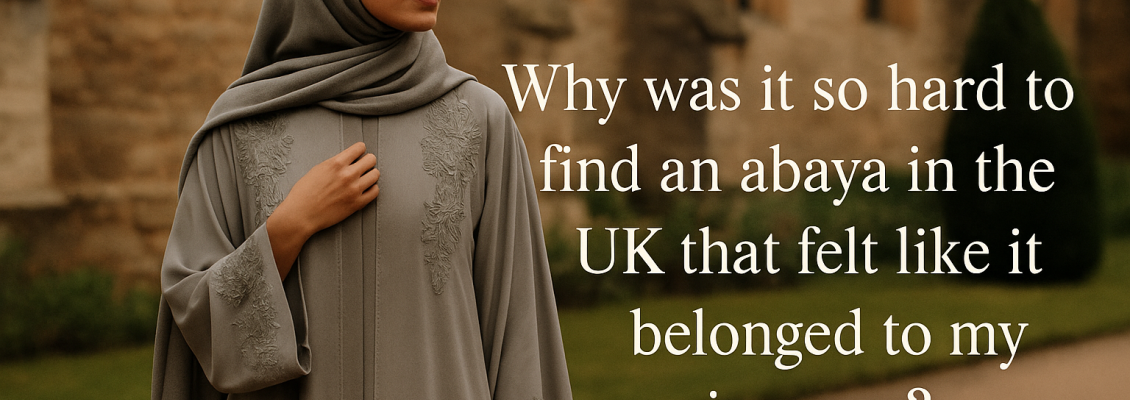
Leave a Comment